I was staring at a pile of mismatched hinges, a monument to my DIY optimism gone wrong. Each one was supposed to be ‘standard,’ a promise that dissolved the moment I tried to fit it onto the door jamb. It’s a headache I wouldn’t wish on anyone. So, let’s cut to the chase: are interior door hinges universal? Short answer: it’s complicated, and the common wisdom often leads you down a rabbit hole of frustration.
For years, I’d just grab whatever looked right from the hardware store, assuming the industry had ironed out the kinks. Big mistake. The reality is, while there are common standards, a lot of little things can make a hinge decidedly NOT universal. And when you’re trying to replace a single worn-out hinge on an old door, that nuance can cost you time, money, and your sanity.
The Illusion of ‘standard’ Hinges
Let’s talk about what people think makes an interior door hinge universal. Usually, it’s the size. You see hinges that are 3.5 inches tall, or maybe 4 inches. That seems pretty straightforward, right? And for a lot of brand-new installations where you’re putting up new doors and new frames, it often is. You pick a standard size, you get the standard screws, and you hang your door. Easy peasy. But the moment you’re dealing with anything that isn’t factory-new, or if you’re trying to match an existing hinge without taking the whole door off, that ‘standard’ starts to feel a lot less universal.
The hinge pin is another common assumption. Most interior door hinges have a removable pin, and you can often swap them out. That’s a good thing, because sometimes the pin gets bent or rusty, and a new pin can breathe life back into an old hinge. However, the diameter and the threading of the pin can vary. You can’t just grab any old pin and expect it to fit snugly into any old hinge barrel. I learned this the hard way trying to replace a bent pin on a closet door. I ended up having to replace the entire hinge because I couldn’t find a pin that fit just right. It felt like a waste of perfectly good metal.
Then there’s the thickness of the hinge leaf. The metal part that screws into the door and the frame. While many are around 1.5mm thick, older homes or custom doors might use thicker or thinner leaves. If your new hinge leaf is too thick, it won’t sit flush in the mortise (the cutout in the wood). This can cause the door to bind, or worse, it can leave a visible gap that just looks sloppy. Conversely, if it’s too thin, you might not get a secure fit, and the door could sag over time.
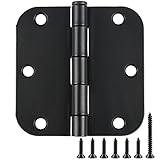
Finally, the corner radius. This is a detail most people never even think about until they’re holding a new hinge and a mortise that doesn’t quite match. Hinges come with either a square corner or a rounded corner (often a 1/4-inch radius, but sometimes 5/8-inch or even other custom curves). If your door frame or slab has square-cornered mortises, you need square-cornered hinges. Trying to force a rounded hinge into a square mortise is a recipe for gouged wood and a hinge that sits proud, looking like a sore thumb.
What to Actually Look for (and Ignore)
Okay, so if ‘standard’ isn’t the magic word, what should you be looking at when you need a replacement hinge? The first, and most important, thing is to match the existing hinge exactly. This means bringing the old hinge with you to the hardware store. Seriously, take the door off, or at least pull the hinge pin and take the leaves with you. Pictures are rarely good enough because the subtle differences in corner radius or leaf thickness are hard to capture and even harder for store employees to assess from a photo.
Here’s a breakdown of what you need to measure and observe: (See Also: A Box Without Hinges Key )
- Height: Measure the overall height of the hinge from the very top to the very bottom. Standard interior hinges are often 3.5 inches or 4 inches, but older homes can have anything from 3 inches up to 5 inches.
- Width: This is the width of one leaf when the hinge is closed. It’s usually around 1.5 inches for a 3.5-inch hinge, but double-check.
- Thickness: Use a caliper or a ruler to measure the thickness of the hinge leaf. Most are around 1.5mm to 2mm, but deviations exist.
- Screw Hole Pattern: While less common for interior hinges to have significantly different hole patterns, it’s worth noting if yours are spaced unusually. Count them too – most have two screws per leaf, but some might have three.
- Corner Radius: This is important. Lay the hinge leaf flat on a piece of paper and trace the corner. Then, use a ruler or a compass to find the radius. If it looks rounded, measure the curve. If it’s sharp, it’s square.
- Finial (Decorative Tip): If your hinge has a decorative tip on the end of the barrel, make sure the replacement matches this aesthetic if it’s visible.
What can you often ignore? The finish, for one. If you have polished brass hinges and you can only find satin nickel, don’t sweat it too much unless you’re obsessive about matching every tiny detail. Most people won’t notice. Similarly, the exact shape of the finial, unless it’s a very prominent or ornate design, is usually secondary to getting the hinge to work correctly. Focus on function first, then aesthetics. And don’t get hung up on the brand. Unless you’re dealing with a very high-end custom door, the brand of hinge rarely matters as much as its physical dimensions and construction.
Common Mistakes That Cost You Money
The biggest mistake people make is assuming that if a hinge looks similar, it will work similarly. I’ve seen people try to force a hinge into a mortise that’s too small, thinking they can just hammer it in. This not only damages the new hinge but can also chip or splinter the wood on your door or frame. Then you’ve got two problems: a bad hinge and damaged woodwork. And good luck trying to return a hammered-in hinge.
Another common blunder is not replacing all the hinges when one fails. People think, ‘Oh, just this one hinge is squeaky/loose, I’ll just swap this one.’ But hinges work as a team. If one is worn out, the others are likely not far behind.
Replacing just one can put uneven stress on the door and frame, leading to premature wear on the other hinges or even warping of the door itself. It’s like replacing just one tire on your car; it’s a temporary fix that can cause bigger problems down the road. I’ve done this, and sure enough, within six months, another hinge started acting up, and I had to do the whole job over. My advice?
If one hinge is visibly worn or failing, replace all of them on that door. It’s a bit more upfront work, but it saves you hassle later.
Buying cheap, unbranded hinges is also a false economy. Sure, they might be a dollar or two cheaper per hinge, but they often use thinner metal, have looser pins, and the finish wears off quickly. I bought a pack of super cheap hinges once for a shed door. They looked fine, but the pin was so loose the door sagged noticeably. Within a year, the finish was peeling, and I had to replace them with decent ones anyway. You end up paying more in the long run when you have to buy them twice.
Finally, not checking for the ‘ więcej’ (more) or ‘less’ side of the hinge. This refers to the bevel on the edge of the hinge. Many interior doors have a slight bevel on the edge that sits against the door stop. The hinge needs to accommodate this. If you have a beveled door edge and install a non-beveled hinge, the door won’t close properly. Most standard interior hinges are designed to work with standard bevels, but if you have an unusual door or frame, it’s something to check. The hinge will often be marked to indicate which side is meant to be on the outside or if it’s non-beveled. (See Also: Are Integrated Washing Machine Door Hinges Standard )
My Own Hinge Horror Story
I was helping my buddy renovate his old Victorian house. He’d bought some beautiful reproduction doors, but the hinges that came with them were… well, they were terrible. They looked nice, but the pins were loose, and the leaves were flimsy. We tried installing them, and the doors dragged on the floor. We thought, ‘No big deal, we just need to adjust the frame.’ We spent an entire afternoon planing the door jambs, only to find out later the problem was the hinges themselves. The leaves were slightly too thin for the mortises, and they weren’t sitting flush.
The real kicker came when we tried to replace just one of the bad hinges to see if a different brand would work. The existing mortises were cut for the cheap hinges, which were slightly thinner. The new, better-quality hinges were a hair thicker, and didn’t sit quite right. We ended up having to carefully chisel out the mortises on all the doors to make them slightly deeper and wider to accommodate the proper hinges. It took us an extra weekend of painstaking work, all because we didn’t realize the ‘standard’ hinges we were trying to replace were actually non-standard in their thinness, and the mortises had been cut specifically for them.
My friend was furious, and I felt like a complete idiot. We should have just bought a complete set of matching, good-quality hinges and properly cut the mortises to fit them from the start. Instead, we tried to patch a bad situation with more bad decisions. It’s a prime example of why you can’t just eyeball it. You have to measure, verify, and sometimes, accept that the original ‘standard’ was anything but.
Hinge Material and Durability: What Really Matters
When you’re looking at interior door hinges, you’ll see them made from a few different materials, primarily steel and brass. For interior doors, the material is less about extreme durability and more about appearance and corrosion resistance. Steel hinges are common, often plated with finishes like zinc, nickel, or brass. They’re generally strong and affordable. Brass hinges, especially solid brass, are more premium and offer excellent corrosion resistance, which is why they hold up well in humid environments like bathrooms.
However, the quality of the plating is often more important than the base material for interior hinges. A cheap steel hinge with a poorly applied nickel plate can start to flake and rust within a year or two, especially in a bathroom or kitchen. Conversely, a well-plated steel hinge can look good and function well for decades. I’ve had brushed nickel hinges on my bathroom door for 10 years, and they still look fantastic. They were a mid-range price, not the cheapest, but definitely not the most expensive.
The weight of the door is also a factor in durability. Standard interior doors are relatively light, so most basic hinges will suffice. However, if you have a solid wood door, a door with glass inserts, or any door that’s significantly heavier than average, you’ll want to opt for heavier-duty hinges. These might be thicker, have more screw holes, or simply be rated for higher weight capacities. Ignoring this can lead to sagging doors and premature hinge failure. You’ll often see heavier hinges described as ‘heavy-duty’ or specify a weight rating. For interior doors, unless it’s a substantial piece of furniture masquerading as a door, standard 3.5-inch hinges are usually fine.
The construction of the pin is another small but significant detail. Is it easily removable? Does it feel loose or wobbly? A well-fitted pin that sits snugly in the hinge barrel is key for smooth operation and longevity. Some pins have a small slot at the bottom that allows you to pry them out with a flathead screwdriver, which is handy for maintenance or replacement. Others might be more difficult to remove or might not be designed for removal at all. (See Also: Are Hinges Wheeels )
| Hinge Feature | Importance for Universal Fit | My Verdict |
|---|---|---|
| Height (e.g., 3.5″ vs 4″) | High – Must match existing mortise depth. | Match Exactly. This is a must for fit. |
| Width of Leaf | Medium – Affects how much wood is engaged. | Match Closely. Slight variations might work, but exact is best. |
| Thickness of Leaf | High – Directly impacts flush mounting. | Important. Too thick or thin causes binding or gaps. |
| Corner Radius (Square vs. Rounded) | High – Needs to fit existing cutout. | Must Match. Forcing will damage wood. |
| Screw Hole Spacing | Medium – Usually standard, but check. | Check. Odd patterns mean custom work. |
| Material (Steel vs. Brass) | Low – For interior, aesthetics and plating matter more. | Appearance First. Functionality is usually fine across materials. |
| Finish (Nickel, Brass, etc.) | Low – Mostly aesthetic. | Optional Match. Don’t sacrifice function for perfect finish. |
The Faq: Your Burning Hinge Questions Answered
Can I Use a 4-Inch Hinge to Replace a 3.5-Inch Hinge?
Generally, no, not without modification. A 4-inch hinge is taller than a 3.5-inch hinge. If you try to install it, the top or bottom of the hinge leaf will either stick out above/below the existing mortise or you’ll have a large gap. You would need to enlarge the mortise in the door jamb and potentially the door itself to accommodate the taller hinge. This is usually more work than it’s worth for a simple replacement.
What Does ‘3-Knuckle’ Mean for a Hinge?
This refers to the number of cylindrical sections (knuckles) that the pin passes through. A standard interior door hinge typically has three knuckles. This provides a stable pivot point. More knuckles can be found on specialized or heavy-duty hinges for specific applications, but for typical interior doors, three is the standard and what you’ll most commonly find.
How Do I Know If My Door Hinges Are Beveled?
A beveled door hinge has a slight angle cut on the edge of the hinge leaf that sits against the door stop. This allows the door to close more smoothly against the stop without the hinge binding. You can usually tell if your door hinges are beveled by looking at the edge of the hinge leaf where it meets the door frame. If the edge is slightly angled, it’s beveled. If it’s a sharp 90-degree angle, it’s not. Most interior doors have a slight bevel, so matching this is important for a good fit.
Are Hinges Universal for Fire Doors?
No, absolutely not. Fire doors have very specific safety requirements, and their hinges are designed to meet those standards. Fire door hinges are typically made of heavier gauge steel, are often non-removable-pinned for security, and must be rated for fire resistance. They are not interchangeable with standard interior door hinges and require specific installation procedures. Always use hinges specifically designed and rated for fire doors.
Can I Just Swap Out the Hinge Pins?
Sometimes, yes, but it’s not a universal solution. If your hinge barrel is worn or damaged, just swapping the pin won’t fix the problem. If the pin is bent or rusted and the barrel is otherwise in good condition, then yes, a new pin might work. However, you need to make sure the pin diameter and length are exactly the same. It’s often easier and more reliable to replace the entire hinge, especially if you’re trying to match an existing hinge. Trying to force the wrong pin can damage the barrel.
Final Verdict
So, are interior door hinges universal? The honest answer is a resounding ‘no,’ not in the way most people assume. While there are common standards for size and screw holes, the subtle differences in corner radius, leaf thickness, and bevel can make a hinge decidedly incompatible with your existing setup. My advice? Ditch the guesswork. If you’re replacing a hinge, take the old one with you to the store. Measure twice, buy once. It’s a small step that saves you a massive headache and makes sure your doors hang right.
Don’t be fooled by the ‘standard’ label on the packaging. It’s more of a guideline than a guarantee when you’re dealing with anything but a brand-new installation. For anything older than a few years, or if you’re not installing a completely new door and frame system, treat every hinge replacement as a specific puzzle to be solved by matching the original piece as closely as humanly possible.
Ultimately, getting the right hinge is about more than just aesthetics; it’s about functionality and preventing future problems. A well-fitting hinge means a door that opens and closes smoothly, seals properly, and lasts for years. So, next time you’re at the hardware store faced with a wall of hinges, remember this: precision matters, and the ‘universal’ claim is often a myth.