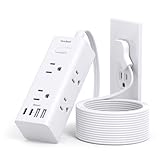
The other day, I was wrestling with a tangled mess of cords behind my TV. You know the scene: a power strip plugged into another power strip, a surge protector dangling precariously, and extension cords snaking under rugs. It got me thinking, because honestly, most folks just grab whatever cord is handy to power their gadgets. But when it comes to electrical safety, are power strips really safer than extension cords? I’ve wasted enough cash on cheap, dodgy gear over the years to know that ‘good enough’ isn’t good enough when fire is a possibility. Let’s cut through the confusion.
I used to think any old cord would do, especially for less important stuff like a desk lamp. My first major ‘aha!’ moment came after a minor electrical fire in my old apartment – thankfully, it was small and I caught it early, but it was a wake-up call. That’s when I started paying real attention to the difference between a flimsy cord and something built to handle the load. The common advice often glosses over the nuances, and that’s where things go wrong.
Power Strips vs. Extension Cords: What’s Really Going on?
Look, the fundamental difference is simple: an extension cord is basically a bridge. It’s a single wire, usually with one male plug on one end and one female receptacle on the other, designed to extend the reach of a single appliance’s cord. Think of it as a temporary workaround for when an outlet is just too darn far away. They’re generally meant for short-term use and for powering one thing at a time. You wouldn’t use an extension cord to run your entire home entertainment system, and for good reason. The wires inside are typically thinner, and they aren’t designed to handle the combined load of multiple devices or the constant draw of high-power electronics.
Power strips, on the other hand, are designed to do more. They’re basically a housing with multiple outlets and a single plug that connects to the wall.
This allows you to plug in several devices at once from a single wall socket. Many also come with built-in surge protection, which is a big deal. Surge protectors are designed to prevent voltage spikes from damaging your electronics.
They have components (like Metal Oxide Varistors, or MOVs) that divert excess voltage to the ground wire. It’s like having a tiny bodyguard for your sensitive tech. However, not all power strips are surge protectors. Some are just glorified multi-outlets, and these can be just as risky, if not more so, than a basic extension cord if you overload them.
The danger with both, and this is where people really screw up, is overloading. Every cord and every outlet has a maximum amperage or wattage rating. Exceed that, and the wires heat up.
Heat leads to melting insulation, short circuits, and eventually, fire. It’s not rocket science, but it’s science nonetheless. I once plugged a space heater, a hair dryer, and a portable fan into a cheap power strip that was supposed to handle it all.
Within about 15 minutes, the plastic housing started to smell like burnt plastic, and I yanked it out just in time. That’s a mistake you only make once, I promise. The common advice is to check the rating, but frankly, most people don’t. They just plug stuff in.
So, are power strips safer than extension cords? In a general sense, a properly used power strip with surge protection is often a better choice for managing multiple devices at a desk or entertainment center.
Extension cords are best left for powering a single appliance from a distance. The key word here is ‘properly used.’ A surge-protected power strip can be a fire hazard if you plug in more power-hungry devices than it’s rated for, or if you daisy-chain them – which is a big NO-NO. Think of it like this: an extension cord is a single lane road; a power strip is a multi-lane highway. You wouldn’t try to force a thousand cars onto that single lane without causing a traffic jam, would you?
Understanding the Risks: Overloading and Bad Wiring
The biggest threat, regardless of whether you’re using a power strip or an extension cord, is overloading. Each cord and each outlet has a limit, usually expressed in amps (amperage) or watts (wattage).
For example, a typical household outlet is 15 amps. A standard extension cord might be rated for 10 or 13 amps. A power strip might also be rated for 13 or 15 amps, but that rating is for the total load across all its outlets.
If you plug in a device that draws 10 amps and another that draws 8 amps into a 15-amp power strip, you’re pulling 18 amps. That’s over the limit. The wires inside the cord and the strip will start to heat up because they can’t handle the flow of electricity.
This heat can melt the plastic insulation, leading to exposed wires, short circuits, and a real fire risk. It’s like trying to push too much water through a pipe that’s too narrow – pressure builds, things get hot, and something’s gotta give.
I learned this the hard way with my old computer setup. I had my PC, two monitors, a printer, and a desk lamp all plugged into a single power strip.
It seemed fine for months. Then, one sweltering summer afternoon, I noticed a weird, acrid smell. The plastic housing of the power strip was warped and discolored, and it was hot to the touch. Thankfully, it hadn’t ignited, but it was a stark reminder that even if a device fits, it doesn’t mean it’s safe to draw that much power.
My mistake was not calculating the total wattage draw of all those devices. The PC and monitors alone were probably pulling close to 10 amps, and the printer and lamp added more. Cheap power strips, especially those from unknown brands, often have undersized wiring or components that can’t safely handle their advertised capacity.
This is a important point; the price tag doesn’t always reflect the quality of internal components.
Another huge danger is using damaged cords. Frayed insulation, exposed wires, or bent plug prongs are invitations for disaster. (See Also: Can Extension Cords Be Thriwn Away )
These aren’t just cosmetic issues; they can create direct pathways for electricity to escape, leading to shocks or fires. It’s tempting to try and tape up a frayed cord or bend a bent prong back into shape, but I strongly advise against it. The integrity of the insulation is what keeps the electricity contained. If it’s compromised, the risk is significantly higher.
Many people keep extension cords and power strips tucked away in drawers or boxes for years, only to pull them out and use them without a second thought. Always give them a good once-over before plugging anything in, especially high-draw items like heaters, hair dryers, or power tools.
The common advice to “always use the manufacturer’s original cord” is good, but often impractical for power strips. What you should be looking for is a UL (Underwriters Laboratories) or ETL (Intertek) mark. These are third-party safety certifications, meaning the product has been tested and meets safety standards. It’s not a guarantee against all failures, but it’s a significant indicator of quality and safety. If a power strip or extension cord doesn’t have one of these marks, it’s best to avoid it like the plague, no matter how cheap it is. Think of these marks as the stamp of approval from people who actually know what they’re doing with electricity.
| Scenario | Extension Cord (Single Device) | Power Strip (Multiple Devices) | Verdict |
|---|---|---|---|
| Powering a single lamp a few feet from an outlet. | Generally safe, if rated correctly. | Overkill and can encourage plugging in more than intended. | Extension cord is usually the better, simpler choice. |
| Running multiple devices at a desk (computer, monitors, charger). | Impractical, requires multiple cords, can create tangles. | Ideal, especially with surge protection. | Power strip is the clear winner here for organization and safety. |
| Powering a high-draw appliance like a space heater or microwave. | Risky, must be heavy-duty and rated for the appliance. | Highly dangerous, unless specifically designed for high-wattage appliances and used for only one. | Use the appliance’s original cord or a dedicated outlet. Never use a standard power strip for this. |
| Connecting to an existing power strip (daisy-chaining). | Not applicable. | EXTREMELY DANGEROUS. Never do this. | DO NOT DO THIS. Significant fire hazard. |
The Power Strip Advantage: Surge Protection and Outlet Density
The primary advantage of a power strip, particularly one with surge protection, is its ability to consolidate multiple power connections and offer a layer of defense for your electronics. Think about your home office or entertainment center. You’ve got a computer, a monitor or two, a router, a modem, maybe a printer, a desk lamp, and a phone charger.
Running all of these directly from wall outlets might require multiple power strips or extension cords anyway, leading to a spaghetti monster of wires. A good power strip consolidates these into one central point, making cable management easier and reducing the number of connections to the wall. This organized approach inherently makes the setup tidier, which can also contribute to safety by reducing trip hazards and making it easier to inspect your wiring.
The surge protection aspect is where power strips really shine compared to basic extension cords. A standard extension cord offers zero protection against power surges, which are sudden increases in voltage that can fry delicate electronic components. These surges can be caused by lightning strikes (even distant ones), power outages, or even heavy appliances cycling on and off in your home.
A surge protector contains MOVs (Metal Oxide Varistors) that absorb this excess voltage, diverting it safely to the ground wire. This can save your computer, TV, gaming console, or other expensive electronics from costly damage. I’ve had equipment saved by a surge protector during a thunderstorm; it was a minor surge, but without the protector, my brand new gaming PC could have been toast.
The protector sacrificed itself, showing a small indicator light that it had absorbed a surge and was no longer offering protection, but my PC was fine. I learned that day that a good surge protector is worth every penny, and they don’t last forever – many have a limited lifespan for their protective components.
However, not all power strips are created equal, and this is where the confusion and potential danger lie. Some cheap power strips are just glorified outlet expanders with no surge protection.
They offer the convenience of more outlets but none of the safety benefits against voltage spikes. Worse, they might have thinner internal wiring than a decent extension cord, making them more susceptible to overheating if overloaded.
Always check the packaging or the unit itself for indications of surge protection. Look for terms like ‘surge protector,’ ‘surge suppressor,’ or a Joule rating.
The Joule rating indicates how much energy the surge protector can absorb before it fails. A higher Joule rating generally means better protection and a longer lifespan for the protective components.
For sensitive electronics like computers and home theater systems, I’d recommend a rating of at least 1000 Joules.
It’s also important to understand that surge protection has a limit. Once the MOVs have absorbed a certain amount of energy over time, or after a significant surge event, they degrade.
Many surge protectors have an indicator light that shows when they are still actively protecting. If this light goes out, or if the power strip stops working entirely, it’s time to replace it. The common advice is to replace surge protectors every few years, or sooner if you live in an area with frequent electrical storms or power fluctuations. I’ve made the mistake of assuming my old surge protector was still good because the power strip itself still worked.
Turns out, the surge protection components were shot, and my electronics were left vulnerable. Treat surge protectors as a consumable item with a lifespan, not a permanent fixture.
Power Strip Surge Protection Ratings: What Do They Mean?
The Joule rating on a surge protector tells you how much energy it can absorb before its protective components fail. The higher the Joule rating, the more protection it offers and the longer it is likely to last. For basic items like lamps or phone chargers, a lower rating (e.g., 200-500 Joules) might suffice, but for sensitive electronics like computers, TVs, or gaming consoles, aim for 1000 Joules or more. Some high-end models can go up to 3000-4000 Joules.
Common Mistakes People Make (and How to Avoid Them)
The number one mistake I see, and frankly, one I used to make myself, is plugging one power strip into another, or an extension cord into a power strip. This is called ‘daisy-chaining,’ and it’s a massive fire hazard.
Every connection point adds resistance, and each device draws power. When you chain them, you’re creating a circuit that’s incredibly susceptible to overheating. Imagine trying to push a huge volume of water through a series of increasingly narrow pipes; eventually, the pressure builds, the pipes get hot, and they can burst. Power strips and extension cords are designed for a single connection to the wall. (See Also: Can Extension Cords Short Out )
Adding more connections in series creates an uncontrolled environment for electrical current. It’s a shortcut that can lead to a very costly and dangerous shortcut to disaster.
Another common pitfall is using the wrong type of cord for the job. For instance, using a lightweight indoor extension cord for an outdoor appliance or a high-draw tool like a lawnmower or a shop vac. Outdoor-rated cords are built with more solid insulation to withstand weather and physical damage. High-draw appliances require heavy-duty cords with thicker gauge wiring (lower gauge number means thicker wire) to handle the current.
If you use a cord that’s too thin, it will heat up and can melt, causing a fire. I once borrowed a friend’s electric snowblower, and he handed me a flimsy indoor extension cord. I didn’t even plug it in; I could tell just by the feel of it that it was completely inadequate and unsafe for that kind of power draw. Always check the amperage or wattage rating on the cord and compare it to the appliance’s requirements.
If in doubt, get a heavier-duty cord. It’s cheaper than a new house.
People also tend to ignore the condition of their cords. Frayed insulation, exposed wires, cracked casings, or bent prongs are often seen as minor inconveniences. But these are serious safety issues. Exposed wires can cause short circuits or electric shocks.
Bent prongs can lead to poor connections, overheating at the outlet, or the plug falling out unexpectedly. The common advice is to replace damaged cords immediately.
Honestly, if a cord looks damaged, just throw it out. Trying to repair it with tape is a band-aid on a bullet wound. It might seem economical in the short term, but the potential consequences are far too severe.
I’ve seen extension cords with insulation so degraded that they looked like they’d been chewed on by rodents, and people were still using them. Don’t be that person.
Finally, there’s the issue of improper placement. Running extension cords under rugs or carpets is a major fire hazard. The cord can get damaged by foot traffic, and the heat generated by the electrical current has no way to dissipate. Trapped heat can easily ignite the carpet or the cord’s insulation.
Similarly, running cords through doorways where they can be pinched, or near heat sources like radiators or ovens, is asking for trouble. Always make sure cords are visible, protected from physical damage, and have adequate ventilation. Think about airflow; electricity generates heat, and that heat needs to escape. Covering a cord with a rug or shoving it behind a hot appliance is like putting a blanket over a running engine – it’s going to overheat.
Extension Cord Gauge: What Does It Mean?
The gauge of an extension cord refers to the thickness of the wire inside. It’s measured on the AWG (American Wire Gauge) scale. A lower gauge number indicates a thicker wire. Thicker wires can carry more current (amps) safely without overheating. For example, a 14-gauge cord is thicker and can handle more power than an 18-gauge cord. Always match the cord’s gauge to the power requirements of the appliance you’re using. For heavy-duty applications, look for 12-gauge or 10-gauge cords.
Real-World Scenarios: When to Use What
Let’s break down some common situations to illustrate the best choices. If you just need to plug in a single bedside lamp that’s a few feet from an outlet, a short, lightweight extension cord is perfectly adequate. It’s a simple solution for a simple problem. You plug the lamp’s cord into the extension cord, and the extension cord into the wall.
Easy. No need for a fancy power strip here, and frankly, it’s probably overkill. The key is that it’s a single appliance and a relatively low power draw. My grandmother still uses a simple extension cord for her reading lamp by her favorite armchair, and it’s been there for years without a hitch because it’s only powering that one lamp and isn’t subjected to heavy use.
Now, consider your home office or entertainment center. This is where a surge-protected power strip really shines. You have multiple devices – computer, monitors, printer, router, speakers, chargers – all needing power. Plugging them all into a power strip not only consolidates the mess of cords but also provides important surge protection for your valuable electronics.
I’ve seen people try to run all their computer gear off a basic extension cord, and when a power surge hit, their computer’s motherboard fried. The cost of replacing the components was far more than the cost of a good surge protector.
For these setups, I always opt for a power strip with at least 8 outlets and a Joule rating of 1000 or higher, and I make sure to check the indicator light that shows the surge protection is active. It’s a small investment for significant peace of mind.
What about power tools or outdoor equipment? For something like a circular saw, a leaf blower, or a pressure washer, you need a heavy-duty extension cord specifically designed for the task. These cords have thicker wires (lower gauge) and more solid insulation to handle the high power draw and potential exposure to the elements. They are typically rated for 12 or 13 amps, sometimes more, and are built to be durable.
Using a light-duty cord here would be incredibly dangerous; it would overheat, melt, and could easily start a fire or lead to a shock. I once had to use a shop vac in a damp garage, and the extension cord I grabbed was an old, thin one. It started to get warm within minutes. I immediately unplugged it and found a proper heavy-duty, outdoor-rated extension cord.
It’s not worth the risk to save a few bucks on the right cord. (See Also: Can Extension Cords Be Use With Electric Heaters )
The absolute worst-case scenario, and something I encounter far too often in older apartments or rental properties, is the practice of plugging high-wattage appliances like space heaters, electric kettles, or microwaves into standard power strips or even extension cords. These appliances draw a tremendous amount of power – often 1500 watts or more.
A standard 15-amp power strip is typically rated for around 1800 watts total. Plugging in a single space heater might push it to its limit, but if you have anything else plugged in, you’re asking for trouble. Many power strips aren’t designed to continuously handle such high, sustained loads.
It’s far safer to plug these high-draw items directly into a wall outlet, preferably on a circuit that isn’t already loaded with other devices. If you must use an extension cord for such an appliance, it needs to be a heavy-duty, high-amperage cord specifically rated for that purpose and used for only that single appliance.
Even then, it’s a calculated risk, and a dedicated outlet is always best.
Can I Use a Power Strip Outside?
No, you should never use a standard indoor power strip outdoors. You need a power strip specifically designed for outdoor use, which will be clearly marked as ‘outdoor-rated.’ These have special weather-resistant housings, seals to protect against moisture and dust, and often GFCI (Ground Fault Circuit Interrupter) protection. Using an indoor power strip outside exposes it to rain, humidity, and temperature fluctuations, creating a severe electrical shock and fire hazard.
When to Call It Quits: Knowing When to Replace
This is where honesty and a bit of ruthless practicality come into play. Your power strips and extension cords are not immortal.
They are consumables, and they wear out. The most obvious sign that a cord or strip needs to be replaced is visible damage. If you see any fraying of the insulation, exposed wires, cracks in the plastic casing, or bent or damaged prongs on the plug, it’s time to let it go.
Don’t try to be a hero and fix it with electrical tape or by bending prongs back. That compromised insulation or bent prong is a direct pathway for electricity to go astray, leading to shocks or fires. I once found an extension cord in my garage that had been run over by a car tire. The plastic was cracked all over.
It still “worked,” but there was no way I was plugging anything into it. It went straight into the trash.
Beyond visible damage, pay attention to heat and smell. If a power strip or extension cord feels unusually warm to the touch, even when only powering a few low-draw devices, that’s a warning sign. It indicates that the wires are overheating, likely due to excessive resistance or an overloaded circuit. Similarly, any acrid, burning plastic smell coming from a cord or strip is a big red flag.
It means the insulation is melting. In either of these cases, unplug the device immediately and dispose of it. This is a situation where common advice might be to check the load, but if it’s already getting hot or smells burnt, it’s beyond just a simple overload; the internal components are likely damaged or undersized.
For surge protectors, there’s another important factor: the lifespan of the surge protection itself. As I mentioned, the MOVs inside a surge protector degrade with each surge they absorb. Many surge protectors have an indicator light that shows they are still providing surge protection. If this light goes out, or if the surge protector simply stops working, it means the protective components are depleted, and it’s now just a regular power strip.
Even if the surge protector still provides power, it’s no longer protecting your electronics from voltage spikes. The common recommendation is to replace surge protectors every 3-5 years, or sooner if you live in an area with frequent thunderstorms or power fluctuations. I tend to replace mine on the 3-year mark regardless, just to be safe.
It’s a small cost to protect expensive electronics.
Don’t forget about wear and tear on the outlets themselves. If you have a power strip where the outlets are loose, meaning plugs don’t fit snugly or fall out easily, that’s a sign of wear. Loose connections can cause intermittent power, overheating at the outlet, and even electrical arcing.
This is especially true for older power strips. If you find yourself having to jiggle a plug to get it to stay in, or if it feels wobbly, it’s probably time for a new one. When in doubt, throw it out. It’s far better to spend a few dollars on a new, safe power strip or extension cord than to risk property damage or personal injury.
The question of are power strips safer than extension cords really boils down to how you use and maintain them, and knowing when they’ve reached the end of their safe life.
When Does a Surge Protector Stop Working?
A surge protector stops working effectively in two main ways. First, the internal surge-absorbing components (like MOVs) degrade over time with each surge they handle. Many have an indicator light that shows when they are still actively protecting; if this light goes out, the surge protection is gone. Second, the unit can be damaged by a single, massive surge event. If your surge protector stops providing power altogether after a lightning strike or power fluctuation, it’s likely that the surge protection is also gone, even if it still looks physically intact.
Verdict
So, are power strips safer than extension cords? The answer isn’t a simple yes or no; it’s a resounding ‘it depends.’ A properly used, good-quality power strip, especially one with surge protection, is generally a better solution for consolidating multiple devices and safeguarding them against voltage spikes. However, they can become dangerous if overloaded, damaged, or if their surge protection components fail unnoticed. Extension cords are best reserved for powering a single appliance from a distance and should always be heavy-duty enough for the task.
The important takeaway is that safety comes down to responsible use and regular inspection, regardless of the device. Overloading, daisy-chaining, and ignoring visible damage are the real culprits behind electrical fires, not the devices themselves. My own close call with a melting power strip taught me to respect the limits of electrical components and to always, always inspect my cords before plugging them in.
Ultimately, when you’re deciding between a power strip and an extension cord, think about what you’re plugging in and how many things you need to power. For a tidy, protected setup at your desk or entertainment system, a surge-protected power strip is the way to go. For a single, simple appliance and a bit more reach, a well-maintained extension cord will do. And when in doubt, or when a cord shows signs of wear, just replace it. It’s a small price to pay for peace of mind and the safety of your home.