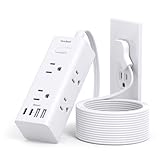
I’ve seen them everywhere – those weird, octopus-like extension cords splayed out in workshops, garages, even living rooms. The PowerSquid, right? They look cool, like something out of a sci-fi movie, but my first thought was always, “Is this thing actually safe?” I’ve wasted enough cash on flimsy, questionable electrical gear to be cynical. So, to answer the burning question: are PowerSquid extension cords safe? Let’s break it down from someone who’s actually plugged stuff into them.
Forget the marketing fluff. What matters is whether they’ll fry your electronics or start a fire. We’re talking about a product designed to make plugging in multiple things easier, but with that comes potential pitfalls if not designed and used correctly. So, does the PowerSquid cut it, or is it just a fancy way to overload circuits?
The Powersquid Design: Does It Make Them Dangerous?
Let’s get real about the PowerSquid’s signature look. It’s not just for show; it’s a design choice aimed at convenience. Instead of one long cord with a single bulky power strip at the end, you get a central hub with multiple outlets branching off at angles. This is supposed to prevent the dreaded cord tangle and allow for those chunky power bricks that always hog space. I’ve seen a few of these in action, and yeah, they do a decent job of spreading things out. My old workbench used to be a snake pit of cords before I tried something similar, and it was a relief to have things a bit more organized.
The core question of safety, though, hinges on a few things. First, what’s inside? Are the internal connections solid, or are they just slapped together? A poorly made connection is a fire waiting to happen. Second, how much power can it actually handle? Just because it has five outlets doesn’t mean you can plug five hair dryers into it. That’s a fast track to blowing a fuse or worse. I’ve always been a bit of a stickler for checking the gauge of the wire and the maximum wattage rating, and the PowerSquid is no different. You need to know what you’re dealing with, especially if you’re running power tools or a bunch of sensitive electronics.
One time, I decided to get fancy and power a bunch of Christmas lights with one of those multi-pronged adapters. It looked like a PowerSquid knock-off. Within an hour, the thing was warm to the touch, and the lights were flickering.
I yanked it out faster than you can say ‘fire hazard.’ That experience taught me that just because something has a lot of sockets, it doesn’t mean it’s built for heavy lifting. The PowerSquid, being a more established brand, likely has better quality control than some of the no-name brands I’ve stumbled across. But still, reading the specs is a must.
For those asking are PowerSquid extension cords safe? The answer isn’t a simple yes or no; it depends on the model and how you use it.
The physical design itself, while convenient, can also be a weak point if the housing isn’t solid. Dropping one or stepping on it repeatedly could, in theory, damage internal wiring. Most PowerSquid units I’ve seen have a fairly solid plastic casing, which is good, but it’s not indestructible. Think about where you’re putting it. Is it going to be in a high-traffic area where it’s likely to get kicked around? If so, maybe a standard, tougher extension cord is a better bet, even if it’s messier. The angled outlets are great for keeping things tidy, but they don’t inherently add to or subtract from the electrical safety beyond the quality of the internal wiring and insulation.
What to Look for: Features That Make a Difference
When you’re eyeing up a PowerSquid or any multi-outlet extension cord, you can’t just grab the cheapest one. There are a few key things that separate the safe, reliable ones from the potential fire starters. First off, the wire gauge.
This is super important and often overlooked. Thicker wires (lower gauge number) can handle more amperage without overheating.
For general household use with lamps and chargers, a 16-gauge cord is usually fine. But if you’re planning to plug in power-hungry tools or appliances, you’ll want to see a 14-gauge or even a 12-gauge cord. Many PowerSquid models will specify this, but if they don’t, that’s a red flag for me. I’ve seen cheap cords with incredibly thin wires that get hot just from running a vacuum cleaner. (See Also: Can Extension Cords Short Out )
That’s not safe, plain and simple.
Next up is the total wattage or amperage rating. The cord itself might be thick enough, but the internal circuitry and the outlets can be a bottleneck. The PowerSquid needs to clearly state its maximum load. If it’s a standard 15-amp cord, that’s roughly 1800 watts at 120 volts.
You can’t exceed that. This is where people get into trouble.
They see five outlets and think they can run a microwave, a toaster oven, and a coffee maker all at once. Nope.
That’s a recipe for tripping breakers or, in the worst-case scenario, overheating the cord. Always do the math: amps x volts = watts. Make sure your combined load doesn’t exceed the rating.
PowerSquid often has different models, some rated for heavier duty than others, so check the product details carefully.
Another feature that screams ‘safety’ is surge protection. While not all PowerSquid units have it, a good surge protector can save your sensitive electronics from voltage spikes. It won’t stop an overloaded circuit from overheating the cord itself, but it’s a layer of defense for your gear. Look for a joule rating on surge protectors; the higher, the better.
Grounding is also absolutely fundamental. Any decent extension cord, including a PowerSquid, should have a three-prong plug. Never, ever cut off that ground pin.
It’s there for a reason – to provide a safe path for electricity in case of a fault. I’ve seen people do it to fit into two-prong outlets, and it’s one of the dumbest, most dangerous things you can do.
Finally, look at the build quality of the outlets and the housing. Are the outlets snug, or is the plug loose and wobbly? Does the plastic feel brittle, or does it have some heft to it? For a PowerSquid, the angled design means the plastic housing has to hold those outlets in place securely. (See Also: Can Extension Cords Be Use With Electric Heaters )
I’d rather pay a little more for a unit that feels solid and has well-made outlets than save a few bucks on something that feels cheap and flimsy. Durability matters, especially if it’s going to be on the floor where it might get bumped or stepped on. The brand reputation can be a guide here, but always do your own visual inspection and feel test if possible.
Common Mistakes and How to Avoid Them
One of the biggest blunders people make with any multi-outlet device, including PowerSquids, is overloading it. It’s so easy to just plug things in and forget about it.
But that’s exactly how you push the cord and the connected devices beyond their limits. My own mistake happened years ago with a cheap power strip. I had a monitor, a PC, a desk lamp, and a phone charger plugged in. Then I added a small space heater.
Big mistake. The cord started to feel warm, then really hot. I smelled that distinct plastic-burning odor and unplugged everything in a panic. Thankfully, nothing caught fire, but it was a stark reminder that just because it fits, doesn’t mean it belongs.
Always, always know the total wattage you’re drawing and compare it to the extension cord’s rating. If you’re unsure, err on the side of caution.
Another common pitfall is using the wrong type of extension cord for the job. For instance, using a light-duty indoor extension cord outdoors is a major no-no. They aren’t designed to withstand moisture, temperature fluctuations, or physical damage from being outdoors. Even if a PowerSquid is used indoors, if it’s in a damp garage or basement, you need to consider its rating. Most standard PowerSquid units are for indoor, dry locations only. If you need something for outdoor use, you need a cord specifically rated for that, with a tougher jacket and weather-resistant outlets. Don’t try to make a square peg fit a round hole; it’s just asking for trouble.
People also tend to ignore the condition of the cord. Cracks in the insulation, exposed wires, damaged plugs, or loose connections are all huge red flags. If your PowerSquid or any extension cord looks beat up, frayed, or damaged in any way, it’s time to get rid of it. Don’t try to tape it up or make a quick fix. Replacing a damaged cord is infinitely cheaper than dealing with a fire or electrocution. I once found an old extension cord in my garage with a section where the outer jacket was completely worn away, exposing the wires. It looked like it had been run over by a car. I tossed it immediately. Safety first, always.
One area where PowerSquid’s design might lead to a specific mistake is if the flexibility encourages it to be crammed into tight spaces or run under carpets. Running cords under carpets is a massive fire hazard because it hides damage, prevents heat dissipation, and can be a trip hazard. Similarly, cramming it behind furniture where it’s constantly bent or kinked can stress the internal wires. The whole point of the PowerSquid is to organize, not to create new hiding places for potential problems. Keep it visible, accessible, and free from damage. This also makes it easier to monitor for any signs of overheating.
Powersquid Safety Table: My Verdict
Here’s a quick rundown of what I look for and how different aspects stack up. It’s not just about specs; it’s about practicality too.
| Feature | Importance | PowerSquid Consideration | My Verdict |
|---|---|---|---|
| Wire Gauge (Amps) | High | Needs to be clearly stated. Lower gauge (thicker wire) is better for higher loads. | Important. Don’t buy if not specified or if it’s too light for your needs. |
| Max Wattage/Amperage Rating | High | Must be clearly labeled. Combined load cannot exceed this. | A must. Know your total power draw. |
| Surge Protection | Medium | Optional, but a good bonus for protecting electronics. | Nice to have for sensitive gear, but not the primary safety feature for the cord itself. |
| Grounding (3-Prong Plug) | Key | Standard on most reputable models. Never modify. | Absolutely mandatory for safety. |
| Build Quality (Housing/Outlets) | Medium-High | Should feel sturdy, outlets should grip plugs firmly. | A flimsy unit is a risk. Trust your hands. |
| Indoor/Outdoor Rating | High | Most are indoor. Check carefully if you need outdoor. | Use only as rated. Outdoor is a different beast. |
Real-World Use: My Experience and Practical Tips
I finally caved and bought a PowerSquid-style device about three years ago. Not a genuine PowerSquid, mind you, but something very similar in design. My goal was to tidy up the tangle of cords behind my entertainment center. I had my TV, soundbar, game console, streaming box, and a lamp plugged into it. The key for me was checking the specs beforehand. I made sure the cord gauge was suitable for the load and that the unit had a decent wattage rating. I also made sure it was well away from anything flammable, and that the plugs weren’t loose. It’s been running without a hiccup since then. (See Also: Are Outdoor Extension Cords 10 Or 12 Gauge )
The practical advantage is undeniable. Those big, clunky power adapters that never fit neatly on a standard strip? They splay out nicely on the PowerSquid without blocking adjacent outlets. It genuinely makes organizing power for multiple devices much less of a headache. However, I will say this: the flexibility that allows for those angled outlets also means the main body of the PowerSquid can sometimes sit a bit awkwardly on a flat surface if not weighted down by plugs. It’s not a huge issue, but it’s something to be aware of. I found that once all the plugs were in, it stayed put quite well.
Here are a few tips based on my experience:
- Know Your Load: Before you plug anything in, sum up the wattage requirements of all the devices you intend to connect. Compare this to the PowerSquid’s maximum rating. If it’s close, or exceeds it, don’t use it. Invest in a higher-rated cord or a different solution.
- Placement is Key: Don’t hide it under rugs or in tight, unventilated spaces. Make sure it has airflow and is easily accessible for inspection and unplugging. Avoid placing it where it can be easily damaged by feet or furniture.
- Inspect Regularly: Even a well-made cord can develop issues over time. I make it a point to check my PowerSquid (and all my extension cords) every six months or so. Look for any signs of wear, overheating (discoloration, melted plastic), or damage to the cord or outlets.
- Don’t Mix and Match Brands Recklessly: While the PowerSquid design is popular, stick to reputable brands. If you see a bizarre, unbranded knock-off that looks suspiciously cheap, walk away. The few dollars saved are not worth the potential risk.
- Use Appropriately Rated Devices: If you’re running heavy-duty tools, a dedicated circuit is always best. Extension cords, even solid ones, are best suited for moderate loads where a permanent outlet isn’t conveniently located.
My contrarian opinion here is that while everyone focuses on the “octopus” look and convenience, the real danger isn’t the shape, it’s the underlying electrical engineering and the user’s understanding of power. A poorly built PowerSquid is a fire hazard, yes, but so is a poorly built standard extension cord. The design might make it easier to overload specific parts of the cord or its internal connections if not manufactured to spec, but the fundamental rules of electricity still apply. People think because it looks modern, it’s inherently safer, which is nonsense. It’s the quality of the materials and the adherence to safety standards that truly matter when asking are PowerSquid extension cords safe.
People Also Ask: Answering Your Burning Questions
Can Powersquid Extension Cords Be Used Outdoors?
Generally, no. Most PowerSquid models are designed and rated for indoor, dry locations only. Using them outdoors exposes them to moisture, temperature changes, and physical damage that they are not built to withstand, creating a significant safety hazard.
What Is the Maximum Wattage for a Powersquid?
The maximum wattage varies by specific PowerSquid model. It’s important to check the product’s label or specifications. For a standard 15-amp, 120-volt circuit, the maximum is typically around 1800 watts. Never exceed this rating with the combined power draw of your connected devices.
Are Powersquid Cords Durable?
Durability depends on the specific model and brand quality. Reputable PowerSquid-style cords are generally constructed with sturdy housings and good quality wiring. However, they can still be damaged by excessive force, crushing, or kinking, so careful placement and handling are necessary.
Should I Use a Surge Protector with a Powersquid?
If your PowerSquid model doesn’t have built-in surge protection, it’s a good idea to use a separate surge protector, especially for sensitive electronics like computers or TVs. However, surge protection is separate from overload protection; it won’t prevent the cord from overheating if you draw too much power.
How Do I Know If My Powersquid Is Overloaded?
Signs of an overloaded PowerSquid include the cord or outlets feeling unusually hot to the touch, a burning plastic smell, flickering lights, or breakers tripping. If you notice any of these symptoms, immediately unplug devices and reduce the load.
Conclusion
So, to circle back to the original question: are PowerSquid extension cords safe? My honest take is that they can be, but like any electrical product, it comes down to quality, proper usage, and understanding their limitations. The design offers convenience, but it doesn’t magically make them impervious to misuse or poor manufacturing.
If you buy a reputable brand, check the specs carefully, and use them within their limits in appropriate locations, a PowerSquid can be a perfectly safe and useful addition to your setup. Just remember that the flashy design is secondary to the electrical engineering beneath the plastic. Don’t let the ‘cool factor’ blind you to basic safety principles.
My advice? Treat it like any other extension cord: know its limits, keep it in good condition, and don’t push it beyond what it’s designed to handle. If you do that, you’ll likely find that your PowerSquid extension cords are indeed safe for your everyday needs.