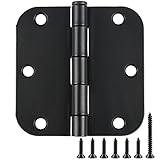
I remember the first time I tried to replace a squeaky door hinge. It seemed simple enough. Just unscrew the old one, screw in the new one. Easy peasy. Except, of course, it wasn’t. I grabbed what looked like a perfectly good hinge from the hardware store, and within a week, the door was sticking again. Turns out, not all hinges are created equal, and asking if are rounded door hinges the same is a question with more nuance than you might think.
It’s easy to get caught up in the shiny new hardware, or the cheapest option available. But when it comes to something as fundamental as a door hinge, cutting corners or making assumptions can lead to a whole lot of frustration down the line. Let’s cut through the noise and figure out what really matters.
The Not-So-Secret Life of Door Hinges
Look, when you’re staring at a wall of identical-looking metal bits at the hardware store, it’s tempting to just grab the cheapest pack of what you think you need. I’ve been there. Years ago, I was renovating my kitchen and needed to replace a couple of cabinet door hinges. They looked exactly the same as the ones I was taking off – same shape, same size, same number of screw holes.
I figured, how different could they be? Apparently, very.
The new doors sagged, they didn’t close flush, and I spent a solid weekend fiddling with them, convinced I was doing something wrong. Turns out, the cheap ones had a slightly looser pin tolerance and thinner metal.
Lesson learned: hinge quality is not a myth.
So, are rounded door hinges the same? In terms of basic function – yes, they all pivot to allow a door to swing. But the devil, as always, is in the details. We’re talking about construction, material, pin type, and tolerance.
The thickness of the steel, the smoothness of the pivot point, and how well the pin fits are all massive factors in how long a hinge will last and how well it will perform. A flimsy hinge can warp under the weight of a heavy door, leading to sagging and sticking. A poorly manufactured pivot point will create friction, leading to squeaking and premature wear. It’s not just about the shape; it’s about the engineering and the materials used to achieve that shape.
Consider the weight of the door. A solid oak interior door is a different beast than a hollow-core closet door.
The hinges need to be rated for the load. Using underspecified hinges on a heavy door is a recipe for disaster.
I once saw a friend’s heavy pantry door start to pull away from the frame because the builder had used the cheapest, lightest hinges imaginable. It looked awful and was a safety hazard. The ’rounded’ part often refers to the corners of the hinge leaf, which is mostly an aesthetic choice for modern or transitional styles, but doesn’t inherently change the core mechanics that matter for performance. What matters more is the gauge of the metal and the quality of the pin and barrel assembly.
The common advice to just buy ‘a standard door hinge’ often overlooks these important differences. Most residential doors use what’s called a ‘butt hinge,’ which is the most common type you’ll see. These come in various sizes and ‘knuckle’ counts (the part of the hinge where the pin is). While the rounded corners are a style element, the underlying construction is what dictates its effectiveness. For example, a standard 3.5-inch hinge with three knuckles is typical for interior doors. But even among these, the quality can vary wildly. You can get flimsy, stamped metal versions that feel light and loose, or solid, solid-feeling ones that clearly have tighter tolerances and better materials.
What to Look for (beyond the Obvious Curve)
Alright, so we’ve established that just because a hinge looks like another, it doesn’t mean it performs like it. When you’re actually out there buying hinges, what’s the real checklist? Forget the rounded corners for a second; they’re mostly about looks, and frankly, most doors end up with square corners anyway unless you’re going for a specific modern vibe. What you need to be sniffing out is quality and suitability.
First off, weight and feel. Pick up a few hinges. Does it feel substantial, or like it might bend if you sneezed on it? (See Also: A Box Without Hinges Key )
Good quality hinges are typically made from thicker gauge steel. You can often see the difference in the edges of the leaves – thicker metal has a more solid look. Also, check the pin. Is it easily removable?
Does it feel loose in the barrel? Some hinges have a non-removable pin, which is fine, but others might have a pin that feels sloppy.
A tight-fitting pin is key to a smooth, silent operation and preventing sag. I once bought a pack of hinges that felt okay in the store, but once installed, the pins were so loose they allowed the door to visibly drop. Annoying as hell.
I ended up having to swap them out for a slightly more expensive, but noticeably better, set. It cost me extra time and money.
Next, consider the finishing. A good hinge will have a smooth, consistent finish. Look for any rough edges, burrs, or inconsistencies in the plating (like nickel, brass, or black oxide). These can be signs of poor manufacturing. The plating isn’t just for looks; it also protects the metal from corrosion. A cheap plating job will chip or peel, leading to rust and a shortened lifespan, especially if the door is in a humid environment like a bathroom.
The number of knuckles is also worth a glance. Most standard interior doors use three-knuckle hinges. For heavier doors, or doors that see a lot of use, you might opt for a four-knuckle hinge, which can offer a bit more stability due to the increased surface area and pivot points. It’s not a universal rule, but it’s a consideration for load-bearing. The pin itself can also vary. Some have a small hole at the bottom for a nail to be inserted to help retain the pin during installation or removal, while others have a more integrated design.
Finally, the radius of the corner matters for installation, not performance. Hinges come with either a square corner or a rounded corner (typically a 5/8-inch radius). You need to match this to the mortise (the cutout) in your door and frame. If you have square mortises, you need square hinges. If you have rounded mortises, you need rounded hinges. They are not interchangeable in terms of fitting into the door and frame without significant modification. This is where people get tripped up thinking “rounded is rounded” and they can just swap them out. This is a important point many DIYers miss.
| Feature | What to Look For (High Quality) | What to Avoid (Lower Quality) | My Verdict |
|---|---|---|---|
| Material Gauge | Thick, solid-feeling steel. No flex. | Thin, flimsy metal. Bends easily. | Key. Don’t skimp here. |
| Pin Fit | Snug, minimal play. Smooth operation. | Loose, wobbly. Feels ‘sloppy’. | Important for preventing sag. |
| Finish | Smooth, even plating. No burrs or rust spots. | Inconsistent, rough, peeling, or discolored. | Important for aesthetics and longevity. |
| Corner Radius | Matches door/frame mortise (square or rounded). | Mismatched radius requiring modification. | A must for proper fit. |
| Brand Reputation | Known for quality hardware. | Generic, unbranded, or known for cheap goods. | Often a good indicator, but feel is key. |
Common Mistakes That Make You Want to Scream
I’ve made enough of these mistakes for all of us, so you don’t have to. The biggest one, hands down, is assuming that if a hinge fits the screw holes, it’s good enough. This ties back to the material gauge and pin fit we just talked about. I remember thinking I was being clever by buying a multi-pack of hinges online that was significantly cheaper than the single ones in the store.
They looked the part, had the right dimensions, and the screw holes lined up. Success, right? Wrong.
Within a few weeks, the doors on my new built-in bookshelves started to droop. Not just a little bit – enough to make the doors scrape the floor. The cheap metal had bowed under the weight.
It was a complete eyesore and a functional nightmare. I ended up having to buy proper, heavier-duty hinges, and the cost of the bad ones, plus the extra labor, was far more than if I’d just bought the good stuff initially.
Another huge blunder is ignoring the corner radius. People see ‘rounded door hinges’ and think it’s just a style choice. They’ll try to put a rounded hinge into a square mortise or vice-versa.
This requires chiseling out the door or frame to make it fit, which is a pain in the backside and can easily damage the wood. If you don’t have the right tools or skills, you’re looking at a botched job. Always match the hinge corner radius to the existing mortise. (See Also: Are Integrated Washing Machine Door Hinges Standard )
If your door and frame have square corners, get square hinges. If they have rounded corners, get rounded hinges. It’s that simple, and it saves a massive headache.
I’ve seen people hack away at wood with dull chisels, making a mess and weakening the surrounding material. It’s rarely worth the effort to force a mismatch.
People also tend to forget about the pin. If a hinge pin feels loose when you first get it, it’s only going to get worse.
This looseness directly translates to the door sagging. You might think you can just tighten the screws more, but that only works if the hinge itself is sound.
If the pin is loose in the barrel, the door will naturally hang lower. It’s like wearing loose shoes; you’re going to stumble.
And then there’s the issue of the wrong type of hinge altogether. While butt hinges are standard for most doors, some applications might require different types, like security hinges or continuous hinges, for specific security or load-bearing needs. Sticking with a basic butt hinge when something else is truly required is a mistake that can compromise security or functionality.
Finally, and this is a bit more niche but happens, is over-tightening or under-tightening the screws. Over-tightening can strip the screw holes in softer wood or even deform the hinge leaf, leading to binding. Under-tightening means the hinge isn’t securely attached, leading to sag and instability. You want the screws snug and firm, but not so tight that you’re crushing the wood or the metal. It’s about finding that sweet spot where the hinge is securely anchored without causing damage.
Are Rounded Door Hinges the Same as Square Ones in Use?
Let’s get this straight: are rounded door hinges the same as square ones when it comes to their fundamental job? Yes, they both pivot. They both allow the door to open and close. The hinge’s purpose is to connect the door to the frame and provide a point of rotation. This core function remains identical whether the corners of the hinge leaves are squared off or have a radius. The physics of the pivot point, the friction at the knuckle, and the load-bearing capacity are not dictated by the shape of the corner of the leaf. They are dictated by the materials, the manufacturing precision, and the design of the barrel and pin assembly.
The key difference, and the reason you can’t just swap them willy-nilly, is how they interface with the door and frame. Doors and frames are typically mortised, meaning a recess is cut into the wood to allow the hinge leaf to sit flush. This recess is either square or has a specific radius, matching the hinge. A square hinge leaf has square corners that sit neatly into a square mortise.
A rounded hinge leaf has a curved corner that fits snugly into a rounded mortise. If you try to put a square hinge into a rounded mortise, there will be gaps, and it won’t sit flush. This can lead to the door not hanging straight, binding, or even damaging the hinge or the wood. Conversely, trying to fit a rounded hinge into a square mortise means you’ll have to cut away wood to make it fit, which is often a messy and imprecise process.
So, while their function is the same, their application is entirely dependent on the existing cutouts in your door and frame. It’s a matter of matching the geometry. Think of it like trying to fit a square peg into a round hole – it just doesn’t work without modification. The rounded hinge is typically used in more modern or contemporary door styles where a softer aesthetic is desired, and the door and frame are prepared accordingly. Square hinges are the standard for traditional doors, or when a clean, sharp look is preferred.
The performance aspects – like how quietly they operate, how much weight they can support, and how long they’ll last – are dictated by the same factors for both types: the quality of the steel, the precision of the pin and barrel, and the overall construction. You can find high-quality, durable rounded hinges and low-quality, flimsy ones, just as you can with square hinges. The shape of the corner is an aesthetic and fitment detail, not an indicator of inherent performance difference between the two shapes themselves. It’s the underlying construction that matters most for how the door actually behaves.
Real-World Use: My Experience with ‘better’ Hinges
I learned this lesson the hard way, not just with cabinet doors, but with a full-sized interior door in my old house. It was an older house, and one of the bedroom doors had always been a bit sticky. It squeaked like a dying mouse and sometimes took a shove to open. The hinges looked… fine. Standard, maybe a little worn. I figured a bit of WD-40 would fix it. Nope. It lasted about a week before the squeaking returned, louder than ever. Then the door started to sag noticeably, making it even harder to close. (See Also: Are Hinges Wheeels )
I finally decided to replace the hinges. I went to the hardware store, and they had these sets that looked a bit nicer, with a smoother finish and a slightly heavier feel.
They were also about twice the price of the cheapest option. I remember thinking, ‘Is it really worth double the money for hinges?’ The packaging boasted ‘quiet operation’ and ‘long-lasting durability.’
Skeptical but fed up, I bought them. The difference was night and day.
The new hinges had a much tighter pin, the metal felt significantly more solid, and the finish was impeccable. Installing them was straightforward, and when I hung the door, it swung open and closed with almost no sound.
It felt… new. The door didn’t sag anymore, and it closed perfectly flush for the first time since I’d owned the place.
That experience cemented my belief that while generic advice might say ‘all hinges are the same,’ it’s a dangerous oversimplification. The quality of the metal, the precision of the machining, and even the type of pin (some are more easily lubricated or replaced) make a tangible difference in the real world. The slightly more expensive hinges I bought weren’t just ’rounded’ or ‘square’; they were simply better made. They had tighter tolerances, meaning less play, less friction, and less chance of wear and tear leading to those annoying squeaks and sags.
It’s like buying a cheap tool versus a good one. The cheap one might do the job for a while, but it’s frustrating to use and likely to break. The good one costs more upfront but makes the job easier, lasts longer, and feels satisfyingly solid in your hand. Hinges are no different.
If you’re renovating, building, or just trying to fix a sticky door, investing in quality hinges – whether they’re rounded or square – is one of those small upgrades that pays off enormously in terms of functionality and peace of mind. I’ve since learned to look for hinges with a bit of heft, a smooth pin action, and a good finish. It’s saved me a lot of grief.
Are Rounded Door Hinges Stronger?
No, the rounded corners themselves do not inherently make a hinge stronger. The strength of a door hinge is determined by the thickness and quality of the metal used, the design of the barrel and pin assembly, and the overall manufacturing precision. You can find both strong and weak hinges with either rounded or square corners. Focus on the material and construction rather than just the corner shape for strength.
Can I Replace Square Hinges with Rounded Hinges?
You can replace square hinges with rounded hinges, but only if you modify the mortise (the cutout) in the door and frame to match the new hinge’s corner radius. If you try to force a rounded hinge into a square mortise, it won’t sit flush, leading to the door not hanging properly and potential binding or damage. This modification can be tricky and may require woodworking skills and tools.
What Is the Difference Between a 3-Knuckle and 4-Knuckle Hinge?
The number of ‘knuckles’ refers to the number of barrel sections on the hinge. A 3-knuckle hinge is standard for most interior residential doors and provides adequate support. A 4-knuckle hinge offers additional support and stability due to the extra pivot point and increased surface area. It’s often recommended for heavier doors or doors that experience very frequent use, as it can help distribute the load more evenly and reduce potential sagging over time.
Do Hinge Finish Colors Affect Performance?
The finish color (e.g., brass, nickel, black) is primarily an aesthetic choice and does not directly affect the hinge’s performance in terms of strength or operation. However, the quality of the finish does matter. A good plating job protects the underlying metal from corrosion and wear, contributing to the hinge’s longevity and smooth operation. Poor quality plating can chip or rust, leading to functional problems over time.
Conclusion
So, to circle back: are rounded door hinges the same as their square-cornered counterparts? Functionally, yes. They both do the job of allowing a door to swing. But in practice, they are not interchangeable without modification because their shape dictates how they fit into the door and frame. The real question isn’t about the curve; it’s about the quality of the metal, the precision of the pin, and the overall build. Don’t get fooled by a similar silhouette; always feel the weight and check the pin for looseness.
My advice? When in doubt, lean towards the option that feels heavier and has a smoother pin action. It might cost you a few extra bucks, but I guarantee your doors will thank you with silent, smooth operation for years to come. It’s one of those small upgrades that makes a massive difference in the everyday experience of your home.