I swear, the first time I tried to replace a couple of sad, sagging cabinet hinges in my kitchen, I thought I was going to lose my mind. I’d seen fancy, soft-close ones online, and I figured, how hard could it be? Turns out, the answer is: pretty darn hard if you don’t know what you’re looking at. This whole notion of whether are kitchen cabinet hinges standard size is a bit of a rabbit hole, but one you gotta go down if you want your cabinets to actually, you know, close.
You walk into a hardware store, and it’s a sea of metal. Different finishes, different styles, different degrees of mystery. It’s enough to make you want to just slap some duct tape on it and call it a day. But trust me, there are ways to figure this out without ending up with doors that hang crooked for the next decade.
The Glorified Metal Arms: What the Heck Are They?
Alright, let’s talk about the unsung heroes of your kitchen: cabinet hinges. These aren’t just random bits of metal; they’re the engineers that let your doors swing open and shut. They’re designed to take a beating, day in and day out, from hurried cooks grabbing spices to kids yanking on drawers. When you’re looking at cabinets, you’ve got two main players: the cabinet box itself and the door. The hinge connects the two. Simple, right? Well, it gets tricky because there are a ton of different ways this connection can happen, and that’s where the ‘standard size’ question really kicks in.
The most common type you’ll see in modern kitchens is the European-style or concealed hinge. These guys are hidden away, mounted into a circular cutout in the door.
They offer a clean, smooth look because you don’t see the hinge on the outside. They’re adjustable, which is a godsend when doors aren’t sitting quite right. You can usually tweak them up, down, left, right, and in/out to get that perfect alignment.
This adjustability is why they’ve become so popular. On the flip side, you’ve got older styles, like the surface-mounted or butt hinges. These are more traditional, often seen on older cabinets or farmhouse styles.
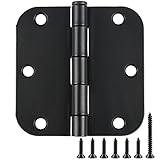
They’re usually visible on the outside and have a simpler construction. Their ‘size’ is more about the overall leaf length and the width of the leaves when closed.
The biggest misconception people have is that all hinges are interchangeable. They’re not.
A European hinge won’t directly replace a traditional butt hinge without some serious modification or a whole new door. The mounting points are different, the door cutouts are different, and the way they function is different. I once tried to swap out some old, rusty hinges on my grandma’s pantry doors for some sleek, new ones. I measured the old ones, bought what I thought were the same dimensions, and ended up with doors that wouldn’t close flush because the mortises (the recesses for the hinge) were too deep for the new hinges.
It was a mess, and I ended up having to chisel out more wood, which is always a gamble. It taught me that ‘standard’ is a relative term in the hinge world.
When people ask about cabinet hinge sizes, they’re usually thinking about two things: the physical dimensions of the hinge itself (length, width) and the type of overlay the hinge provides. Overlay refers to how much the door covers the cabinet frame. A full overlay door covers almost the entire frame, while a partial overlay leaves a gap. The hinge type dictates the maximum overlay. So, while the physical dimensions of many common hinges might seem similar, the overlay capability is a huge factor in determining compatibility. It’s like saying all screws are standard size – technically true for certain categories, but you wouldn’t use a drywall screw to hang a heavy shelf.
Decoding the Dimensions: What ‘standard’ Really Means
So, are kitchen cabinet hinges standard size? The honest answer is: yes, for specific types, but it’s not a one-size-fits-all situation. Let’s break down what people usually mean when they talk about hinge size and standards. (See Also: Are Brass Hinges Magnetic )
For the popular European-style (or concealed) hinges, the ‘standard’ usually refers to the mounting plate and the hinge cup size. The hinge cup, the part that sits in the round cutout on the door, is almost universally 35mm in diameter. This is the big one.
If you’ve got European hinges, chances are you’re dealing with 35mm cups. The depth of that cutout is also fairly standard, typically around 12-13mm.
The distance from the edge of the door to the center of that cup is called the ‘bore distance’ or ‘backset’, and this can vary, usually from 3mm to 7mm. This variation is important for achieving different overlay amounts. So, while the cup size is a big standard, the backset can change the outcome.
For traditional surface-mounted or butt hinges, ‘standard’ is more about the overall length and width of the hinge leaf. Common sizes might be 3 inches long by 3 inches wide (when open), or 4 inches by 4 inches. These are often sold by their dimensions. The thickness of the metal also plays a role in their perceived sturdiness. The screw hole pattern is usually consistent for a given size and type, but again, it’s not a universal standard across all hinge styles. You might find a 3×3 hinge from one brand that has slightly different screw hole spacing than a 3×3 from another, though this is less common than variations in other measurements.
One area where things get really specific is the overlay. As I mentioned, hinges are designed to create a certain amount of overlay.
This is usually described as full overlay, half overlay, or inset. A full overlay hinge allows the door to cover almost the entire face frame of the cabinet, giving that clean, modern look. A half overlay is common on two-door cabinets where each door covers half of the stile (the vertical frame piece). Inset doors sit flush within the cabinet frame.
Hinges are designed with specific opening angles and arm lengths to achieve these different overlays. So, even if you find a hinge with a 35mm cup, it might be designed for a full overlay, while another 35mm hinge is meant for a half overlay. They won’t be interchangeable if you’re trying to maintain the cabinet door’s original positioning.
I learned this the hard way when I was trying to match hinges for a built-in bookshelf that had flush inset doors. The original hinges were old and weirdly shaped. I found what looked like a standard inset hinge online, but the opening angle was wrong. The doors would only open about 85 degrees, not the full 180 degrees I needed to access the back of the shelves. It was a frustrating afternoon of trial and error, realizing that ‘standard’ doesn’t account for the specific way a door needs to function within its opening. You really have to consider the door’s position relative to the cabinet frame. It’s not just about the metal bits; it’s about the whole system.
What to Look for When Buying Hinges
When you’re actually shopping, don’t just grab the first thing that looks remotely like a hinge. You need to be specific. First, identify your existing hinge type if you’re replacing them.
Are they visible on the outside, or hidden? If hidden, is there a round hole in the door? If visible, what’s the shape and size of the metal leaf?
Then, measure what you have. For European hinges, measure the diameter of the round cutout (almost always 35mm) and the distance from the edge of the door to the center of that hole (backset). (See Also: Are Ikea Utrusta Hinges Blum )
Also, note the overlay required. For butt hinges, measure the length and width of the leaves. Pay attention to the screw hole pattern. Most importantly, consider the material and finish.
Brass, steel, and zinc alloy are common. Finishes like brushed nickel, oil-rubbed bronze, or matte black are popular and should match your hardware.
| Hinge Type | Key Measurement | Common Standard? | My Verdict |
|---|---|---|---|
| European/Concealed | 35mm Cup Diameter | High | The most standardized part. If you have these, 35mm is almost guaranteed. |
| European/Concealed | Backset/Bore Distance | Medium | Varies from 3mm-7mm. Important for overlay. |
| Traditional Butt Hinge | Leaf Length & Width | Medium | Standardized by common sizes (e.g., 3×3, 4×4), but hole patterns can vary slightly. |
| All Types | Overlay Requirement | Low | This is the biggest variable. Hinges are designed for specific overlays (full, half, inset). Mix this up, and your doors won’t align. |
Common Mistakes and Why They Happen
The biggest blunder people make is assuming all hinges are the same. This leads to buying the wrong type, the wrong size, or hinges that simply won’t provide the correct door overlay. I’ve seen folks try to force a full-overlay hinge onto a half-overlay application, ending up with doors that scrape each other or don’t close properly. Or they’ll buy a hinge with the right cup size but the wrong arm type, which affects how the door sits. It’s like buying a tire for your car without checking if it’s for the front or back, or if it’s the right size for the rim. It just won’t work correctly.
Another common mistake is not accounting for the material of the cabinet door and frame. If you have lightweight particleboard doors, you don’t want heavy-duty, industrial-sized hinges that will rip out the screws. Conversely, for solid wood doors, flimsy hinges will sag over time. The weight capacity of the hinge is important, though it’s not always clearly marked on consumer-grade hinges. For most kitchen cabinets, standard residential hinges are sufficient, but it’s something to keep in mind if you have exceptionally heavy doors.
Then there’s the finish. People often focus on the look and forget about the material. A beautiful matte black finish on a cheap zinc alloy might chip or fade quickly. Stainless steel or solid brass hinges tend to be more durable and resist corrosion better, especially in humid kitchen environments. I learned this with a set of “designer” hinges I bought for my bathroom vanity. They looked fantastic for about six months, then started to rust and peel. Cost me twice as much in the long run to replace them with something decent. You get what you pay for, and with hinges, that’s especially true for longevity and appearance.
People also overlook the hinge opening angle. Most standard European hinges open to about 100-110 degrees. But some applications, like corner cabinets or cabinets with pull-out shelves, might require hinges with wider opening angles (like 155 or 170 degrees) or special pivot hinges. Trying to use a standard hinge in these situations will result in limited access or doors that don’t open far enough. It’s a small detail, but it makes a huge difference in usability.
The Lsi Keywords Weave: Practical Application
When you’re tackling a cabinet refresh, understanding the ‘cabinet hinge mounting plate’ is key. This is the part that screws onto the cabinet frame, and its compatibility with the hinge arm dictates how the door attaches. Many modern hinges use a click-on system where the arm (attached to the door) snaps onto the mounting plate. This makes installation and removal much easier. If you’re replacing hinges, you need to make sure your new hinges’ mounting plates will align with your existing screw holes on the cabinet frame, or be prepared to drill new ones.
Another aspect that ties into the ‘cabinet door overlay’ is the adjustment screws. These little screws on the hinge arm are your best friends. They allow you to fine-tune the door’s position after installation. You can adjust them to move the door up or down, left or right, or in and out to achieve that perfect, gap-free alignment. This is where the ‘standard’ hinge size becomes less important if you have decent adjustment capabilities, as you can compensate for minor measurement errors. It’s why I always recommend hinges with good adjustability, especially for DIYers.
For those looking at ‘kitchen cabinet hinge repair’, often it’s not the hinge itself that’s the problem, but loose screws or worn-out mounting plates. Sometimes a simple tightening of screws is all that’s needed. If the wood around the screw hole is stripped, you can use wood filler or golf tees and wood glue to create a solid base for the screws. If the hinge mechanism itself is broken or severely worn, then replacement is usually the only viable option. Identifying the exact type and size of the original hinge is most important for a smooth repair or replacement. Don’t just assume a generic hinge will do; measure twice, buy once.
Faq: Your Burning Cabinet Hinge Questions Answered
Are Cabinet Hinges Universal?
No, cabinet hinges are not universal. While there are common standards for certain types, like the 35mm cup size for European hinges, the overall design, mounting system, overlay capability, and opening angle vary significantly between different styles and manufacturers. You must identify the specific type of hinge you have to make sure compatibility.
What Is the Standard Size for Cabinet Hinges?
For European-style (concealed) hinges, the most common standard is a 35mm diameter for the hinge cup that fits into the door. For traditional butt hinges, ‘standard’ refers more to common leaf dimensions like 3×3 inches or 4×4 inches. However, ‘standard’ also relates to the overlay the hinge is designed to achieve (full, half, inset), which is a important compatibility factor. (See Also: Are Piano Hinges Strong )
How Do I Measure Cabinet Hinges?
If you have European hinges, measure the diameter of the round hole in the door (should be 35mm) and the distance from the edge of the door to the center of that hole (backset). For traditional butt hinges, measure the length and width of each leaf when the hinge is closed. Also, note the number and spacing of screw holes. If possible, look for any manufacturer markings.
Can I Mix and Match Cabinet Hinge Brands?
Yes, you can often mix and match brands if you are using the same type of hinge and the specifications are identical, particularly the mounting plate screw pattern and the hinge arm type. However, it’s always safest to stick with the same brand and model if you’re replacing just a few hinges, to make sure a perfect match in function and appearance. Mixing brands can sometimes lead to slight differences in overlay or alignment.
What Is Overlay on Cabinet Hinges?
Overlay refers to how much the cabinet door covers the cabinet frame when closed. Full overlay doors cover almost the entire frame for a clean, modern look. Half overlay doors are common on two-door cabinets where each door covers half of the center stile. Inset doors sit flush within the cabinet frame. The type of hinge you choose dictates the overlay capability.
My First Cabinet Hinge Disaster
I was about twenty-something, living in my first apartment, and the kitchen cabinets looked like they’d survived a war. The doors were warped, the paint was peeling, and the hinges were rusty blobs of metal.
I decided I was going to ‘fix’ it. I looked up ‘cabinet hinges’ online and saw all these beautiful, sleek, European-style ones. I figured, ‘This is it!
My kitchen will look amazing!’ I measured the old hinges – they were about 3 inches long. I ordered some ‘standard’ 3-inch hinges. What I failed to grasp was that these old hinges were surface-mounted, and the new ones were concealed, meaning they needed a specific, round cutout in the door. I also didn’t realize the ‘standard’ dimensions I was looking at were for the overall length of the hinge, not the important cup size or mounting plate dimensions.
When the new hinges arrived, they looked nothing like the old ones. I tried to mount them, and of course, they didn’t fit anywhere. I ended up having to chisel out a bunch of wood to even attempt to fit the cups, and then I realized the doors themselves were too thin or too warped to properly support the new hinges and close correctly. It was a complete disaster.
I spent more on the wrong hinges and tools than the cabinet doors were probably worth. I ended up just cleaning up the old ones as best I could and living with the rusty hinges for another year. It was a brutal, expensive lesson: understand what you’re dealing with before you buy anything. The idea of whether are kitchen cabinet hinges standard size seemed so simple, but it was anything but.
Final Thoughts
So, are kitchen cabinet hinges standard size? The short answer is yes, if you’re talking about specific components like the 35mm cup for European hinges, or common dimensions for traditional ones. But ‘standard’ is a minefield if you’re not paying attention to the details. Overlay, mounting type, and even the screw hole patterns can vary enough to make a ‘standard’ hinge completely incompatible with your cabinet.
My advice? If you’re replacing hinges, take pictures of your existing ones from multiple angles. Measure everything meticulously. If you can, take an old hinge with you to the store, or at least to a place that sells hardware. Don’t just eyeball it. The few minutes you spend being thorough now will save you hours of frustration, and a fair bit of cash, down the line. Trust me on this one.