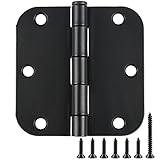
I remember the first time I was helping a buddy renovate his old house. He’d scrounged up some fancy-looking brass hinges for a cabinet, all polished and gleaming. He proudly held one up to a magnet I had in my toolbox, and… nothing. Total silence. He looked baffled. I was too, a bit. We’d both just assumed, you know, brass = metal = magnetic. Boy, were we wrong. It turns out the question ‘are brass hinges magnetic’ isn’t as straightforward as you’d think, and it led me down a rabbit hole of metallurgy and DIY fails.
Most people just grab whatever hinges look good and fit the door. But when you start digging into why some things stick to magnets and others don’t, especially when it comes to hardware you’re going to touch constantly, you start to wonder.
It’s easy to get caught up in the aesthetics of brass – that warm, classic glow is undeniably attractive. But when it comes to functionality, especially if you’re dealing with anything that might interact with magnets (think magnetic catches, or even just wanting to know if they’re solid brass), understanding their magnetic properties is surprisingly important.
The Magnetic Truth About Brass (and Why It Matters)
So, let’s cut to the chase: are brass hinges magnetic? The short, blunt answer is no, not really. And if you’re expecting a strong pull from a magnet, you’re going to be disappointed. This is where common DIY advice often falls flat. People see brass, they think ‘metal,’ and their brains automatically slot it into the ‘magnetic’ category along with steel or iron. I’ve seen plenty of advice online saying brass is magnetic because it’s a metal, and that’s just plain wrong. It’s like saying all rocks are igneous because they’re found in the ground.
The reason brass isn’t magnetic is down to its composition. Brass is an alloy, primarily made of copper and zinc.
While both copper and zinc are metals, neither of them are ferromagnetic – meaning they don’t strongly attract to magnets. Think of it this way: magnetism in materials like iron and steel comes from the way their electrons are aligned. In copper and zinc, the electrons aren’t aligned in a way that creates that strong magnetic attraction. You might get an incredibly weak, almost imperceptible pull if you use a super-powerful magnet and a highly pure sample of copper or zinc, but for all practical purposes when you’re dealing with brass hardware, it’s non-magnetic.
I learned this the hard way when I was trying to use some magnetic cabinet catches and couldn’t figure out why the brass plates weren’t holding.
This distinction is more important than you might think. If you’re installing something that relies on magnetic attraction – like a magnetic door catch, or even if you’re trying to use a magnetic stud finder to locate the framing behind your cabinet doors (which, yes, I’ve tried) – brass hinges won’t play along. You’ll be left scratching your head, wondering if your magnet is broken or if you somehow bought non-metallic hinges. I’ve wasted a good hour once trying to get a magnetic cabinet latch to stick to a brass plate, thinking I was doing something wrong, only to realize the plate wasn’t steel at all.
The common mistake is assuming all metals behave the same way magnetically. It’s a fundamental misunderstanding of metallurgy. Just because it’s shiny and hard doesn’t mean it’ll stick to a fridge magnet. For hinges, the primary concern is durability, corrosion resistance, and aesthetics. Their magnetic properties are usually a non-issue, unless you’re deliberately trying to use them with magnets. But if you’re in a situation where magnetic attraction is part of the system, you need to know your brass won’t be the magnetic component. This is why sometimes you’ll see hinges made of steel with a brass plating, or hinges designed to work alongside magnetic components made of actual ferromagnetic materials.
What to Look for: Solid Brass vs. Plated Hinges
When you’re shopping for hinges, especially if the ‘brass’ look is what you’re after, you’ll often encounter two main types: solid brass and brass-plated. Understanding the difference is key to knowing what you’re getting, and importantly, whether it will be magnetic (spoiler: neither really will be, but the underlying material matters).
Solid Brass Hinges: These are made entirely from a brass alloy. They have that beautiful, consistent color throughout, and they tend to be more durable and resistant to corrosion than plated versions. Because they are made of copper and zinc, solid brass hinges are not magnetic. Their weight and feel are substantial, which many people find indicates quality. If you tap a solid brass hinge, it has a certain resonance. These are the ones that will age gracefully, developing a lovely patina over time. I’ve got a set on my pantry door that’s been there for years, and they just get better looking. They feel good to the touch, too – smooth and cool.
Brass-Plated Hinges: These are typically made from a less expensive metal, like steel or zinc alloy, and then coated with a thin layer of brass. They offer the brass look at a lower price point.
The plating can wear off over time, especially in high-traffic areas, revealing the base metal underneath. If the base metal is steel, then that part will be magnetic. So, you might find that the edge or the screw holes of a brass-plated hinge will attract a magnet if the plating has worn away sufficiently. This is a common point of confusion. (See Also: A Box Without Hinges Key )
People test the plating, it doesn’t stick, so they assume it’s not brass. Then they test a chipped corner and it does stick, leading them to believe it’s some weird magnetic brass. It’s just the steel showing through.
Why This Matters for Magnetism: If you’re holding a magnet near a hinge and it barely sticks, or only sticks in certain spots, it’s a strong indicator that you’re dealing with brass-plated steel. A true solid brass hinge will show no magnetic attraction whatsoever. For most applications, this magnetic property (or lack thereof) is irrelevant. Hinges are designed to swing doors, not to interact with magnets. However, if you’re building something where magnetic catches are involved, or you want to be absolutely sure about the material composition for aesthetic reasons (e.g., you want the warm glow of brass without the potential for rust from steel), knowing the difference is important.
What to Look for: A Quick Comparison
| Feature | Solid Brass Hinges | Brass-Plated Hinges | Verdict (Magnetism) |
|---|---|---|---|
| Composition | Copper and zinc alloy | Base metal (steel/zinc alloy) with brass coating | N/A |
| Weight & Feel | Substantial, dense | Lighter, less dense | N/A |
| Durability | High, resists corrosion | Lower, plating can wear | N/A |
| Magnetic Attraction | None | May attract magnet if plating wears off (base metal is steel) | Solid Brass: Non-magnetic. Plated: Potentially weakly magnetic where worn. |
| Price | Higher | Lower | N/A |
When I’m choosing hardware for a high-end project, I always opt for solid brass. The longevity and the way it ages are worth the extra cash. For a quick fix or a less visible application, plated can work, but you’ve got to be aware of its limitations, especially if any magnetic interaction is a possibility.
Common Mistakes When Buying and Installing Hinges
You’d think hinges are simple, right? Screw them on, door swings. But I’ve learned over the years that there are a few common pitfalls that can turn a simple task into a frustrating ordeal, especially when you’re trying to get that perfect look or function. One of the biggest mistakes people make is assuming all hinges are created equal. This goes beyond just the material, though that’s a big part of it, and ties directly back to our magnetic question.
Mistake 1: Not Checking the Base Metal of Plated Hinges. As we discussed, if you’re buying brass-plated hinges, and you’re concerned about magnetism (maybe for a specific artistic build or a workshop jig), you absolutely MUST check what’s underneath. If you’re holding a magnet near a hinge and it weakly attracts, you’re likely dealing with a steel core. If you’re aiming for a purely non-magnetic solution, you need solid brass or a non-ferrous metal entirely.
I remember a friend who was building a custom display cabinet with magnetic closures. He bought what he thought were solid brass hinges, but they were plated steel. The cabinet doors wouldn’t close properly because the hinges were interfering with the magnetic catches. He spent ages troubleshooting the catches, only to discover the issue was the ‘brass’ hinges all along.
Mistake 2: Ignoring Hinge Finishes. Brass comes in different finishes: polished, antique, brushed, lacquered. Polished brass is bright and shiny.
Antique brass has a darker, aged look, often achieved through chemical treatments. Brushed brass has a matte, satin finish.
Lacquered brass has a clear coating to prevent tarnishing. If you buy a hinge and it doesn’t look like what you expected, it could be the finish.
And here’s a kicker: some antique brass finishes involve coatings that might contain trace amounts of iron or other magnetic elements in the finishing process, though the base brass itself is non-magnetic. This is rare, but possible if you’re dealing with very cheap, mass-produced decorative items that aren’t meant for heavy-duty use. For standard door hinges, this isn’t usually a concern, but it’s good to be aware of the variety.
Mistake 3: Forgetting Hinge Knuckles and Pins. Most hinges have a barrel-like section called the knuckle, which encloses the pin that allows the hinge to pivot. The quality of the pin and how smoothly it rotates is important for hinge operation. If a hinge feels stiff or squeaky, it’s often the pin. And while the knuckle itself is made of brass (or plated), the pin is sometimes a different material.
In some very cheap hinges, even solid brass ones, the pin might be steel for strength. If this steel pin is exposed or the knuckle is slightly worn, you might get a very faint magnetic pull on the pin itself. Again, for quality, solid brass hinges, this is almost non-existent, but it’s a factor in budget hardware. (See Also: Are Integrated Washing Machine Door Hinges Standard )
I once had a set of cheap cabinet hinges that squeaked incessantly, and when I finally took them apart, the pin was visibly rusty steel. That’s why paying a bit more for better quality hardware pays off in the long run – fewer headaches and better performance.
Mistake 4: Over-reliance on Aesthetics. You see a beautiful, ornate brass hinge and just buy it because it looks good. But does it have the right load-bearing capacity for your door? Is it the right size? Is it designed for the type of swing you need (e.g., inset vs. overlay)? These functional aspects are far more important than whether it’s magnetic or not, unless, as I’ve said, you have a specific magnetic requirement. Always check the specifications for the door weight, size, and swing direction. A beautiful hinge that can’t support the door is just… well, it’s just decorative junk.
Real-World Applications: Where Magnetism (or Lack Thereof) Might Matter
Okay, so we’ve established that solid brass hinges are generally not magnetic. But when does this actually become a problem, or even a consideration, in the real world? Most of the time, it doesn’t. You install hinges, the door opens and closes, and you forget about them. The primary function of a hinge is mechanical, not magnetic. However, there are a few niche scenarios where understanding the magnetic properties of your brass hardware can save you a headache or two.
Magnetic Catches and Latches: This is the most common situation. Many cabinet doors, especially in kitchens and bathrooms, use magnetic catches to stay closed.
These catches have a magnet, and a small metal plate on the door that the magnet attracts. If you’re installing new cabinets or replacing hardware, and you want to use magnetic catches, you absolutely need to make sure the door has a metal plate that will attract the magnet. If you mistakenly install solid brass hinges and then try to attach a magnetic catch to what you think is the door frame (and it’s solid brass), it won’t work. You’ll need to attach the metal plate to a non-brass surface, or make sure the hinge itself isn’t interfering.
Or, if you’re using a hinge that’s brass-plated steel, the worn areas might offer enough attraction for a weak magnet, but it’s unreliable. I’ve had to explain this to people who were convinced their magnetic catches were faulty, only to find they’d been trying to stick them to solid brass trim.
Decorative and Artistic Installations: For artists or DIYers creating unique pieces, the magnetic properties of materials can be part of the design. If you’re building a kinetic sculpture or a piece of furniture that uses magnets in its construction or operation, you’ll want to know precisely which components are magnetic and which are not. Using solid brass hinges in such a project means they won’t interfere with any magnetic elements you’ve incorporated elsewhere. Conversely, if you wanted a decorative brass element that did interact with magnets, you’d be looking at something like brass-plated steel, or perhaps a different non-ferrous metal alloy that has some magnetic susceptibility (though this is less common than iron/steel).
Workshop and Garage Use: In a workshop, you might find yourself using magnetic tool holders or magnetic trays to keep screws and small parts organized. If you’re building custom shelving or cabinets in your workshop, and you want to attach magnetic organizers to the doors or sides, you’ll want to know if the underlying material will hold them. Solid brass hinges on a cabinet door in your garage won’t hold a magnetic parts tray.
If you installed steel hinges (perhaps even brass-plated ones where the plating is worn), they might. This is a minor point, but for someone who likes things to be functional and integrated, it’s a detail worth knowing. I’ve got magnetic strips all over my workbench, and I often find myself sticking random metal bits to them.
If my cabinet doors were brass, that wouldn’t be an option.
Specialty Applications: In certain industrial or scientific settings, materials are chosen for very specific properties. While this is unlikely for a typical homeowner, in specialized fields, the precise magnetic susceptibility of materials is important. For instance, in areas with sensitive electronic equipment, non-magnetic materials are preferred to avoid interference. Solid brass hinges would fit this bill perfectly, whereas steel hinges would not. This is probably overkill for most of us, but it highlights that material properties, even something as seemingly minor as magnetism, can be important in specific contexts.
Contrarian Take: Why You Shouldn’t Sweat the Magnetism of Brass Hinges
Alright, I’m going to go against the grain here a bit. Everyone gets so hung up on whether brass hinges are magnetic or not, and frankly, for 99% of people, it’s a complete non-issue. I’ve spent years working with hardware, and the only time I’ve ever had to actively consider the magnetic properties of a hinge was when I was specifically asked about it, or when I was troubleshooting a magnetic catch that wasn’t working. (See Also: Are Hinges Wheeels )
Here’s the deal: hinges are meant to hinge. Their job is to allow a door to swing smoothly on its frame. They need to be strong, durable, resistant to corrosion, and aesthetically pleasing. Whether they stick to a magnet or not has zero bearing on these core functions. When people ask me, ‘Are brass hinges magnetic?’, it usually stems from a misunderstanding or a misplaced concern. They might be worried about some vague notion of ‘metal behavior’ or they might be trying to diagnose a problem with another component (like a magnetic catch) and incorrectly assume the hinge is the culprit.
My advice? Unless you are explicitly designing a system that relies on the magnetic attraction of your hinges (which is extremely rare, even for specialty applications), stop worrying about it. Focus on the things that actually matter: quality of construction, proper sizing for your door, the type of finish you want (and its durability), and whether it’s solid brass or a good quality plating if you’re on a budget. If you are installing magnetic catches, then yes, you need to make sure there’s a metal plate for the magnet to stick to, but that plate is separate from the hinge itself. The hinge is just there to make the door swing.
I’ve seen people spend hours testing hinges with magnets, getting frustrated, and ultimately buying the wrong hinges because they got sidetracked by this irrelevant detail. The common advice is to understand the material science, which is fine for engineers, but for the average homeowner or DIYer, it’s overthinking. The real ‘mistake’ isn’t that brass hinges aren’t magnetic; the mistake is letting that question distract you from what truly makes a good hinge: its mechanical integrity and how it functions with the door.
So, to reiterate: Solid brass hinges are not magnetic. Brass-plated hinges might be slightly magnetic if the underlying steel shows through. But in 99.9% of scenarios, this magnetism (or lack thereof) is completely irrelevant to the hinge’s performance. Pick hinges that look good, feel solid, operate smoothly, and are appropriate for your door. That’s the real advice.
Frequently Asked Questions (faq)
Will a Magnet Stick to Solid Brass Hinges?
No, a magnet will not stick to solid brass hinges. Solid brass is an alloy primarily of copper and zinc, neither of which are ferromagnetic. While extremely powerful magnets might induce a minuscule magnetic effect, for all practical purposes, solid brass is non-magnetic. This means you can’t rely on solid brass hinges to hold a magnetic catch or plate.
What If My Brass Hinges Feel Slightly Magnetic?
If your brass hinges feel slightly magnetic, it’s a strong indication that they are not solid brass. They are most likely brass-plated hinges, where the underlying base metal is steel or another ferromagnetic material. The plating may have worn away in certain spots, exposing the magnetic metal underneath. This is common in cheaper hardware or heavily used hinges.
Are There Any Magnetic Alloys That Look Like Brass?
While pure brass is not magnetic, some alloys that resemble brass in color might contain magnetic elements. However, for standard hardware like hinges, if it’s marketed as brass and has a magnetic pull, it’s almost certainly a brass-plated steel. True brass alloys do not exhibit significant magnetic attraction. If you need a magnetic component with a brass-like appearance, you’d typically use brass plating over a steel core.
Why Is It Important to Know If Brass Hinges Are Magnetic?
For most applications, it’s not important. However, it becomes important if you are using magnetic door catches, latches, or other systems that rely on magnetic attraction. In such cases, you need to make sure the components designed to attract magnets are made of ferromagnetic materials (like steel or iron), not solid brass. Knowing your hinges are non-magnetic helps troubleshoot why magnetic catches might not be working correctly.
Can I Use Brass Hinges with Magnetic Cabinet Catches?
You can use brass hinges with magnetic cabinet catches, but the hinges themselves won’t be the part that attracts the magnet. You’ll need to attach a small steel strike plate or metal tab to the door, and the magnet in the catch will hold onto that plate. Solid brass hinges do not have the magnetic properties to engage with the catch directly.
Final Verdict
So, to wrap it all up: are brass hinges magnetic? The straightforward answer is no, solid brass hinges are not magnetic. If you encounter brass-colored hinges that do attract a magnet, you’re likely dealing with brass-plated steel, where the underlying metal is doing the work. This distinction is important if you’re working with magnetic catches or specific artistic projects, but for the vast majority of hinge applications, the magnetic property is a non-factor. Focus on quality, fit, and finish.
My advice? Don’t get bogged down by the magnetism question unless it’s directly relevant to your project. Instead, invest your energy into selecting hinges that are built to last, operate smoothly, and complement the look of your doors and cabinets. A well-made, non-magnetic brass hinge is a thing of beauty and function.
If you’re in doubt about a hinge’s material, grab a decent magnet. If it sticks firmly, it’s probably steel or plated steel. If there’s absolutely no pull, you’re likely dealing with solid brass or another non-ferrous metal like aluminum or stainless steel (though stainless steel has varying magnetic properties depending on its alloy). This simple test can save you a lot of confusion and make sure you get the right hardware for the job.