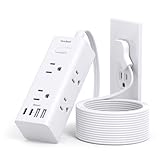
My old kitchen used to be a nightmare. Every appliance seemed to live on the opposite side of the counter from an outlet. I remember one frantic Monday morning, my fancy espresso machine blinking accusingly because the power cord barely reached the wall. I was staring at it, bleary-eyed, wondering if I was going to have to rearrange my entire kitchen just for a decent cup of coffee. This whole ordeal got me thinking about a simple question many of you probably have: are there extension cords for coffee pots?
It’s not a glamorous topic, I know. But sometimes, the most practical solutions are the most overlooked. You want that perfect cup, and you don’t want to be tethered to a single, inconvenient spot.
The Nitty-Gritty: Are Extension Cords Safe for Coffee Pots?
Okay, let’s cut to the chase. Are there extension cords for coffee pots? Yes, absolutely. You can plug your coffee maker into an extension cord just like any other household appliance. The real question isn’t if you can, but should you, and what kind of cord you should be using. I’ve seen too many people grab any old extension cord lying around – the kind they use for their garden tools or that ancient Christmas light display – and plug in their precious coffee machine. That’s a recipe for disappointment, at best, and a fire hazard, at worst.
Coffee makers, especially the fancier ones with heating elements and pumps, can draw a significant amount of power. Think about it: they’re boiling water or heating it to near-boiling temperatures. This means they need a cord that can handle that electrical load without overheating. Using an undersized cord is like trying to run a marathon with tiny little straw shoes. It just won’t cut it, and something’s going to break or melt.
The key here is gauge. Electrical wire is measured in ‘gauge,’ and the lower the number, the thicker the wire.
Thicker wire can handle more current (amperage) safely. For most coffee pots, you’ll want a cord that’s rated for at least 15 amps. A common mistake I see is people using a cord that’s rated for, say, 10 amps, because it’s all they have. That’s a huge risk.
The cord will get hot, the insulation can degrade, and you could end up with a short circuit or, in a worst-case scenario, a fire. I learned this the hard way with a cheap toaster oven years ago; it kept tripping the breaker until one day, the cord started to smell funny.
Thankfully, I unplugged it before it became a real problem, but it was a stark reminder.
Another thing to consider is the length of the cord. The longer the cord, the more resistance there is in the wire. This resistance can cause voltage to drop, meaning your coffee pot might not get the full power it needs to operate optimally. For a coffee maker, this might mean it takes longer to brew, or the coffee isn’t as hot as it should be. While a short extension cord (say, 3-6 feet) usually isn’t a big deal, if you’re looking at a 25-foot monstrosity, you need to be extra sure it’s heavy-duty enough to compensate for the length.
So, when you’re asking ‘are there extension cords for coffee pots?’, the answer is a resounding ‘yes,’ but with a massive asterisk. You need the right kind of extension cord. Don’t just grab any old cord from the garage. Look for one specifically designed for indoor use, rated for at least 15 amps, and ideally, not excessively long. The ones marketed as ‘appliance cords’ or ‘heavy-duty indoor extension cords’ are usually a good bet. And for heaven’s sake, check the cord for any damage – nicks, frays, or melted spots – before you even think about plugging anything into it. Safety first, always.
What to Look for: The ‘right’ Extension Cord for Your Brew
Alright, so you’ve confirmed that, yes, there are extension cords for coffee pots, and you’re ready to buy one. But what exactly should you be looking for to avoid the mistakes I’ve seen (and made)?
It boils down to a few key features. First and foremost is the wire gauge. I cannot stress this enough.
Most standard household circuits are 15 amps. Your coffee maker, especially a drip machine or an espresso maker with a strong heating element, can pull a good chunk of that. You need an extension cord that can handle at least 15 amps, and preferably a bit more to be safe.
The National Electrical Manufacturers Association (NEMA) uses AWG (American Wire Gauge) for this. For 15 amps, you’re generally looking at 14-gauge wire. If you can find 12-gauge, even better, as it’s thicker and can handle more power with less resistance, especially over longer distances.
The second important factor is the length. While it’s tempting to get a 25-foot cord to reach that outlet on the far side of your kitchen, longer cords mean more voltage drop. For a coffee pot, this can mean a weaker heating element or a slower pump. I’ve personally found that keeping the extension cord length to 6-10 feet is usually sufficient for most kitchen needs and minimizes potential power issues. If you absolutely must go longer, make sure you’re stepping up to a heavier gauge wire (like 12-gauge for anything over 15-20 feet). Think of it like water pressure; the longer and narrower the hose, the less pressure you get at the end. Electricity works similarly. (See Also: Can Extension Cords Short Out )
Next, consider the type of cord. You want an indoor-rated cord. Outdoor cords are built to withstand the elements but often have different specifications.
For kitchen use, a heavy-duty indoor extension cord is what you need. Look for cords with a solid, thick insulation that feels durable. Avoid cords that feel flimsy or have a thin, plastic-like coating. The connectors (the plugs and sockets) should also be sturdy and fit snugly.
A loose connection is a fire hazard. I once had a cheap power strip where the outlet for my blender felt loose. I always felt a little nervous using it, and rightly so. I swapped it out for a better quality one, and the peace of mind was worth every penny.
Also, check the number of outlets. Most coffee makers only need one plug, but if you’re looking to power multiple small appliances in one spot (like your coffee maker, grinder, and maybe a small milk frother), a power strip with surge protection can be a good option.
However, be mindful of the total amperage the power strip is rated for. Don’t overload it. A good rule of thumb is to buy a cord that has more capacity than you think you need.
If your coffee maker is rated at 1200 watts (which is about 10 amps at 120 volts), a 15-amp cord is a minimum, and a 20-amp cord would be even safer, especially if you’re using a longer length or have other devices on the same circuit.
Finally, look for certifications. In the US, you’ll want to see the UL (Underwriters Laboratories) mark. This means the product has been tested and meets safety standards. While not a guarantee against all problems, it’s a good indicator of a quality product. Some higher-end cords might also have ETL or CSA markings, which are other recognized testing laboratories. My own personal rule is to never buy an extension cord that doesn’t have a clear, reputable certification mark on it. It’s a simple visual check that can save you a lot of grief. So, when you’re out shopping, remember: gauge, length, type, connectors, and certification. Get those right, and you’re golden.
Common Mistakes and How to Avoid Them
The question ‘are there extension cords for coffee pots?’ is simple, but the execution of using one can get messy if you’re not careful.
I’ve seen people make some doozies of mistakes, and frankly, some of them are so common they’re almost understandable, but that doesn’t make them any less dangerous. The biggest one, hands down, is using the wrong wire gauge.
Like I said before, coffee makers are power-hungry beasts. They need a thick cord that can handle the electrical load. Using a thin, light-duty cord – the kind you might use for a lamp or a clock – is a huge mistake.
This is where you see cords getting hot to the touch, melting insulation, and potentially starting fires. It’s like trying to drink a milkshake through a drinking straw – it’s just not designed for that kind of flow. Always check the label on the cord for its amperage rating and the wire gauge. If it doesn’t list it clearly, or if it seems too light for the job, put it back on the shelf.
Another common blunder is overloading the circuit or the extension cord itself. Just because you can plug three things into a power strip doesn’t mean you should, especially if those things are high-wattage appliances.
Your coffee maker, toaster, and microwave on the same overloaded circuit? That’s a recipe for tripped breakers or worse. Even if the circuit can handle it, the extension cord itself has a maximum amperage rating.
Exceed that, and you’re asking for trouble. I once plugged my coffee pot, a small electric kettle, and my phone charger into a single, cheap power strip. Within minutes, the power strip felt warm, and my coffee tasted… off. I unplugged everything immediately and realized that even though they were all small appliances individually, the cumulative draw was too much for the cheap strip. (See Also: Can Extension Cords Be Use With Electric Heaters )
Always consider the total wattage or amperage you’re drawing and make sure your cord and the circuit can handle it. It’s better to have separate outlets or a higher-rated extension cord than to risk it.
Then there’s the issue of damage and wear and tear. People will use extension cords that are clearly battered – frayed wires, cracked insulation, bent prongs. They think, ‘It still works, right?’ Wrong.
That damage compromises the cord’s integrity and makes it unsafe. A frayed wire can expose the conductor, leading to shocks or short circuits.
Cracked insulation can allow moisture or debris to get in, causing corrosion or fire hazards. I’ve salvaged cords that looked like they’d been through a wrestling match with a badger.
My advice? If it looks damaged, replace it. It’s a cheap piece of safety equipment that’s not worth gambling on. Inspect your extension cords regularly, especially if they’re tucked behind appliances or furniture where they might get pinched or rubbed.
A more subtle, but still problematic, mistake is using the wrong type of cord for the location. For example, using an indoor cord outdoors is a no-no. They aren’t built to withstand moisture, UV rays, or temperature fluctuations, and they can degrade quickly, becoming a safety hazard. Conversely, while not directly applicable to coffee pots in the kitchen, using an outdoor-rated cord indoors is usually fine, but they can be bulkier and more expensive than necessary.
For kitchen counter use, stick to heavy-duty indoor cords. Also, avoid daisy-chaining extension cords – plugging one extension cord into another.
This dramatically increases the risk of overheating and voltage drop, and most safety experts strongly advise against it. If you need more reach, buy a longer, appropriate-gauge extension cord.
Finally, and this is a pet peeve of mine: forgetting about the cord when cleaning. I’ve seen coffee pots shoved back against the wall, pinching the power cord between the appliance and the backsplash. This can damage the cord over time. Always make sure there’s a little breathing room, especially around the plug and the appliance’s power input. Take the extra five seconds to position the appliance so the cord isn’t stressed. These seem like minor things, but they add up. By avoiding these common pitfalls – checking gauge, not overloading, inspecting for damage, using the right type, and avoiding daisy-chaining – you’re well on your way to using an extension cord for your coffee pot safely and effectively.
Real-World Use: Where and When an Extension Cord Makes Sense
Let’s be honest, not everyone has the luxury of a perfectly laid-out kitchen with outlets exactly where they need them. My first apartment had a tiny galley kitchen, and the only available outlet for my coffee maker was on the opposite side of the room from where I wanted it. This is precisely where the question ‘are there extension cords for coffee pots?’ becomes not just relevant, but necessary.
The most obvious scenario is limited outlet availability. This happens all the time in older homes, small apartments, or kitchens with a lot of built-in cabinetry that restricts access. If your counter space is prime real estate and the only outlet is inconveniently placed, an extension cord can liberate your coffee station. I had a situation once where the only outlet in a small kitchen was behind the refrigerator.
Seriously. I wasn’t about to pull that beast out every morning just to brew a pot. An extension cord was the only sensible solution. I made sure to get a heavy-duty one, rated for appliances, and tucked it neatly behind the fridge, only bringing the plug end out to where I needed it.
Another common use is for temporary setups. Maybe you’re hosting a party and need to set up a coffee bar in a different area of your house – the dining room, the patio, or even a spare bedroom.
In these cases, an extension cord is indispensable. You can’t assume there will be an outlet right where you want your coffee urn or drip machine to be. I’ve used them for outdoor gatherings where we set up a coffee station on a side table on the deck. Again, the key is choosing the right cord – one that’s suitable for the environment (if it’s potentially damp, you’ll need something more solid, but for a dry deck, a heavy-duty indoor cord is usually fine) and the power draw of the coffee equipment. (See Also: Are Outdoor Extension Cords 10 Or 12 Gauge )
Sometimes, it’s simply about ergonomics and workflow. I have a dedicated spot for my coffee maker on the counter, but the outlet is a bit too far away, requiring the cord to be stretched taut. This looks messy and, more importantly, puts unnecessary stress on the cord and the appliance’s connection point. Using a moderately long, heavy-duty extension cord allows me to position the coffee maker perfectly without the cord being pulled tight or dangling precariously.
It’s a small thing, but it makes the daily coffee ritual smoother and safer. I’ve also found it helpful if you have a particularly bulky coffee maker or want to keep it away from the immediate splash zone of your sink, but still need it to reach a power source.
It’s also worth noting that some people use extension cords for multiple small appliances that share a power outlet. For example, if you have a grinder and a coffee maker that you want to use simultaneously, and they’re plugged into the same dual outlet, you might need an extension cord to reach a more convenient spot or to separate them for better counter space organization. In this case, make sure the extension cord you choose can handle the combined load of both appliances. A power strip with surge protection can be a good option here, provided it’s rated appropriately.
One area where caution is advised is with high-end espresso machines. These machines often have sophisticated electronics and can draw a lot of power, especially during the heating and pump cycles.
While a proper, heavy-duty extension cord can be used, it’s generally best to plug these directly into a wall outlet if at all possible. The manufacturer’s recommendations are usually to avoid extension cords altogether for these types of machines due to the precision required in power delivery.
Always check your appliance’s manual. If it explicitly states ‘do not use extension cords,’ then you absolutely should not use one. My own experience with a mid-range espresso machine was that it ran a bit erratically on an extension cord – the pressure gauge would fluctuate more than usual.
Plugging it directly into the wall solved it. So, while extension cords have their place, always consider the specific appliance and its power demands before deciding to use one.
Choosing the Right Cord: A Quick Guide
When it comes to selecting an extension cord for your coffee pot, it’s not rocket science, but you do need to pay attention. Here’s a simple breakdown of what to prioritize:
| Feature | Why It Matters | What to Look For | My Verdict |
|---|---|---|---|
| Wire Gauge | Handles electrical current; lower number = thicker wire = safer for high-draw appliances. | 14-gauge for shorter runs (up to ~10ft) and 15-amp appliances. 12-gauge for longer runs or 20-amp appliances. | Important. Don’t skimp here. 14-gauge is the absolute minimum for most coffee makers. |
| Amperage Rating | The maximum current the cord can safely carry. | At least 15 amps. 20 amps is better for peace of mind and longer cords. | Key. Match or exceed your coffee maker’s needs. |
| Cord Length | Distance to outlet; longer cords mean more voltage drop. | As short as practical. 6-10 feet is usually ideal for kitchen counters. Avoid anything over 25 feet unless absolutely necessary and using heavy-gauge wire. | Important. Shorter is generally better for performance. |
| Type | Suitability for indoor use and durability. | Heavy-duty indoor extension cord. Look for thick, flexible insulation. | Standard. Stick to indoor-rated cords for kitchen use. |
| Connectors | Secure fit prevents loose connections and arcing. | Sturdy, well-molded plugs and sockets. Make sure a snug fit. | High importance. A loose plug is a fire hazard. |
| Certifications | Indicates safety testing by reputable organizations. | UL (Underwriters Laboratories) listed is the minimum. ETL or CSA are also good. | A must. Look for the mark. |
| Condition | Safety and longevity. | No nicks, cuts, frays, or melted spots. | Important. If it’s damaged, replace it. |
Seriously, this table summarizes it. It’s not about buying the cheapest cord; it’s about buying the right cord. A good quality extension cord designed for appliances will cost you more upfront, maybe $15-$25 for a decent 10-foot, 14-gauge cord. But that’s a small price to pay for avoiding a melted appliance, a tripped breaker, or worst, a house fire. I’ve wasted more money on cheap, flimsy cords that died after a few months than I care to admit. Now I just buy the good stuff. It saves money and hassle in the long run.
The Faq: Answering Your Burning Coffee Cord Questions
Can I Use a Regular Indoor Extension Cord for My Coffee Pot?
Yes, you can use a regular indoor extension cord, but it must be a heavy-duty one rated for the power your coffee pot requires. Standard, light-duty cords meant for lamps or electronics are not sufficient because coffee makers, especially those with heating elements, draw a lot of amperage. Always check the cord’s amperage rating and wire gauge to make sure it can safely handle the load.
Is It Safe to Plug My Coffee Maker Into a Power Strip?
It can be safe, but only if the power strip is adequately rated for the combined amperage of all devices plugged into it, including your coffee maker. Look for a power strip with surge protection and a heavy-duty construction, ideally with a rating of at least 15 amps. Avoid plugging multiple high-draw appliances into a single power strip, and never daisy-chain power strips or extension cords. Always check the power strip’s specifications against your appliance needs.
What Happens If I Use an Extension Cord That’s Too Thin for My Coffee Pot?
Using an extension cord that’s too thin (i.e., has the wrong wire gauge and insufficient amperage rating) is dangerous. The cord can overheat, melt its insulation, and potentially start a fire. It can also lead to a voltage drop, meaning your coffee maker won’t perform optimally, potentially resulting in weaker coffee or longer brew times. In severe cases, it can damage your coffee maker’s internal components.
How Long Can an Extension Cord Be for a Coffee Pot?
Ideally, keep the length as short as possible, generally under 10 feet, to minimize voltage drop and power loss. If you need a longer cord, you must use a thicker gauge wire to compensate for the increased resistance. For example, a 25-foot cord should ideally be 12-gauge to safely handle the typical power draw of a coffee maker. Always consult the extension cord’s specifications and your coffee maker’s manual.
Final Thoughts
So, to circle back to the initial query: are there extension cords for coffee pots? Yes, and they can be a lifesaver when your outlets are in the wrong place. But it’s not a free-for-all. You absolutely need to pick the right cord – one that’s heavy-duty, has the correct gauge and amperage rating, and isn’t excessively long. Think of it like choosing the right tool for a job; you wouldn’t use a butter knife to chop vegetables. The same principle applies here for safety and performance.
My experience has taught me that skimping on extension cords is a false economy. A cheap cord might save you a few bucks now, but the potential cost of damage, fire, or just a poorly performing coffee maker is far greater. Take the time to check the specs, look for those UL ratings, and inspect the cord for any signs of wear and tear. Your morning cup of coffee, and your home, will thank you for it.
Next time you’re contemplating that kitchen layout or need to set up a coffee station, remember these tips. Don’t let a misplaced outlet dictate your caffeine intake. Just make sure you’re doing it safely and correctly.