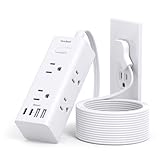
You’re staring at that tangle of cords behind the TV, or maybe you’re setting up a new workshop and need power for a tool. The question pops into your head: are there grounded extension cords? Of course, there are. Anyone who tells you a basic two-prong cord is fine for everything is either misinformed or, worse, trying to sell you something cheap that could bite you later. I’ve been there, wrestling with power needs and wondering what was actually safe and effective. Let’s cut through the noise about these vital pieces of our electrical lives.
Why You Absolutely Need a Grounded Extension Cord
Look, nobody likes buying extra cords. You just need to plug something in, right?
So when I was first setting up my little home office years ago, I grabbed what I thought was a generic extension cord from the discount store. It was cheap, it was long, and it worked… for a while. Then came the static shock when I touched my metal desk, followed by a nervous feeling every time I plugged in my monitor. That’s when I learned the hard way that not all extension cords are created equal, and the ones that matter most are the grounded ones.
The common advice to just use whatever you have lying around is, frankly, dangerous garbage. A grounded extension cord isn’t just a suggestion; it’s a safety feature that can prevent shocks and even fires.
It’s about giving electricity a safe path to follow, especially when something goes wrong.
What does ‘grounded’ even mean in this context? It means the cord has a third prong – that little round pin – which connects to the grounding wire inside your appliance and then to the earth ground in your wall outlet. This third prong is the unsung hero. If a fault occurs within an appliance, like a hot wire accidentally touching its metal casing, the electricity has a low-resistance path to flow into the ground instead of through you when you touch that casing. This quickly trips a circuit breaker or blows a fuse, cutting off the power. Without that ground, the casing becomes live, and you become the path of least resistance. Trust me, you don’t want that job.
I remember setting up a new power tool in my garage. It was a heavy-duty drill, definitely not a toy.
I used an old, two-prong extension cord because it was the only one long enough. About an hour into drilling some mounting holes for shelves, I reached out to steady the workpiece, and my knuckles brushed the metal housing of the drill. ZAP!
A jolt went through me that made my teeth rattle. I nearly dropped the drill. Shaken, I immediately unplugged everything and went out to buy a proper, heavy-gauge, three-prong grounded extension cord.
It cost maybe $25, which felt like a lot at the time, but after that shock, it felt like the best money I ever spent. That incident cemented my belief: for anything with a metal casing, high power draw, or that you might touch while it’s running, a grounded cord is a must.
How Does a Grounded Extension Cord Actually Work?
Let’s break down the magic, or rather, the engineering, behind a grounded extension cord. It all starts with the plug.
You’ve got your two flat blades, which carry the hot and neutral current to power your device. Then, there’s the third, round pin.
This isn’t just for show. This pin is connected to a wire inside the extension cord that runs all the way to the grounding terminal in the male plug that goes into your wall socket. This terminal is, in turn, connected to the grounding system of your building’s wiring.
In your home, this grounding system is ultimately connected to a grounding rod driven into the earth outside your house, or to the metal water pipes that go into the ground. (See Also: Can Extension Cords Short Out )
So, when you plug a three-prong appliance into a grounded extension cord, and that cord is plugged into a grounded outlet, you’ve created a complete circuit for safety. The ‘hot’ wire provides the power, the ‘neutral’ wire completes the normal circuit, and the ‘ground’ wire acts as an emergency exit. Think of it like a dedicated escape route for rogue electricity. If the internal wiring of your appliance develops a fault and a live wire touches the metal chassis, the electricity doesn’t just sit there waiting for you to touch it.
Instead, it flows immediately down that ground wire, through the extension cord, into your building’s grounding system, and safely into the earth. This massive surge of current is detected by your circuit breaker or fuse, which is designed to interrupt the flow of electricity very quickly, usually within milliseconds. This prevents electrocution and can also stop electrical fires from starting due to the fault.
This is a stark contrast to a two-prong (ungrounded) setup. If a fault occurs in an ungrounded appliance, the metal casing becomes energized at mains voltage. If you then touch that casing and are also in contact with something grounded (like a concrete floor, a metal sink, or even just standing on damp ground), your body becomes the path to ground. The resulting electric shock can range from a painful jolt to something far more serious, even fatal.
That’s why, for safety reasons, modern electrical codes mandate grounding for most circuits and appliances, especially those used in kitchens, bathrooms, garages, and outdoors. You’ll see that the LSI keyword ‘appliance safety’ is directly addressed here by explaining the mechanism of grounding and its role in preventing electrical hazards.
What to Look for: Features of a Good Grounded Cord
Alright, so you’re convinced you need one. But walking into an electronics store or browsing online, you’re bombarded with options. What actually separates a decent grounded extension cord from a flimsy one that’s going to give you grief?
It boils down to a few key things. First, the gauge of the wire. This is often expressed as an AWG (American Wire Gauge) number.
Lower numbers mean thicker wires. For general household use with lighter loads (lamps, chargers), a 16-gauge cord might be okay, but for anything more substantial – power tools, heaters, kitchen appliances, or running power over longer distances – you’ll want a 14-gauge or even a 12-gauge cord.
Thicker wires can handle more amperage (current) without overheating, which is a major fire hazard. Don’t skimp here; thicker is safer and more reliable, especially if you’re using it for high-draw items.
Second, the plug and receptacle ends. Look for heavy-duty construction. The prongs should feel solid, not flimsy.
The insulation around the plug should be solid. For the receptacle end (where you plug in your device), check for sturdy construction that grips the appliance’s plug firmly. Some cords have reinforced blades or molded connectors that are less likely to break. If you plan to use the cord outdoors or in damp locations, you absolutely need a cord specifically rated for that.
These will have heavier-duty, weather-resistant insulation and plugs, and often a bright color so you don’t accidentally leave them out in the rain. Many outdoor cords also have moisture-resistant seals on the receptacle. This is a prime example of ‘consumer education’ – giving you the practical knowledge to make a smart purchase.
Third, length. While you might be tempted to buy the longest cord available, longer cords have more electrical resistance, which can lead to voltage drop, especially with thinner gauge wires and high-current devices. This means your appliance might not get enough power, performing poorly or even getting damaged over time. For heavy loads or long runs, you might need to step up to an even thicker gauge wire (like 10-gauge for very high-draw, long-distance needs, though these are less common as ‘extension cords’ and more like appliance cords).
If you need to run power a significant distance, consider if a permanent electrical solution, like adding an outlet, is a better long-term investment. Here’s a quick comparison table to help you visualize: (See Also: Can Extension Cords Be Use With Electric Heaters )
| Feature | What to Look For | Verdict |
|---|---|---|
| Wire Gauge (AWG) | Lower numbers are better (16, 14, 12). 16 for light loads, 14 for moderate, 12 for heavy. | Key for preventing overheat & voltage drop. |
| Plug/Receptacle | Heavy-duty, durable plastic. Firm grip on appliance plug. Reinforced blades. | Prevents physical damage and makes sure good connection. |
| Rating | Indoor/Outdoor specific. GFCI protection for wet areas. | Mandatory for safety in specific environments. |
| Length | As short as practically possible for the intended use. | Minimizes voltage drop and potential for damage. |
| Grounding Prong | Present and intact. | The core safety feature – a must for many appliances. |
Common Mistakes and How to Avoid Them
You’d think plugging in an extension cord is simple, but I’ve seen people mess it up in ways that make my skin crawl. One of the most common and dangerous mistakes is using an extension cord that’s rated for a lower amperage than the appliance it’s powering.
You see this a lot with space heaters or power tools. The appliance draws more current than the cord can safely handle. The cord gets hot, the insulation can melt, and boom – fire hazard.
Always check the appliance’s power rating (usually in amps or watts) and match it to a cord that can handle at least that much, with a bit of buffer. My rule of thumb: if it gets warm to the touch during use, it’s too small or overloaded. Unplug it immediately.
Another biggie is overloading the extension cord itself by plugging in too many devices. Extension cords are not power strips. While some have multiple outlets, they are all drawing from the same single circuit within the cord. Daisy-chaining extension cords is also a terrible idea.
Each connection point adds resistance and potential failure points. Plus, most extension cords aren’t designed to be connected end-to-end for safety and durability. If you need more outlets or more reach, get a proper power strip with surge protection or a longer, appropriately gauged extension cord. Never, ever cut off the third prong to make a grounded plug fit into a two-prong outlet.
That third prong is there for a reason, and disabling it removes your primary safety net. If you encounter an outlet that only has two slots, you need to have an electrician assess and upgrade your wiring, or at the very least, use a GFCI adapter or outlet for safety.
This relates to the ‘common advice is wrong’ angle – cutting off the ground pin is a classic, dangerous ‘hack’ that should never be done.
I once saw a neighbor using a thin, indoor-rated extension cord to power a leaf blower outside. It was draped across their wet lawn.
The cord was frayed in a couple of spots, and the plug looked beat up. I politely (and nervously) mentioned that it wasn’t safe. They shrugged, said it was fine, and kept blowing leaves.
A few days later, their garage light flickered out, and the breaker for that circuit kept tripping. Turns out, the cheap cord had shorted somewhere, damaging the wiring in their wall. They ended up having to call an electrician for a costly repair.
That was a perfect example of using the wrong tool for the job and the resulting consequences. When it comes to ‘electrical safety’, using the correct, properly rated equipment is most important.
Real-World Use Cases and Practical Tips
So, where do you actually need a grounded extension cord? Pretty much anywhere there’s a risk of shock or where you’re powering anything beyond a simple lamp. Think workshops with power tools that have metal casings.
Kitchens, for appliances like toasters, blenders, or mixers that might get wet or have metal parts. Garages for anything from car maintenance equipment to electric tire inflators. Home offices for computers, monitors, printers, and other electronics that need stable power and have sensitive components. Even for outdoor use, like powering holiday lights (with a proper outdoor-rated cord, of course), charging an electric grill, or running a radio for a backyard party. (See Also: Are Outdoor Extension Cords 10 Or 12 Gauge )
Basically, if the appliance has a three-prong plug, it’s designed to be grounded, and you should use a grounded extension cord to connect it to power.
A few practical tips from my own battles with cords: Invest in a few different lengths. You don’t want to unroll 50 feet of cord just to power a device that’s 5 feet away.
Shorter, heavier-gauge cords are better for specific, high-draw tasks. Keep your extension cords organized. A tangled mess is not only unsightly but makes it hard to inspect them for damage. Cord wraps or large hooks can be your friend.
For outdoor use, always make sure the cord is rated for it and never leave it plugged in or exposed to the elements when not in use. Inspect your cords regularly for nicks, cuts, or worn insulation.
If you see damage, it’s time to retire the cord – don’t try to tape it up and hope for the best. Consider purchasing cords with built-in circuit breakers or GFCI protection for areas where water is a concern, like near a sink or outdoors. These add an extra layer of protection on top of the grounding.
Finally, understand the ‘gauge’ difference. I learned this the hard way. My first attempt to power a small welding machine in my garage with a standard 14-gauge cord resulted in dim lights and a tool that barely worked. After a bit of research and a trip to the hardware store for a 12-gauge cord, the difference was night and day. The machine ran at full power, and the cord stayed cool. It was a clear illustration that the wire’s thickness directly impacts performance and safety for heavier loads. This is why understanding the ‘electrical supply’ needs of your appliances is so important.
Faq: Grounded Extension Cords Explained
Can I Use a Two-Prong Extension Cord for My Three-Prong Appliance?
No, you absolutely should not. A three-prong plug includes a grounding pin that is a vital safety feature. Using a two-prong extension cord bypasses this safety mechanism, leaving you vulnerable to electric shock if a fault occurs within the appliance. It’s an unnecessary risk for a convenience that isn’t worth the potential danger.
What Happens If I Cut Off the Ground Pin From an Extension Cord?
Cutting off the ground pin is extremely dangerous. It eliminates the safety path for electricity to go to the ground in case of a fault. If a hot wire inside your appliance touches its metal casing, the casing will become energized. Without a ground, your body becomes the path for the electricity to reach the ground, leading to a potentially fatal electric shock. Never do this.
How Do I Know If an Extension Cord Is Grounded?
A grounded extension cord will have a three-prong plug on both ends (or a three-prong plug on one end and a three-slot receptacle on the other). The third prong is the round pin, which connects to the ground wire. If an extension cord only has two flat prongs, it is not grounded.
Can I Use an Indoor Extension Cord Outdoors?
It is strongly advised against using indoor extension cords outdoors. They are not designed to withstand outdoor conditions like moisture, temperature fluctuations, or UV exposure, which can degrade the insulation and create a safety hazard. Always use an extension cord specifically rated for outdoor use.
What Is the Difference Between Awg 16 and Awg 14?
AWG stands for American Wire Gauge. A lower AWG number indicates a thicker wire. Therefore, an AWG 14 cord has thicker wires than an AWG 16 cord. Thicker wires can carry more electrical current (amperage) safely without overheating and reduce voltage drop over longer distances. For heavier loads or longer runs, AWG 14 or even AWG 12 is preferable to AWG 16.
Final Verdict
So, to answer the core question: yes, there are grounded extension cords, and frankly, you should be using them for most of your power needs, especially if the appliance has a three-prong plug. It’s not just a suggestion; it’s a fundamental safety feature that protects you and your home from electrical hazards. Don’t be tempted by the cheapest option or the easiest way out; invest in a cord that’s properly rated for the job.
Take a moment to look at the cords you’re currently using. Do they have that third prong? Are they rated for the task? If you’re unsure, err on the side of caution and get a new, appropriate cord. It’s a small price to pay for peace of mind and genuine safety.
Next time you’re tempted to use an old, two-prong cord for something important, remember that shock I got. It’s a lesson learned the hard way, and one you don’t need to repeat. Always choose grounded.