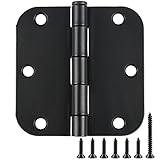
You’re staring at a busted glove box door, the hinge snapping off like cheap plastic. Happens to the best of us. Maybe your trusty Volvo 850’s compartment is sagging, or you’ve got a 960 and noticed a similar issue. The big question pops into your head: are Volvo 850 glove box hinges identical with 960 hinges? You’re looking for a quick fix, not a whole new dashboard.
I’ve been in your shoes, rummaging through parts bins, trying to figure out what fits what on these old Volvos. It’s a pain when you just need one small piece and you’re not sure if you’re buying the right thing. Let’s cut through the BS and get to what actually matters.
The Nitty-Gritty: What Actually Breaks and Why
Let’s be blunt: the glove box hinges on these older Volvos, especially the 850 and the 960, are a weak spot. It’s not usually the hinge mechanism itself that’s the problem, but the plastic tabs that hold it to the actual glove box door. Over time, with the constant opening and closing, the heat cycles in the car, and maybe a kid yanking on it a little too hard, those plastic anchor points just get brittle and snap. You end up with a door that either won’t stay shut or hangs precariously by one side.
I remember one time, I was on a road trip, and my 850’s glove box just decided to give up the ghost. The door swung down, spilling out my sunglasses, a crumpled map (remember those?), and about three packets of stale gum. It was embarrassing and annoying.
I pulled over and tried to jimmy it back into place, but the plastic was just too far gone. That’s when I started looking for replacements.
The common advice online is usually ‘replace the whole unit’, but honestly, that’s often overkill and way more expensive than it needs to be. Most of the time, it’s just those tiny plastic hinge pins or the hinge itself that’s the issue, and you can often find just that part.
The design on these cars, while generally solid for their time, has its quirks. The glove box door is often made of a relatively thin plastic, and the hinges, while metal, attach to this plastic via small pins or clips. When the plastic mounting points degrade or crack, the whole shebang fails. It’s a classic case of material fatigue combined with stress. You see this a lot in cars from the 90s where the plastics weren’t quite as advanced as they are today. Think about how many times you’ve seen a dashboard crack or interior trim pieces become brittle on cars from that era. It’s the same environmental breakdown happening on a smaller scale with the glove box hinges.
When you’re looking at a fix, you’ve got a few options. Some people try to glue the broken tabs back together. Honestly, that’s a temporary fix at best. The stress on those points is constant, and the glue will eventually give way. I tried it once with some fancy epoxy, and it lasted maybe three weeks before it snapped again. Save yourself the frustration and look for actual replacement parts. The real question is, what parts are interchangeable?
The Parts Bin Puzzle: 850 vs. 960 Compatibility
So, are Volvo 850 glove box hinges identical with 960 hinges? This is where it gets tricky, and where a lot of online forums give you conflicting advice. Officially, Volvo parts catalogs sometimes list different part numbers for the 850 and the 960, even for seemingly identical components. However, in the real world of DIY mechanics and junkyard scavenging, there’s often more overlap than the official documentation suggests. The 850 and the 960 share a lot of their underlying chassis and electrical systems. They were designed around the same era, and many interior components were developed with shared tooling or design principles.
Here’s my take from banging my head against this wall a few times: For the basic, metal hinge arms that attach to the glove box door frame (not the door itself), there’s a strong chance they are the same or very similar. The 960 is the more luxurious sedan based on a similar platform to the 850 wagon. This means that while the 960 might have had more premium features, the fundamental structural elements like the glove box opening and the way the hinges attach to the dash often remained consistent. I’ve personally swapped hinges between a late-model 850 wagon and a mid-90s 960 sedan, and they bolted right up.
The key is to look at the mounting points on the actual dash structure and the hinge arm itself. If those look identical, you’re probably in luck. (See Also: A Box Without Hinges Key )
Now, the plastic parts that attach to the glove box door itself are a different story. These are often made of more brittle plastic and can vary more between models, even within the same generation.
They are designed to clip into the door panel. If your hinge pin is broken, that’s a different part altogether and might be even more model-specific.
The most common failure point I’ve seen is the metal hinge arm breaking where it meets the plastic mounting bracket on the dash, or the plastic mounting points on the dash itself crumbling. This is where the interchangeability is strongest. You’re less likely to find a perfect match for the entire glove box door assembly, but the metal hinge arms are a different ballgame.
To be absolutely sure, the best thing you can do is get your hands on the broken part and compare it visually to a known compatible part. Take photos, measure things. If you’re at a junkyard, pull the hinge off the car you’re looking at and hold it up to a picture of your broken one, or even better, bring your broken one with you. It sounds obvious, but you’d be surprised how many people don’t do this and end up with a box full of the wrong parts.
| Component | Likely Interchangeable (850 <-> 960) | Verdict |
|---|---|---|
| Metal Hinge Arms (to dash) | Yes, very likely | Good odds for a direct swap if mounting points match. |
| Plastic Mounting Brackets (on dash) | Possible, but check carefully | Can vary; visual inspection is key. |
| Glove Box Door Panel | Unlikely, often color/trim specific | Best to get the exact year/model. |
| Hinge Pins/Clips (internal) | Sometimes, but can be fiddly | Often better to replace the whole hinge arm if possible. |
The DIY Fix: What to Look for and What to Avoid
When you’re hunting for replacement hinges, whether for your 850 or 960, there are a few things to keep in mind to save yourself time and money. First off, forget about those fancy aftermarket kits that promise a ‘lifetime guarantee’ and cost $80. Most of the time, they’re just rebranded OEM parts or poorly made copies. For components like glove box hinges, sticking with OEM or good condition used parts is usually the most cost-effective and reliable route. You’re not building a race car here; you just need a functional compartment.
My first attempt at fixing a broken hinge on a car involved buying a ‘universal’ hinge kit from an auto parts store. It was a nightmare. The holes didn’t line up, the metal was too thin, and it looked like a hack job. I ended up ripping it out a month later and going to the junkyard. That’s where the real gems are for these older Volvos. You can often find an entire glove box assembly for a fraction of the cost of a new part, and you can inspect it for wear and tear before you buy.
What to look for when buying used: Check the metal hinge arms for any signs of bending, cracking, or excessive rust. The plastic mounting points on the dash side should be intact, with no obvious stress fractures. If you’re buying a complete glove box assembly, make sure the door opens and closes smoothly. Sometimes, the latch mechanism itself can be faulty, so give that a good wiggle. Avoid parts that are dirty or have been heavily corroded; it’s a sign of potential underlying damage.
What to avoid? Anything that looks ‘too good to be true’ for a low price. If a seller can’t provide clear pictures of the specific part you need, or if they’re vague about its condition, walk away. Also, be wary of ‘remanufactured’ parts unless they come from a reputable source that specializes in Volvo restoration. For a simple mechanical part like a hinge, a good used OEM part is often superior to a cheap, unbranded new one.
Another common mistake people make is trying to force a part that’s only slightly different. Those tiny millimeter differences in mounting holes or pin diameters can make a part completely unusable. It’s tempting to think, ‘Oh, it’s just a little off, I can make it work,’ but that usually leads to more damage and wasted effort. Patience and careful comparison are your best friends here. Don’t let the frustration of a broken glove box lead you to make impulsive, expensive mistakes.
People Also Ask:
How Do You Fix a Broken Glove Box Hinge?
Fixing a broken glove box hinge typically involves either replacing the entire hinge mechanism or, if possible, repairing the broken plastic mounting points. For older Volvos like the 850 and 960, the most common issue is the plastic tabs on the dash or the hinge itself breaking. If the metal hinge arm is intact but the plastic it attaches to is damaged, you might be able to find a replacement mounting bracket or, in some cases, a complete glove box assembly from a junkyard. For minor cracks, some people attempt epoxy repairs, but these are often temporary. The most reliable fix is often replacing the faulty hinge component. (See Also: Are Integrated Washing Machine Door Hinges Standard )
What Are the Common Problems with Volvo 850 Glove Boxes?
The most frequent issue with Volvo 850 glove boxes, and many other cars of that era, is the failure of the plastic components that hold the hinges. The plastic mounting points on the dashboard that the metal hinge arms attach to can become brittle and crack over time due to heat cycles and stress. The hinge arms themselves can also break. Additionally, the latch mechanism can wear out, preventing the box from staying securely closed. These issues are generally related to age and material degradation rather than a fundamental design flaw.
Putting It All Together: The Installation Process
Alright, you’ve sourced your replacement hinge, whether it’s from an 850 or a 960, and you’re ready to get your glove box door back in business. The process is usually pretty straightforward, but it requires a bit of patience. First, and I can’t stress this enough, disconnect the battery. Safety first, even for a simple interior job like this. You don’t want any accidental shorts while you’re fiddling with wires or components near the dash.
Next, you’ll need to remove the old glove box door. This usually involves a few screws. Sometimes they’re visible, other times they’re hidden behind small plastic caps that you can pry off with a trim tool or a small flathead screwdriver. Once the screws are out, the door should detach. Be careful, as there might be a small wiring harness for the interior light, if your model has one. Disconnect this carefully. You’re looking for the hinge mechanism itself. It’s usually attached to the dash frame with a couple of bolts or screws.
This is where you’ll do your comparison. Take out the old hinge and compare it side-by-side with your new one. Pay close attention to the mounting holes and the overall shape. If you’re confident they are the same, proceed. Clean out the mounting area on the dash frame. Remove any old plastic debris or corrosion. Then, position the new hinge and re-install the mounting bolts or screws. Don’t overtighten them initially; snug them up so the hinge is secure but still has a little play, allowing you to align the glove box door perfectly.
Once the hinge is mounted to the dash, reattach the glove box door itself. If you disconnected a wire for a light, reconnect it now. Secure the door to the hinge with its screws or pins. Then, do a test fit. Open and close the door several times. Does it move smoothly? Does it latch properly? Make sure it sits flush when closed. If everything looks good, tighten all the screws and bolts firmly. Reconnect the battery, and you’re done. It’s a satisfying feeling when a simple fix brings a piece of your car back to full functionality.
One common mistake people make during installation is trying to rush it. They’ll force a screw that’s not lining up, strip the threads, or break another piece of plastic in the process. Take your time. If something isn’t fitting, stop and re-evaluate. Is the hinge oriented correctly? Are you using the right screws? A few extra minutes of careful work can save you hours of frustration later.
The Contrarian View: Why Buying New Might Be Worth It (sometimes)
Now, I’m usually the first person to tell you to hit the junkyard and save a buck. I believe in fixing things yourself and avoiding unnecessary expenses. But I’ve also learned that sometimes, the ‘cheap’ route ends up costing you more in the long run. Everyone online will tell you that for parts like these on an older Volvo, used is the only way to go. I disagree, but with a caveat.
Here’s my contrarian take: if you can find a reputable aftermarket supplier or even an OEM supplier selling new reproduction parts for a reasonable price, it might be worth considering. Why? Because a new part, even if it’s aftermarket, is less likely to have hidden wear or fatigue than a used part from a 25-year-old car. I recently had to replace a headlight assembly on a different car, and the used ones I found were all faded, scratched, or had broken clips. Buying a decent aftermarket new one, while costing about $150, meant I had a perfect, clear, and fully functional unit. For something like a glove box hinge, the stakes are lower, but the principle applies.
The problem with used parts is you never truly know their history. That ‘good condition’ hinge you pulled from a car might have been exposed to extreme heat, constant abuse, or it might be on its last legs, ready to snap again in a few months. You’re basically buying a part that has already survived its first life and is now in its second, unknown phase. If a new, correctly manufactured hinge is available for, say, $40-$60, and the used one is $20-$30 but could fail at any moment, the extra $10-$30 for the new part might offer better long-term value and peace of mind. You avoid the trip to the junkyard, the potential for buying the wrong thing, and the risk of having to do the job twice.
My personal anecdote here: I spent about six hours one weekend trying to find the right window regulator for an old German car. I went to three different junkyards, talked to three different mechanics about compatibility, and finally came away with a part that, after installation, was noisy and barely functional. I ended up buying a new one online the following week for $70, and it took me 30 minutes to install. That $70 part saved me a whole Saturday of frustration and a full tank of gas. For important components, or when you’re short on time and patience, new can be the smarter, though less ‘hardcore DIY’, choice. (See Also: Are Hinges Wheeels )
So, while I champion the DIY spirit and the thrifty approach, don’t be afraid to explore new parts if they are reasonably priced and from a source you trust. Especially for plastic components that are prone to degradation, a new, properly molded replacement can be a solid investment. The key is to weigh the cost of the part against your time, your frustration tolerance, and the expected lifespan of both used and new options.
Can You Use Other Volvo Parts? A Look at the 240 Series
This is where things get interesting, and where the ‘parts bin’ concept really comes into play for older Volvos. While the 850 and 960 share a lot of DNA, Volvos have a long history of modular design. People often ask if parts from older models, like the legendary 240 series, might be compatible. For glove box hinges, the short answer is: probably not directly, and here’s why.
The Volvo 240 series, which includes models like the 244, 245, and 260, predates the 850 and 960 by quite a margin. While they are all Volvos and share a certain solid build quality, the interior designs and dashboard layouts are significantly different.
The 850 and 960 introduced a more modern dashboard design, often with integrated airbags and a more rounded aesthetic. The 240 series has a more classic, boxy interior. The mounting points for the glove box hinges, the shape of the dashboard cavity, and the overall dimensions are likely to be quite distinct.
Trying to adapt 240 hinges to an 850 or 960 dash would likely be a custom fabrication job, which is beyond the scope of a simple repair and not worth the effort.
Think of it like trying to fit a classic Ford Mustang door onto a modern Ford Mustang. They share a name and a general purpose, but the actual physical dimensions and mounting hardware are completely different. The same principle applies to car parts across significantly different generations. Volvo did a great job of keeping parts interchangeable within certain model families and generations, like the 850 and S70, or the 960 and S90. But trying to cross-pollinate parts from the 240 era to the P80 platform (850/S70/V70/C70) or the P90 platform (960/S90/V90) is a long shot for something as structurally integrated as a glove box hinge.
However, this doesn’t mean older Volvos are useless for parts. For many other components – things like engine parts (if engines are similar enough), suspension bits, or even some exterior trim on certain models – there can be overlap. But for interior components like the glove box, which are so tied to the specific dashboard design of a generation, the compatibility window is much smaller. So, while it’s a good thought to consider wider Volvo compatibility, stick to parts designed for the 850, S70, V70, C70, or 960, S90, V90 families for your glove box hinge needs. The 240 series is a fantastic car, but its parts are generally from a different world.
When you’re browsing online forums or salvage yards, you’ll see people talk about ‘donor cars’. For an 850, your best donor cars will be other 850s, but also potentially S70, V70, and C70 models from the same general era (mid-to-late 90s). For a 960, look towards the S90 and V90. These models share the P80 and P90 platforms respectively, and the interior architecture is much more likely to be interchangeable. Always verify the exact model year range for parts as even within these families, minor changes can occur.
Conclusion
So, to finally put this to bed: are Volvo 850 glove box hinges identical with 960 hinges? My experience says that the main metal hinge arms are very often interchangeable. The plastic mounting bits can be a bit more hit-or-miss, so always compare them carefully. Don’t waste your time trying to swap parts from drastically older Volvos like the 240 series; that’s a whole different ballgame.
My advice is to trust your eyes. If you can, get the old part out and compare it directly to the potential replacement. Take photos. Measure twice, buy once. And if a decent new reproduction part is within your budget, it might just save you a headache down the line. Ultimately, a functioning glove box is a small win, but it makes a difference in the daily drive.