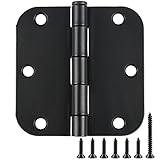
I remember the first time I tried to save a buck on hinges. Bought a pack of what looked like perfectly fine, shiny zinc-plated ones for a shed door. Within six months, they looked like they’d been pulled from the bottom of a swamp. Rust. Everywhere. It was a harsh lesson that just because something looks decent, doesn’t mean it’ll stand up to the elements. So, are zinc plated hinges rust proof? The short answer, and the one nobody really wants to hear, is a resounding no. But it’s a bit more nuanced than that, and understanding those nuances can save you a whole lot of hassle and money down the line.
This isn’t about fancy marketing jargon; it’s about what actually happens when you hang a door or a gate outside, or even in a damp garage. We’re talking about real-world use, not a sterile lab. Let’s get down to brass tacks about what you’re actually getting with zinc plating and whether it’s good enough for your project.
The Shiny Deception: What Zinc Plating Actually Does
Let’s be blunt: zinc plating on hinges is basically a sacrificial coating. Think of it like a shield for the steel underneath. The zinc is designed to corrode instead of the steel. It’s a chemical reaction, and the zinc will eventually give its life to protect the metal it’s coating. This is why, when new, zinc-plated items often have that bright, almost silvery sheen. It looks good, feels smooth, and for indoor, dry applications, it can last for a very, very long time without a speck of rust. I’ve got a set of cabinet hinges in my kitchen that have been there for fifteen years and still look pristine.
The problem arises when these hinges are exposed to moisture, salt, or corrosive elements. The zinc layer, while a good first line of defense, is finite. Once it’s used up its sacrificial duty, the underlying steel is exposed, and that’s when you start seeing those ugly orange-brown streaks of rust. This happens faster in some environments than others. Coastal areas with salty air are brutal on zinc plating. Areas with high humidity and frequent rain are also a challenge. Even road salt kicked up from cars in a driveway can accelerate the process. It’s not a magic shield; it’s a temporary one.
Many people think ‘plated’ means ‘waterproof’ or ‘rust-proof’. That’s a common misconception, and it’s the one that gets you. For basic interior use, like on a closet door or a pantry door, zinc plating is perfectly adequate and cost-effective.
You get a decent look and protection against the minimal environmental exposure. But when you move to exterior applications, or places where there’s significant moisture or chemical exposure, you’re really pushing your luck. I learned this the hard way with a garden gate that faced the full brunt of New England weather.
I thought I was being smart by saving money, but I ended up having to replace those hinges within two years. The cost of the replacements, plus the frustration, far outweighed the initial savings.
It’s a classic case of ‘buy cheap, buy twice’.
When ‘rust Proof’ Is More Like ‘rust Resistant-Ish’
Here’s the contrarian take that might ruffle some feathers: ‘rust proof’ is often a marketing term, and for zinc-plated hardware, it’s usually misleading. I’ve seen plenty of advice online saying that zinc plating is good enough for most exterior applications if you maintain it. Maintain it how? Polish it daily? Re-plate it every year? That’s not practical for most people. What they mean by ‘rust proof’ is often closer to ‘highly rust resistant for a limited time under specific conditions’. It’s a subtle but important difference. (See Also: A Box Without Hinges Key )
What you’re really looking for is durability. For hinges that need to stand up to the elements, you need something more solid.
Stainless steel hinges are the gold standard for rust resistance. They don’t rely on a coating; the entire material is resistant to corrosion. For extreme environments, like marine settings or areas with heavy industrial pollution, even stainless steel might have specific grades that perform better. But for the average homeowner dealing with outdoor gates, sheds, or deck furniture, a good quality stainless steel hinge will outlast zinc-plated ones by years, if not decades.
I remember a friend who built a beautiful outdoor kitchen and used stainless steel hinges on all the cabinets. Years later, they still looked brand new, even with the salty sea air constantly blowing in.
My own zinc-plated outdoor projects, meanwhile, were a constant battle with rust spots.
Another option to consider, especially for really tough jobs, is powder-coated hardware. A good powder coating can create a thick, durable barrier that’s much more resistant to chipping, scratching, and corrosion than thin zinc plating. It often comes in various colors, which can be a nice bonus. However, if the coating does get significantly damaged, the underlying metal can still rust. It’s a different kind of defense than zinc plating, and in many cases, it’s superior for outdoor use. The key takeaway is that ‘zinc plated’ should be a signal to investigate further, not an automatic ‘yes’ for any application that gets even a little bit wet.
Understanding Different Types of Zinc Plating
Not all zinc plating is created equal, and this is where a bit of the nuance comes in, though it rarely changes the fundamental ‘not truly rust proof’ answer. The most common type you’ll find on budget-friendly hinges is electroplated zinc. This is done by passing an electric current through a solution containing zinc ions, depositing a thin layer onto the steel. It’s cost-effective and provides that bright finish. This is the type most likely to fail quickly in harsh conditions.
Then you have hot-dip galvanizing. This is a much thicker coating where the steel parts are dipped into molten zinc. The resulting coating is much more durable and offers significantly better corrosion resistance. Hinges that are hot-dip galvanized will last much longer outdoors than electroplated ones. However, they often have a rougher, duller finish, which might not be what you’re looking for aesthetically. They can also be a bit thicker and might not fit as precisely in certain applications where tight tolerances are needed. This is a much more suitable option for outdoor use than standard zinc plating, but it’s still not entirely ‘rust proof’ – it just takes a lot longer to get there.
There’s also zinc plating with a chromate conversion coating, often called clear or blue zinc, yellow zinc, or black zinc. The chromate layer adds an extra layer of protection and can also provide different color options. Yellow zinc, in particular, was historically seen as more corrosion-resistant than clear zinc, though modern formulations have narrowed that gap. Still, these offer a slight improvement over plain electroplated zinc. For example, I used yellow zinc-plated screws for a deck railing project a few years back, and they held up reasonably well for a couple of seasons before I started seeing minor surface rust. It was better than plain zinc, but definitely not stainless steel level performance. (See Also: Are Integrated Washing Machine Door Hinges Standard )
Zinc Plated Hinges vs. Other Finishes: A Quick Comparison
| Finish | Corrosion Resistance | Appearance | Typical Use | My Verdict |
|---|---|---|---|---|
| Electroplated Zinc | Low to Moderate | Bright, shiny silver | Interior doors, cabinets | Okay for dry indoor, avoid outdoors. |
| Yellow Zinc (Chromate) | Moderate | Yellowish/gold tint | Interior/light exterior, utility | Better than plain zinc, but still not for tough jobs. |
| Hot-Dip Galvanized | High | Dull, gray, rougher | Outdoor gates, heavy-duty hardware | Good for outdoors, but can be bulky. |
| Stainless Steel | Very High | Silver, can be polished | Exterior doors, marine, high-moisture areas | The gold standard for rust-free. |
| Powder Coated | High | Various colors, smooth or textured | Outdoor furniture, gates, decorative items | Excellent durability, but prone to damage. |
As you can see from the table, while zinc plating offers some level of protection, it’s really only a strong contender for interior, dry environments. For anything exposed to the elements, you’re better off looking at more solid options.
Real-World Use Cases and Common Mistakes
Let’s talk about where people actually use these things and where they go wrong. The most common mistake is assuming that a ‘zinc-plated’ hinge from the hardware store is suitable for an exterior gate or a garden shed. You’ll see them advertised as ‘suitable for outdoor use’, which is technically true, but it’s like saying a t-shirt is ‘suitable for swimming’ – it will technically get wet, but it’s not designed for it and won’t perform well. The environment dictates the hardware. A hinge on a shed door that faces south and gets blasted by sun and rain all year needs far more solid protection than a hinge on an interior closet door that sees only occasional use and is protected from the elements.
I had a neighbor who built a beautiful screened-in porch and wanted to save money on the hinges for the screen doors. He went with the cheapest zinc-plated ones he could find. Within the first year, they were already showing rust streaks, staining the wood and looking terrible. He had to replace them with stainless steel ones. That experience was a stark reminder for me, and for him, that the upfront cost savings on hardware can easily be eaten up by the cost and effort of replacement, not to mention the aesthetic damage. It’s a false economy.
Another common mistake is not considering the type of moisture or exposure. If you live near the ocean, salt is a massive factor. Zinc plating offers very little protection against salt spray. If your project is near a road that gets salted in the winter, that’s also a highly corrosive environment. Even high humidity in a bathroom or basement can eventually break down zinc plating over time, though it will last longer than an outdoor application. People often think, ‘It’s just a bit of moisture,’ but those constant micro-exposures add up. So, if your hinge is going to be anywhere that experiences regular dampness, high humidity, or direct contact with water, you really need to reconsider zinc plating.
When Are Zinc-Plated Hinges ‘good Enough’?
So, if they’re not truly rust-proof, when are zinc-plated hinges a decent choice? Primarily, it’s for applications where the environment is controlled and dry. Think about the inside of your house: closet doors, utility room doors, pantry doors, interior cabinet doors. These are environments where the hinges are protected from rain, snow, salt, and extreme humidity. In these scenarios, electroplated zinc hinges will perform perfectly well for years, offering a cost-effective solution with a pleasing aesthetic.
I’ve also used them successfully in my workshop for lightweight doors on storage cabinets that are inside the building. Since the workshop is heated and dehumidified, the hinges don’t face any significant corrosion. They just need to swing smoothly, and the zinc plating provides that. The key is understanding the ‘environment’ of the hinge. If it’s always protected, if it doesn’t get wet, if it’s not exposed to salt or harsh chemicals, then zinc plated hinges can absolutely be ‘good enough’. They are a budget-friendly option that gets the job done in the right context.
Consider the weight of the door or gate as well. While not directly related to rust-proofing, very heavy doors put more stress on hinges, and sometimes the cheaper zinc-plated options might not be as solid in their construction. This is separate from the plating itself, but it’s worth keeping in mind that often, the lowest-cost options are compromised in multiple areas, not just the finish. If you’re building something substantial, it’s usually best to pair it with hardware that is built to last, and that often means looking beyond basic zinc plating for anything that will be exposed to the elements.
People Also Ask: Zinc-Plated Hinges and Rust
Do Zinc-Plated Hinges Rust Quickly?
Zinc-plated hinges can start to rust relatively quickly, especially in humid or coastal environments, or when exposed to salt or chemicals. While the zinc coating is designed to corrode sacrificially, this protection is finite. Once the zinc is depleted, the underlying steel will begin to rust, which can happen within months in harsh conditions. (See Also: Are Hinges Wheeels )
Can You Paint Over Zinc-Plated Hinges to Prevent Rust?
Yes, you can paint over zinc-plated hinges, and it can provide an additional layer of protection against rust, especially if you use a good quality primer and paint designed for metal. However, this is often a temporary fix. If the paint chips or scratches, exposing the zinc or steel, rust can still form underneath or start where the coating is compromised.
Are Stainless Steel Hinges Worth the Extra Cost Over Zinc-Plated Ones for Outdoor Use?
Absolutely, if you want longevity and minimal maintenance for outdoor applications. Stainless steel hinges are inherently resistant to rust and corrosion, whereas zinc-plated hinges will inevitably degrade and rust when exposed to the elements. The initial cost difference is often far less than the cost and hassle of replacing rusted-out zinc-plated hinges multiple times over the years.
How Do I Clean Rust Off Zinc-Plated Hinges?
You can clean light rust off zinc-plated hinges using a mild abrasive like steel wool or a wire brush, followed by a rust remover or a paste of baking soda and water. For more severe rust, you might need to use a stronger chemical rust remover. After cleaning, it’s important to dry the hinges thoroughly and apply a protective coating, such as a clear sealant or lubricant, to prevent immediate re-rusting. If the zinc plating is significantly compromised, the rust will likely return.
What Is the Best Alternative to Zinc-Plated Hinges for Outdoor Use?
For outdoor use, the best alternatives to zinc-plated hinges are typically stainless steel hinges, which offer superior rust and corrosion resistance. Another good option is powder-coated hardware, which provides a durable barrier against the elements. Hot-dip galvanized hinges are also a more solid choice than standard zinc-plated ones, offering better long-term protection.
Conclusion
So, to circle back to the main question: are zinc plated hinges rust proof? No. They are not. They offer a degree of protection, especially in dry, indoor environments, but they are not a magical shield against the elements. If your project is exposed to moisture, salt, or anything that can cause corrosion, you’re setting yourself up for disappointment and likely replacement down the road. It’s always better to invest a little more upfront in stainless steel or a solid powder coating for outdoor applications.
Think about the lifespan you want for your project. If it’s something temporary, or purely decorative and always indoors, then maybe zinc plated will do. But for anything functional that needs to withstand weather, it’s a gamble. I’ve learned my lesson the hard way more than once, and I’d rather spend a bit more on hardware that I know will last than deal with the frustration of rust streaks and failing hinges.
Ultimately, the choice comes down to where you’re putting them and what you expect. Understand the limitations of zinc plating, and you’ll make a much smarter decision for your project. Next time you’re at the hardware store, take a good, hard look at the environment your hinge will live in before grabbing that budget-friendly zinc option.