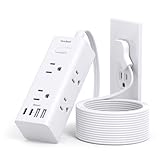
I once spent a solid hour wrestling with an extension cord that promised the moon and delivered a weak pulse. It was supposed to power my entire outdoor movie setup – projector, speakers, the works. Instead, it sputtered and died halfway through the opening credits of a perfectly good alien invasion flick. That’s the kind of headache you get when you gamble on a brand you’re not sure about. So, when people ask me, ‘are walmart extension cords good,’ my first thought isn’t about the price tag. It’s about whether they’ll leave you in the dark, literally.
We’ve all been there, staring at that wall of cords at the big box store, trying to decipher which one won’t melt, spark, or just plain fail when you need it most. Walmart’s selection is massive, and sometimes, you can snag a decent deal. But is it a gamble worth taking? Let’s cut through the noise.
Walmart Extension Cords: The Good, the Bad, and the Sparky
Look, let’s get one thing straight: Walmart sells extension cords. They sell a LOT of them. You’ll find everything from the tiny, indoor-only ones that are barely good for a lamp, to the beefy, outdoor-rated beasts that could probably power a small village.
The sheer volume means you can find something that fits your needs, but it also means the quality is all over the map. I’ve bought a few over the years, mostly out of sheer convenience because I was already there buying paper towels and that weirdly addictive cheese puff snack.
Sometimes, I lucked out and got a cord that worked just fine for its intended purpose, like running a string of patio lights or powering a leaf blower for a few hours. These were usually the heavier gauge ones, clearly labeled for outdoor use, and with a decent length. They felt substantial, the plugs were snug, and I didn’t have to worry about them overheating. Easy peasy.
But then there were the other times. The time I bought a cheap, lightweight cord for my Christmas lights, and within a week, one of the outlets became loose.
I had to jiggle it constantly, and I swear I could feel a faint warmth even when it wasn’t under heavy load. That’s the kind of thing that makes you question everything.
You start thinking, ‘Is this thing going to start a fire?’ It’s not about being a doomsayer; it’s about having seen enough shoddy electrical components over the years to be wary. I’ve had extension cords that felt flimsy from the moment I unboxed them, with thin plastic that could crack easily and prongs that bent if you looked at them too hard. These are the ones that make you wonder if they’re even rated for the wattage they claim.
My rule of thumb? If it feels too light, too flexible, or the plastic feels cheap and brittle, put it back on the shelf.
You’re not saving money if you have to replace it in a month or, worse, deal with an electrical hazard.
The biggest issue I’ve encountered with lower-end cords, not exclusively from Walmart but often found there due to the price point, is the gauge of the wire. This is what determines how much current (amperage) the cord can safely handle. If you try to run a high-draw appliance, like a space heater or a power tool, on a cord with too thin a gauge, the wires inside can overheat, melt the insulation, and potentially cause a fire.
It’s a serious risk, and it’s not worth saving a few bucks. I learned this the hard way when I tried to run my old shop vac on a thin, orange cord I’d grabbed for a song.
It got noticeably hot to the touch within minutes, and I yanked it out of the wall faster than a politician dodges a question. That experience cemented my understanding that gauge matters, and you need to match the cord to the job. So, when you’re looking at Walmart’s selection, pay close attention to the ‘gauge’ number – the lower the number, the thicker the wire and the more power it can handle.
What to Actually Look for (and Avoid)
Let’s break down what makes an extension cord ‘good,’ regardless of where you buy it, and how Walmart’s offerings stack up. First and foremost, the gauge of the wire is king. This is a must.
You’ll see numbers like 16/3, 14/3, 12/3, or even 10/3. The first number is the gauge (AWG – American Wire Gauge), and the lower it is, the thicker the wire. (See Also: Can Extension Cords Short Out )
So, 10 gauge is thicker than 12, which is thicker than 14, and so on. The ‘/3’ means it has three conductors: hot, neutral, and ground.
You almost always want the ‘/3’ for safety. For light-duty tasks like powering a Christmas tree or a small fan, a 16-gauge cord might suffice, but honestly, I’d still lean towards 14-gauge to be safe. For anything with a motor – power tools, vacuums, appliances – you need 12-gauge or even 10-gauge for high-draw items or long runs.
Next up is the length. Don’t buy a 100-foot cord if you only need 10 feet. Why? Because longer cords, especially thinner ones, have more resistance, which means voltage drop. This can make your appliances run less efficiently, and in extreme cases, damage them. Plus, longer cords are just more clutter to deal with. Conversely, don’t try to daisy-chain multiple short cords to reach a distant outlet. This is a recipe for disaster. Every connection point is a potential failure point, and the combined resistance can still lead to overheating. Always try to buy one cord of the appropriate length for the job. Walmart usually has a decent range of lengths, so you should be able to find something suitable.
The plug and socket construction is another biggie. Look for a heavy-duty, molded plug that feels solid.
The prongs should be straight and sturdy. For the socket end, you want one that grips the appliance plug firmly. A loose socket is a common failure point and can lead to intermittent power or arcing.
I’ve had cords where the socket just started to sag, and plugs would fall out. It’s annoying and unsafe. For outdoor use, you absolutely need a cord specifically rated for outdoor use. These are built with tougher, weather-resistant insulation and often have shrouded outlets to protect against moisture and debris.
Don’t skimp on this; using an indoor cord outside is a fire hazard waiting to happen. Walmart carries these, often in bright orange or yellow so you don’t accidentally run over them with a mower.
Common Mistakes People Make with Extension Cords
One of the biggest mistakes I see people make is buying the cheapest cord they can find without considering the amperage rating of the device they’re plugging into it. They see a 50-foot cord for $10 and grab it, only to discover it can’t handle their new electric grill. Always check the wattage or amperage of your appliance – it’s usually on a label on the device itself – and then match it to the cord’s rating. A thin gauge cord will overheat and can melt.
Speaking of overheating, another massive no-no is running extension cords under carpets or rugs. Not only is this a fire hazard if the cord overheats, but it also damages the cord, making it more likely to short out.
I once knew a guy who did this for his home office setup, and it took a small fire in his living room for him to learn his lesson. Just don’t do it.
People also frequently overload extension cords. They’ll plug in a space heater, a fan, and a TV all into one power strip connected to a single extension cord.
Most standard cords aren’t designed for that kind of combined load. You need to think about the total amperage being drawn. If the label on your extension cord says ’10A max,’ and you plug in devices that draw a total of 12A, you’re asking for trouble. It’s like trying to push too much water through a garden hose – something’s going to burst.
And finally, I see a lot of people using extension cords for permanent or semi-permanent wiring solutions. Extension cords are meant for temporary use. If you find yourself needing power in a location regularly, you should have an electrician install a permanent outlet.
Relying on extension cords for long-term power is a safety risk and often violates electrical codes. (See Also: Can Extension Cords Be Use With Electric Heaters )
Real-World Use: My Walmart Cord Stories
I remember one particularly hot summer day, I was doing some landscaping and needed to run a hedge trimmer. My usual heavy-duty cord was MIA (probably borrowed by a neighbor and forgotten). So, off to Walmart I went.
I grabbed what looked like a decent outdoor-rated cord, 14-gauge, 50 feet, bright orange. It felt sturdy enough. I plugged in the trimmer, which isn’t the biggest power hog, but it draws a steady amount of current. For the first hour, it was fine.
Then, I started noticing the cord was getting warm. Not hot, but definitely warm.
I finished the job quickly, feeling a little uneasy. When I coiled it up, the plastic felt noticeably softer than my other cords.
This wasn’t a catastrophic failure, but it was a clear signal that this cord was probably at or near its limit. I decided right then and there that this cord would only be used for lighter tasks from then on, like powering a string of fairy lights or my electric leaf blower for short bursts. It taught me that even an outdoor-rated cord needs to be the right gauge for the job, not just ‘outdoor-rated’.
Another time, I needed to set up a temporary sound system for a backyard party. I bought a longer cord, maybe 100 feet, again from Walmart, because I needed to reach an outlet on the far side of the house. This one was a bit thinner, probably 16-gauge, but it was only powering speakers and a small mixer, not a huge amplifier.
It worked perfectly for the party. The plugs stayed snug, there was no noticeable heat, and the sound was clear. This was a case where the lighter gauge was acceptable because the power draw was minimal. It highlighted for me that ‘good’ is relative to the task.
A cord that’s inadequate for a power tool might be perfectly fine for a Christmas light display. The key is understanding the requirements of what you’re plugging in.
However, I also have to mention the time I bought one of those super cheap, thin, ungrounded cords to power a small fan during a heatwave. It was maybe 20 feet long and felt like spaghetti. Within two days, the insulation around one of the prongs started to crack. I immediately unplugged it and threw it away.
That was a lesson learned the brutal way: if a cord feels flimsy and cheap, it probably is, and it’s not worth the risk. Walmart’s selection means you’re exposed to everything from reliable, well-made cords to absolute junk. You have to be discerning.
My advice? Stick to the brands you recognize within Walmart’s selection, and always, always check the gauge and the intended use.
Walmart Extension Cord Brands: What to Look For
When you’re navigating the aisles at Walmart, you’ll notice a few different brands often pop up. Some are store brands, others are more established names. Generally, I’ve found that sticking with brands that specialize in electrical accessories tends to yield better results.
Brands like Iron Forge, Husky (though often more tool-focused, they have some decent cords), or even some of the more generic ‘heavy duty’ lines at Walmart can be hit or miss, but paying attention to the specs is more important than the brand name itself. Look for cords that clearly state their gauge (e.g., 12/3, 14/3), their maximum amperage or wattage rating, and whether they are intended for indoor or outdoor use. The packaging should also feel solid, not flimsy.
I’ve had decent luck with cords that are specifically marketed as ‘heavy duty’ or ‘contractor grade.’ These usually come in thicker gauges and have more solid insulation. They might cost a bit more upfront, but the longevity and safety are usually worth it. (See Also: Are Outdoor Extension Cords 10 Or 12 Gauge )
If you’re looking at a cord and the packaging is vague, or it feels like paper-thin plastic, that’s usually a red flag. For outdoor use, look for those bright orange or yellow cords that are clearly marked ‘outdoor rated’ and preferably have a ground pin. The sockets should also look sealed or covered to prevent debris from getting in. Some of the higher-end cords, even at Walmart, might feature lighted ends, which can be a handy little indicator that the circuit is powered, especially if you’re running things in dim light or at night.
I’m a big fan of cords that have a polarized plug (one prong wider than the other) or a three-prong grounded plug. These are designed for safety and are a must for most appliances. Always avoid cords that only have two flat prongs unless you are absolutely certain the device you are plugging in is ungrounded and requires it, which is rare for anything modern. My personal rule of thumb is if I’m unsure, I spend a few extra dollars to get a 12-gauge or 10-gauge cord.
It’s a small price to pay for peace of mind, especially when dealing with electricity. The upfront cost of a good quality, correctly gauged extension cord is minuscule compared to the potential cost of damage to your appliance, your home, or your safety.
Extension Cord Gauge vs. Wattage: What’s the Difference?
Understanding the relationship between gauge and wattage is key to safe extension cord use. Wattage is the measure of power an appliance consumes (Watts = Volts x Amps). Amperage (Amps) is the rate of electrical current flow. The gauge of the extension cord determines how much amperage it can safely carry. A thinner gauge (higher AWG number) can carry fewer amps, while a thicker gauge (lower AWG number) can carry more amps. If you overload a cord by drawing more amps than it’s rated for, it will overheat. Overheating can melt the insulation, damage the cord, and potentially cause a fire.
So, how do you put this together? First, find the wattage or amperage rating of your appliance. This is usually on a label on the appliance itself.
Then, you need to know the voltage of your outlet, which is typically 120V in the US. You can calculate the amperage required by dividing the wattage by the voltage (Amps = Watts / Volts). For example, a 1500-watt space heater plugged into a 120V outlet draws 12.5 amps (1500 / 120 = 12.5). A 16-gauge cord is typically rated for about 10 amps, a 14-gauge for about 13 amps, and a 12-gauge for about 18 amps.
Therefore, for that 1500-watt heater, you’d absolutely need at least a 14-gauge cord, and ideally a 12-gauge cord for any significant length, to be safe.
My Extension Cord Verdicts
Here’s a quick rundown of my personal take on different types of extension cords you might find, keeping Walmart’s selection in mind. Remember, these are general guidelines, and you always need to check the specific specs for your needs.
| Type of Cord | Gauge (Typical) | Best Use | Walmart Find Verdict | My Opinion/Verdict |
|---|---|---|---|---|
| Light Duty Indoor | 16/2 or 16/3 | Lamps, small fans, holiday lights | Can be hit or miss. Look for reputable brands. | Okay for very light loads, but I prefer 14-gauge even for these. |
| Medium Duty Indoor/Outdoor | 14/3 | Power tools, small appliances, yard work | Often a good sweet spot. Look for ‘heavy duty’ labels. | My go-to for most general tasks. Reliable if you get a decent brand. |
| Heavy Duty Indoor/Outdoor | 12/3 | High-draw appliances, contractors, long runs | Available, but might cost more. Worth it for demanding jobs. | Key for anything that draws serious power. Don’t cheap out here. |
| Extra Heavy Duty | 10/3 | Generators, large welders, extreme loads | Less common at Walmart, might need a specialty store. | For serious work. If you need this, you know it. |
| Appliance Cords (specific) | Varies | Refrigerators, freezers (short, thick) | Usually specific to the appliance. Not a general extension. | Use these only when specified by the appliance manufacturer. |
Are Walmart Extension Cords Good? The Final Word
So, to circle back to the original question: are Walmart extension cords good? My honest answer is: it depends entirely on what you buy and what you use it for. Walmart carries a vast range of extension cords, from flimsy, bargain-basement options that I’d avoid like the plague, to perfectly serviceable, heavy-duty cords that can handle demanding tasks.
The key isn’t the store; it’s the specifications of the cord itself and your understanding of what those specifications mean for your specific needs. You absolutely have to be an informed consumer. Don’t just grab the cheapest one because it’s there and convenient. Check the gauge, know the wattage of your appliance, and make sure it’s rated for the environment you’re using it in, especially if it’s outdoors.
I’ve had both good and bad experiences with extension cords bought from Walmart. The ‘good’ ones have served me reliably for years, powering everything from my electric mower to outdoor party lighting. The ‘bad’ ones have either failed prematurely or made me sweat about safety. The lesson learned is that while Walmart can be a convenient place to pick up an extension cord in a pinch, you need to be diligent.
Educate yourself on wire gauge (AWG), amperage, and voltage. A 12-gauge cord for power tools, a properly rated outdoor cord for garden equipment, and a lighter-duty cord for simple indoor tasks – that’s the practical approach. If you do your homework, you can certainly find some solid, reliable extension cords at Walmart that will do the job safely and effectively.
Final Verdict
Ultimately, whether you’re asking ‘are walmart extension cords good?’ or asking about any other retailer, the power is in your hands – literally. You hold the responsibility to choose wisely. Don’t let convenience or a low price tag blind you to safety. Take a moment, check the specs, and make sure the cord you’re buying is up to the task. Your appliances, your home, and your peace of mind will thank you for it.
My advice? If you’re unsure, err on the side of caution. Opt for a thicker gauge (lower AWG number) and a cord rated for outdoor use if there’s any chance of moisture or outdoor exposure. It’s a small investment that can prevent a lot of headaches, or worse.
Next time you find yourself needing an extension cord, remember this: knowledge is power, and in this case, it’s also safety.