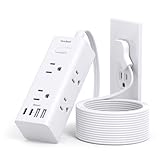
I remember staring out my kitchen window one rainy Tuesday, watching the fairy lights on the patio flicker precariously. They were plugged into a white extension cord, snaking across the damp deck. My immediate thought wasn’t about the ambiance, but a cold dread: are white extension cords waterproof? I’d always assumed white meant ‘indoor’ and black meant ‘outdoor,’ but the packaging had been frustratingly vague. It turns out, the color is about as useful as a screen door on a submarine when it comes to water resistance.
This whole ‘waterproof’ thing for extension cords is a minefield. You see them advertised for garden parties, holiday decorations, and even powering tools in the backyard, but the reality is often a lot less straightforward. Let’s cut through the marketing fluff.
The Color Myth: White vs. Black and Water
Most folks, myself included until I got burned (literally, almost), make a snap judgment based on color. White extension cords? Must be for the pristine indoors, safe from any moisture. Black ones? They look tougher, more rugged, probably ready to take on the elements. It’s a simple heuristic, and honestly, it’s usually right. However, the assumption that all white cords are inherently non-waterproof and all black ones are waterproof is a dangerous oversimplification. The real enemy isn’t the pigment; it’s the construction and the certifications.
I once bought a set of white LED string lights for my daughter’s graduation party. They came with a white cord that the box implied was okay for outdoor use. Big mistake. A sudden summer shower turned half the lights into sad, drooping strings, and I spent a good hour unplugging everything, paranoid about a short circuit. The cord itself looked fine, but the connection points and the plug were clearly not designed for anything more than a light mist. That experience taught me to ignore the color and look for specific indicators. It’s like judging a book by its cover – sometimes it works, but you’re going to miss some great stories (and potentially electrocute yourself).
The common advice is to stick to black for outdoor use, and for good reason. Black cords are more frequently manufactured with materials and designs intended to withstand UV exposure, temperature fluctuations, and, yes, moisture.
But even then, you can’t just grab any old black cord and assume it’s ready to be submerged. It’s about the gauge of the wire, the quality of the insulation, and importantly, the type of plug and receptacle connectors.
Think of it this way: a leaky faucet is bad, but a leaky faucet attached to your main water line is a catastrophe. The same applies here; a small breach in an extension cord can have significant consequences, especially when water is involved.
The important factor is the cord’s rating and construction, not its wardrobe choice.
What Actually Makes an Extension Cord Weather-Resistant?
So, if color is a red herring, what should you actually be looking for? It boils down to two main things: the cord’s construction and its rating. Forget the aesthetic; we’re talking about the guts of the thing. A truly weather-resistant extension cord, whether it’s white or black, will have thicker, more durable insulation. Look for jackets made from materials like PVC (polyvinyl chloride) or, even better, rubber. Rubber is generally more flexible in cold temperatures and offers superior resistance to abrasion and moisture compared to standard PVC.
Another key indicator is the gauge of the wire, denoted by an AWG (American Wire Gauge) number. Lower numbers mean thicker wires, which can handle more amperage and are generally more solid. For outdoor use, especially if you’re powering tools or a significant number of lights, you’ll want a 14-gauge or even a 12-gauge cord. Thicker wires also tend to have better insulation integrity, making them less susceptible to damage that could lead to water ingress.
I learned this the hard way trying to run a shop vac during a garage cleanup. I grabbed what I thought was a heavy-duty cord, but it was a 16-gauge, and it got noticeably warm. That’s a warning sign, not just for safety, but for potential failure points where water could get in if it were exposed.
The plug and receptacle ends are just as important. Look for cords with molded, not assembled, plugs. Molded plugs are typically more durable and offer a tighter seal against the elements. Some cords are specifically advertised as ‘waterproof’ or ‘weatherproof.’
Don’t just take their word for it. Look for certifications from organizations like UL (Underwriters Laboratories) or ETL (Intertek). A UL Listed or ETL Listed mark means the product has been tested and meets specific safety standards, which often include resistance to water and outdoor conditions. (See Also: Can Extension Cords Short Out )
If you see ‘SJTW’ or ‘SJTOW’ in the cord’s designation (usually printed on the jacket), that’s a good sign. ‘S’ means hard service portable cord, ‘J’ means junior hard service, ‘T’ means thermoplastic (PVC) or thermoset (rubber) insulation, and ‘W’ means weather-resistant.
The ‘O’ in SJTOW indicates oil-resistance, which often goes hand-in-hand with water resistance.
Common Mistakes: What Not to Do with Extension Cords
The biggest mistake, and one I’ve definitely made, is using indoor-rated extension cords outdoors. Period. If a cord doesn’t explicitly state it’s for outdoor use, assume it’s not. This applies to both white and black cords.
You might see those cheap, thin cords bundled with holiday lights or small appliances. They’re often marked for indoor use only.
Dragging one out into the garden, even for a few hours, is asking for trouble. Water can seep into the insulation, degrade the wires, and create a serious fire hazard or shock risk. I once saw a neighbor’s lights spark and short out during a light drizzle because they were using a cheap indoor cord. It was a stark reminder that safety isn’t optional.
Another common blunder is overloading the cord. Every extension cord has a maximum amperage rating. Exceeding this can cause the cord to overheat, damaging the insulation and making it more vulnerable to moisture ingress. It’s like trying to push a small car up a steep hill with a bicycle chain – something’s gonna snap. For outdoor power equipment like mowers or leaf blowers, you need a heavy-duty cord (lower gauge number) that can handle the required amperage. If you’re running multiple devices, add up their amperage needs and make sure the cord can handle the total load, with a little buffer for safety. Don’t guess; check the labels on your devices.
People also forget about physical damage. Kinking a cord, running over it with a lawnmower, or even just dragging it across rough surfaces can create tiny cracks in the insulation that you can’t see but water can find. It’s tempting to just yank a cord out from under something or untangle it with a bit of brute force, but that’s how you compromise its integrity. Always handle your extension cords with care, inspect them for any nicks or cuts before use, and store them properly to prevent damage. Wrapping them loosely and storing them in a dry place is far better than stuffing them into a bucket where they can get tangled and abraded.
Finally, and this is a big one that many people ignore: never try to cut or splice an extension cord to make it longer or to adapt it for a different plug. This voids any safety certifications and creates incredibly dangerous connection points that are highly susceptible to water damage. If you need a longer cord, buy one that’s already the right length and rated for the job. Trying to be clever with DIY electrical work is a recipe for disaster, especially when the weather is a factor. The common advice is clear: if it’s not factory-made and rated for your needs, don’t do it.
Real-World Use: My Patio and the Periodic Table of Cords
Let’s talk practical application. My backyard is my sanctuary, but it’s also subject to the whims of British weather – meaning damp, drizzly, and occasionally downright torrential. For years, I struggled with outdoor lighting and powering the occasional electric grill. I’d buy cords that claimed ‘outdoor use,’ only to find them corroded or sparking after a few months. It was frustrating and, frankly, a bit scary. Then I started paying closer attention to the labels and looking for specific codes.
I ended up investing in a few different types of cords, and it’s made all the difference. For general garden lighting and powering a small water feature, I use a cord marked ‘SJTW’ with a 14-gauge wire. It’s usually a dark green or black, but I’ve seen good white ones too. The ‘W’ is the key here.
These cords have held up through countless downpours and don’t show any signs of wear at the plug or the connectors. I’ve also learned that even ‘water-resistant’ cords aren’t meant to be fully submerged unless they are specifically designed for that purpose (like submersible pump cords, which are a whole different beast). My fairy lights are now plugged into an ‘outdoor-rated’ extension cord that has a drip loop, which is a simple but effective way to prevent water from running directly into the receptacle.
For anything that draws more power, like my electric grill or a hedge trimmer, I’ve upgraded to 12-gauge ‘SJOOW’ cords. The ‘OO’ in SJOOW indicates a heavier rubber insulation that’s incredibly durable and flexible. These are overkill for just running some lights, but for tools that demand consistent power and might be used in damp conditions, they’re worth every penny. I have one that’s been going strong for five years, despite being dragged through mud and left out in unexpected rain. (See Also: Can Extension Cords Be Use With Electric Heaters )
It cost me about $40 for 50 feet, which felt steep at the time, but given the peace of mind and longevity, it’s been a solid investment. Compare that to buying a new $15 cord every year that barely lasts a season, and the math works out.
Here’s a quick rundown of what those letters on the jacket often mean, just so you know what you’re looking at:
| Code | Meaning | My Verdict |
|---|---|---|
| S | Hard Service Portable Cord | Decent, but check for outdoor rating (W) |
| SJ | Junior Hard Service Portable Cord | Lighter duty, often for indoor use. Avoid for serious outdoor tasks. |
| T | Thermoplastic Insulation (PVC) | Standard, can stiffen in cold. Look for ‘W’ for weather. |
| O | Oil-Resistant Outer Jacket | Often means better durability and water resistance. Good sign. |
| W | Weather-Resistant | THIS IS THE ONE YOU WANT FOR OUTDOORS. A must. |
| OO | Oil-Resistant Outer Jacket and Oil-Resistant Inner Insulation | Top-tier durability. Great for demanding outdoor use. |
This isn’t rocket science, but it’s easy to get lost in the jargon. The takeaway is simple: look for the ‘W’ if it’s going outside, and consider the ‘OO’ for heavy-duty jobs. The color? Still largely irrelevant for actual water resistance.
How to Properly Connect Outdoor Extension Cords
Connecting outdoor extension cords requires a bit more care than just plugging them in. First, make sure both the cord and the device you’re connecting have appropriate outdoor ratings.
Second, always create a ‘drip loop.’ This is a simple U-shape formed in the cord just before the connection point, allowing water to drip off the cord before it reaches the plug and receptacle. It’s a basic physics trick that’s incredibly effective.
Third, secure the connection if possible. Some outdoor-rated cords and plugs have locking mechanisms, or you can use heavy-duty electrical tape (specifically designed for outdoor use) to wrap around the connection, providing an extra layer of protection.
Finally, keep connections lifted and off the ground whenever possible. Using cord protectors or simply propping the connection up on a piece of wood can prevent it from sitting in puddles.
A Contrarian Take: When Indoor Cords might Be Okay (rarely)
Okay, here’s where I might get some flak. Everyone, myself included until recently, says ‘never use an indoor cord outdoors.’ And for 99% of situations, that’s absolutely the correct, safest advice. However, there’s a tiny, niche exception that I’ve tested myself, and it hinges on two things: the type of indoor cord and the exposure level.
I’m talking about those thin, often white, cords that come with small electronics or string lights that are marketed as usable for ‘temporary indoor/outdoor’ decorative lighting. They usually have a clear, flexible plastic insulation and a molded plug. Now, I would NEVER use these to power a hedge trimmer or a car battery charger. But for a few hours, during a dry spell, to power a small strand of LED fairy lights that are themselves rated for outdoor use, and the connection is completely protected from any direct rain or splash?
I’ve done it. I had a set of lights I wanted to hang under a covered porch, completely out of the elements, and I didn’t have an outdoor-rated extension cord long enough. I used a heavy-duty indoor cord, made sure the plug was nowhere near any moisture, and it worked fine. The key was the complete absence of any water exposure and the low power draw.
I wouldn’t do it for more than a few hours, and I’d unplug it immediately if there was any sign of dew or a sudden change in weather.
My reasoning? These cords often have decent enough insulation for dry conditions. (See Also: Are Outdoor Extension Cords 10 Or 12 Gauge )
The danger comes from moisture degradation and the risk of shock if the insulation is compromised and then exposed to water. If you can guarantee zero water contact, and the cord is of decent quality (not the absolute cheapest, flimsiest thing you can find), the risk is significantly reduced. BUT – and this is a huge BUT – this is a calculated risk.
It’s like wearing a seatbelt in a car. You hope you never need it, but you wouldn’t drive without it. For extension cords, the ‘seatbelt’ is the outdoor rating.
My brief experiment was more about curiosity and necessity for a very specific, controlled situation. For anyone asking if they should do it? My honest, blunt answer is no. Stick to the rated cords.
It’s not worth the potential for a nasty shock or a fire, especially when so many affordable outdoor options exist.
The Faq: Clearing Up Extension Cord Confusion
Are White Extension Cords Safe for Outdoor Use?
Generally, no, unless the cord is explicitly marked as ‘outdoor-rated’ and has weather-resistant features. The color white is not an indicator of water resistance. Many white extension cords are designed solely for indoor use and can be hazardous if exposed to moisture, leading to electrical shorts, fire risks, or electric shock. Always look for certifications like UL or ETL and specific markings like ‘W’ for weather-resistant on the cord’s jacket.
Can I Use an Indoor Extension Cord Outside If It’s Not Raining?
It’s strongly advised against. While the immediate risk might be lower during dry weather, indoor cords lack the necessary insulation and protection against moisture, UV rays, and temperature fluctuations that outdoor cords are built to withstand. Even dew or condensation can compromise an indoor cord over time, making it unsafe for future use or immediate electrical hazards. Stick to cords specifically rated for outdoor use to make sure safety.
What Does the ‘w’ on an Extension Cord Mean?
The ‘W’ on an extension cord designation (like SJTW or SJOOW) stands for ‘Weather-Resistant.’ This is a important marking that indicates the cord’s insulation and jacket materials have been tested and designed to withstand outdoor conditions, including exposure to moisture, sunlight, and varying temperatures. If you intend to use an extension cord outside, make sure it has the ‘W’ designation.
How Do I Know If My Extension Cord Is Waterproof?
True ‘waterproof’ is rare for standard extension cords; most are ‘water-resistant’ or ‘weatherproof.’ Look for cords specifically designed for outdoor use with a ‘W’ rating. Check for molded plugs (rather than assembled), durable insulation materials like rubber, and certifications from recognized testing laboratories like UL or ETL. If a cord is not clearly marked for outdoor use or doesn’t have these features, it’s likely not waterproof or even sufficiently water-resistant for outdoor applications.
Is It Safe to Leave an Outdoor Extension Cord Plugged in All the Time?
Leaving an outdoor extension cord plugged in permanently, especially if it’s exposed to the elements, is generally not recommended. While outdoor-rated cords are designed for exposure, prolonged connection can still lead to wear and tear, corrosion at the connection points, or damage from pests or physical stress. It’s best practice to unplug and store outdoor extension cords when they are not in use to prolong their lifespan and maintain safety. Make sure connections are dry before plugging in or unplugging.
Final Verdict
So, to circle back to that rainy Tuesday staring out the window: are white extension cords waterproof? Almost certainly not. The color is a visual cue for indoor use, but the real story is in the cord’s rating and construction. Don’t let a vague label or a pretty white color fool you into a potentially dangerous situation. Invest in cords specifically designed for outdoor use, marked with that important ‘W,’ and you’ll save yourself a lot of headaches (and possibly a lot of danger).
Next time you’re tempted by a bargain cord that looks ‘tough enough,’ take a moment to read the fine print. Your safety, and the safety of your home, depends on it. For me, I’ve learned to trust the certifications and the heavy-duty rubber cords for anything outside. It’s a small price to pay for peace of mind when the weather turns.