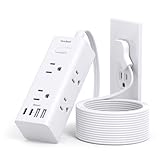
I remember staring at that distant outlet, a single sad extension cord lying coiled like a defeated snake. My project, a simple outdoor lighting setup, demanded more reach. The obvious next step, to my inexperienced mind, was to grab another cord. But what if they weren’t the same? Could 2 different extension cords together actually work, or was I about to fry something important? It’s a question many folks grapple with when that last few feet make all the difference. Most people just grab whatever they have, hoping for the best, which is a recipe for disaster. Let me tell you, I’ve been there, and it rarely ends well without a bit of thought.
Don’t Just Jam ’em Together: Why It’s Tricky
Look, the short answer to whether you can 2 different extension cords together is technically yes, you can. But that’s like saying you can eat a whole jar of pickles in one sitting – doesn’t mean you should.
The real issue isn’t just fitting the plug into the socket; it’s about what happens to the electricity trying to flow through them. Think of extension cords like pipes for water. If you connect a thin garden hose to a wide fire hose, the pressure and flow get all messed up.
Electricity is similar. Different cords have different capacities, measured in gauge (AWG). A lower AWG number means a thicker wire, which can handle more amperage (current).
Jamming a thin cord onto a thick one means that thin cord is going to get hammered. It’s going to overheat. It’s going to be a fire hazard. Seriously, I once tried to power a small electric heater with a daisy-chained setup of two lightweight indoor cords, forgetting one was way thinner than the other.
Within ten minutes, the female end of the thinner cord was warm, then hot. I yanked it out just as a faint wisp of smoke appeared. Dumbest thing I’d done in ages. Learned that day that wire gauge is king.
Gauge Matters More Than You Think
This is where most DIYers trip up. They see a plug and a socket, and their brain says ‘connected!’
But the real magic (or disaster) happens based on the wire thickness. Extension cords are rated by American Wire Gauge (AWG).
The lower the number, the thicker the wire, and the more power (amperage) it can safely carry. You see cords rated 18 AWG, 16 AWG, 14 AWG, 12 AWG, and 10 AWG. The thinner ones, like 18 or 16 AWG, are generally for light-duty stuff: lamps, small electronics, maybe a laptop charger. They’re not designed for anything that draws a lot of juice.
When you’re looking at plugging two cords together, the entire chain needs to be rated for the load you’re putting on it. If you have a 15-amp appliance, you need a cord (or a combination of cords and connections) that can handle at least 15 amps. If you connect a 14 AWG cord (good for up to 15 amps) to a 16 AWG cord (good for maybe 7-10 amps, depending on length), the 16 AWG cord becomes the bottleneck.
It’s going to get hot. It’s going to try and push more electricity through itself than it’s designed for. This isn’t just an annoyance; it’s a genuine fire risk. I’ve seen extension cords melt into a plastic mess because they were overloaded. (See Also: Can Extension Cords Short Out )
It’s not pretty, and it’s entirely avoidable with a bit of common sense and knowledge of AWG ratings. Always, always, always use the thicker gauge cord as the one closest to the appliance if you’re chaining them, and make sure the entire path can handle the load. If you have any doubt, don’t do it.
The Right Way: Couplers and Proper Connectors
So, if just jamming cords together is a bad idea (and it is), what’s the proper way to extend your reach when you absolutely need more length? This is where purpose-built connectors come into play.
They’re often called couplers or inline connectors, and they’re designed to join two cords safely. The key here is that these couplers are usually rated for specific amperages and wire gauges.
You’re not just randomly connecting any two cords; you’re using a device designed to bridge the gap. When you’re buying an extension cord coupler, make sure it’s rated for the amperage of the appliance you intend to plug into the extended circuit. Most common household circuits are 15 amps, but some appliances like window air conditioners or power tools might require 20 amps.
Buying a coupler that’s rated for less than your appliance will be asking for trouble, just like using the wrong gauge cord. I bought a heavy-duty coupler a few years back for a workshop project that involved running a long power cord for a compressor.
It was a beefy, rubberized thing that felt solid. It allowed me to join two 12-gauge cords, giving me about 100 feet of reach without any noticeable voltage drop or heat buildup. The key was that both cords and the coupler were rated for the 20-amp draw of the compressor.
It made all the difference. You can also find cord splitters or multi-tap connectors, but the same rules apply: check the amperage rating and the wire gauge capacity.
Don’t cheap out on these. A few extra bucks for a properly rated connector is far cheaper than a new appliance or a house fire.
Remember, the goal is to maintain the integrity of the electrical path. You’re not creating a weak link; you’re extending the strong one.
Common Mistakes That Fry Your Gear (and Your Cords)
People make a ton of mistakes when they try to connect extension cords, or when they use them incorrectly in the first place. The most common one, as I’ve hammered home, is ignoring the wire gauge (AWG). (See Also: Can Extension Cords Be Use With Electric Heaters )
People grab whatever cord is closest, without checking if it’s rated for the appliance or if it’s thin enough to melt. Another biggie is length. The longer an extension cord is, the more resistance it has.
Even with the correct gauge, a super long cord can cause voltage drop, meaning your appliance doesn’t get the full power it needs. This can cause motors to run hotter, electronics to malfunction, and light bulbs to dim.
When you’re joining cords, you’re effectively making the total length even longer. So, if you’re already pushing the limits with a long single cord, chaining two together, even if they’re the same gauge, might be a bad idea. The voltage drop becomes more pronounced. A third mistake is using indoor cords outdoors.
They aren’t designed to withstand moisture, extreme temperatures, or physical damage from being out in the elements. You need outdoor-rated cords, which are typically heavier-duty and have a more solid insulation. They’ll have a ‘W’ in their rating, like ‘SJTW’. If you see that, it’s generally okay for outdoor use.
Using an indoor cord outside is asking for it to degrade, get damaged, and potentially short circuit. I’ve seen people try to power Christmas lights with indoor cords in the rain. It’s a miracle I haven’t heard of more electrocutions, honestly. Finally, people often overload the outlet they’re plugging into.
Extension cords draw power from a wall receptacle. If that receptacle is already on a circuit that’s maxed out, adding more load with an extension cord setup will trip the breaker, or worse, overheat the wiring in the wall.
Always be mindful of the circuit’s total capacity.
Extension Cord Comparison Table
| Cord Type/Gauge | Typical Amperage Rating | Best For | Verdict |
|---|---|---|---|
| 18 AWG (Thin) | ~7 Amps | Lamps, clocks, small electronics, charging | Avoid for chaining or heavy loads. Burns easily. |
| 16 AWG (Medium-Thin) | ~10 Amps | Power tools (light duty), small appliances, seasonal lighting | Okay for short runs, but watch the load. Risky for chaining without careful matching. |
| 14 AWG (Medium-Heavy) | ~15 Amps | Most household appliances, power tools, medium-duty tasks | Good general-purpose choice. Safest for joining if the other cord matches and load is within limits. |
| 12 AWG (Heavy) | ~20 Amps | High-power tools, large appliances, long outdoor runs | The go-to for demanding jobs. Excellent for extension or joining when high current is needed. |
| 10 AWG (Extra Heavy) | ~30 Amps | Industrial equipment, temporary power distribution | Overkill for most home use. Very solid. |
When Joining Cords might Be Okay (and How to Do It Safely)
Alright, let’s be brutally honest. In a pinch, if you’re facing a situation where you absolutely must extend a cord and have no other option, and you understand the risks, you can try to connect two cords. But this isn’t a free-for-all.
There are very specific conditions where this is less of a gamble. First, the cords MUST be the same gauge (AWG). I cannot stress this enough.
If one is 14 AWG, the other must be 14 AWG. Don’t even think about it if they’re different. Second, the combined length shouldn’t lead to excessive voltage drop for the appliance you’re powering. (See Also: Are Outdoor Extension Cords 10 Or 12 Gauge )
If your appliance draws a lot of power (high amperage), and you’re already using two long cords, you’re asking for trouble. For example, powering a small oscillating fan for a few extra feet might be fine with two identical 16 AWG cords, but trying to run a large air conditioner or a powerful shop vac this way is a terrible idea. Third, the connection point itself needs to be protected. Don’t just leave a plug sticking out in the open.
If you’re doing this outdoors, water is your enemy. Use a waterproof connector or a junction box that’s rated for outdoor use and weather conditions. I’ve seen people use electrical tape to join cords, and frankly, that’s just begging for an accident.
A proper, insulated inline connector or coupler is really the minimum standard. Some people argue that if you’re only adding a short cord (like 5-10 feet) of the same gauge to an existing cord, it’s usually fine for moderate loads.
I tend to agree, but I’m always watching for heat and listening for any odd sounds from the appliance. My own rule of thumb: if the cord or the appliance feels unusually warm, unplug it immediately. And for anything remotely important or high-power, just buy a longer cord. It’s always the safest, most reliable bet.
Can I Connect a 10-Foot and a 25-Foot Extension Cord?
You can physically connect them, but whether you should depends entirely on their wire gauge (AWG) and the power draw of the appliance. If they are the same gauge and the combined length doesn’t cause excessive voltage drop for your device, it might be acceptable for light loads. However, it’s generally safer to use cords of the same length and gauge, or a single, longer cord designed for the task.
What Happens If I Use a Thin Extension Cord with a Thick One?
You create a bottleneck. The thinner cord will overheat because it can’t handle the amperage the thicker cord is designed to carry. This is a significant fire hazard. The thinner cord is likely to melt, damage your appliance, or even start a fire.
Is It Safe to Use Extension Cord Couplers?
Yes, if you use the correct ones. Extension cord couplers (or inline connectors) are designed to join two cords safely. Make sure the coupler is rated for the amperage of your appliance and the gauge of your cords. Always choose heavy-duty, weather-resistant couplers for outdoor use.
Will Connecting Two Cords Cause a Voltage Drop?
Yes, any time you extend a cord, especially by joining two together, you increase resistance and can experience voltage drop. This is more pronounced with longer total lengths and thinner gauge wires. Voltage drop can make appliances run less efficiently or even damage them over time.
Are There Specific Regulations on Connecting Extension Cords?
While there aren’t explicit regulations saying you can’t connect two cords in all situations, electrical codes and safety standards strongly advise against creating such configurations unless done with proper, rated connectors and maintaining the correct wire gauge and amperage capacity for the load. Safety organizations like OSHA provide guidelines for safe cord usage in workplaces, which generally discourage daisy-chaining without proper equipment.
Verdict
So, can 2 different extension cords together? The short answer is: not without careful consideration and potentially significant risk. If they’re different gauges, just don’t. If they’re the same gauge, you’re still looking at potential voltage drop and the need for a protected connection, especially outdoors. It’s never ideal, and frankly, it’s usually a sign you need a longer, single extension cord.
My advice? Save yourself the headache and the potential for a melted mess or worse. If you need more reach, invest in one quality extension cord that’s appropriately rated for your needs. It’s the cheapest insurance policy you can buy against electrical fires and damaged equipment. Seriously, don’t gamble with electricity.
Next time you find yourself short on cord length, take a breath, assess the load, and make the smart buy. Your appliances and your home will thank you.