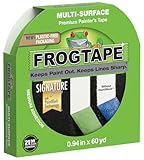
I remember staring at a roll of blue painter’s tape, wondering if this flimsy strip of paper was really going to protect my lungs. Years ago, I was helping a buddy demo an old shed, and the place was just thick with dust. Some of that dust, we later found out, was asbestos. He’d used painter’s tape to seal off a doorway, and I’d seen him do it a dozen times before. It got me thinking: can asbestos get through painters tape? It’s not a question you see answered in the DIY forums, and frankly, most advice feels a bit too corporate and not real-world enough.
The truth is, when you’re dealing with potential hazards like asbestos, you want blunt honesty, not marketing fluff. We need to talk about what actually works and what’s just snake oil. So, let’s cut through the BS and figure out if that tape is doing its job, or if it’s just giving you a false sense of security.
The Sticky Truth: How Painter’s Tape Actually Works (and Fails)
Look, painter’s tape is designed for one thing: creating clean lines when you paint. It uses a low-tack adhesive that’s supposed to stick well enough to hold its position but peel off cleanly without damaging the surface underneath, especially once the paint dries. The tape itself is usually made of a thin, crinkled paper backing. It’s not designed to be a barrier against microscopic particles, especially something as insidious as asbestos fibers. Think of it like trying to stop a mosquito with a chain-link fence; the gaps are just too big, even if they aren’t immediately obvious to the naked eye.
When you’re dealing with asbestos-containing materials (ACMs) that are disturbed – think sanding, cutting, or demolition – you’re releasing tiny, sharp fibers into the air. These fibers are incredibly small, much smaller than dust particles you can see floating in a sunbeam. Painter’s tape, even the good stuff, has pores and seams in its paper backing. These aren’t visible to us without magnification, but they’re there. Asbestos fibers, being so lightweight and tiny, can absolutely work their way through these microscopic openings. It’s not a matter of ‘if’ they can, but ‘how easily’ they can.
I learned this the hard way on a bathroom renovation in my first house. I was trying to seal off the area where I was replacing an old, cracked ceiling tile that I suspected might be asbestos.
I slapped on some good quality blue painter’s tape around the doorway, feeling pretty smug about my DIY containment. I spent about three hours in there, chipping away. A few weeks later, a hazmat guy doing a general inspection of the house casually mentioned that my tape seal was… well, pretty much useless for actual asbestos containment. He explained that those fibers are like smoke; they’ll find a way through anything not specifically designed to stop them.
That roll of tape cost me about $12, and it gave me a false sense of security that could have cost a lot more in the long run.
The adhesive itself is another story. While it might create a somewhat sealed edge, it’s not airtight. The tape’s job isn’t to create a hermetic seal. It’s flexible, it can lift, and the edges are rarely perfect. If you’re talking about a small amount of settled dust, maybe it traps some of that. But airborne, disturbed asbestos fibers? They’re far more mobile and insidious.
What You Should Be Using (and Why Painter’s Tape Isn’t It)
So, if painter’s tape isn’t the hero we thought it might be for asbestos containment, what is? The short answer is: specialized materials. When you’re dealing with asbestos, you’re entering the territory of proper abatement and containment protocols, which are a whole different ballgame than just slapping tape on a doorway. The goal isn’t just to create a barrier that looks sealed; it’s to create a barrier that is sealed against microscopic particles. This is where things like polyethylene sheeting, often 6-mil thickness or greater, come into play. This is the heavy-duty plastic you see in construction zones or remediation sites. (See Also: Does Painters Tape Rip Paint Off Walls )
This sheeting is non-porous. It doesn’t have the paper fibers or microscopic gaps that painter’s tape does. You typically seal the edges of this sheeting with specialized, high-tack construction tape or even duct tape, but the barrier material itself is the primary defense. When you’re sealing off an area, you want to cover all openings – doorways, windows, vents, any cracks or penetrations. The sheeting is taped securely to the walls, floors, and ceilings, creating a physical barrier. Then, any seams in the sheeting itself are taped. The key here is a continuous, non-porous barrier.
Beyond the sheeting, there are other containment methods. For smaller projects or specific situations, you might see negative air machines, which are basically powerful fans that pull air out of the contained area and filter it through HEPA filters, preventing fibers from escaping. Sealing off an area with just painter’s tape doesn’t achieve this negative pressure, nor does it filter the air. It’s like trying to bail out a sinking boat with a teacup when the hull is split open.
I once hired a company to remove some suspect insulation from my attic. They came in with rolls of thick plastic sheeting, stapled it up like a tent, and then used a special kind of tape that looked like industrial-strength duct tape. They also had a big machine humming away outside the house. They explained the sheeting was for containment and the machine was to make sure the air pressure inside the attic was lower than outside, so any stray particles would be pulled in rather than pushed out. My $12 roll of blue tape sat in my toolbox, utterly useless for that job.
When it comes to asbestos, the advice from actual professionals – the people who do this for a living and have to follow strict regulations – is to err on the side of extreme caution. Painter’s tape, by its very nature and design, does not meet the standards required for containing hazardous materials like asbestos. It’s a common mistake for DIYers to think a simple seal is enough, but the enemy here is microscopic and incredibly resilient.
The ‘people Also Ask’ Section: Clearing Up Confusion
I’ve seen a lot of chatter online about asbestos and home renovations, and some of the questions people ask are spot-on but often get muddled answers. Let’s tackle a few of those directly, because the confusion around this stuff can be dangerous.
Can Asbestos Fibers Pass Through Plastic Sheeting?
Generally, no, not standard polyethylene sheeting used for containment. This material is designed to be non-porous. The risk comes not from the plastic itself, but from improperly sealed seams, tears, or using sheeting that is too thin and can be easily punctured. The key is a continuous, intact barrier.
What Is the Best Tape for Asbestos Containment?
The best ‘tape’ isn’t the primary containment material; it’s used to seal the edges of containment sheeting. High-tack construction tape or specialized abatement tape is often used, but it’s applied to a proper barrier like 6-mil polyethylene. For sealing small gaps or cracks in non-porous surfaces after removal, a good quality duct tape might be considered, but it’s never the primary containment method itself.
Can Asbestos Be Sealed with Tape?
For temporary, minor sealing of settled dust on a non-porous surface, some tapes might help, but it’s not a reliable or safe method for containing airborne fibers during disturbance or for long-term sealing of ACMs. Painter’s tape is definitely not suitable. The goal of sealing is to create an impermeable barrier, which tape alone cannot achieve for airborne asbestos. (See Also: Does Masking Tape Work The Same As Painters Tape )
What Is Considered an ‘asbestos Safe’ Tape?
There isn’t really an ‘asbestos safe’ tape in the way people might imagine. The concept is about containment barriers. Tapes used in asbestos abatement are typically high-strength, high-adhesion tapes designed to create a strong, durable seal on polyethylene sheeting and other construction materials. They are part of a system, not a standalone solution. No tape is ‘safe’ on its own to seal in asbestos fibers if the underlying material is disturbed.
The Microscopic Menace: Understanding Asbestos Fiber Size
This is where the rubber meets the road on why painter’s tape fails. Asbestos fibers are microscopic. We’re talking about lengths that can be anywhere from 0.5 to 10 micrometers (µm), and their diameter is often less than 1 µm. To put that into perspective, a human hair is about 50 to 100 µm in diameter. So, a single asbestos fiber can be 100 times thinner than a human hair.
Think about the weave of painter’s tape. Even though it looks solid to your eyes, the paper fibers have spaces between them. These spaces are vastly larger than the diameter of an asbestos fiber. If you were to try and filter water through a colander to remove grains of sand, it might work. But if you tried to filter sand through a net that was designed to catch pebbles, the sand would just pass right through. Painter’s tape is like that net for asbestos fibers.
Moreover, these fibers are incredibly lightweight. Once disturbed, they can remain airborne for hours, even days. This means they don’t just fall straight down; they drift. They can easily be carried by air currents, getting pulled through tiny gaps. When you’re talking about creating a seal with painter’s tape, you’re relying on the adhesive to stick perfectly to every contour and the paper to be a solid barrier. Neither of these is true for asbestos containment.
The adhesive on painter’s tape is water-based and designed for temporary adhesion. It doesn’t form a perfect, continuous seal against a wall, especially if the surface is textured or dusty. There will be microscopic channels along the edge of the tape where air can move. And if air can move, those tiny asbestos fibers can hitch a ride. It’s a fundamental misunderstanding of particle physics and material science to believe painter’s tape offers any meaningful protection against airborne asbestos.
I saw a presentation once by an industrial hygienist who had microscopic images. He showed how even a seemingly solid material can have pores visible only under magnification. He explained that to contain asbestos, you need a material and a seal that is impermeable at the micron level. Painter’s tape, bless its heart, is about as far from that as you can get while still being called a ‘tape’.
Contrarian Opinion: What About Sealing Settled Dust?
Now, some folks might argue that for settled dust, painter’s tape can at least trap some of it on a surface. And yes, if you very carefully applied painter’s tape to a smooth, clean surface and pressed it down firmly, it might pick up a few loose fibers clinging to that surface. I’ve seen people use it to pick up glitter, which is a similar concept of sticky adhesion.
But here’s the rub: asbestos isn’t just settled dust. The danger comes when it’s disturbed and becomes airborne. If you’re disturbing ACMs, you’re creating airborne dust. If you’re trying to clean up a known asbestos dust spill with painter’s tape, you’re basically just moving the problem around and potentially making it worse by creating more friction and disturbance as you press the tape down. Plus, that tape is then contaminated and needs to be disposed of as hazardous waste, which is another layer of complication. So, while it might grab some dust, it’s a terrible tool for actual asbestos safety and can create a false sense of security that leads to bigger problems. (See Also: Does Painters Tape Peel Paint )
Painter’s Tape vs. Real Containment: A Comparison
Let’s break down why painter’s tape falls so short when compared to materials designed for hazardous substance containment. It’s not about being fancy; it’s about being effective. The stakes are too high to guess.
| Feature | Painter’s Tape | Proper Containment Sheeting (e.g., 6-mil Polyethylene) | Verdict |
|---|---|---|---|
| Material | Paper backing, acrylic adhesive | Virgin polyethylene plastic | Plastic is non-porous; paper is not. |
| Porosity | Porous (microscopic gaps in paper fibers) | Non-porous | Painter’s tape allows fiber passage. |
| Adhesive | Low-tack, water-based, designed for clean removal | Applied with separate high-tack tape or stapled | Painter’s tape adhesive isn’t for creating a hermetic seal. |
| Barrier Integrity | Low. Easily tears, lifts, and has seams. | High. Durable, puncture-resistant, forms a continuous barrier when sealed. | Sheeting provides a physical, impermeable barrier. |
| Airflow Control | None. Allows air and fiber movement. | Used in conjunction with negative air machines for controlled airflow. | Sheeting is part of a system; tape is not. |
| Intended Use | Masking paint lines, light-duty temporary holding. | Hazardous material containment, dust control, weatherproofing. | Completely different applications and performance levels. |
| Cost (Approx.) | $5 – $15 per roll | $30 – $100 per large roll (depending on thickness/size) | Initial cost of proper materials is higher, but the safety value is immeasurable. |
The table doesn’t lie. Painter’s tape is designed for a completely different purpose. It’s like using a kitchen sieve to try and catch airborne dust mites; it’s just not built for that scale or type of particle. When you’re dealing with potential asbestos exposure, you need materials that are specifically engineered to prevent the escape of microscopic fibers. This means non-porous barriers, proper sealing techniques, and often, air filtration systems. Anything less is just a gamble with your health.
Practical Tips for Actual Containment (when You Can’t Call the Pros)
Look, I get it. Sometimes you’re in a situation where you have to do what you can yourself, and calling in a full abatement team isn’t feasible or cost-effective for a very minor, localized issue (and even then, proceed with extreme caution). If you must attempt some form of containment for a small, non-friable asbestos-containing material that you’re not disturbing heavily, here’s what you should be thinking about, and remember, this is NOT a substitute for professional asbestos abatement.
- Assess the Material: First, is it definitely asbestos? If you suspect it is, and it’s friable (crumbly, easily broken), STOP. Don’t mess with it. If it’s solid and non-friable (like some floor tiles or siding), and you’re just trying to prevent dust from spreading after you’ve carefully removed it, containment is about sealing.
- Use 6-mil Polyethylene Sheeting: Buy the thickest, heaviest-duty plastic sheeting you can find – 6-mil is the minimum standard for many applications. Cover the entire area you want to isolate. Overlap seams by at least 12 inches and tape them securely.
- Seal ALL Openings: Use the polyethylene to cover doorways, windows, vents, and any other openings. Secure the edges to the walls, floors, and ceilings. This is where you’d use a strong construction tape or abatement tape, NOT painter’s tape. Press the tape firmly to create the best possible seal.
- Consider Negative Air (If Possible): This is often beyond DIY, but if you can rent or borrow a HEPA-filtered negative air machine, it significantly increases the effectiveness of your containment by pulling air into the contained space.
- Wet Methods: When working with ACMs, always try to wet the material down first. This helps keep fibers from becoming airborne. Use a pump sprayer with water and a little bit of surfactant (like dish soap) to help the water penetrate.
- Proper Cleanup and Disposal: Once the material is removed and the area is contained, clean up any dust using wet wiping and HEPA vacuums. Double-bag all waste in heavy-duty, labeled asbestos disposal bags.
The key takeaway here is that painter’s tape has absolutely zero role in any of these steps for actual asbestos containment. It’s like trying to build a boat out of tissue paper. You need solid, impermeable materials and proper sealing techniques. If you’re unsure, or if the material looks questionable, your best bet is always to consult with a certified asbestos professional.
Can Asbestos Get Through Painters Tape? The Final Word
Let’s be crystal clear. The answer to “can asbestos get through painters tape?” is a resounding, unqualified YES. It’s not a question of possibility; it’s a certainty. The paper backing of painter’s tape is inherently porous, and the microscopic size and lightweight nature of asbestos fibers mean they can easily pass through these pores. Furthermore, the adhesive is not designed to create an airtight seal, and the tape itself can be easily compromised.
Thinking painter’s tape will protect you from asbestos is like thinking a flimsy fly screen will stop a gas leak. It’s a dangerous misconception. The materials and methods used for asbestos containment are specifically designed to create impermeable barriers against particles far smaller than what painter’s tape can block. Relying on it for anything beyond masking paint lines is a gamble with your health and the health of those around you.
My own blunders have taught me that when it comes to hazardous materials, there’s no room for ‘good enough.’ You need to use the right tools for the job, and painter’s tape simply isn’t one of them. If you’re dealing with anything that might contain asbestos, do your research, use proper containment materials like thick polyethylene sheeting, and if in doubt, always, always call a professional. Don’t let a cheap roll of tape give you a false sense of security.
Final Verdict
So, to wrap this up: can asbestos get through painters tape? Absolutely. It’s not designed for it, and it will fail spectacularly if you try to use it for any kind of hazardous material containment. I’ve seen people try to cut corners, and it rarely ends well. The microscopic nature of asbestos fibers means they’ll sneak through the paper weave and around the edges of the tape like water through a sieve.
If you’re doing any kind of work where you suspect asbestos might be present, or if you’re disturbing materials that could contain it, forget the painter’s tape. Invest in proper 6-mil polyethylene sheeting, high-tack construction tape, and if you can, consider professional advice or services. Your lungs will thank you.
Don’t let a cheap roll of tape be the weakest link in your safety chain. For anything serious, always prioritize professional-grade materials and methods. It’s not worth the risk.