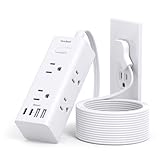
I remember the first time I realized just how much I hated running out of juice mid-project. I was trying to string up some Christmas lights, and the nearest outlet was a solid 75 feet away. My brain, buzzing with festive cheer and completely lacking in foresight, immediately went to the big box store. I grabbed two heavy-duty extension cords, figuring I’d just plug them end-to-end. Simple, right? Well, that’s how I learned that just because you can plug something in, doesn’t mean you should. So, can extension cords be connected together? The short, blunt answer is: sometimes, but you really need to know what you’re doing.
The temptation to daisy-chain cords is strong, especially when you’re in a pinch. It feels like a quick fix, a way to extend your reach without buying a whole new, longer cable. But this is where many of us, myself included, have tripped up (literally and figuratively). The common advice often dances around the issue, offering warnings without really digging into why it’s risky or when it’s actually okay.
The Shocking Truth: When It’s Okay (and When It’s Not)
Let’s get straight to it: connecting extension cords together, often called ‘daisy-chaining,’ is a technique that’s fraught with peril if done incorrectly. My first major screw-up with this involved a portable generator during a power outage. I needed to run a fridge and a few lights, but the generator was about 50 feet from the house. I had a 50-foot cord and a 25-foot cord. What could go wrong?
Everything. The connection point became a hotspot, literally. The casing started to feel warm, and I panicked. I unplugged everything and ran to the store for a single 75-foot cord, which, of course, cost me nearly $100. That little lesson taught me that electrical load and heat are not things to mess with. The common advice is to avoid it altogether, and for good reason. But is it always a fire hazard? Not necessarily. It boils down to understanding the voltage, amperage, and wattage ratings of your cords.
Think of electrical current like water flowing through pipes. The extension cord is the pipe, and the amount of current (amperage) is how much water is flowing. If you connect two undersized pipes together to carry a lot of water, the joints are going to strain, heat up, and potentially burst. Extension cords are the same. Each cord has a maximum amperage rating. When you connect two, the total load you’re pulling from the outlet has to flow through the first cord, then through the connection, then through the second cord. If either cord, or the connection point, can’t handle the full load, you’ve got a problem.
The key is that both cords you connect must be rated for the total amperage required by the devices you’re plugging in. If you’re running a single, low-power item like a string of LED lights, it’s probably not going to push enough amps to cause issues, even with two cords. But if you’re trying to power a space heater, a power tool, or multiple appliances, you’re asking for trouble.
The connection itself is another weak point. The prongs and sockets on extension cords aren’t always designed for the kind of stress and heat that can build up.
Poorly made connectors or loose connections are a recipe for arcing, which is a fancy word for electrical sparks that can melt plastic and start fires.
I once saw a buddy try to connect three cheap, thin cords to power a small electric grill at a park picnic. Within minutes, the middle cord was smoking. We were lucky it didn’t ignite. It was a stark reminder that not all extension cords are created equal, and cheaping out on them is a terrible idea. The gauge of the wire inside is most important. Thicker wires (lower gauge number) can handle more current with less resistance, meaning less heat buildup. If you’re connecting cords, you absolutely MUST make sure both are of sufficient gauge for the total load, and ideally, they should be the same gauge and type.
What to Look for: The Devil’s in the Details
So, if you’re staring down the barrel of needing more length and have a couple of extension cords sitting around, what’s the smart move? First off, forget those flimsy, indoor-only cords. If you’re even thinking about connecting cords, you should be looking at heavy-duty, outdoor-rated cords, preferably with a thick gauge wire. Look for markings like ’12 AWG’ (American Wire Gauge) for serious power needs, or ’14 AWG’ for moderate loads. The lower the AWG number, the thicker the wire. Don’t even consider connecting cords that are thinner than 16 AWG for anything other than very low-power items like a single LED string.
The wattage and amperage ratings are printed on the cord itself, usually near the plug. You need to do some basic math. Figure out the total wattage of the devices you intend to plug in. If they’re not rated in watts, find their amperage and multiply by the voltage (which is typically 120V in North America). So, if you have a tool that draws 10 amps, it’s pulling 1200 watts (10A * 120V). If you’re connecting two cords, each cord must be rated to handle at least that 1200 watts (or 10 amps). Don’t try to split the difference or assume the connection magically reduces the load.
The connection point itself is another area where people cut corners. Some specialized connector kits are designed to join cords more safely, but they’re not common for standard household extension cords. For typical cords, you’re relying on the male and female ends. They need to be clean, free of corrosion, and fit snugly. A loose connection is a major fire risk. I’ve seen cords with melted male prongs because the connection was poor, causing resistance and heat buildup right there. (See Also: Can Extension Cords Short Out )
Another thing to consider is the length. The longer an extension cord gets, the more resistance there is in the wire, even if it’s a thick gauge. This means that the voltage can drop over distance, and heat can increase. So, connecting two 50-foot cords to make a 100-foot run will generate more heat and voltage drop than a single, purpose-built 100-foot cord of the same gauge. It’s not ideal. The Electrical Safety Foundation International (ESFI) often publishes guidance on safe electrical practices, and while they strongly advise against connecting cords, their materials emphasize using the correct gauge for the intended load and distance.
Here’s a little table that tries to make sense of it, but remember, this is for informational purposes and connecting cords is generally discouraged:
| Cord Gauge (AWG) | Max Amperage (Approx.) | Max Wattage (Approx. @ 120V) | Suitability for Connecting | My Verdict |
|---|---|---|---|---|
| 18 AWG | 7-10 Amps | 840-1200 Watts | Very Low Power ONLY (e.g., single string lights) | Avoid. Too thin for almost everything. |
| 16 AWG | 10-13 Amps | 1200-1560 Watts | Light Duty (e.g., small tools, fans) | Risky. Only if total load is well below max for both cords. |
| 14 AWG | 13-15 Amps | 1560-1800 Watts | Medium Duty (e.g., power tools, small appliances) | Potentially Okay, but buy good quality cords. |
| 12 AWG | 15-20 Amps | 1800-2400 Watts | Heavy Duty (e.g., generators, larger tools) | Best bet for connecting if absolutely necessary. |
The ‘My Verdict’ column is where my practical, sometimes-burned hands come in. I’ve learned that skimping on wire gauge is a fast track to disappointment and potential danger. If you have to connect cords, using two 12-gauge cords to run a tool that draws 15 amps is far safer than trying it with two 16-gauge cords.
Common Mistakes and Why They’re So Dangerous
The most common mistake, and one I made myself early on, is assuming that if the plug fits, it’s fine. You look at your two cords, they have the same number of prongs, and you jam them together. Boom. Done. Except, no. This is like saying a garden hose can carry high-pressure water just because you can attach it to the spigot. The cord’s construction, its gauge, and its insulation matter. Those cheap, dollar-store extension cords? They’re often made with incredibly thin wire, poor-quality insulation, and flimsy connectors. They’re designed for minimal load, maybe running a lamp for a few hours, not for powering anything substantial, and certainly not for being linked together.
Another huge error is ignoring the total load. People see a 15-amp cord and think, ‘Okay, I can run 15 amps.’ Then they connect it to another 15-amp cord and think, ‘Great, now I can run 30 amps!’ That’s absolutely not how it works. The total amperage from your devices flows through each cord in the chain. If your tool draws 10 amps, both cords have to handle that 10 amps. If one cord is only rated for 8 amps, it becomes the bottleneck. It will overheat, potentially melt its insulation, and could start a fire. I’ve seen the charred remains of outlets and cords from this exact scenario. It’s not pretty.
Overheating is the silent killer. You won’t always see smoke or sparks immediately. Sometimes, it’s a slow burn.
The connection gets warm, then hotter. The plastic casing softens. The insulation degrades.
Eventually, a short circuit occurs, or the wires melt through, and you have a fire. This often happens when the cords are used for extended periods.
That little bit of warmth you felt earlier? It’s compounded over hours. I learned this the hard way while running some outdoor Christmas lights with a slightly undersized cord.
It felt a bit warm to the touch, but I figured it was just the cold weather making it seem that way. A few days later, I found a melted section near the plug. Thankfully, it hadn’t caught fire, but it was a clear warning sign.
People also forget about the environment. Is the connection point exposed to moisture? Is it buried under leaves? Is it going to get stepped on repeatedly by machinery or people? Even a ‘heavy-duty’ cord can be damaged by sharp edges, kinks, or being run over. Connecting cords creates an additional point of failure, and that point is often less protected than the original ends. Moisture is a particularly nasty culprit for extension cords. It can get into the connection points, cause corrosion, and create short circuits or ground faults, which are dangerous. (See Also: Can Extension Cords Be Use With Electric Heaters )
Then there’s the sheer laziness of not reading the labels. Every legitimate extension cord has its specifications printed on it. People glance at it, see ‘extension cord,’ and move on. But the gauge, the voltage/amperage rating, and whether it’s for indoor or outdoor use are vital pieces of information. Ignoring these details is like driving a car without checking the oil; eventually, something will seize up.
Real-World Use Cases: When It Might Be Necessary
Despite all the warnings, there are situations where connecting extension cords might seem like the only practical solution, and sometimes, with extreme caution, it can be managed. The most common scenario is needing a bit more length for a tool or appliance, but not an absurd amount. For instance, if you have a 25-foot cord and need 40 feet, connecting it to another 25-foot cord to get 50 feet might be feasible, provided both cords are rated appropriately for the job.
Think about a contractor using a power tool on a large job site. They might have a 100-foot cord on their saw, but need to reach a specific corner that’s an extra 20 feet away. In this case, they’d likely have a separate, high-quality 20-foot cord, and they’d connect the two. The key here is that professional contractors usually invest in good quality, heavy-gauge cords. They understand the risks and the importance of using cords that can handle the load. They’re also keenly aware of the total amperage draw of their tools.
Another instance could be powering temporary lighting for an event or a workspace. If you have a series of lights that need to be strung together, and the individual cords aren’t long enough to reach the nearest outlet, you might connect them.
However, this is where it gets tricky. Many string lights are designed for low amperage.
But if you’re using older, high-wattage work lights, you need to be extremely careful. I once helped set up a community event where we needed to run power to a few gazebos. We ended up using several heavy-duty cords linked together, but we were meticulous about checking the total load and making sure every cord was rated for it. We also used weather-resistant connectors and kept them lifted to avoid any contact with damp ground.
Consider a scenario where you’re using a portable generator. Often, generators have multiple outlets, but they might not be positioned perfectly. You might have a 50-foot cord running from the generator to your house, but then need to reach an appliance on the other side of the yard. Connecting a second, appropriately rated cord to get that extra reach is sometimes done. Again, the emphasis must be on using the highest gauge cords you possibly can. I’ve seen people connect cheap, thin cords to generators, and it’s a disaster waiting to happen. The generator puts out a stable, strong current, and it will quickly overpower an inadequate cord.
The absolute best-case scenario for connecting cords is when you have two identical, high-quality, heavy-gauge extension cords. For example, if you have two 50-foot, 12-gauge, outdoor-rated cords, and you need 100 feet to power something that draws, say, 10 amps, connecting them is much less risky than using two different cords, or cords of a lighter gauge. The goal is to minimize the number of connection points and make sure every part of the circuit is solid enough to handle the load. You’re basically creating a longer, but still continuous, wire path. But even in this ‘best’ scenario, a single 100-foot cord of the same gauge is still the safer, preferred option.
Practical Tips for When You Absolutely Must Connect
If you’ve read all this and are still convinced you need to connect extension cords, then here are a few practical, hard-won tips. First and foremost: buy the best quality cords you can afford. I’m talking about thick, heavy-gauge (12 AWG is best for most serious needs), outdoor-rated cords from reputable brands. These cords are built with better insulation, more copper, and more solid connectors. They cost more upfront, but they’re cheaper than a fire or damaged equipment.
Second, understand your load. Do the math. Add up the wattage or amperage of everything you intend to plug into the end of your extended cord. Then, make sure that each cord in the chain, and the connection points, can handle that total load. If you have a tool that draws 12 amps, and you’re connecting two cords, both cords must be rated for at least 12 amps. If one is rated for 10 amps, it’s a no-go. I once spent an hour at the hardware store looking at cords, comparing specs, and calculating loads before I was confident about connecting two for a temporary outdoor outlet. Better safe than sorry.
Third, inspect your cords and connectors thoroughly. Before you plug anything in, check for any signs of damage: nicks, cuts, frayed wires, melted spots, or cracked insulation. Make sure the prongs on the male end and the slots on the female end are clean, straight, and not corroded. A loose connection is a significant fire risk. If a connector feels wobbly or loose, don’t use it. I always give the connection a gentle tug after plugging in to make sure it’s secure. (See Also: Are Outdoor Extension Cords 10 Or 12 Gauge )
Fourth, keep connections out of harm’s way. If you absolutely have to connect cords, try to place the connection point where it won’t be stepped on, kinked, or exposed to moisture. If it’s outdoors, lift it if possible, or at least make sure it’s not sitting in a puddle or a damp spot. Some people use specialized, weatherproof connector boxes for this exact purpose, which offer a bit more protection. I’ve also seen people wrap the connection point with electrical tape, but this is a temporary, less-than-ideal fix and can sometimes trap moisture.
Finally, keep the total length as short as possible. The longer the extension, the greater the resistance and voltage drop. If you need 100 feet, and you’re connecting two 50-foot cords, that’s better than connecting a 25-foot cord to a 75-foot cord if both are the same gauge. The fewer connections, the better. Ideally, buy a single, continuous cord of the required length. It’s always the safest bet. I’ve learned this through experience; trying to cobble together a solution often ends up costing more in the long run, in terms of safety, hassle, and replacement parts.
Can Extension Cords Be Connected Together?
Yes, extension cords can technically be connected together, but it’s generally discouraged due to safety risks. If you must connect them, it’s important that both cords are heavy-duty, have a sufficiently thick wire gauge (lower AWG number), and are rated for the total amperage and wattage of the devices you’re powering. A loose or poor connection is a major fire hazard.
Is It Safe to Connect Two Extension Cords?
It is not inherently safe to connect two extension cords without careful consideration. The primary risks involve overheating due to insufficient wire gauge for the total load, poor connection points causing arcing, and increased resistance leading to voltage drop. Always use high-quality cords rated for the combined load.
What Is the Risk of Connecting Extension Cords?
The main risks of connecting extension cords are fire hazards caused by overheating, electrical shock from damaged insulation or faulty connections, and potential damage to your appliances or tools due to insufficient power delivery or voltage fluctuations. Overheating can melt cord insulation and start fires.
How Many Extension Cords Can Be Safely Connected Together?
There is no universally safe number of extension cords that can be connected together. The safety depends entirely on the gauge and rating of the cords and the total load. Connecting two heavy-duty cords for a light load might be acceptable, but connecting multiple lighter-duty cords for a heavy load is extremely dangerous. It’s best practice to avoid connecting more than one and to use a single, appropriately sized cord whenever possible.
The Contrarian View: When ‘good Enough’ Isn’t
Now, here’s where I might ruffle some feathers. Everyone online, every safety manual, will tell you, ‘Don’t connect extension cords.’ And they’re right, mostly. But they often paint with too broad a brush.
The contrarian take is this: if you have two IDENTICAL, high-quality, heavy-gauge (12 AWG minimum) extension cords, and you need to power something with a modest load (say, under 10 amps), connecting them is often technically safe and functionally fine. The key here is the word ‘identical’ and the emphasis on quality and gauge. I’ve done this myself a few times for temporary outdoor lighting setups where a single, extra-long cord wasn’t readily available, and it worked without a hitch because I invested in heavy-duty cords and was meticulous about the connection.
The reason most advice says “don’t” is because the vast majority of people asking this question are likely to have a mix of cords – some cheap, some old, some thin. They’ll grab whatever’s handy and plug it in. That’s where the danger lies. If you’re pulling 15 amps, and you connect a 14-gauge cord to a 16-gauge cord, the 16-gauge cord becomes the weak link. It’s going to get hot. The common advice saves people from their own potential ignorance or laziness. It’s a blanket rule for a reason: to prevent widespread misuse. My opinion is that while a blanket ‘no’ is the safest general advice, it doesn’t acknowledge the situations where it can be done responsibly.
The danger isn’t inherent in the act of connecting two cords, but in the quality of the cords and the understanding of the user. If you’re a DIYer who understands electrical loads, wire gauges, and the importance of good connections, and you’re using two identical, solid cords for a manageable load, the risk is significantly reduced. It’s about applying knowledge, not just blindly following instructions. But and it’s a HUGE ‘but’ – if there’s any doubt, buy a longer cord. The cost of a new, proper cord is minuscule compared to the potential cost of a fire or injury.
Conclusion
So, can extension cords be connected together? The honest answer is a qualified ‘yes,’ but with a heavy dose of caution. My personal journey with cords has taught me that while it’s technically possible, it’s a path fraught with potential hazards that most people should probably avoid. The temptation to just plug two together is strong, but the risks of overheating, fire, and damage are very real, especially if you’re using undersized or low-quality cords.
If you find yourself in a bind and absolutely must extend your reach, remember the golden rules: use heavy-gauge cords, make sure both are identical and rated for your load, inspect them thoroughly, and keep connections secure and protected. But honestly, if you can avoid it, do. Buying a single, correctly sized extension cord is almost always the safer, more reliable, and ultimately, the smarter choice. It’s not worth the risk to save a few bucks or a trip to the store.
Next time you’re staring at a situation that requires a bit more reach, take a moment. Do you have the right tools for the job, or are you about to create a problem? Consider if investing in a longer, single cord would be the best way forward.