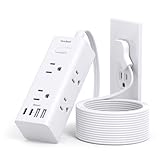
I remember staring at my garage workbench, tools spread out, a half-finished project mocking me. I needed power, but the nearest outlet was a good 30 feet away. My eyes landed on a tangle of extension cords in the corner. “Can extension cords be daisy chained?” I muttered, already picturing myself linking three together to get the job done. It seemed so obvious, so simple. Yet, a little voice in the back of my head whispered doubt. We’ve all been there, right? Facing that distance problem and thinking a quick fix is the way to go.
It’s a question that pops up more often than you’d think, especially when you’re deep in a DIY project or just trying to get enough juice for your holiday lights. The short answer is… complicated. And honestly, most people get it wrong, risking more than just a blown fuse.
Why Linking Cords Is Usually a Dumb Idea
Look, I’m not here to sell you anything. I’ve bought my share of cheap, flimsy extension cords that crapped out after a month, and I’ve learned the hard way what’s worth your hard-earned cash and what’s just snake oil. The whole notion of daisy-chaining extension cords is one of those things that seems perfectly logical until you actually think about what’s happening electrically. It’s like stacking Dominoes, but instead of a cool pattern, you risk a fire.
When you connect one extension cord to another, you’re basically increasing the total length of the wire carrying electricity. Simple enough, right?
But here’s the kicker: every foot of wire has resistance. Think of it like trying to push water through a really long, narrow pipe versus a short, wide one. The longer and narrower it gets, the harder it is for the water (or in this case, electricity) to flow.
This resistance causes heat. And where there’s heat, there’s a potential problem. The longer the combined cord, the more resistance you have, and the more heat gets generated.
This is a big reason why people ask can extension cords be daisy chained – they’re trying to solve a distance problem and often don’t consider the electrical consequences.
My first real ‘aha!’ moment with this was when I was trying to run power to a small shed for a freezer. I had a heavy-duty cord, but it wasn’t quite long enough.
I grabbed another, slightly lighter-duty one, and plugged them together. For a week, everything seemed fine.
Then, one sweltering afternoon, I went to the shed and the cord running to it was hot to the touch. Not just warm, but genuinely hot.
I yanked it apart, and the female end of the first cord was actually starting to look a little… melty. That was enough for me. I went and bought a single, much longer, properly rated cord.
It cost more, sure, but the peace of mind was worth every penny. I learned that day that when it comes to electrical safety, ‘good enough’ can be downright dangerous.
The problem isn’t just the heat, either. The more connections you have, the more points of failure you introduce. Each plug and socket connection is a potential weak spot. They can become loose, corroded, or simply not make good contact, leading to intermittent power, arcing, and more heat. Arcing is basically electricity jumping across a gap, and it’s a prime cause of electrical fires. So, while the idea of daisy-chaining might seem like a quick fix, it’s actually a recipe for disaster if you’re not extremely careful, and frankly, most casual users aren’t.
What Happens Electrically When You Link Cords?
Let’s get a little more technical, but I’ll keep it real. When you plug an appliance into an extension cord, the cord is basically a temporary wire. It needs to be thick enough (low gauge number) to handle the amperage (current draw) of the appliance without overheating. Each extension cord has a maximum amperage rating, usually printed on the cord itself or its packaging. Exceeding this rating is a fast track to melted plastic and potential fires. Now, when you daisy-chain extension cords, you’re not just increasing the length; you’re stacking these ratings and resistances on top of each other. (See Also: Can Extension Cords Short Out )
Imagine you have three 50-foot, 16-gauge cords. Each one is rated for, say, 10 amps.
If you plug them together to make a 150-foot cord, you cannot simply add their amp ratings. That’s a common misconception. The total resistance of the combined cord length becomes the limiting factor.
A 16-gauge wire has a certain resistance per foot. Multiply that by 150 feet, and you’ll see the resistance is significantly higher than for a single 50-foot cord. This higher resistance means more voltage drop (the electrical pressure decreases over distance) and, critically, more heat generated for the same amount of current flowing through it. This is why you’ll often find advice suggesting that if you must extend a cord, you should use a thicker gauge wire (lower gauge number) for longer runs, especially if you’re powering something that draws a lot of amps.
The issue of voltage drop is also important. If your voltage drops too much, your appliances won’t perform as intended. A motor might run slower, a light might dim, or sensitive electronics could malfunction or even be damaged. While this isn’t always a fire hazard, it’s definitely an operational problem that comes with long, daisy-chained runs of undersized wire. Some people think that if the cord doesn’t feel hot, it’s fine. That’s a dangerous gamble. The heat is generated within the copper wire, and it can take time for that heat to transfer to the outer insulation and then to the air. You might not feel the heat until it’s already too late.
The National Electrical Code (NEC) in the US, and similar standards elsewhere, have specific guidelines for extension cords, though they primarily focus on their use as temporary wiring and the requirements for permanent installations. However, the principles of wire gauge, length, and ampacity they outline are the same ones that make daisy-chaining risky. For instance, the NEC addresses how voltage drop impacts the performance and safety of circuits. While it doesn’t explicitly say ‘Thou shalt not daisy chain,’ it sets standards for wire sizing and circuit loading that, when applied, make exceeding a single cord’s capacity through chaining a bad idea.
What to Look for in an Extension Cord (and When to Ditch It)
Alright, so if you’re going to use an extension cord, or even consider daisy-chaining (which, spoiler alert, I’ll tell you not to do in most cases), you need to know what you’re looking at. It’s not just about length.
The most important spec is the gauge of the wire. This is usually indicated by a number followed by AWG (American Wire Gauge).
The lower the number, the thicker the wire, and the more current it can safely handle without overheating. For typical outdoor use with moderately powered tools, 14-gauge is a good starting point, and 12-gauge is even better for heavier loads or longer runs. 16-gauge is okay for very light loads, like a string of Christmas lights or a small fan, but it’s generally not solid enough for power tools.
Another key feature is the cord’s construction. Is it rated for indoor or outdoor use? Using an indoor cord outside is a no-go. Outdoor-rated cords are designed to withstand moisture, UV rays from the sun, and temperature fluctuations. They’ll usually have a thicker, more durable jacket. Look for cords that are made of stranded copper wire, which is more flexible and durable than solid wire, especially if you’re going to be coiling and uncoiling it frequently. The plugs themselves are also important. They should be heavy-duty, with a ground pin (the third prong) if you’re powering anything that requires grounding – which is almost everything you’d use a proper extension cord for.
Here’s a little table I’ve put together based on my own experiences. It’s not a rigid rulebook, but it’s how I quickly assess a cord:
| Feature | What to Look For | My Verdict |
|---|---|---|
| Gauge (AWG) | 14 or 12 for most tools. 16 for light-duty only. | Lower number = Better. Don’t skimp here. |
| Length | Get one that’s long enough. Don’t rely on chaining. | Longer single cord is always safer than multiple short ones. |
| Rating | Indoor vs. Outdoor. Grounded vs. Ungrounded. | Outdoor rated for outdoors. Grounded for almost everything else. |
| Plug Type | Molded, heavy-duty, with strain relief. | Avoid cheap, flimsy plugs that feel like they’ll break. |
| Overall Condition | No cuts, nicks, frayed wires, or damaged insulation. | If it looks suspect, it IS suspect. Toss it. |
When should you ditch an extension cord? Any sign of damage is a deal-breaker. If you see cuts in the insulation, exposed wires, melted spots (especially around the plugs), or if the cord feels excessively hot even when it’s not under heavy load, it’s time for it to go. Don’t try to repair a damaged extension cord with tape.
Electrical tape is for low-voltage wiring repairs, not for the abuse an extension cord takes. It’s not worth the risk of a fire or electrocution to save a few bucks on a new cord.
I’ve thrown away more cords than I care to admit, but each time it was because I valued my safety and my house over a piece of worn-out plastic and wire. (See Also: Can Extension Cords Be Use With Electric Heaters )
Real-World Use Cases (and Why They Fail)
Let’s talk about where people actually try to daisy-chain cords and why it usually goes sideways. The most common scenario is probably with holiday decorations. You’ve got lights strung around the house, across the lawn, maybe up a tree. You need power in multiple spots, and the outlets are few and far between. So, you grab a couple of outdoor extension cords, plug ‘em end-to-end, and voilà! Lights on.
The problem here is twofold. First, holiday lights, especially older incandescent ones, can draw more power than you think, especially if you have hundreds or thousands of bulbs. Second, those cheap, thin cords often marketed for Christmas lights are usually 16-gauge or even 18-gauge, which is borderline for anything beyond a very short run. When you chain them, you increase resistance and voltage drop. This can lead to lights dimming towards the end of the string, or worse, the connectors overheating. I’ve heard horror stories of entire strings of lights melting their own plugs off because they were chained too far and drawing too much power through undersized cords.
Another frequent offender is the DIYer trying to power up a power tool in the yard. Need to run a circular saw to cut some lumber for a fence, but the nearest outlet is across the driveway?
Easy, right? Grab the extension cord. Oops, it’s not long enough.
Grab another. Now you’ve got two, maybe three, cords linked together. Many power tools, especially saws and drills, draw a significant amount of amperage when they’re under load – that is, when they’re actually cutting or drilling.
A 14-gauge cord might be fine for a 25-foot run, but when you chain it with another 25-foot cord, you’ve got a 50-foot run. If that second cord is also 14-gauge, you’re pushing it, especially if the tool is a high-draw model. The cord can overheat, leading to damage, reduced tool performance, and a fire risk.
I’ve seen guys’ extension cords get so hot they actually fuse themselves to the concrete they’re lying on. Not a good look.
Even something as simple as running multiple appliances in a workshop can be a problem. You might have a bench grinder, a soldering iron, and a drill charging station.
If you’re trying to power all of these from a single outlet using a power strip, and then plugging that power strip into an extension cord, and then maybe daisy-chaining that to another cord to reach the tool… you’re creating a massive electrical hazard. Each appliance has its own amperage draw. Sum them up, and you might be exceeding the capacity of the extension cords. The heat generated by overloading a cord can melt not only the cord itself but also the power strip and even the outlet’s wiring, which can cause a fire deep within your walls.
It’s just not worth the convenience.
The Contrarian Take: When Might It (slightly) Work?
Okay, here’s where I might ruffle some feathers. Everyone says “never daisy-chain extension cords.” And for 99% of situations, they’re dead right. But there’s a sliver of a possibility where it might not be an immediate fire-starter, provided you are unbelievably meticulous and understand the risks. This is NOT an endorsement, it’s a clarification.
The only time you might get away with it, and I mean barely, is if:
- You are connecting TWO cords, and only two.
- Both cords are of the HIGHEST gauge rating you can find (e.g., 12-gauge for heavy-duty outdoor, or 14-gauge for general purpose) and are IDENTICAL in type and length.
- The combined length is still within the reasonable limits for that gauge wire (check online charts for voltage drop – even 100 feet of 12-gauge can have noticeable drop).
- The appliance you are powering has a VERY LOW amperage draw – think a single string of LED Christmas lights, a small fan, or a battery charger that draws less than 5 amps.
- You are using them for a very short duration (a few hours, not all day or overnight).
- You constantly monitor the temperature of the connection points and the cords themselves.
Everyone else is going to tell you to buy one single, long, heavy-duty cord. And they are RIGHT. For any serious tool, any significant load, or any extended period of use, that’s what you absolutely should do. If you’re powering a lawnmower, a leaf blower, a heater, a freezer, or anything that draws more than a couple of amps, forget about daisy-chaining. Just buy the proper length cord. I’ve seen extension cords melt and start fires because someone thought they could get away with linking two 16-gauge cords to run a small air compressor. It was a bad day for them, and a good lesson for me to always err on the side of caution. (See Also: Are Outdoor Extension Cords 10 Or 12 Gauge )
The real danger with the “it might work” scenario is that it encourages complacency. You get away with it once, maybe twice, and then you start thinking it’s okay. Then you try it with something that draws a bit more power, or you leave it plugged in longer, and that’s when the trouble starts. So, while I can technically describe a scenario where it could be done with extreme caution, my honest, blunt advice is to avoid it like the plague. It’s a risk that rarely pays off.
Practical Tips for Extension Cord Safety
So, we’ve established that daisy-chaining extension cords is generally a bad idea. But what are some practical, real-world tips for using them safely and effectively? First, always buy more cord than you think you need. It’s cheaper to buy one 100-foot cord than two 50-foot cords, and it’s significantly safer. When you’re at the hardware store, don’t just grab the cheapest one. Look at the gauge and the rating. If you’re going to use it for power tools, get a 12-gauge or 14-gauge cord. If it’s just for plugging in a lamp or a phone charger, a 16-gauge might suffice, but even then, a 14-gauge offers more flexibility for future needs and less voltage drop.
Always inspect your cords before each use. I know it sounds like a pain, but it takes about 30 seconds. Uncoil the cord and give it a quick visual check. Look for any nicks, cuts, abrasions, or melting on the insulation. Check the plugs to make sure they aren’t cracked or damaged. If you find any damage, that cord is out of commission. Don’t try to fix it with tape; it’s not rated for the electrical load and can be a fire hazard. Throw it away and buy a new one. Seriously, I’ve got a bin of retired extension cords that looked perfectly fine on the outside but had internal damage or worn-out connectors. Better safe than sorry.
When you’re using extension cords, especially outdoors, make sure they are rated for outdoor use. These cords have a tougher, weather-resistant jacket and are designed to handle moisture and temperature changes. Never use an indoor-rated cord outside; it can degrade quickly and become a safety hazard. Also, avoid running extension cords across high-traffic areas, like walkways or driveways, where they can be run over by vehicles or tripped on by people. If you must cross a walkway, use a cord protector or cover to shield it from damage and prevent tripping. Never plug more than one extension cord into another; this is the essence of the question: can extension cords be daisy chained, and the answer is you shouldn’t.
Finally, be mindful of the total load. Don’t overload your extension cord. Each cord has a maximum amperage rating.
Check the appliance you’re plugging in – it will have a wattage or amperage rating. Add up the ratings of all the appliances you plan to run on a single extension cord.
If the total exceeds the cord’s rating, you risk overheating and fire. A good rule of thumb is to stay well below the maximum rating – maybe 80% of it for continuous use. For example, if a cord is rated for 10 amps, don’t plug in appliances that add up to more than 8 amps.
It’s better to use a heavier-duty cord or a separate circuit if you need to power multiple high-draw items.
Frequently Asked Questions About Extension Cords
Is It Safe to Connect Two Extension Cords Together?
Generally, no. Connecting two or more extension cords together, known as daisy-chaining, increases the total length, which leads to higher electrical resistance and voltage drop. This can cause the cords to overheat, potentially leading to damage, reduced appliance performance, and a fire hazard. It’s always safer to use a single, longer extension cord of the appropriate gauge.
What Is the Maximum Number of Extension Cords That Can Be Connected?
There is no official maximum number, but the practice itself is highly discouraged due to the safety risks involved. Each connection point adds resistance and potential failure points. Even connecting just two cords can significantly degrade performance and increase risk, especially if they are not heavy-duty and properly rated for the load.
Can I Use a Heavy-Duty Extension Cord to Connect Lighter Duty Ones?
While a heavy-duty cord can handle more current, connecting it to a lighter-duty cord doesn’t make the lighter-duty cord any safer. The overall capacity of the chain is limited by the weakest link – the cord with the lowest amperage rating. You still run the risk of the lighter-duty cord overheating and failing, potentially igniting the other cords or nearby materials.
What Happens If You Daisy Chain Extension Cords?
When you daisy chain extension cords, the total length increases, causing electrical resistance and voltage drop. This leads to the cords generating more heat. Overheating can damage the cords, melt insulation, cause arcing, and significantly increase the risk of an electrical fire. It can also cause appliances to run inefficiently or fail to operate correctly due to insufficient voltage.
Are There Any Situations Where Daisy Chaining Is Okay?
In very rare and controlled circumstances, connecting two heavy-duty, identical extension cords to power an extremely low-draw appliance (like a single string of LED lights) for a short duration might be considered, but it is still not recommended. The risks of overheating and fire are always present. For virtually all practical purposes, daisy-chaining should be avoided in favor of using a single, properly rated cord of sufficient length.
Verdict
So, to wrap it all up, while you technically can plug one extension cord into another, doing so is a gamble I wouldn’t recommend taking. The risks of overheating, voltage drop, and potential fires far outweigh any convenience. Every time I’ve seen someone push the limits with linked cords, it’s ended with a problem, big or small. The real solution to needing more reach is a single, properly rated, longer cord. Don’t be that person who thinks they’re saving a few bucks only to end up with a melted mess or worse.
Think about it: if you’re already asking can extension cords be daisy chained, it’s a sign you might be pushing the limits of what’s safe. It’s always better to invest in the right equipment upfront. A good quality, long extension cord isn’t just a convenience; it’s a piece of mind. So next time you’re facing that distance problem, skip the chain and get the right length. Your tools, your wallet, and your home will thank you for it.