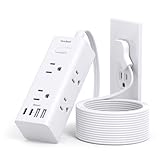
I’ve seen it a thousand times. Someone pulls out a tangled mess of cords from their checked bag, looking like they wrestled a nest of angry snakes. Usually, it’s because they just stuffed it all in there without a second thought. So, can extension cords go in checked luggage? The short answer is yes, but a lot of people don’t do it right, and that can lead to a whole heap of problems, from damaged gear to, well, a trip to the lost and found that feels like it’s taking forever.
This isn’t about breaking rules; it’s about not showing up to your destination with useless electronics because your vital cables got trashed or snagged on something. I learned this the hard way after a trip where my trusty travel adapter decided to take a dirt nap somewhere between Denver and Dallas, all because I’d just shoved it into a side pocket.
The Airline Gatekeepers: What They Actually Care About
Look, when you’re wondering if can extension cords go in checked luggage, the first thing you should consider isn’t some obscure airline policy that no one reads. It’s about safety. Airlines, and more importantly, the TSA, are primarily concerned with two things: fire hazards and things that could be used as weapons. Extension cords, in their standard form, don’t generally fall into either of those categories. They’re not flammable like lithium batteries (which have their own strict rules, by the way) and you’re not going to be whacking anyone with a coiled-up power strip. So, from a pure ‘will I get it confiscated at security’ standpoint, you’re usually in the clear.
The real issue isn’t that they’re banned, it’s about how you pack them and the potential for damage. I’ve seen people try to cram massive, industrial-grade extension cords into carry-ons, and while they might technically get through, it’s just a pain. For checked baggage, it’s a bit more forgiving on size, but the rough-and-tumble nature of that luggage carousel is what you need to worry about. Imagine your nice, expensive power strip with all its delicate circuitry getting tossed around with hard suitcases and duffel bags. It’s a recipe for a broken cord, a fried device, or worse.
Think about it: your bag might get dropped, stacked upon, and generally manhandled. A thin, flimsy extension cord, or even a thicker one that’s not secured, can easily get snagged on something in another bag, or have its connectors bent or broken. I once had a seemingly sturdy extension cord’s plug get mangled so badly it looked like a cartoon character had stepped on it. It was useless. That’s why my personal rule is to treat any electronic accessory like it’s made of spun sugar when packing. Even if the airline doesn’t care, your gear might.
The good news is, most travel-specific extension cords or power strips are designed with durability in mind. They’re often built with thicker wiring and more solid casings. But even the best ones need a little protection. So, while the answer to ‘can extension cords go in checked luggage’ is a resounding ‘yes,’ the practical answer involves a bit more thought about protecting your investment.
When Does a Simple Cord Become a Problematic Cord?
Okay, so we’ve established that your average extension cord isn’t going to get you flagged at the security checkpoint. But that doesn’t mean all extension cords are created equal when it comes to travel. The real problem arises when you’re dealing with cords that are either too large, too unwieldy, or – and this is a big one – not properly secured. I’ve seen folks try to pack those monstrous, 50-foot orange contractor-grade cords in their checked bags, and while technically allowed, it’s just asking for trouble.
Not only does it take up an absurd amount of space, but it’s also more prone to tangling and getting damaged because it’s so bulky. These are the kinds of cords that are better left at home unless you have a very specific, industrial need on your trip, which is rare.
The common advice you’ll find online, often from people who have never actually put a cord through the wringer of travel, is to just coil it up. Yeah, great advice. But how you coil it matters. A haphazard wrap job will inevitably lead to a knotted mess that’s a nightmare to untangle. This is where I’ve made my own mistakes. I used to just loop it around my hand and shove it in a bag. Predictably, it would end up looking like a bird’s nest by the time I landed. It took me a good few tries and a lot of frustration to realize that a little extra effort in the packing phase saves a massive headache later.
What about those power strips with a million outlets? Those are the ones that get people in trouble, not because of the cord, but because of the potential for overload. While airlines don’t typically police the wattage of individual items in checked luggage, it’s a good practice to be mindful of it.
You don’t want to plug in a high-power appliance and a bunch of other gadgets into one overloaded strip. I had a friend once who fried a perfectly good travel power strip because he plugged his hair dryer, a laptop, and a portable heater into it all at once.
The strip smoked, and he was left without power for his electronics. So, even if the cord itself is allowed, what you do with it is key. (See Also: Can Extension Cords Short Out )
My own little tale of woe involved a surge protector power strip I bought for about $35. It was supposed to be solid, with individual on/off switches for each outlet. Sounded great, right? Well, I packed it, and on the return trip, one of the switches was jammed. It took me ten minutes of fiddling, and I ended up having to tape it in the ‘on’ position. Not ideal. It was a reminder that even ‘sturdy’ gear can take a beating. So, when considering what kind of extension cord can go in checked luggage, think about its build quality and its intended use. Avoid anything that feels flimsy or excessively large.
How to Pack Your Cords Like a Pro (so They Actually Work Later)
Alright, so you’ve decided that your trusty extension cord or power strip is coming along for the ride. Great. Now, how do you actually pack it so it doesn’t arrive looking like it went ten rounds with a washing machine?
This is where the real value is, beyond just the ‘yes, you can’ answer. The first, and arguably most important, step is to coil it properly.
I’m not talking about just wrapping it around your hand. Get a good, loose coil. Think of it like a gentle S-shape, not a tight circle. This prevents kinks and stress on the wires.
Once coiled, secure it. A simple Velcro strap is your best friend here. You can buy them for a couple of bucks, or sometimes they come with the cord itself.
Don’t underestimate the power of a good Velcro strap; it keeps that coil from unraveling into a chaotic mess.
Next, protect the ends. The plugs and the outlet sockets are the most vulnerable parts. They can get bent, broken, or filled with lint and debris. A great low-cost solution is to use a small Ziploc bag for each end. Slip the plug into one bag and the socket end into another. This keeps them clean and prevents them from snagging on anything else in your luggage. For larger power strips, you might want to find a dedicated soft pouch or a small padded case. I’ve seen some really neat travel organizers that have specific compartments for cables and electronics. They’re worth the investment if you travel frequently.
Consider a cable management box or a dedicated electronic organizer. These are fantastic for keeping all your cords, adapters, and small gadgets tidy and protected. They often have elastic straps, mesh pockets, and padded dividers, creating a safe haven for your electronics. It’s a bit like giving your cords their own little apartment in your suitcase. I ended up getting one of these after one too many tangled-cord incidents, and it’s made a world of difference. It cost me about $25 and saves me probably 15 minutes of untangling and stress every single trip.
One trick I’ve learned is to put the coiled and strapped cord inside a larger item that offers some structure. For instance, tuck it inside a pair of shoes or a toiletry bag. This adds an extra layer of protection and prevents it from being crushed by heavier items. If you’re packing a bulky power strip, consider placing it in the center of your suitcase, surrounded by softer items like clothes, to absorb any impact. This layered approach is key to making sure your extension cord survives the journey intact and ready to use.
The ‘contrarian’ Take: When to Leave It Home
Alright, let’s get a little controversial. Everyone says, “Just pack it!” and sure, can extension cords go in checked luggage? Yes. But here’s my contrarian opinion: If it’s not a travel-specific, compact unit, or if you’re heading somewhere that has decent power availability and outlets in the room, maybe you don’t need it at all. Seriously. I’ve seen too many people lugging around bulky, unnecessary cords that end up taking up valuable space for things they actually need.
Think about your destination. Are you going to a modern hotel with bedside outlets and USB ports built into the lamps? Or are you staying in a rustic cabin where the only outlet is behind a dusty dresser? (See Also: Can Extension Cords Be Use With Electric Heaters )
This dictates your need. If you’re just going to be charging your phone and a laptop in a standard hotel room, often a small, multi-port USB wall adapter is all you really need. Most hotel rooms these days have enough accessible outlets for a couple of devices. The massive, multi-plug extension cords are often overkill.
I used to pack one religiously, convinced I’d need it, only to have it sit in my bag unused for entire trips. It was a waste of space and weight.
My personal revelation came during a trip to Europe. I packed a European adapter and a small extension cord with multiple outlets. Turns out, the adapter had enough outlets on its own, and the hotel room was well-equipped. The extension cord was dead weight. I ended up buying a much smaller, foldable travel power strip for about €15 on my next trip, and it was far more practical. It had a couple of standard outlets and a few USB ports, and it folded flat for easy packing. That $40 behemoth I’d lugged around previously? Never saw the light of day on that trip.
So, before you even ask if your specific extension cord can go in checked luggage, ask yourself: “Do I really need this?” If the answer is “probably not,” then leave it at home. Your back, your suitcase space, and your sanity will thank you. Focus on bringing the essentials. A good travel adapter with multiple USB ports, maybe a small, compact power strip if you know you’ll be in a remote location or have a ton of gadgets, but ditch the bulky stuff if you can. It’s not about following rules; it’s about smart packing and not carrying dead weight.
Common Mistakes and What to Look For
Let’s break down what trips people up when packing extension cords and what you should be looking for in a travel-friendly option. The biggest mistake, hands down, is the tangling.
People just chuck it in the bag, and it becomes a Gordian knot by arrival. That’s why securing it with a strap is a must.
Another common mistake is not protecting the plugs and sockets. They can get bent, broken, or clogged with debris, rendering your cord useless. Use Ziploc bags or a dedicated pouch. I learned this after a trip where the metal prongs of my plug got bent because it was rolling around loose in my bag.
It took ages to straighten them out enough to get a connection.
Then there’s the issue of overloading. While the airline won’t stop you, you can certainly fry your cord or your devices. Always check the wattage rating of your extension cord and the appliances you plan to plug into it. Don’t try to run a high-wattage item like a hair dryer or a portable heater through a flimsy travel cord meant for charging phones. Stick to lower-draw electronics. For a typical trip, you’re likely charging phones, laptops, tablets, and maybe a camera battery. Most travel-friendly power strips and extension cords can handle this load without an issue, but it’s good to be aware.
When you’re shopping for a travel extension cord or power strip, here’s what I look for:
| Feature | My Verdict | Why? |
|---|---|---|
| Compact Size & Foldability | Must-have | Saves precious luggage space. |
| Multiple USB Ports | Highly Recommended | Reduces the need for multiple chargers. |
| Surge Protection | Good to Have | Offers peace of mind against power fluctuations. |
| Durable Build Quality | Key | Needs to withstand travel abuse. |
| Integrated Cable Management | Bonus | Keeps things neat and tidy. |
| Universal Voltage Compatibility | Consider if traveling internationally | Key for countries with different voltage. |
Avoid cords that are excessively long or heavy. Think about the practicality for travel. A 10-foot cord might be useful at home, but for a hotel room, 3-5 feet is often more than enough. The goal is convenience and functionality, not carrying around a home-based setup. My first travel power strip cost me about $20 and had only two outlets and no USB ports. It was a terrible purchase. Now, I look for something that can handle at least two devices plus a couple of USBs, and costs around $25-$40, but is compact and well-built. (See Also: Are Outdoor Extension Cords 10 Or 12 Gauge )
Real-World Use Cases and Tips
So, beyond just charging your phone next to your bed, where else do extension cords come in handy when traveling, and what are some practical tips to make sure they work for you? I’ve found them particularly useful in a few scenarios. One is when you’re sharing a hotel room with someone else. Suddenly, those two outlets by the bed become a battleground. A small extension cord with multiple outlets, especially with USB ports, can be a lifesaver, preventing arguments over who gets to charge their device. I remember a trip with my sister where we each had a phone, a tablet, and a smartwatch to charge. Without a multi-outlet strip, it would have been a nightly negotiation.
Another great use is for travelers who need to power more specialized equipment. Think photographers with battery chargers for multiple cameras, videographers with lighting setups, or even remote workers who rely on a laptop, monitor, and other peripherals. In these cases, a solid, surge-protected power strip is almost a necessity. You don’t want your expensive gear getting damaged by a power surge in an unfamiliar location. I once saw a photographer in a remote lodge who had brought a heavy-duty power strip to run his laptop, two chargers, and a portable hard drive. It made his setup so much more organized and safe.
Here’s a quick rundown of practical tips:
- Test Before You Pack: Plug in your extension cord and a couple of devices at home before your trip. Make sure it works perfectly. Don’t wait until you’re in a foreign country or a remote location to discover a faulty cord.
- Label Your Cord: If you have multiple similar cords, consider a small label or a colored zip tie on your travel extension cord. This helps you quickly identify it among your other cables, especially if it has specific voltage requirements.
- Consider the Destination’s Power: If you’re traveling internationally, make sure your extension cord (and any adapters) are compatible with the voltage and plug type of your destination country. Universal voltage compatibility is a big plus if you travel widely.
- Keep it Accessible: If you anticipate needing it right away upon arrival, pack it in your carry-on if possible (make sure it meets size/weight limits) or in the top layer of your checked bag.
- Clean Your Plugs: Before packing, check the prongs of your extension cord’s plug and the outlets for any dust or debris. A quick wipe-down can prevent connection issues.
Ultimately, the decision to pack an extension cord is a personal one based on your travel needs. For most casual travelers, a compact power strip with USB ports is sufficient. But for those with more demanding electronic needs, a reliable extension cord can be a big deal. Just remember to pack it smart.
Frequently Asked Questions About Extension Cords in Luggage
Can I Put a Power Strip in Checked Luggage?
Yes, generally you can put a power strip in checked luggage. Airlines and the TSA are primarily concerned with items that pose a fire hazard or security risk. Standard power strips do not fall into these categories. However, it’s always a good idea to make sure it’s packed securely to prevent damage and to be mindful of its wattage capacity to avoid overloading.
Are There Restrictions on Extension Cords in Checked Bags?
For most standard extension cords, there are no specific restrictions from airlines or the TSA for checked luggage. The main ‘restriction’ is practical: bulky or unwieldy cords take up space and are prone to damage. If a cord is excessively long or appears to be modified in a way that could be a hazard, it might be flagged, but this is rare for typical consumer extension cords.
Do I Need to Declare an Extension Cord in Checked Luggage?
No, you do not need to declare a standard extension cord in checked luggage. It is considered a common electronic accessory and does not fall under any special declaration requirements for air travel. Declaring it would be unnecessary unless it’s part of a larger, specialized electronic system that might require specific handling or documentation.
Can Extension Cords Be a Fire Hazard in Checked Luggage?
While an extension cord itself isn’t typically a significant fire hazard, any electrical device carries some risk, especially if it’s damaged or faulty. The primary concern would be a short circuit caused by physical damage to the cord or its components. This is why proper packing to protect the cord from impact and snagging is important, even if it’s not an official airline restriction. It’s about minimizing any potential risk.
Conclusion
So, to circle back to the main question: can extension cords go in checked luggage? The straightforward answer is yes, you can pack them. But as we’ve dug into, the ‘how’ is far more important than the ‘if.’ A carelessly tossed cord can arrive damaged, tangled, or just plain useless, turning a potentially helpful item into a frustrating burden. Treat your cords with a bit of respect during packing—secure them, protect their ends, and consider if you truly need the one you’re packing.
Ultimately, smart packing is about making sure your gear arrives ready to go. For most people, a compact, multi-port travel power strip is the way to go. It balances functionality with portability. If you travel often and rely on multiple devices, investing in a good quality, travel-specific cord management solution will save you headaches down the line. Don’t let a tangled mess or a broken plug ruin your trip.
My final word? Pack it if you need it, but pack it smart. And if you can get away with just a travel adapter and your device’s native cord, you might just be doing yourself a favor by leaving the extra length at home.