
I’ve got more pairs of sunglasses than I care to admit, and with that comes the inevitable tiny screw falling out. It’s a universal problem. You’re fiddling with them, maybe trying to tighten a loose arm, and suddenly, poof, a screw the size of a gnat’s eyebrow vanishes into the ether. That’s when the question pops into your head: can Gorilla Glue fix small screws for sunglasses? I’ve been down this road, more times than I care to count, wrestling with these miniature metal gremlins. Forget fancy repair kits for a minute; let’s talk about the go-to adhesive in most toolboxes.
My first instinct, like many, is to grab whatever glue I have handy. For years, that’s been the trusty yellow bottle of Gorilla Glue. It’s a powerhouse for many DIY tasks, but when it comes to something as delicate as eyeglass screws, things get a little more complicated than just slapping some glue on it. We need to get real about what works and what’s just a sticky mess waiting to happen.
The Gorilla Glue Saga: When Super Glue Meets Spectacles
Look, Gorilla Glue is a brand I trust. For gluing wood, filling cracks, or even sticking a sole back onto a boot, it’s often my first choice. Their original formula is a polyurethane, which expands as it cures, making it great for filling gaps. Then they branched out into super glues – cyanoacrylate-based adhesives, the kind that bonds in seconds. This is usually what people mean when they say ‘Gorilla Glue’ for small, fiddly jobs. So, when that tiny screw on your favorite shades decides to make a break for it, and you’re reaching for that bottle, the real question is: can Gorilla Glue fix small screws for sunglasses, specifically the super glue type?
My initial experiments, back when I was a fresh-faced DIYer with more enthusiasm than sense, involved a pair of cheap reading glasses that had a screw pop out. I figured, ‘Hey, super glue is super, right?’ I dabbed a tiny bit onto the screw head, pressed it back into the hole, and held it for what felt like an eternity.
The result? It held.
For about a week. Then, the screw started working its way loose again, and worse, I had a sticky residue all around the hinge. This wasn’t just about the screw; it was about the aesthetic and the functionality of the hinge itself. The glue had seeped into the delicate moving parts, making the arm stiff and prone to further breakage.
It was a classic case of overzealous gluing and a fundamental misunderstanding of how these tiny parts work together.
The problem isn’t usually the adhesive strength itself, but its application and compatibility. Eyeglass screws and hinges are designed for precision. They need to allow for smooth movement and be easily tightened or loosened if needed. A thick, unforgiving blob of super glue doesn’t offer that. It’s a permanent fix, often too permanent, and it can gum up the works. The expansion of some Gorilla Glue formulas, like their original polyurethane, is absolutely a no-go for eyeglass hinges. It would likely shatter the frame or make the hinge completely inoperable. You need something that offers a very controlled bond, not a structural overhaul.
People Also Ask questions often revolve around alternatives and the best type of glue. Many wonder if a specific Gorilla Glue product is better than others. The key differentiator here is the type of Gorilla Glue you’re using. Their Original formula is too aggressive. Their Super Glue products are cyanoacrylates, which are much thinner and faster. These are closer to what you might need, but even they have their pitfalls. The common advice is often just ‘use super glue,’ but that’s like saying ‘use a hammer’ when you need to hang a picture – it’s too broad. You need to know which super glue and how to apply it judiciously.
I remember trying to fix a pair of Ray-Bans once – a truly heartbreaking experience. The screw fell out near the temple.
I used a Gorilla Glue Super Glue Gel. The gel is thicker, so I thought it would be more controllable. I carefully applied a minuscule amount to the screw threads and then inserted it.
It held. For about three weeks.
Then, the plastic around the screw hole, weakened by the repeated stress and the chemical nature of the glue, started to crack. It wasn’t the screw that failed; it was the frame itself giving way because the glue had basically bonded the screw too rigidly, creating stress points. This is a important lesson: sometimes, the frame material is the weakest link, and a strong glue can exacerbate that weakness.
Choosing the Right Adhesive: Beyond the Yellow Bottle
So, if the standard Gorilla Glue super glue isn’t always the perfect solution for those tiny eyeglass screws, what is? This is where we need to get a bit more specific. Most eyeglass screws are tiny, often with very fine threads, and they go into plastic or metal frames. You need an adhesive that’s strong enough to keep the screw in place but also flexible enough not to crack the frame or seize up the hinge. Cyanoacrylate super glues are generally the go-to for this kind of repair because they dry clear and bond quickly. However, not all super glues are created equal, and how you use them is just as important as the product itself. (See Also: Can You Use Loctite On Glasses Screws )
The common advice you’ll find online is often just ‘use super glue.’ What they don’t tell you is that many super glues are very brittle once cured. This brittleness can be a problem when you’re dealing with a moving part like a hinge. The stress of opening and closing the sunglasses can cause the cured glue to snap, releasing the screw. This is why I’ve seen more than a few repairs fail within weeks. A better option for some people might be a flexible super glue, specifically designed to withstand shock and vibration. These are less common, but they exist. They tend to have additives that give them a slight rubbery quality after curing, making them more forgiving.
Another angle to consider is the type of screw and the material of your sunglasses. If the screw hole is slightly stripped, a standard super glue might just fill the void and hold. But if the screw is just loose, you want to avoid over-gluing.
A tiny drop on the threads of the screw itself is usually the way to go, rather than applying glue directly into the hole. This allows you to control the amount of adhesive. I learned this the hard way, too. I once tried to glue a screw directly into a stripped hole, and I ended up with a screw that wouldn’t go in all the way, leaving a gap and a wobbly arm.
It was a mess.
For those who are really serious about eyeglass repair, there are specific eyeglass repair kits that often come with tiny tubes of specialized adhesive. These aren’t always Gorilla Glue, but they are formulated for the job. They often recommend a very small amount of adhesive applied directly to the threads of the screw. This is the most controlled method. When I’ve used these kits, I’ve found them to be more reliable than just grabbing a random tube of super glue from the drawer. The key takeaway is that the ‘super glue’ you think of might not be the best type of super glue for this specific, delicate task. Think thinner, more flexible, or specialized eyeglass adhesives.
My personal preference, when I absolutely have to use an off-the-shelf glue, is to go for a gel super glue. The Gorilla Glue Super Glue Gel is a decent option because the thicker consistency makes it easier to apply a small, precise amount. It’s less likely to drip and run into the hinge mechanism. Even so, I still use a toothpick to apply it, rather than the applicator tip. It gives me far more control. I’d rate the Gorilla Glue Super Glue Gel as a ‘maybe works, but be careful’ option, whereas their original polyurethane glue is a definite ‘no way.’
| Adhesive Type | Pros | Cons | Verdict for Sunglasses |
|---|---|---|---|
| Gorilla Glue Original (Polyurethane) | Strong, fills gaps well | Expands significantly, messy, inflexible, can damage plastic | NO. Absolutely not. Will likely destroy your glasses. |
| Gorilla Glue Super Glue (Liquid) | Fast bonding, clear | Can be brittle, difficult to control flow, can run into hinges | Risky. Use with extreme caution, very small amounts. |
| Gorilla Glue Super Glue Gel | Thicker, easier to control flow | Still can be brittle, can seize hinges if over-applied | BETTER. Best of the Gorilla Glue super glues for this task, but still requires care. |
| Specialized Eyeglass Glue/Repair Kit | Formulated for precision, often flexible, includes tools | Can be harder to find, sometimes more expensive | YES. Generally the most reliable and safest option. |
The Tiny Screw Conundrum: Why It’s Tricky
Let’s talk about the actual screws themselves. These aren’t your average household screws. We’re talking about fasteners that are often less than a millimeter in diameter, with incredibly fine threads. Their purpose is to hold delicate hinges together, allowing them to pivot smoothly without any play or looseness. When one of these tiny screws decides to depart, it’s not just an inconvenience; it’s a precision engineering problem. This is precisely why the question, ‘can Gorilla Glue fix small screws for sunglasses,’ isn’t a simple yes or no.
The issue with super glue, even the gel kind from Gorilla Glue, is that it’s designed for a permanent, rigid bond. Eyeglass hinges, on the other hand, need a degree of flexibility and adjustability. The constant opening and closing of the glasses exert stress on the hinge.
If you glue a screw in place rigidly, that stress has to go somewhere. It often ends up transferring to the plastic or metal frame around the screw hole.
Over time, this concentrated stress can lead to the frame cracking, as I’ve seen happen more than once. It’s like trying to fix a loose bolt on a car by welding it – it might stop it from moving, but you’ve introduced new failure points.
Another common mistake people make, myself included in my early days, is applying too much glue. You see that tiny screw hole and think, ‘I need to make sure it’s secure.’ So, you load up the screw or the hole with glue. What happens? The excess glue oozes out, cementing the hinge shut, or creating a visible, sticky mess on the outside of the frame. This not only looks terrible but can also impede the smooth operation of the hinge. I recall a pair of aviators where I’d over-glued a screw. The arm wouldn’t fold flat anymore, and it felt like I was bending metal whenever I tried to close them. Eventually, the hinge snapped clean off at the frame.
The common advice to ‘just put a tiny drop on the threads’ is good, but it’s easier said than done with standard super glue applicators. The tip is often too large, and the glue flows too quickly. This is where those specialized eyeglass repair kits really shine. They usually come with a needle-point applicator or a tiny syringe, allowing for microscopic application of adhesive. If you’re going to attempt this with a standard super glue, I highly recommend using a fine-tipped toothpick or a hypodermic needle (if you have one lying around from a model kit, for instance) to transfer the glue. This gives you far more control than the bottle’s own nozzle.
Furthermore, the temperature and humidity can affect how super glues cure. In a dry, cold environment, it might take longer. In a humid, warm environment, it can cure almost instantly, sometimes with a white powdery residue known as ‘blooming.’ This blooming can happen on your sunglasses, leaving a white film around the repair. It’s not only unsightly but can also indicate that the glue isn’t bonding as effectively as it should. It’s a gamble, and for something as visible as your sunglasses, a gamble you might not want to take without proper preparation and technique. (See Also: How Are Screws For Mobile Phones Machined )
Real-World Applications and My Go-to Fix
So, after all my tinkering, what’s my honest take on whether Gorilla Glue can fix small screws for sunglasses? For a quick, temporary fix in a pinch, maybe. If you’ve got a Gorilla Glue Super Glue Gel and you’re incredibly careful, you might get a few weeks out of it. But for a lasting, reliable repair? I’d say generally, no. It’s not the ideal tool for the job. I’ve wasted more time and money on failed super glue repairs than I care to admit, ending up with either a loose screw, a cracked frame, or a stiff, useless hinge. It’s a fix that often creates more problems than it solves in the long run.
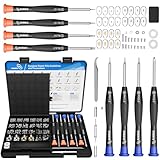
My personal go-to method now involves a dedicated eyeglass repair kit. I bought one for about $15 online a few years back, and it’s been invaluable. It came with a tiny screwdriver set, replacement screws of various sizes, and a small tube of clear, flexible adhesive. The adhesive in these kits is usually a cyanoacrylate, but it’s formulated to be less brittle and more forgiving of movement. The real value, though, is in the applicator. It’s a fine needle that allows you to place a single, microscopic drop of glue directly onto the screw threads. This level of precision is what you need for eyeglass repairs.
When a screw falls out, my process now is: 1. Find the screw (if possible). 2. If the screw is intact and the threads aren’t damaged, clean both the screw and the inside of the hole with a dry cotton swab. 3. Using the needle applicator from the kit, apply a tiny, tiny amount of the specialized glue to the threads of the screw. 4. Carefully insert the screw back into the hole and tighten it gently with the tiny screwdriver. I don’t crank it down; I just snug it up. 5. Wipe away any minuscule excess with a dry swab immediately. This method has kept screws in place for years without any ill effects on the frame or hinge.
I once had a pair of metal-framed glasses where the screw hole itself was slightly enlarged, and the screw kept loosening. The standard glue fix wouldn’t have worked because the threads had nothing to grip. In that case, I used a tiny bit of epoxy putty, letting it cure around the screw hole, and then re-drilled a new, slightly smaller hole for the screw. That was a more involved repair, but it’s a testament to how sometimes, you need more than just glue. However, for a simple loose screw, the specialized kit is the way to go.
If you absolutely must use a standard adhesive and can’t get a repair kit, here’s my advice: get the thinnest, clearest super glue you can find (Gorilla Glue Super Glue Gel is a borderline acceptable option if you’re careful). Use a toothpick to apply a minuscule amount to the threads of the screw, not the hole. Hold it in place, and cross your fingers. Be prepared for it to potentially fail, or worse, damage your glasses. It’s a risky gamble. I learned this through experience, and now I’m sharing it to save you the headache. It’s not worth potentially ruining a good pair of sunglasses for a few dollars saved on a proper repair kit.
Common Mistakes to Avoid with Eyeglass Glue
This is where most people, myself included for a long time, go wrong. It’s not just about if Gorilla Glue can fix small screws for sunglasses, but how you go about it. The number one mistake is using too much glue. I cannot stress this enough.
For these tiny screws, you need an amount of glue that’s barely visible. Think of it as a single molecule of adhesive, not a blob.
When you apply too much, it seeps into the hinge, making it stiff, or it oozes out and ruins the look of your glasses. I’ve seen people try to fix a loose screw on their glasses and end up with a hinge that’s permanently fused shut, rendering the glasses useless. That’s not a repair; that’s destruction.
Another huge pitfall is applying the glue to the wrong place. Many people will try to put the glue directly into the screw hole.
This is a bad idea for several reasons. First, it’s hard to control the amount. Second, the glue can cure and create a solid plug, making it impossible to reinsert the screw properly. Third, it can spread and gum up the delicate workings of the hinge.
The correct approach, if you’re using a standard super glue, is to put a tiny amount of glue onto the threads of the screw itself. This way, you’re controlling the application directly onto the fastener.
Even better is using the specialized needle applicators from eyeglass repair kits, which apply glue with microscopic precision.
People also often forget about the material of their sunglasses. If you have plastic frames, especially acetate, some super glues can react with the plastic, causing it to fog, discolor, or even become brittle. While Gorilla Glue’s super glues are generally safe, there’s always a risk. Metal frames are usually more forgiving, but you can still damage the finish or plating if the glue is too aggressive or if it bleeds. This is why using a glue specifically designed for delicate plastics or metals, or one formulated for eyeglass repairs, is so much safer. It’s a calculated risk versus a smarter choice. (See Also: How Tight To Tight G Shock Screws Site Forums Watchuseek Com )
Forgetting about the future is another common mistake. Super glue creates a rigid bond. Eyeglass hinges are designed to flex and move. If a screw is glued in rigidly, the stress of opening and closing the glasses will be concentrated at the point of the screw. This can lead to micro-fractures in the frame material around the screw hole, which will eventually cause the frame to crack. A more flexible adhesive, or the proper tightening of the screw without glue, allows the hinge to move naturally. If the screw keeps coming loose, it might indicate a stripped screw hole, which requires a different solution than just more glue.
Finally, impatience. Super glue cures fast, but not always instantly. People often try to use the glasses too soon after applying the glue, thinking it’s fully set. This can break the bond before it’s truly cured, leading to a failed repair and a sticky mess. Always give super glue the full curing time recommended on the packaging, and even then, be gentle with the repair for the first 24 hours. For eyeglass repairs, this means letting them sit undisturbed for at least an hour, preferably longer, before attempting to fold or unfold them. It’s a small price to pay for a potentially longer-lasting fix.
Faq: Your Eyeglass Glue Questions Answered
Can I Use Gorilla Glue’s Original Formula on My Sunglasses?
No, absolutely not. Gorilla Glue’s original polyurethane formula expands significantly as it cures. This expansion is far too aggressive for delicate eyeglass frames and hinges. It can easily crack plastic frames or make the hinge mechanism unusable. Stick to cyanoacrylate-based super glues or specialized eyeglass adhesives.
What Kind of Glue Is Best for Eyeglass Screws?
The best type of glue for eyeglass screws is typically a cyanoacrylate-based super glue that is clear and fast-drying. Ideally, you want one that is slightly flexible after curing, rather than completely brittle. Specialized eyeglass repair kits often contain the most suitable adhesives, as they are formulated specifically for this purpose and come with precise applicators.
How Do I Stop My Sunglasses From Squeaking?
Squeaking in sunglasses usually comes from friction in the hinge. You can try a tiny amount of graphite powder (from a pencil lead) or a very small drop of silicone lubricant. Avoid oily lubricants like WD-40, as they can attract dust and degrade plastic over time. For a more permanent fix, if the squeak is due to looseness, make sure the screw is properly tightened. If it’s a persistent issue, a minuscule amount of clear super glue on the screw threads might help, but be cautious not to seize the hinge.
Can I Use Super Glue to Reattach a Screw That’s Already Stripped?
If the screw hole is stripped, simply applying super glue to the screw threads won’t be enough. The threads have nothing to grip. In this scenario, you might need to use a filler like epoxy putty to rebuild the area around the screw hole, then re-drill a small pilot hole for the screw. Alternatively, you can try using a slightly larger screw if available, but this is rarely an option for tiny eyeglass screws. For stripped holes, a professional repair might be your best bet.
The Final Word: Is Gorilla Glue Worth the Risk?
So, after dissecting the sticky situation, can Gorilla Glue fix small screws for sunglasses? My honest answer, based on years of wrestling with these tiny metal demons and the glues meant to tame them, is usually no, it’s not the best tool for the job. While their super glue products can technically bond a screw, the risk of damaging your frames, creating a stiff hinge, or having the repair fail prematurely is just too high. I’ve learned that forcing a powerful adhesive into a delicate mechanism is often a recipe for disaster. The expansion, brittleness, and lack of fine control with most standard glues mean you’re more likely to cause further damage than achieve a lasting repair.
Instead, my recommendation, and what I do now without hesitation, is to invest in a proper eyeglass repair kit. They’re inexpensive, readily available, and contain the right tools and adhesives for the job. The precision applicator is key, allowing you to use the absolute minimum amount of glue needed, directly where it’s required. This approach not only increases the chances of a successful, long-lasting repair but also protects your sunglasses from the harshness of more general-purpose adhesives. It’s about using the right tool for the right task, and for those minuscule eyeglass screws, that means something more specialized than your average bottle of Gorilla Glue.
If you absolutely find yourself in a bind with no other options, and you have Gorilla Glue Super Glue Gel, proceed with extreme caution. Use a toothpick to apply a single, microscopic drop to the screw threads, and pray. But know that you’re playing with fire. My advice? Save yourself the frustration and potential damage, and get a proper kit. Your sunglasses (and your sanity) will thank you for it. The question of whether Gorilla Glue can fix small screws for sunglasses deserves a nuanced answer, and for me, that answer leans heavily towards ‘find a better way’.
Final Thoughts
Ultimately, while Gorilla Glue’s super glues might offer a temporary band-aid for a loose screw on your sunglasses, I wouldn’t rely on it for a lasting fix. The potential for damage to your frames or hinges is significant, and in my experience, these repairs rarely stand the test of time. It’s like using a sledgehammer to crack a nut – you might get the job done, but you’ll likely break more than you intended.
My hard-won advice is to skip the gamble with generic super glues. For those tiny, fiddly screws that hold your world together (or at least your vision), a specialized eyeglass repair kit is your best friend. They’re cheap, effective, and designed precisely for this kind of delicate work. The control you get with their applicators is worth its weight in gold.
So, if you’re staring at a loose screw on your favorite pair of shades, resist the urge to grab the strongest glue you own. Think precision, not brute force. For the best results, and to avoid a sticky situation, opt for a dedicated solution that treats your eyewear with the care it deserves.
![AXTH 25-in-1 Small Precision Screwdriver Set, Professional Magnetic Mini Repair Tool Kit for Phone, Computer, Watch, Laptop, Macbook, Ring Doorbell, Eyeglass, Electronic, [Bearing Steel] Screw Driver](https://m.media-amazon.com/images/I/518YlLmPTcL._SL160_.jpg)
