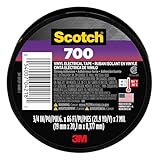
I remember the first time I tried to fix a frayed lamp cord. Panic set in. I’d seen people wrap things in electrical tape, so naturally, I figured, ‘Can I use electrical tape over splice wires?’ It seemed like the obvious, cheap solution. Fast forward a few weeks, and that lamp started doing that annoying flicker thing again. Turns out, my quick fix was anything but. It was a mess of sticky residue and a barely-holding connection. That’s when I learned that not all tapes are created equal, and some jobs need more than just a sticky strip.
This isn’t about making things look pretty; it’s about safety and reliability. Electrical tape has its place, but slapping it over every wire splice is asking for trouble down the line. We’ve all been there, looking for the easiest way out, especially when you just need something to work right now. But sometimes, the ‘easy’ way costs you more in the long run.
When Electrical Tape Is Just Plain Dumb
Look, I’m not here to bash electrical tape. It’s got its uses.
For insulating a simple, low-voltage connection that isn’t going to be pulled on, flexed, or exposed to the elements, it can do the job. Think of the old-school telephone cord repairs or a quick wrap on a speaker wire.
But when it comes to those situations where you’re asking, ‘Can I use electrical tape over splice wires?’ and you’re talking about anything with significant voltage, movement, or potential for moisture, you’re stepping into dangerous territory.
I’ve seen guys (and yes, I was one of them) try to get away with it on automotive wiring, trailer lights, even basic household appliance repairs. The problem is, standard vinyl electrical tape, the cheap stuff you get at any hardware store, isn’t designed for that kind of stress. It gets brittle in the cold, melts in the heat, and the adhesive can turn into a sticky, gooey mess that attracts dirt and grime, making the situation worse.
The stretchiness that makes it easy to wrap can also mean it doesn’t provide a truly tight, insulated seal. It’s like putting a band-aid on a bullet wound – it might cover it, but it’s not going to fix the underlying problem.
My first real wake-up call was with some outdoor Christmas lights. One of the main lines frayed, and I, in my infinite wisdom, wrapped the splice in about five layers of black electrical tape. Looked pretty solid, right?
Wrong. A week of rain, a little freezing, and then a sudden thaw, and that connection shorted out half my light string.
The tape had absorbed water like a sponge and the adhesive was long gone. It was a sticky, soggy disaster.
That’s when I learned that the environment matters. If that splice is going to see moisture, temperature swings, or vibration, you need something tougher.
This isn’t just about a quick fix; it’s about preventing fires and making sure your circuits don’t fail at the worst possible moment. Relying on basic electrical tape for anything more than a temporary, low-stress fix is a gamble I’m no longer willing to take. There are better, more reliable methods available that don’t cost a fortune and will actually last.
What You should Be Using Instead
Alright, so if electrical tape isn’t always the answer, what is? For most splices that need to be reliable, especially in automotive, outdoor, or high-vibration environments, you’re looking at heat-shrink tubing or a good quality crimp connector with its own insulation. Heat-shrink is fantastic. You strip your wires, twist them together or use a crimp connector, slide a piece of heat-shrink tubing over the splice, and then heat it up with a heat gun. As it heats, it shrinks down, creating a snug, insulated, and often waterproof seal. It’s clean, it’s professional, and it holds up. You can get it in different sizes and even colors, which is handy for identifying different circuits. (See Also: Can Black Electrical Tape Catch Fire )
Then you have crimp connectors. These are metal sleeves that you slide over the stripped ends of two wires and then crimp them down with a special tool. They create a solid mechanical and electrical connection. Some come with built-in insulation, or you can use heat-shrink tubing over them.
For trailer wiring or anything that’s going to be jiggled around constantly, a good crimp connection sealed with heat-shrink is practically bulletproof. I once spent a weekend redoing trailer wiring that someone had ‘fixed’ with just electrical tape and wire nuts.
Every bump in the road was causing shorts. After I redid it with proper crimps and heat-shrink, it was solid as a rock for years.
People often worry about the cost of these specialized connectors and tools, but honestly, the cost of a fire, a failed repair, or a damaged appliance far outweighs the price of a few good connectors and a decent crimping tool. It’s an investment in not having to do the job twice, or worse.
Choosing the Right Crimp Connector
When you’re looking at crimp connectors, don’t just grab the cheapest ones. You’ll find butt connectors, spade connectors, ring terminals, and more. For splicing two wires together, butt connectors are usually your go-to. Make sure the connector is rated for the gauge of wire you’re using. Too small and you can’t get the wire in, too big and you won’t get a good crimp. Also, consider the material. Brass is common and fine for most applications, but for higher current or corrosive environments, you might look at copper or nickel-plated connectors. The quality of the crimp tool is also most important. A cheap, flimsy crimper won’t get a strong connection, and the wires can pull out.
| Connector Type | Typical Use | My Verdict |
|---|---|---|
| Butt Connector | Splicing two wires together | Reliable for most applications, especially with heat-shrink. |
| Spade Connector | Connecting to a terminal or lug | Good for quick disconnects, but can be less secure than a ring terminal. |
| Ring Terminal | Connecting to a screw or stud | Very secure for permanent connections, less prone to vibration issues. |
| Wire Nut | Twisting wires together (dry, low-voltage) | Only for very specific, simple applications. Avoid for anything important. |
The Sticky Truth About ‘just Wrapping It’
Let’s get back to the question: can I use electrical tape over splice wires? The blunt answer is: you can, but you probably shouldn’t if you want a lasting, safe repair. The common advice to just wrap it securely is often given by people who haven’t seen the long-term consequences.
Electrical tape is basically vinyl with an adhesive. Over time, especially with temperature fluctuations, UV exposure, or mechanical stress, that adhesive degrades. It can become gummy, oozy, and lose its sticking power.
The vinyl itself can become brittle and crack. This leaves your splice exposed to the elements, dust, and moisture, which can lead to corrosion, shorts, and eventually, failure.
I once had a car door that wouldn’t roll up. The wiring harness running through the flexible boot had broken. A previous ‘fix’ involved wrapping the splice with electrical tape.
When I pulled it apart, the tape was a sticky, black goo that had attracted every bit of dust and dirt in the car, and the wires were barely making contact. It was a mess that took longer to clean up than to properly repair with a crimp connector and some heat-shrink.
People often think because it’s called ‘electrical tape,’ it’s specifically designed for all electrical work. That’s a marketing myth. While it’s insulating, it’s not necessarily protective or durable for every scenario. For instance, if you’re doing a repair in an engine bay where temperatures can get quite high, standard electrical tape will likely melt and become a sticky mess. In a damp basement, it will absorb moisture. On a mobile application like a boat or RV, constant vibration will work the tape loose. The cheap nature of it also tempts people into overusing it – thinking more layers equal more security. This just creates a bulky, often uneven surface that’s more prone to snagging and damage.
When Electrical Tape might Be Okay (but Still Risky)
There are very few scenarios where I’d willingly reach for standard electrical tape for a splice. Maybe, and I mean maybe, if you have a very low-voltage, low-current, dry, stationary application where failure isn’t important. (See Also: Can I Electrical Tape My M 2 Ssd Until Screw Arrives )
Think a small toy that’s battery-operated and you just need to keep a temporary wire from touching another for a few days until you can get the proper part. Even then, I’d be hesitant. The risk of it failing, combined with the messy residue it leaves, makes me want to avoid it.
If you must use it, make sure the wires are mechanically secured first (e.g., twisted and perhaps even soldered, though soldering isn’t always ideal for vibration-prone connections). Then, wrap the tape tightly, overlapping each layer by at least half, and extend the tape well beyond the splice in both directions. But honestly, even in these fringe cases, a bit of heat-shrink or a proper connector is a better long-term solution.
A Contradictory Take: Is Electrical Tape Ever good?
Here’s where I might ruffle some feathers. Everyone says, ‘Use proper connectors!’ and they’re usually right. But I’ve seen some really solid, well-executed repairs using high-quality electrical tape, specifically the type that’s more like vulcanizing rubber tape. This isn’t your standard vinyl stuff. This stuff actually fuses to itself, creating a solid, waterproof, and highly insulating layer. It’s more expensive, and it’s a pain in the backside to apply neatly compared to just slapping on vinyl tape. You have to stretch it as you wrap, and it fuses together. It’s a different beast entirely.
I used some of that self-fusing silicone tape (which is similar in application principle to vulcanizing rubber tape, though chemically different) to seal a leaky junction box on my old RV that was exposed to the elements. It held up through two brutal Canadian winters and countless road trips. It felt more like a solid rubber sheath than tape.
Now, the question is, ‘Can I use electrical tape over splice wires?’ If you mean this high-end, self-fusing stuff, then yes, absolutely, with the caveat that you still need a mechanical connection underneath.
But if you mean the cheap vinyl stuff from the dollar store? Then no. The common advice is to avoid all tape, and for 90% of people using the cheap stuff, that’s the safest bet. But there’s a niche for high-quality insulating tapes that can perform remarkably well if applied correctly.
It’s just not the everyday, grab-and-go solution most people think of when they grab that roll of black tape.
Real-World Use Cases and Mistakes to Avoid
I’ve spent countless hours troubleshooting wiring gremlins, from my first shaky DIY projects to helping friends with their automotive headaches. The most common mistake I see, hands down, is relying solely on electrical tape for any splice that experiences stress, moisture, or temperature changes. This includes outdoor lighting, automotive wiring (especially under the hood or in wheel wells), trailer connections, and even wiring in damp basements. The tape degrades, the adhesive fails, and you end up with exposed conductors, short circuits, and a potential fire hazard. Another mistake is not using the right gauge connectors or crimp tools. A weak crimp means the wires can pull apart, and that’s a major failure point, even if you’ve insulated it perfectly.
I remember helping a buddy fix his boat trailer lights. The previous owner had used electrical tape over wire nuts on the splices. It was a disaster. Every time it rained, the lights would go haywire.
We pulled it apart, and the wire nuts were corroded, the tape was gummy and falling off, and the wires were starting to fray. We replaced the corroded connectors, used proper heat-shrink butt connectors, and sealed the whole thing. Problem solved. Another time, a friend’s garden power tool kept tripping the breaker.
The cord had a small nick in it, and he’d wrapped it with electrical tape. The tape itself started to degrade from the heat generated by the short, and it looked like a melted mess. Proper repair involved replacing that section of cord entirely with a new plug and socket, not just taping over the damage.
A Few Practical Tips for Wire Splicing
- Always disconnect power first. I know, it sounds obvious, but in the heat of the moment, it’s easy to forget. It’s the most important safety step.
- Strip wires cleanly. Don’t nick the conductors when stripping. A clean strip makes sure a good connection.
- Use the correct connectors. Match your connectors (butt connectors, crimps) to the wire gauge.
- Crimp properly. Use a good quality crimp tool. A solid mechanical connection is key.
- Insulate thoroughly. Heat-shrink tubing over crimps is my preferred method. It’s durable and seals well.
- Avoid relying on tape alone. If you do use tape, make sure the splice is mechanically sound first and use high-quality, self-fusing tape for important applications.
When Is Electrical Tape an Absolute No-Go?
So, to circle back to the initial question, ‘Can I use electrical tape over splice wires?’ There are definite no-go zones. Anywhere that experiences significant vibration, like in a car engine bay, on a boat, or on heavy machinery, is a bad place for standard electrical tape. (See Also: Can I Use Duct Tape In Place Of Electrical Tape )
The constant flexing and shaking will break down the adhesive and the tape itself over time. High-temperature environments are also a big no. Think about the area around an engine or exhaust system; standard tape will melt.
Similarly, in very cold environments, it can become brittle and crack. And, as I’ve learned the hard way, any splice that will be exposed to moisture or chemicals is also off-limits for standard electrical tape. It’s not waterproof, and it will absorb liquids, compromising the insulation and leading to corrosion.
If you’re unsure, or if the connection is for something important, always err on the side of caution and use a dedicated wire connector and proper insulation method like heat-shrink.
People Also Ask: Common Questions Answered
Can You Use Electrical Tape for Permanent Wire Splices?
No, standard vinyl electrical tape is generally not recommended for permanent wire splices, especially in demanding environments. It degrades over time due to heat, cold, UV exposure, and mechanical stress, compromising its insulating properties. For permanent repairs, use proper connectors like crimps or splices, and insulate them with heat-shrink tubing or specialized connectors.
What Is the Best Way to Insulate a Wire Splice?
The best way to insulate a wire splice is to first make sure a secure mechanical and electrical connection using a crimp connector or a solder joint (if appropriate for the application). Then, insulate this splice with heat-shrink tubing, which shrinks tightly around the connection, or use insulated connectors designed for the purpose. This provides a durable, reliable, and often waterproof seal.
How Many Layers of Electrical Tape Should I Use on a Splice?
While you might be tempted to add more layers for perceived extra security, this isn’t a reliable strategy. Overlapping each layer by at least half and extending the tape beyond the splice is more important than the sheer number of layers. However, even with many layers, standard electrical tape has inherent limitations in durability and resistance to environmental factors.
Can I Use Electrical Tape on a 12v Wire?
For low-voltage 12V applications, standard electrical tape can provide temporary insulation for simple splices, but it’s still not ideal for anything exposed to vibration, moisture, or extreme temperatures. A proper crimp connector and heat-shrink are always a safer and more durable solution, even for 12V systems, to prevent future problems.
The Takeaway on Electrical Tape’s Limits
My experience has taught me that while electrical tape has its place for quick, temporary fixes on low-demand circuits, it’s a flimsy solution for most wire splicing jobs. The convenience and low cost are tempting, but the potential for failure, especially in important applications, is too high. I’ve learned to invest in proper tools and connectors – they’re not that expensive, and they save you a world of headaches and potential hazards down the line.
When I see a splice wrapped in nothing but electrical tape, my gut reaction is usually, ‘This is going to fail.’ It’s not about being fancy; it’s about being safe and reliable. So, can I use electrical tape over splice wires?
Yes, but it’s rarely the smart choice for anything that matters.
Conclusion
So, after all the fiddling, failing, and learning the hard way, my answer to ‘Can I use electrical tape over splice wires?’ is a firm ‘proceed with extreme caution, and usually, no.’ It’s a band-aid, not a cure. For anything that’s going to be under stress, exposed to the elements, or just plain important, bite the bullet and get the right connectors and insulation. Your future self, and anyone else who might touch that wiring, will thank you.
Don’t let a cheap roll of tape become a costly problem. Invest in a decent crimp tool and some heat-shrink tubing. It’s a small price to pay for peace of mind and a repair that actually lasts. Next time you’re facing a wire splice, take a moment to think about the environment and the demands that connection will face. It’s usually pretty obvious then whether that roll of black tape is going to cut it, or if you need to step up your game.