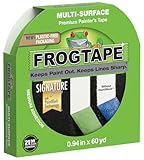
I’ve stood in rooms, armed with a fresh roll of blue tape and a picture frame, convinced this was going to be the day. The day that frame actually stayed put. Then, a few hours later, I’d hear that sickening thud. Over the years, I’ve learned a thing or two about what works and what’s just a frustrating waste of time. So, to answer the burning question: can I use painters tape to hang things up? The short answer is sometimes, but it’s far from a universal solution.
It’s easy to get sucked into the idea that this cheap, readily available stuff can do it all. After all, it’s called ‘painters tape’ for a reason, right? To hold things in place while you work. But hanging a picture is a different beast entirely than masking off a trim line. Let’s get real about this.
The Big Myth: Painters Tape as Your Go-to Hanger
Look, everyone’s been there. You’ve just painted a room, and you’re itching to get your photos and posters back on the walls. You’ve got a roll of that familiar blue (or sometimes green or purple) tape sitting on the counter. It seems like the obvious choice, right?
It’s cheap, it’s easy to find, and it’s designed to stick to surfaces without leaving a mess. But here’s the blunt truth: painters tape is fundamentally designed for masking, not for long-term adhesion of items to a wall. Its primary job is to create a clean line between two surfaces during painting and then peel off cleanly without damaging the paint underneath. This means its adhesive is formulated to be temporary and relatively low-tack.
When you’re talking about hanging something with even a little weight – a lightweight poster, a small print, maybe even a flimsy piece of holiday decor – it might seem to hold at first. But that initial stickiness is deceiving.
Over time, gravity, temperature fluctuations, and humidity can all work against that weak bond, leading to the dreaded fall. I remember once trying to hang a gallery of old family photos in my hallway using only painter’s tape, thinking it would be a cute, temporary setup. Within a week, half of them had peeled away, leaving unsightly blue residue and a few sad, bent corners. It looked less ‘charmingly bohemian’ and more ‘disaster zone’.
The common advice you’ll find online often dances around this issue. You’ll see articles suggesting it for ‘very lightweight items’ or ‘temporary displays.’ While technically true, this undersells the frustration it can cause. These same articles might tout its ‘easy removal’ as a major benefit, which is great for painting, but hardly a selling point when your frame ends up on the floor.
It’s like recommending a teacup for carrying water across a field – it might hold a little, but it’s not the right tool for the job. The real problem is that most people don’t distinguish between different types of tape, assuming one roll of ‘blue tape’ is the same as another. This is a mistake that costs people time, money, and peace of mind. So, while you can technically use painters tape to hang things up, the real question is, should you?
And if so, under what very specific, very limited circumstances?
What to Look for (and What to Avoid) in Hanging Tapes
When you’re looking for something to actually keep your treasures on the wall, you need to shift your mindset from ‘temporary masking’ to ‘reliable adhesion.’ This means looking at products specifically designed for hanging. The biggest mistake people make is grabbing the cheapest, most common roll they see. Let’s break down what to look for.
First off, forget the standard blue painters tape for anything that isn’t a piece of paper you can tape directly to the wall and expect to stay there. If you’re hanging photos, posters, or anything with a bit of substance, you need something with a stronger adhesive. Look for terms like ‘heavy-duty,’ ‘removable,’ or ‘picture hanging strips.’ Brands often have distinct product lines for these purposes.
For instance, Command strips have become incredibly popular, and for good reason. They’re designed to hold weight and remove cleanly. However, even they aren’t perfect, and I’ll get to that. Other options include double-sided mounting tapes, which can be very strong but often use a more aggressive adhesive that might damage surfaces upon removal, so read the label carefully.
Some of these are foam-taped, which gives them a bit of cushioning and can accommodate slightly uneven surfaces. Another type is a heavy-duty version of what looks like Velcro, but it’s often a more permanent, industrial-strength adhesive. These are great for heavier items but are usually not meant for frequent repositioning. (See Also: Does Painters Tape Rip Paint Off Walls )
The key differentiator is the adhesive technology and its intended use. Standard painters tape uses an acrylic-based adhesive that’s designed for low surface energy and easy release. Tapes and strips designed for hanging often use a different type of adhesive, sometimes with a rubber base or a specialized formulation that balances strength with removability. The packaging will usually tell you the weight rating – pay attention to this! A strip that claims to hold 1 pound is useless for a 5-pound frame. Here’s a quick rundown of common options you’ll find:
| Product Type | Pros | Cons | Verdict |
|---|---|---|---|
| Standard Painters Tape (Blue/Green) | Cheap, widely available, easy to find. | Very low weight capacity, adhesive degrades over time, can leave residue if left too long. | Avoid for anything more than a single sheet of paper. |
| Removable Double-Sided Tape (e.g., Scotch Removable) | Better adhesion than painters tape, often leaves no residue. | Still has a weight limit, can stretch and be difficult to remove cleanly if applied poorly. | Okay for lightweight posters or very small prints. |
| Picture Hanging Strips (e.g., Command Strips) | Designed for weight, clean removal, various weight ratings available. | Can be expensive, requires careful application for best results, some surfaces may still be damaged if removed incorrectly. | My go-to for most framed items. |
| Heavy-Duty Mounting Tape/Strips | High weight capacity, strong bond. | Can damage paint/drywall upon removal, not easily repositionable. | For permanent installations or very heavy items. |
When deciding, always consider the weight of the item you’re hanging, the type of wall surface, and how long you intend for it to stay up. Trying to cut corners here is a recipe for disaster.
Common Mistakes When Using Tape for Hanging
Okay, so you’ve got the wrong tape, or you’re using the right tape incorrectly. That’s where the real frustration kicks in. My biggest gripe with people who claim ‘painters tape totally works for hanging stuff’ is that they often haven’t bothered to prep the surface properly, or they’ve applied the tape in a way that guarantees failure. One of the most common mistakes is assuming that just because a surface looks clean, it is clean.
Walls collect dust, grease, and all sorts of grime that you can’t always see. If you slap tape onto a dusty surface, that dust acts as a barrier, severely weakening the bond.
Before applying any tape meant for hanging, you absolutely must clean the area. A damp cloth with a little mild soap, followed by a thorough drying, makes a world of difference. Then, there’s the application itself. For any removable hanging strip, the instructions are usually quite specific: apply pressure for a certain amount of time, wait a certain amount of time before hanging the item, and then wait again before putting weight on it.
Rushing this process is a guaranteed way to have your item end up on the floor. I’ve seen people just stick a strip on, immediately hang a heavy mirror, and then wonder why it peeled off an hour later. No kidding! It needs time to cure and form a strong bond.
Another mistake is using the wrong type of tape for the wall surface. For example, some tapes might work fine on painted drywall but can peel off wallpaper or textured surfaces. Always check the tape manufacturer’s recommendations for surface compatibility. Furthermore, people often underestimate the weight of what they are hanging.
That framed print might look light, but if it has a thick glass cover and a heavy frame, it can easily exceed the capacity of a tape that seems strong enough at first glance. I once tried to hang a somewhat substantial piece of framed artwork using what I thought was heavy-duty double-sided tape, only to discover later that the ‘heavy-duty’ rating was for static loads, not for the slight vibrations that occur in a house. It was a close call, but thankfully it only sagged precariously before I noticed. Finally, there’s the dreaded residue.
While painters tape is supposed to remove cleanly, if it’s left on too long, exposed to sunlight, or applied over a poorly painted surface, it can still leave behind sticky gunk or even pull off paint. This is a failure of the tape’s intended purpose, and a reason why you shouldn’t rely on it for hanging.
Real-World Use Cases: When Painters Tape might Work
Okay, let’s be absolutely clear. For the vast majority of hanging tasks – pictures, mirrors, shelves, anything with real weight or value – standard painters tape is NOT the solution. It’s the wrong tool for the job.
However, there are a few niche scenarios where you might find it useful, though I still approach these with caution. The first is for hanging very lightweight paper items, like a single sheet of construction paper, a drawing made by a kid, or a printed flyer that you only need to stay put for a day or two. Think of a temporary sign for a bake sale taped to a classroom door, or a child’s artwork taped to a refrigerator.
In these cases, the paper itself has minimal weight, and the bond required is minimal. The ease of removal of painters tape is a genuine advantage here, as you don’t want to damage the surface the paper is taped to. (See Also: Does Masking Tape Work The Same As Painters Tape )
Another potential use is for temporary marking. For instance, if you’re rearranging furniture and want to mark out where a piece will go, a strip of painters tape on the floor can be helpful. Or, if you’re doing some minor repairs and need to hold a small, lightweight piece in place while you work and then immediately remove the tape, it can serve a purpose. I’ve used it to hold a small patch of wallpaper in place temporarily while glue dried underneath, but that was only for a few hours and the wallpaper was already coming loose.
It’s not for structural integrity; it’s for holding something that’s mostly self-supporting for a short period. Some people also use it for temporary decorations, like streamers or lightweight banners, for a party. Again, the key here is ‘temporary’ and ‘lightweight.’ If that banner is made of thick vinyl or has a lot of wind catching it, painters tape will fail spectacularly.
My advice? If you’re questioning whether painters tape is strong enough, it probably isn’t.
There are so many affordable, purpose-built hanging solutions available now, from adhesive hooks to specialized tapes and strips, that there’s rarely a good reason to gamble with painters tape for anything that matters. The risk of damage to your item or your wall, not to mention the disappointment, usually outweighs any perceived cost savings.
Contrarian View: Why I Still Keep It Around (for Other Things)
Now, here’s where I might go against the grain a little. Everyone says painters tape is only for painting.
And for hanging things? Absolutely not.
But here’s the thing: I still buy and use painters tape religiously. Why? Because it’s brilliant for its intended purpose and for a few other very specific, non-hanging tasks. I’ll never use it to hang my prize-winning photograph, but if I’m painting a room with a tricky corner or trying to create a clean line on trim, it’s indispensable.
The way it conforms to slightly uneven surfaces and then peels off cleanly without screaming ‘rip off my paint!’ is genuinely remarkable when used correctly. I’ve spent hours meticulously masking off baseboards, windowsills, and intricate moldings, and that blue tape has saved me countless hours of touch-up work. It’s a necessary tool for any DIY painter.
Beyond painting, I’ve found it useful for temporarily securing things during crafts or minor repairs. For example, holding a piece of wood in place while wood glue sets (again, only if the piece isn’t heavy and the glue is doing the real work). Or, to temporarily seal a small crack in a plastic container before I can get a proper repair kit. I’ve even used it to mark things – labeling boxes temporarily before a move, or marking which wire is which on a complex electronic setup.
The key is understanding its limitations. It’s a low-tack, temporary adhesive. It’s designed to stick, but not too hard, and to release easily. So, while I’d never recommend it for hanging pictures, I’m not about to ditch it from my toolkit entirely.
It’s just about using the right tool for the right job. If you’re trying to hang a framed print, that’s a job for a dedicated picture hanger, not the tape you used to mask your window frames.
Practical Tips for Hanging (when Not Using Painters Tape)
So, if painters tape is off the table for most hanging tasks, what should you be doing? First, always assess the weight of the item you want to hang. (See Also: Does Painters Tape Peel Paint )
This is a must. If it’s a lightweight poster or a child’s drawing, you might get away with a removable double-sided tape. For anything with a frame, glass, or any heft – say, over half a pound – you need to step up.
My absolute favorite for framed photos, prints, and even moderately heavy mirrors is the 3M Command system. I’ve been using their picture hanging strips for years, and I’ve hung everything from small frames to a surprisingly heavy antique mirror. The trick, as I mentioned, is following the instructions to the letter.
Clean the wall, apply the strips with firm pressure for the recommended 30 seconds, let them ‘cure’ for at least an hour (though I usually wait overnight if I can), and then attach the frame. When it comes time to remove them, pull the strip straight down, stretching it slowly as per the instructions. I’ve never had paint damage using this method.
For heavier items, like larger mirrors or shelves, you’ll likely need to use traditional methods involving screws, anchors, and possibly finding studs. This requires a drill, a stud finder, and a bit more skill, but it’s the only truly secure way.
If you’re uncomfortable with that, hire someone. It’s cheaper than replacing a shattered mirror or repairing a hole in the wall.
Another tip: if you’re hanging multiple items to create a gallery wall, use a level and measure carefully. A misplaced nail or hook is much harder to fix cleanly than a slightly crooked piece of tape (though again, you shouldn’t be using tape). Consider templates made of paper to plan your layout before making any holes. And if you’re hanging something on a textured wall or wallpaper, always do a small test patch in an inconspicuous area first with whatever adhesive you plan to use.
Some adhesives can react poorly with certain wall coverings, causing discoloration or damage. My personal rule of thumb: if the item is valuable (monetarily or sentimentally), or if its falling would cause damage, screws and anchors are the only way to go. For lighter, less important items, good quality removable adhesive strips are usually sufficient.
People Also Ask:
Can Painters Tape Hold Up a Poster?
It depends on the poster. A single sheet of thin paper might stay up for a while, especially if it’s a temporary display for a day or two. However, for heavier cardstock posters or if you want it to stay up long-term, painters tape is likely not strong enough. Its adhesive is designed for temporary masking, not sustained hanging. You risk the poster falling and getting damaged.
Will Painters Tape Damage My Wall?
Generally, no, if used as intended for short periods and removed carefully. That’s its main selling point for painting. However, if left on for an extended time, exposed to heat or direct sunlight, or if applied over a poorly prepared or delicate paint job, it can potentially leave residue or even pull off paint. It’s always best to test in an inconspicuous area if you’re concerned.
What Is the Best Tape for Hanging Pictures?
For most framed pictures and lightweight to medium-weight decor, adhesive picture hanging strips (like Command Strips) are the best option. They are designed to hold weight securely and remove cleanly. For heavier items like mirrors or shelves, you’ll need to use traditional methods like screws and wall anchors, finding studs whenever possible.
Can I Use Double-Sided Tape to Hang Things?
Yes, but you need to use the right kind. Standard double-sided tape might be too aggressive and damage your walls upon removal. Look for ‘removable’ double-sided tapes, or specifically designed ‘picture hanging’ strips. Always check the weight rating and follow the application instructions carefully to make sure a secure hold without damaging your surfaces.
Final Thoughts
So, to circle back to the original question: can I use painters tape to hang things up? The resounding answer from years of personal trial and error is: probably not, and certainly not for anything you care about. It’s a tool for painters, for masking, for creating crisp lines. It’s not a substitute for actual picture hanging hardware or dedicated adhesive solutions. If you’re tempted to use it, I implore you to reconsider. The small amount of money you save on proper hanging strips will be nothing compared to the cost of a broken frame, a damaged wall, or the sheer annoyance of finding your prized possession on the floor.
My advice? Invest in a few rolls of good quality picture hanging strips or hooks. They’re readily available, relatively inexpensive, and designed for the job. Read the weight limits, follow the instructions meticulously, and you’ll save yourself a world of hurt. If you’re still wondering about painters tape, just remember its primary function: it’s meant to peel off cleanly after a job is done, not to hold things up indefinitely. Use it for painting, and leave the hanging to the professionals or the purpose-built tools.