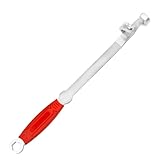
I remember the first time I stripped a bolt head. It was on a cheap mountain bike I was trying to fix up. I was so proud of myself for getting it apart, and then I went to put it back together. Tighten, tighten, snug… and then snap. The head just rounded off, leaving me staring at a useless chunk of metal stuck where it shouldn’t be. That’s when I learned the hard way that yes, you absolutely can over torque a bolt. It’s not just a theoretical problem; it’s a real-world mess that costs time and money.
For years, I just spun wrenches and hoped for the best, thinking ‘tight is tight.’ Turns out, that’s a recipe for disaster. This isn’t about fancy jargon; it’s about what happens when you push metal too far, and why everyone needs to pay attention to torque specs, even when it feels like overkill.
When Snug Isn’t Snug Enough: The Mechanics of Overtorquing
So, can you over torque a bolt? The simple answer is a resounding ‘yes,’ and the consequences can range from annoying to downright catastrophic. It all boils down to the forces you’re applying to the fastener and the materials it’s interacting with. When you tighten a bolt, you’re stretching it. This stretch creates tension, which is what holds things together. Think of it like stretching a rubber band – it wants to snap back. The bolt’s ability to stretch and return to its original shape without permanent deformation is key to its strength.
When you apply too much torque, you’re basically overstretching that rubber band. You’re exceeding the bolt’s elastic limit. This means the bolt permanently deforms. It might not break immediately, but it’s weaker. In some cases, the head can round off, making it impossible to remove without specialized tools, or worse, it can shear off entirely, leaving you with a broken bolt embedded in whatever it was supposed to be holding. I’ve seen this happen on engine parts where a sheared bolt meant pulling the whole damn engine just to fix one tiny piece. It’s infuriating.
The material of the bolt and the material it’s threading into both play a massive role. A grade 8 bolt is designed to handle far more abuse than a cheap hardware store bolt. Similarly, threading a bolt into soft aluminum is a lot riskier than threading it into solid steel. You have to consider the weakest link in the chain, and often, that’s not the bolt itself but the material it’s going into. The threads in the mating material can strip, meaning the bolt just spins freely because there’s nothing left for it to grip.
There’s also the issue of heat. Rapid tightening can generate friction, and that friction creates heat. Excessive heat can weaken the metal of the bolt or the surrounding material. It’s a snowball effect. You start with too much force, you generate heat, the material weakens, and then the same amount of force becomes even more excessive. It’s a vicious cycle that leads to failure. I learned this the hard way trying to assemble a complex piece of machinery that specified very particular torque sequences. Rushing through it, I ended up with a warped flange because I’d heated and stressed the bolts unevenly. That mistake cost me days of rework and a few hundred bucks in replacement gaskets.
What Overtorquing Actually Looks Like (and Feels Like)
You don’t always hear a snap or see a bolt head disappear. Often, overtightening is a subtler form of destruction. The most common symptom you’ll notice, assuming the bolt doesn’t outright break, is a rounded-off bolt head. This happens when the wrench slips because the bolt head has deformed under excessive pressure. It’s that sickening feeling when your socket or wrench just spins uselessly on a mangled hex. If you’ve ever tried to remove a bolt that’s been overtightened and the head is just a smooth, rounded nub, you know the pain. It’s a special kind of frustration that usually requires drilling it out, which is rarely a clean or easy job.
Another sign, especially with fasteners going into softer materials like aluminum or even some plastics, is deformation of the surrounding material. You might see the surface it’s threaded into bulge slightly, crack, or even warp. On a car engine, overtightening a valve cover bolt can cause the cover to warp, leading to oil leaks. I had a buddy who overtightened the bolts on a plastic intake manifold on his old truck. It didn’t break the bolt, but it cracked the manifold itself, and he was chasing vacuum leaks for weeks before he figured out what he’d done. The bolt looked fine, but the damage was done. (See Also: Do You Need Torque Caliper Bolts )
Sometimes, the bolt itself looks fine, but the threads are shot. You can’t see this directly, but you’ll feel it. When you’re trying to tighten the bolt, it just keeps going and going, past the point where it should be snug, and then it just spins freely. You’ve basically stripped the threads either on the bolt or, more commonly, in the hole it’s screwing into. This is a silent killer of fasteners, and it’s incredibly common when people don’t use a torque wrench. They just keep tightening, thinking they’re making it secure, but they’re just grinding away the metal that’s supposed to hold it.
Then there’s the less obvious damage: fatigue. Even if a bolt doesn’t break or deform visibly, repeatedly overstressing it can create microscopic cracks. Over time, these cracks can propagate, leading to a sudden, unexpected failure. This is particularly dangerous in applications where a fastener failure could lead to a serious accident, like in automotive or aerospace components. You might not see the problem, but it’s there, waiting.
Common Mistakes That Lead to Overtorquing (and How to Avoid Them)
Let’s be honest, most of us have probably overtightened a bolt at some point. It usually stems from a few common mistakes. The biggest one? Guessing. Just tightening until it ‘feels right’ is a gamble. What feels right to you might be way too much for the bolt or the material. Everyone’s strength is different, and even your own strength can vary day to day. I used to think my ‘feel’ was good enough, but I’ve seen enough stripped threads and broken bolts to know better. It’s like trying to guess a precise weight without a scale – you’re going to be off.
Another huge mistake is using the wrong tool. A cheap, worn-out wrench or socket can slip easily, rounding off a bolt head even if you’re not applying excessive force. Or, using a longer wrench than necessary gives you way too much use, making it incredibly easy to apply far more torque than intended. It’s like using a sledgehammer to crack a walnut. I’ve fallen into this trap myself, grabbing the biggest wrench I can find because it makes the job faster, only to regret it when I’m fighting a rounded bolt head.
Ignoring manufacturer specifications is another classic blunder. Most manufacturers, especially in automotive, aerospace, or anything involving important components, provide torque specifications for a reason. They’ve done the engineering and testing to figure out the optimal tightness for strength, reliability, and longevity. Deviating from these specs without a deep understanding of the material science involved is just asking for trouble. People often think ‘more is better’ or ‘I know better than the engineers,’ which is rarely the case.
Here’s a contrarian take: Some people say torque wrenches are overkill for most DIY jobs. I disagree. While you might get away with it for, say, tightening a cabinet hinge, for anything mechanical that’s subject to vibration, stress, or heat cycles, a torque wrench is your best friend. It’s not about being overly precise for the sake of it; it’s about preventing damage and making sure safety. I spent about $70 on a decent torque wrench a few years back, and it’s saved me hundreds in potential repairs and countless headaches. It’s one of those tools that pays for itself quickly.
Real-World Scenarios: Where Overtorquing Hurts the Most
The automotive world is a minefield for overtightening. Think about tightening lug nuts on your car’s wheels. If you overtighten them, you can warp your brake rotors. Warped rotors mean a shaky steering wheel and reduced braking effectiveness – not something you want. I’ve had customers come in with brand-new rotors that were already warped because the shop that installed them cranked down the lug nuts with an impact wrench set to ‘demolition’ mode. It’s criminal. (See Also: Do I Need Special Replacement Bolts For Car Engines )
Engine components are another major pain point. Head bolts, for instance, need to be torqued to very specific values and in a specific sequence. Overtightening can lead to a blown head gasket, warped cylinder heads, or even cracked engine blocks.
That’s a repair bill that can run into thousands. Even smaller things, like oil pan bolts or intake manifold bolts, can cause leaks or cracks if you go too tight.
I once helped a buddy rebuild a motorcycle engine, and we got a little too enthusiastic with the crankcase bolts. We ended up with a tiny oil weep that took us two days to find, all because one bolt was just a hair too tight and slightly deformed the gasket surface.
Bicycle components are also notoriously sensitive. Aluminum frames, carbon fiber parts, and lightweight alloy components can be easily crushed or cracked by overtightening. Many bicycle manufacturers now use specific torque-limiting wrenches or ‘click’ type torque wrenches to make sure their parts are installed correctly. Trying to muscle those parts into place is a surefire way to end up with expensive damage. I’ve seen carbon seat posts snapped in half by someone just trying to make sure their seat wouldn’t slip.
Here’s a comparison of common fasteners and their susceptibility to overtightening:
| Fastener Type | Material | Susceptibility to Overtorquing | Common Consequences | Verdict |
|---|---|---|---|---|
| Lug Nuts | Steel | High | Warped rotors, broken studs | Torque wrench is a must for safety. |
| Engine Head Bolts | High-Strength Steel | Very High | Blown head gasket, warped head, cracked block | Important; follow sequence and specs exactly. |
| Aluminum Intake Manifold Bolts | Aluminum (bolt) into Aluminum (manifold) | Medium-High | Stripped threads, cracked manifold | Careful with feel; torque wrench recommended. |
| Carbon Fiber Seatpost Clamp Bolts | Various Alloys (bolt) into Carbon Fiber | Extreme | Crushed carbon, cracked frame/post | Torque limiter is a must. |
The key takeaway is that the more important the application, or the weaker the materials involved, the higher the risk and the more important precise torque becomes. Don’t guess; use the right tools and specs.
Practical Tips for Getting It Right (and Avoiding the Pain)
So, how do you avoid the pitfall of overtightening? It’s not rocket science, but it does require a shift in mindset from ‘tighten it hard’ to ‘tighten it right.’ First and foremost, invest in a torque wrench. For most DIYers, a click-type torque wrench in the range of 10-150 ft-lbs is a great starting point. They’re relatively affordable and make a huge difference. If you’re doing serious automotive work, you might need a higher-spec one, but for general use, a decent mid-range one is fine. Learn how to use it – calibrate it if needed, and always back off the adjustment when you’re done storing it. (See Also: Can You Use A Torque Wrench To Break Bolts Loose )
Always, always look up the manufacturer’s torque specifications for the job you’re doing. Service manuals, owner’s manuals, or even online forums dedicated to your specific make and model can be goldmines of this information. Don’t assume you know the right torque; verify it. When using a torque wrench, apply steady, smooth pressure. Don’t jerk it. Pull the wrench until it clicks (or indicates the set torque). Once it clicks, stop. Don’t try to get ‘one more click’ or ‘just a little bit more.’ That’s where you cross the line into overtightening.
Cleanliness matters too. Make sure the threads on both the bolt and the hole are clean and free of debris, rust, or old thread locker. Dirt and debris can create false readings or cause the bolt to bind, leading you to apply more force than necessary. Similarly, if the application calls for lubricant or thread locker, use it as specified. Lubrication reduces friction, which means the same amount of torque will result in more bolt stretch. Manufacturers account for this in their torque specs, so using the wrong lubricant (or no lubricant when it’s called for) can lead to overtightening.
Finally, be patient. Rushing is the enemy of proper torqueing. Take your time, double-check your settings, and make sure you’re using the correct socket or wrench for the bolt head. It might take a little longer, but the peace of mind and the avoidance of costly repairs are well worth the extra few minutes. I used to rush, thinking I was saving time, but then I’d spend hours fixing the mess I made. Now, I budget extra time for important torquing steps, and it’s always the smarter move.
What Happens If You Overtighten a Bolt?
Overtightening a bolt can lead to several problems. The bolt itself can stretch beyond its elastic limit, permanently deforming it and weakening it. The bolt head can round off, making it difficult or impossible to remove. The threads on the bolt or in the material it’s screwed into can strip, causing the bolt to spin freely. In some cases, overtightening can cause the surrounding material to crack or deform, leading to leaks or structural failure. For important components, it can even cause sudden, catastrophic failure.
How Do You Know If You’ve Overtightened a Bolt?
You might notice the bolt head rounding off as your wrench slips, or the bolt might just keep turning without tightening further, indicating stripped threads. You could also see deformation in the material the bolt is threaded into, such as bulging or cracking. If a bolt feels excessively tight and resists removal, or if it breaks during tightening, it’s a clear sign of overtightening. Sometimes, the damage is internal and won’t be apparent until later.
Can You Overtighten a Bolt Without Breaking It?
Yes, absolutely. Overtightening doesn’t always result in immediate breakage. The bolt can be stretched and permanently deformed without snapping. This compromised bolt will be weaker and more susceptible to failure under stress or vibration later on. You might also strip threads or damage the material without breaking the bolt itself, leading to a loss of clamping force and potential leaks or loosening.
Is It Possible to Overtighten Lug Nuts?
Yes, it is very possible and unfortunately common to overtighten lug nuts. Many people use impact wrenches without proper torque settings, leading to excessive clamping force. Overtightening lug nuts can warp your brake rotors, strip the wheel studs, or even crack the wheels themselves. It’s important to use a torque wrench and follow the manufacturer’s specified torque values for lug nuts to make sure safety and prevent damage.
Verdict
Look, nobody likes messing up a job, but learning that you can over torque a bolt is a rite of passage for anyone who works with their hands. It’s not about being perfect; it’s about understanding the forces at play and respecting the materials you’re working with. That gnawing feeling when a bolt head rounds off is a hard lesson, but it’s one that sticks.
My advice? Get a torque wrench. Seriously, it’s not some fancy, unnecessary gadget. It’s a tool that prevents expensive mistakes and keeps things from falling apart when you least expect it. Learn the specs, use the tool, and take your time. Your future self will thank you for it, especially when you’re not wrestling with a stripped bolt at 2 AM.