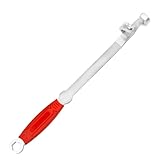
I remember the first time I tried to get a stubborn bolt out from under a car. I was a novice, all eager to impress myself with my newfound DIY skills. The socket wouldn’t quite reach, so I grabbed one of those shiny chrome extensions, feeling like a pro. It felt solid, looked good, and I confidently cranked on the wrench. The bolt didn’t budge, but something else did: a horrible grinding sound and a sickening lurch. This is where you start to wonder, do bolt extensions affect torque? The answer isn’t a simple yes or no, and my early experience taught me there’s more to it than just reaching a little further.
So, Do Bolt Extensions Mess with Torque? The Short Answer
Look, the short, blunt answer is yes, bolt extensions can affect the torque you apply. But it’s not like they magically eat torque. It’s more about how they introduce flex and friction into the system. Think of it like trying to push a heavy box across a carpeted floor versus a smooth tile floor.
The friction is different, and your effort doesn’t translate the same way. When you’re using a socket wrench, the direct connection between your hand and the bolt head is what delivers the most accurate force. Adding any extra piece, especially a long or poorly made one, is like adding extra links to a chain – each link can introduce a little play, a little slop, and a little loss of the direct force you’re trying to apply.
My first real ‘aha!’ moment about this came when I was building a workbench. I needed to snug down some particularly long bolts that went through some thick hardwood. I had a standard socket and a couple of different extensions, including a really long one that I thought would make the job easier.
I was aiming for a specific tightness – not too loose, not so tight I’d strip the threads. I applied what felt like a good amount of force with the extension, but the bolt still felt a bit loose. So, I switched to a shorter extension, and then eventually, I just used a universal joint directly on the socket. The difference was night and day.
The same amount of physical effort resulted in a much firmer connection with the shorter extension, and even more so without it.
It’s not some high-level physics lesson you need to ace. It’s practical. The longer and thinner the extension, the more it’s going to flex under load. That flex means some of your turning force is being used to bend the metal instead of turn the bolt. Friction is another culprit. Every joint, every surface that slides against another, is going to create a tiny bit of resistance. With a simple socket and wrench, you have maybe two contact points generating friction. Add an extension, and you could have four or more. Over time, and with cheaper tools, this friction can actually wear down the extension or the socket, further compounding the problem.
Understanding the Torque Transfer: Flex, Friction, and the ‘feel’
Let’s break down why this happens. When you’re applying torque, you’re basically twisting something. The cleaner and straighter that twist is, the more efficiently it gets to the bolt. An extension rod, especially a cheaper one, is not perfectly rigid. It has a degree of torsional flex. Imagine a wet spaghetti noodle; you can twist it, but it bends and wobbles. A good quality extension has minimal flex, but it’s never zero. This flex means that the rotational force you apply at the wrench handle doesn’t perfectly translate to the socket. A portion of that effort is spent deforming the extension rod itself. The longer and thinner the extension, the more pronounced this effect will be.
Then there’s friction. Every time you connect an extension to a socket, or an extension to your ratchet, there’s a surface area that’s in contact. This contact creates friction. While individual friction points might be small, when you stack up multiple components – ratchet, extension, socket – these small losses can add up. Think about those cheap, unbranded socket sets you might see. The fit between the socket and the extension might be a bit sloppy. That sloppiness translates directly into lost torque. It’s like trying to pour water through a leaky bucket; some of it is going to drip out before it reaches the bottom.
This is why experienced mechanics can often ‘feel’ the torque. They develop a sense for how much force is needed. When they introduce an extension, they’re subconsciously compensating for the potential losses.
They’ll often use a shorter extension if possible, or a thicker, more rigid one. For important applications, like engine components or suspension parts, where precise torque is absolutely vital, many pros will opt for a direct socket-to-ratchet connection whenever feasible.
If they have to use an extension, they’ll often use a torque wrench and might need to apply a bit more turning effort than the torque wrench reading suggests if they’re using a very long or flexible extension. It’s a subtle thing, but it makes a huge difference in how securely things end up being fastened.
The Role of Extension Length and Diameter
The length of the extension is arguably the biggest factor in torque loss. A 3-inch extension will flex far less than a 12-inch extension under the same load. This is basic physics: longer levers are more susceptible to bending and twisting. So, if you can get away with a shorter extension, always do it. The diameter also plays a role, though usually less significant than length. A thicker extension is generally more rigid than a thinner one of the same length. This is why you’ll see extensions come in various diameters, like 1/4-inch, 3/8-inch, and 1/2-inch drive. The larger drive sizes typically correspond to thicker, more solid extension rods that can handle higher torque without excessive flexing. (See Also: Do You Need Torque Caliper Bolts )
Impact of Material and Manufacturing Quality
Not all extensions are created equal. Cheaper extensions, often made from lower-grade steel, are more prone to flexing and can even deform permanently under high stress. Higher-quality extensions, usually forged from chrome-vanadium steel, are heat-treated and designed for maximum strength and minimum flex. The precision of the manufacturing also matters. A well-made extension will have a snug fit with both the ratchet and the socket, minimizing play and reducing friction. I once bought a super cheap set of extensions online, and the sockets would just wobble around on the end. It was infuriating. The torque I thought I was applying was probably half what it should have been, and I ended up stripping a bolt head because of it.
When Do Bolt Extensions Cause Real Problems?
The problems arise when you’re dealing with applications where precise torque is a must. We’re talking about anything safety-related, like important suspension components, brake caliper bolts, or engine cylinder heads.
In these situations, under-torquing can lead to parts coming loose, which can have catastrophic consequences. Over-torquing is also a risk; you might think you’re applying a certain amount of torque, but with a long, flexible extension, you could be applying significantly more, leading to stripped threads or broken bolts. I learned this the hard way when I was assembling a bike frame.
I needed to torque down the seat post clamp to a very specific number. I used a long extension, felt like I was right there, and then later realized the clamp had deformed the seat post slightly. Had it been a important structural bolt, it could have been a disaster.
Another scenario where extensions can cause headaches is in tight, awkward spaces where you’re already fighting for use. If you have to use a long extension in a confined area, you’re often making it harder on yourself. You’re more likely to bump the extension, increasing friction and play. Plus, the added length can make it difficult to get the right angle on the ratchet, further compromising your ability to apply consistent torque. I’ve spent more time than I care to admit wrestling with a ratchet and a long extension in a cramped engine bay, only to realize I could have gotten the job done faster and more accurately with a wobble socket or a different approach.
It’s also worth considering the drive size. Using a 1/4-inch drive extension for a job that requires significant torque is a recipe for disaster. These smaller drive tools are not designed for heavy loads, and the extensions will flex dramatically, leading to inaccurate torque application and potential tool failure. Always match your extension’s drive size and quality to the torque requirements of the job. For high-torque applications, you’ll want a solid 1/2-inch drive extension made from quality steel. Don’t skimp here. The cost of a good extension is peanuts compared to the cost of a broken bolt, a damaged part, or worse.
The ‘feel’ vs. The Torque Wrench: A Real-World Trade-Off
For most everyday tasks, like changing a tire or assembling furniture, the slight torque loss from a decent extension is usually negligible. You can often rely on the ‘feel’ of the wrench. However, when a specific torque value is called for, especially in automotive or structural applications, relying solely on feel becomes a gamble. This is where a calibrated torque wrench is your best friend.
If you’re using a torque wrench with an extension, you need to understand that the wrench is measuring the torque at its own drive head, not directly at the bolt. For very long extensions, some engineers recommend adding a small percentage to the target torque setting to compensate for the flex and friction. However, for most DIYers, the best practice is to use the shortest, most rigid extension possible and get the torque wrench as close to the bolt head as you can.
Common Mistakes People Make
The most common mistake is using an extension that’s way too long for the job. People grab the longest one they have because they think it will make access easier, but they don’t consider the increased flex and torque loss. Another mistake is using cheap, unbranded extensions that are made from soft metal. They’ll flex like a wet noodle and can even bend permanently.
People also forget about friction. They’ll use a dirty or rusty extension, or one with a sloppy fit, and wonder why they can’t get the bolt tight enough. Finally, there’s the over-reliance on ‘feel’ when a precise torque is actually required. You might think you’re applying 50 ft-lbs, but with a long extension, it could be significantly less or even more.
When Extensions Are Your Best Friend (and When to Ditch Them)
There are definitely times when a bolt extension is absolutely indispensable. Think about working on a modern car engine.
You’ve got all sorts of shrouds, hoses, and other components in the way. Trying to reach certain bolts without an extension would be practically impossible. In these cases, a good quality extension, even a longer one, is what allows you to do the job at all. (See Also: Do I Need Special Replacement Bolts For Car Engines )
The key here is to use the shortest extension that will still get you access, and to make sure it’s a well-made one. I’ve got a set of 3/8-inch drive extensions in lengths from 2 inches all the way up to 10 inches, and I use them all. But I always start with the shortest possible and only go longer if absolutely necessary.
Another time extensions are a lifesaver is when you need a bit of extra clearance for your knuckles or your ratchet handle. Sometimes, even if you can reach the bolt directly, your hand or the tool is crammed in there so tight that you can’t get a good grip or apply steady pressure. Adding a short extension can give you that precious bit of extra room, making the job much more manageable and less likely to result in scraped knuckles or dropped tools. It’s a trade-off, of course, but sometimes that little bit of extra space is worth the slight potential for torque loss, especially if you’re not working on safety-important components.
However, if you’re dealing with a bolt that’s seized or requires a very high initial torque to break loose, or if you’re torquing a important fastener to a precise specification, that’s when you should seriously consider ditching the extension. If you can get your ratchet directly onto the bolt head, do it. If you absolutely need an extension, use the shortest, stiffest one you have, and make sure it’s a good quality tool. For really important fasteners, many mechanics will remove any extension and use a direct-drive socket, or even a crowfoot adapter if clearance is an issue, to maintain the most accurate torque transfer possible. It’s all about understanding the physics and the practical realities of the job you’re doing.
My Go-to Extension Strategy
My personal strategy is simple: shortest practical extension, always. If I can use a 3-inch extension and get the job done, I will.
If I need to reach further, I’ll step up to a 6-inch, then a 10-inch. I rarely, if ever, use those super long, skinny extensions unless it’s an absolute last resort.
For impact wrenches, extensions are often built more robustly to handle the shock, but for manual ratcheting, rigidity is king. I also prefer extensions that have a nice, snug fit. You can feel the difference when a socket or ratchet connects firmly to the extension.
It gives you confidence that the torque is actually going where you want it to go. I’ve got a mix of brands, but I’ve found that brands known for their quality tool steel tend to hold up better and flex less. It’s worth paying a little more for that reliability.
Using Wobble Extensions: A Compromise
Wobble extensions, also known as universal joint extensions or flexible extensions, are a special case. They have a universal joint built into them, allowing for a greater range of motion at an angle. This is incredibly useful for getting around obstructions. However, that universal joint itself is a significant source of flex and friction. While they’re invaluable for access, they will introduce more torque loss than a straight extension of the same length. If you’re using a wobble extension for a high-torque application, be aware that you’re likely applying less torque than you think. For most moderate tasks, they’re fine, but for important torquing, they’re usually best avoided if a straight extension can do the job.
The Humble Comparison: Extension Types and Their Torque Impact
To really hammer this home, let’s look at a quick comparison. This isn’t hard science, but it’s based on years of my own experience and observations. When you’re choosing an extension, you’re balancing reach with accuracy.
| Extension Type | Typical Use Case | Torque Impact (My Opinion) | Verdict |
|---|---|---|---|
| Short Straight Extension (2-4 inches) | General access, slight clearance needs | Minimal to Slight | Go-to choice for most jobs. |
| Medium Straight Extension (6-8 inches) | Deeper engine bays, tight spots | Slight to Moderate | Use when short isn’t enough. |
| Long Straight Extension (10+ inches) | Very deep or obstructed fasteners | Moderate to Significant | Last resort for important torque. |
| Wobble/Universal Joint Extension | Extreme angles, around major obstructions | Significant | Excellent for access, not precision. |
| Flexible Extension (coiled spring) | Extremely tight or awkward angles | Very Significant | Purely for access, torque is compromised. |
This table is a simplified view, of course. The actual torque loss depends heavily on the quality of the extension, the torque being applied, and the specific geometry of the joint. But as a general rule of thumb, the more ‘flex’ or ‘bend’ the extension introduces, the more torque you’re losing. For those times when you’re wrestling with a bolt and you feel like you’re putting in a ton of effort but not making progress, double-check your setup. Is that super long, skinny extension the culprit? Sometimes, simplifying your tool setup can make all the difference.
What About Impact Extensions?
Impact extensions are a different beast. They’re designed to withstand the shock and vibration of an impact wrench. They are typically made from stronger steel and are more solid than standard extensions. While they are still subject to the principles of flex and friction, their primary purpose is durability under high, sudden torque loads, not necessarily precise, static torque application. When using an impact wrench, the tool itself is delivering the torque in rapid bursts, and the extension’s role is to reliably transmit that power. For precision torquing, stick to non-impact, high-quality straight extensions and a calibrated torque wrench.
When Precision Matters Most: The Torque Wrench and Extensions
This is where things get serious. If you’re working on something where a specific torque value is listed in a manual – think cylinder heads on an engine, wheel lug nuts, or suspension components – you absolutely need to pay attention to how your extensions are affecting your torque wrench. A torque wrench measures the twist at its own drive head. If you have a 12-inch extension between your torque wrench and the bolt, the torque wrench is reading the torque applied to the extension, not directly to the bolt. (See Also: Can You Use A Torque Wrench To Break Bolts Loose )
The flex in that long extension means the bolt is receiving less torque than the wrench is indicating. I’ve heard of mechanics adding 10-15% to their torque wrench setting when using very long extensions to compensate.
Personally, I try to avoid this if at all possible. My preference is always to get the torque wrench as close to the bolt head as I can, using the shortest extension necessary, or even a universal joint if that’s the only way to get direct access.
It’s a bit of a gamble, and one I’m not willing to take on important components. The problem is, you can’t easily quantify that loss without advanced testing. So, for DIYers, the safest bet is to minimize extension use when using a torque wrench. If you absolutely must use one, opt for a heavy-duty, thicker diameter extension. The thicker the extension, the less it will flex. And again, shorter is always better. If you’re not working on something where the manual specifies torque values down to the foot-pound, then the slight inaccuracies introduced by a decent extension are usually not going to cause you any real problems. It’s the precision-important stuff where you need to be extra vigilant.
Don’t fall into the trap of thinking that because an extension looks sturdy, it won’t affect your torque. Some of the most solid-looking extensions can still have a surprising amount of flex. The quality of the steel, the heat treatment, and the manufacturing tolerances all play a role. I’ve seen extensions that looked great but would noticeably twist when I applied moderate force. The best way to gauge this is by feel and by the reputation of the brand. If you’re buying the cheapest set you can find, expect them to be less precise. Investing in a reputable brand known for quality tools will pay off in accuracy and durability.
Ultimately, when precision matters, the goal is to create the most direct, rigid connection possible between your effort and the fastener. Extensions are a tool to overcome access issues, not a magic wand that transmits force perfectly. Understand their limitations, use them judiciously, and always prioritize getting your measuring tool (the torque wrench) as close to the actual work (the bolt) as possible.
Can I Use a Bolt Extension with a Torque Wrench?
Yes, you can use a bolt extension with a torque wrench, but you need to be aware that it can affect the accuracy of the reading. The extension introduces flex and friction, meaning the torque measured by the wrench at its drive head will be higher than the actual torque applied to the bolt. For important applications, use the shortest, most rigid extension possible and get the torque wrench as close to the bolt head as you can.
How Much Torque Do Bolt Extensions Lose?
The amount of torque lost depends on several factors, including the length, diameter, material quality, and manufacturing precision of the extension. Longer and thinner extensions will cause more torque loss due to increased flex. Friction at the connection points also contributes to loss. It’s difficult to give an exact percentage, but it can range from negligible for short, high-quality extensions to potentially 15% or more for very long, flexible ones.
Are Wobble Extensions Bad for Torque?
Wobble extensions (with universal joints) are generally considered to introduce more torque loss than straight extensions of the same length. The universal joint itself creates a point of flex and increased friction. While they are incredibly useful for accessing fasteners at awkward angles, they are less ideal for applications where precise torque accuracy is most important. Use them when access is the priority, but be aware of the potential for reduced torque transfer.
Should I Use Extensions for Breaking Loose Stuck Bolts?
Yes, extensions can be very helpful for breaking loose stuck bolts, especially if they are in a hard-to-reach location. The added use can make it easier to apply the necessary force. However, be mindful that if the bolt is extremely seized, a long or flexible extension might flex or even break under the sudden, high force. For extremely stubborn bolts, a breaker bar with a direct socket connection is often preferred if space allows, but extensions are a useful tool when needed.
What Is the Best Quality Extension for Torque Accuracy?
The best quality extensions for torque accuracy are typically those that are shorter, have a larger diameter (for the drive size), are made from high-grade, heat-treated steel (like chrome-vanadium), and have precise manufacturing that makes sure a snug fit. Reputable tool brands that focus on quality materials and engineering will generally offer extensions with minimal flex and friction, leading to more accurate torque transfer.
Verdict
So, to circle back to that initial question: do bolt extensions affect torque? Unequivocally, yes. It’s not some abstract concept; it’s a practical reality you encounter when you’re actually doing the work. My early mistakes taught me that while extensions are fantastic for getting into those hard-to-reach places, they come with a trade-off in torque accuracy. The longer, the thinner, the cheaper the extension, the more you’re likely losing in translation from your wrench to the bolt head.
When you’re just tightening something up around the house, it probably won’t matter much. But for anything safety-related, or if a specific torque value is called for, you need to be smart about it. Use the shortest extension that will do the job, pick a quality one, and if you’re using a torque wrench, try to get it as close to the bolt as possible. Honestly, sometimes the best solution is to find a different tool or technique that avoids needing an extension altogether.
Next time you’re faced with a stubborn bolt in a tight spot, take a moment to assess your setup. Is that long extension really necessary, or is it just making things harder and less accurate? Understanding how these simple tools work, and where their limitations lie, is what separates a frustrated DIYer from someone who gets the job done right.