
You’ve been there. That tiny screw, mocking you from the back of your favorite watch, refusing to budge. You’ve tried a fingernail, a coin edge, maybe even a butter knife in a moment of sheer desperation. It’s frustrating, right? That feeling of being utterly defeated by something so small. I’ve personally wrestled with more stubborn watch screws than I care to admit, and let me tell you, the cheap, flimsy kits advertised everywhere? Total garbage.
When you can’t unscrew watch parts, it’s usually not about brute force. It’s about having the right tools and knowing how to use them without turning your timepiece into a sparkly paperweight. This isn’t rocket science, but it does demand a bit of patience and the correct approach. Let’s cut through the fluff and get to what actually works.
The Right Tools Aren’t Fancy, They’re Just… Right
Look, I’m not saying you need a Rolex-grade workbench, but the $5 multi-tool you grabbed at the checkout counter? Toss it. I learned this the hard way. I once bought a supposed ‘all-in-one’ watch repair kit that came with screwdrivers so soft, they practically bent when I looked at them.
I was trying to replace a watch battery in my grandfather’s old Timex, a simple job, or so I thought. The smallest screwdriver in that kit stripped the screw head after about two seconds of trying.
It wasn’t just annoying; it felt disrespectful to the watch. I ended up having to take it to a jeweler just to get the stripped screw out, costing me more than the cheap kit did.
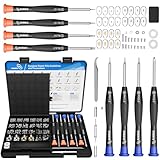
What you actually need are precision screwdrivers. And I don’t mean that fancy set with the interchangeable bits that looks cool but feels flimsy. I mean a set of solid, well-made, fixed-blade precision screwdrivers. You want them to have hardened steel tips.
Brands like Wiha,eben, or even some decent Felo sets are where it’s at. You don’t need a massive set; for most watch work, you’ll primarily use sizes like 0.8mm, 1.0mm, 1.2mm, and maybe 1.4mm. The key is that the tip fits snugly into the screw slot. If it wiggles, you’re asking for trouble.
A good set will feel balanced in your hand, with a knurled grip that doesn’t slip. When you find yourself facing a situation where you can’t unscrew watch components, the quality of your screwdriver is most important.
It’s not about having the most tools, but the
best
ones for the job. I’ve spent probably $180 over the years on various cheap sets before finally investing in a decent Wiha set, and it was worth every penny. The difference is night and day.
| Tool Type | Why It’s Okay | Why It’s Better | Verdict |
|---|---|---|---|
| Cheap “Watch Repair Kit” Screwdrivers | Comes with lots of tiny pieces. | Tips are often too soft, strip easily, and don’t fit well. Handle feels cheap. | Avoid. More likely to cause damage. |
| Generic Precision Screwdriver Set | Better than the absolute cheapest, has a few useful sizes. | Steel is usually harder, but consistency can be an issue. Fit might still be iffy. | Okay for very occasional, non-important use. |
| Reputable Brand Precision Screwdrivers (Wiha,eben, Felo) | Specifically designed for fine mechanics. | Hardened steel tips that hold an edge, precise sizing, comfortable and non-slip grip, balanced feel. Lasts for years. | Highly Recommended. Key for reliable work. |
The Unsung Hero: The Screw Holder
This is where most people trip up when they can’t unscrew watch case backs or bands. They’re fumbling with tiny screws, trying to get them back in place, and inevitably, one goes flying across the room. I’ve lost screws under couches, into shag carpets, and even, I swear, into another dimension. The sheer panic of a runaway screw is enough to make anyone want to just put the watch back together, unfinished. But there’s a simple, cheap solution: a screw holder. These are usually small silicone mats with little divots or magnetic areas designed to keep screws organized. Some are just simple rubber pads, others have tiny magnetic compartments. The key is that they are slightly grippy.
My first experience with a dedicated screw holder was when I was trying to reassemble a very fiddly Seiko movement. I had about twenty tiny screws of different lengths and types. Without the holder, I would have been toast. I laid all the screws out in the divots according to where they came from, and it made reassembly exponentially easier.
It sounds so basic, but it’s a big deal. Imagine you’re trying to swap out a watch band, and you’ve got those two tiny spring bar screws. If one falls on the floor, you might be able to find it.
If you’re working on a watch movement with screws smaller than a grain of rice, losing one means a trip to the parts bin or a very expensive repair. I use a small, flexible silicone mat with various sized compartments. Even if it’s not magnetic, the gentle friction of the material is usually enough to stop screws from skittering away. (See Also: Cant Screw Out Screws In Iphone 6 )
It’s not about high-tech gadgets; it’s about managing those tiny, easily lost components. For less than $10, you can save yourself hours of frustration and the potential cost of replacement parts.
The “gentle Persuasion” Technique (when Force Fails)
So, you’ve got the right screwdriver, and it fits perfectly, but the screw just… won’t turn. It’s like it’s glued in there. This is where people often reach for pliers or try to force it, which is a fast track to a damaged screw head. Before you resort to that, there are a few gentle persuasion techniques that can work wonders.
One of the most effective, especially for older watches or those that have seen a lot of use, is applying a bit of penetrating oil. Now, I’m not talking about WD-40, which is a water dispersant and can sometimes leave residue. I’m talking about a proper penetrating oil, like PB Blaster or a specialized watch oil. You only need a tiny drop.
Apply it to the screw threads and let it sit for at least 15-30 minutes, or even longer for really stubborn ones. The oil seeps into the threads and helps break down any corrosion or gunk that’s holding the screw.
Another trick, and this is one that many DIYers overlook, is using a bit of heat or cold. For metal screws, a slight temperature change can cause them to expand or contract, breaking the bond. A tiny puff of compressed air held upside down (which releases a very cold propellant) can sometimes shock a screw loose. Be extremely careful with this, as you don’t want to damage any seals or other delicate components.
A much safer method is to use a hot air gun on a very low setting, pointed away from the watch crystal and any plastic parts, just to warm the area around the screw. This can soften old thread-locking compounds or dried oils.
I remember trying to get a screw out of an old brass telescope eyepiece that had been sitting in a damp shed for years. It was completely seized. After letting some penetrating oil sit overnight and then gently warming the area with a heat gun on its lowest setting for about 30 seconds, the screw practically spun out with minimal effort. It felt like magic, but it was just physics.
When you’re finding you can’t unscrew watch parts that seem fused, these methods are your best bet before you consider anything more drastic.
One common mistake I see is people trying to force a screw that’s cross-threaded. This happens when the screwdriver isn’t perfectly aligned with the screw slot, and you start turning. The threads get damaged, and it becomes incredibly difficult to remove. Always make sure your screwdriver is perpendicular to the screw and that you feel it engage properly before applying any turning force. If it feels gritty or resistant from the start, stop. Back it out and try again, making sure you’re properly aligned. This one tip alone has saved me from many potential disasters.
Common Mistakes That Lead to Stripped Screws
Let’s be brutally honest: most of the time, when you can’t unscrew watch screws, it’s because of a mistake
you
made, not because the screw is inherently evil. The most common culprit? Using the wrong size screwdriver. I see people trying to force a 1.2mm screwdriver into a 0.8mm screw hole, or vice-versa. It’s like trying to hammer a nail with a screwdriver – it’s not going to end well. The tip will slip, chew up the screw head, and render it almost impossible to remove without specialized tools. Always measure, or at least visually confirm, the screw head size and match it to your screwdriver tip. If the tip isn’t a perfect fit, stop. Find the right one.
Another massive mistake is applying too much downward pressure while turning. When you use a precision screwdriver, you’re not trying to brute-force it.
The ideal method is to apply firm but gentle downward pressure to keep the tip seated in the screw slot, and then turn slowly and steadily. Too much downward force can cam the screwdriver out of the slot, causing damage. (See Also: Do Iphone Smart Cases Screw Your Battery )
Think of it as a precise dance, not a wrestling match. I’ve seen people practically lean their entire body weight onto a tiny screw.
It’s overkill and dangerous. When I was younger, I’d get impatient and just crank on things. That’s how I ended up with a drawer full of watches with mangled screw heads.
It taught me that patience and the right technique are far more valuable than speed.
Finally, people often forget about the quality of the screw itself. Some screws, especially in cheaper watches or accessories, are made from very soft metal. If you encounter one of these, you have to be extra gentle. Don’t expect them to withstand the same torque as a screw in a high-end tool.
Always assume the screw is the weakest link. If you’re using a bit of penetrating oil and it’s not working, and the screw head looks a little soft, it might be time to call in a professional or consider a different approach, like carefully drilling it out (which is a last resort and requires a lot of skill).
The best way to avoid stripped screws is to be methodical. Take your time, use the right tools, and be mindful of the forces you’re applying. It’s not about how fast you can do it, but how well.
What Tool Do I Need to Unscrew a Watch?
You need precision screwdrivers with hardened steel tips. The most common sizes for watch screws are 0.8mm, 1.0mm, 1.2mm, and 1.4mm. Make sure the tip fits snugly into the screw slot without wobbling. A good quality set from brands like Wiha or eben is recommended.
Why Won’t My Watch Screw Turn?
A watch screw might not turn due to corrosion, dirt, or thread-locking compound. Sometimes, it’s simply because the wrong size or a poor-quality screwdriver is being used, leading to a stripped head. Gentle persuasion techniques like applying penetrating oil or controlled heat can help.
How Do I Remove a Stripped Watch Screw?
Removing a stripped watch screw is difficult and may require specialized tools. You can try using a rubber band placed over the stripped screw head with a screwdriver to add grip, or a screw extractor kit designed for very small screws. If these fail, professional watchmaking tools or a jeweler may be necessary.
The Reality of Watch Repair Kits and Magnification
Let’s talk about those ubiquitous watch repair kits. You know the ones – they promise to turn you into a watch repair guru overnight with a plastic case full of tiny, often questionable tools. I’ve bought my fair share, and honestly, most of them are more frustrating than helpful. The screwdrivers are usually the first to go, as I mentioned. The little tweezers are often too blunt to grip anything delicate, and the case back removers can be flimsy and scratchy. The only part of these kits that’s sometimes borderline useful is the magnifying glass, but even that is usually a low-quality lens that distorts the image.
If you’re serious about working on watches, or even just comfortable doing basic battery changes and band adjustments without causing damage, you need to invest in individual, quality tools. A good set of precision screwdrivers is a must.
For magnification, don’t rely on the cheap plastic loupes. Get a proper jeweler’s loupe, preferably a triplet lens which offers a much clearer and distortion-free view. A 5x or 10x magnification loupe is usually sufficient for most watch tasks.
I bought my first decent loupe for around $30, and it made such a difference. Suddenly, I could actually see what I was doing, rather than guessing.
I remember trying to replace the tiny pins on a metal watch bracelet with a blurry, cheap loupe. It took me an hour and I nearly bent a pin. With the triplet loupe, it took about five minutes. The clarity is astounding. (See Also: How Do You Fix A Missing Screw In Sunglasses )
When you can’t unscrew watch parts, magnification is your friend. It allows you to perfectly align your screwdriver with the screw head, identify the exact size needed, and spot any issues with the screw threads before you apply force. It’s not just about seeing better; it’s about seeing
clearly
. Many ‘kits’ also include things like tiny plastic picks or spatulas. While these might have some niche use, they’re rarely as effective as a dedicated tool. For instance, if you need to pry open a watch case, a proper case knife is far superior to a flimsy plastic tool. My advice? Skip the bundled kits and buy your key tools individually. It might seem more expensive upfront, but you’ll save money and frustration in the long run by not having to replace shoddy components. It’s about building a toolkit that works, not just one that looks impressive in a plastic box.
My Experience with a DIY Watch Repair Kit
I once bought a popular, inexpensive watch repair kit online, hoping to save money by changing my own watch batteries. The screwdrivers were made of incredibly soft metal and stripped the tiny screws on the first attempt. The tweezers were too blunt to grip the battery securely, and the plastic case back opener scratched my watch bezel. I ended up taking the watch to a professional, who had to drill out one of the stripped screws. The experience cost me more time and money than if I had gone to a professional from the start.
When to Call a Professional (and Save Yourself the Headache)
There comes a point where you have to admit defeat, and frankly, it’s usually a smart move. If you’ve tried the right tools, gentle persuasion, and you’re still staring at a screw that won’t budge, or worse, a screw head that’s starting to look like a chewed-up piece of metal, it’s time to step away. Trying to force it further is just asking for expensive damage. This is especially true for valuable watches, vintage pieces, or watches with intricate movements. You might save $50 on a battery change or a strap adjustment, but if you damage the case, the crystal, or the movement, that $50 saving turns into a $500 repair bill, if it can even be fixed.
How do you know when to call it? A good rule of thumb is if you’re no longer confident you can do the job without causing harm. If the screw head is already damaged, or if the watch has a water-resistance rating that you might compromise by improper reassembly, it’s often best left to the pros. I learned this the hard way with an old diver’s watch.
I was trying to replace a cracked crystal myself, and I got one of the tiny screws holding the movement in place stuck. I spent hours trying to get it out, eventually stripping it.
The watch ended up needing a full service and a new movement because of my stubbornness and a single stuck screw. That cost me over $400. Now, I’m much quicker to evaluate if a job is beyond my current skill set or toolset. Professional watchmakers have specialized tools for screw extraction, precise diagnostic equipment, and the experience to know when a component is too risky to handle yourself.
Don’t be embarrassed to seek professional help; it’s often the most economical and sensible choice for your prized timepieces. Sometimes, the easiest way to deal with a watch you can’t unscrew is to let someone who can handle it.
They’ve seen it all before, and they have the tricks up their sleeve to deal with even the most stubborn situations.
Final Verdict
So, you’re staring at a watch you can’t unscrew. Before you throw it across the room, take a deep breath. Chances are, it’s not the watch, it’s the approach. Investing in a few decent precision screwdrivers and a cheap screw mat will save you a world of pain. Remember that gentle persuasion often beats brute force, and when in doubt, a professional is always an option.
Don’t let a stubborn screw ruin your day, or your watch. With the right tools and a bit of patience, most of these little battles can be won. And if you’re really stuck, there’s no shame in handing it over to someone with the specialized gear and experience to get the job done right.
Next time you face a watch you can’t unscrew, try these tips. You might surprise yourself with what you can accomplish.
![AXTH 25-in-1 Small Precision Screwdriver Set, Professional Magnetic Mini Repair Tool Kit for Phone, Computer, Watch, Laptop, Macbook, Ring Doorbell, Eyeglass, Electronic, [Bearing Steel] Screw Driver](https://m.media-amazon.com/images/I/518YlLmPTcL._SL160_.jpg)
