
You’re staring at a bare metal box, ready to build your dream PC. You’ve got your motherboard, your shiny new graphics card, maybe even some fancy RGB fans. Then it hits you: do computer cases come with screws? I remember my first build, convinced everything would just snap into place. Turns out, that’s a fast track to frustration and a potentially wobbly machine.
The short answer is usually yes, but ‘usually’ is the operative word here. It’s not as simple as just saying ‘they’re included’. The type, quantity, and even the quality of those screws can make or break your build experience.
Forget those slick, minimalist cases that look like they belong in an art gallery. Often, the prettiest cases skimp on the essentials, like a proper assortment of mounting hardware. You need the right screws for the right job, and hoping the case manufacturer guessed your needs perfectly is a gamble I’ve learned not to take.
The Screw Situation: What’s Actually in the Box?
So, do computer cases come with screws? For the most part, yes. It’s rare to find a brand-new case that ships completely bare. Most manufacturers understand that you’re not going to have a massive stash of random PC screws lying around from your last build (or maybe you do, you hoarder). They’ll typically include a bag or two of assorted hardware. This usually covers the basics: motherboard standoffs, screws for mounting the motherboard itself, screws for your storage drives (both 2.5-inch SSDs and 3.5-inch HDDs), and screws for securing expansion cards like your graphics card.
However, the devil is, as always, in the details. The quality of these screws can vary wildly. Some cases come with solid, well-machined screws that are a joy to work with. Others provide cheap, soft metal screws that strip out with the slightest bit of pressure. I once bought a case where the motherboard screws were so soft, I nearly gave up trying to install them. They felt like they were made of hardened cheese. It’s a frustrating experience when you’re trying to assemble something that’s supposed to be a solid piece of technology.
The quantity can also be an issue. While cases usually provide enough for the standard configurations they support, they might not anticipate every possible setup. If you’re planning on cramming in more hard drives than the case designer ever dreamed of, or if you’re using an older, less common motherboard form factor that requires specific standoff configurations, you might find yourself short.
There’s also the matter of screw types. Motherboard standoffs, for example, are important for preventing your motherboard from shorting out against the case. Some cases include them pre-installed, which is a nice touch. Others expect you to screw them in yourself, and they’ll provide the correct screws for that. Then you have the different thread pitches for SSDs versus HDDs, and the smaller screws for things like the power supply unit (PSU) mounting.
The biggest variable, and this is where my own early blunders come in, is the inclusion of specialized screws. Want to mount a liquid cooling radiator? Need to attach a fan in a specific spot? Many of these tasks require screws that aren’t always in the standard accessory bag. My second build, I was so focused on getting the case and the main components that I completely overlooked the need for specific radiator screws. I ended up having to make a frantic trip to a local computer shop, buying a small, overpriced pack just to get my AIO cooler mounted. It felt like a rookie mistake, and honestly, it was.
Here’s a look at what you might find, and what you might not find, in a typical case’s screw bag:
| Component | Likely Included? | Common Screw Type | My Verdict |
|---|---|---|---|
| Motherboard Standoffs | Yes (sometimes pre-installed) | Threaded posts (male/female) or screws for self-installation | Key. Pre-installed is a godsend. |
| Motherboard Mounting Screws | Yes | Usually Phillips head, often M3 size, sometimes coarser threads | Standard, but check for stripping. |
| SSD/HDD Mounting Screws | Yes | Larger threads, often M3.5 or M4, sometimes with rubber grommets. | Good to have enough for a few drives. |
| Expansion Card Screws (GPU, etc.) | Yes | Thumb screws or standard Phillips head, larger thread | Usually one or two, enough for a basic setup. |
| PSU Mounting Screws | Yes | Larger, coarse thread, often M4 or M5 | Always included, usually just the right amount. |
| Radiator/Fan Screws | Sometimes (especially for fans) | Thinner threads, often M4 or M5, various lengths | Often missing, especially for radiators. A common pain point. |
| Case Panel Screws | Yes (usually for side panels) | Often thumb screws or standard Phillips head | Convenient for quick access. |
The ‘people Also Ask’ Gauntlet: Tackling Your Burning Questions
You’re probably wondering if you need to buy extra screws. This brings us to a very common question: ‘Do you need to buy screws for a PC case?’ Generally, no, you don’t need to buy a whole separate pack of screws just to build a basic PC if your case comes with them. Most entry-level and mid-range cases will provide a decent assortment for the core components. You’ll get enough to mount your motherboard, a couple of hard drives or SSDs, and your graphics card. The case manufacturer is aware that this is the minimum requirement for a functional build. (See Also: How To Fix Eyeglasses Arm Without Screw )
Another hot topic is, ‘What screws come with a PC case for SSDs?’ For 2.5-inch SSDs, you’ll typically find smaller screws with a finer thread pitch than those used for 3.5-inch hard drives. These are often M3 screws, and cases usually include enough to mount at least two or three SSDs. Many modern cases also feature tool-less drive bays or sleds, which might use different mounting mechanisms or even require specific clips that are also included. If your case has dedicated SSD mounting points on the back of the motherboard tray, these will almost certainly use the smaller M3 screws.
And what about the bigger drives? ‘Are screws included for 3.5-inch drives in PC cases?’ Absolutely. 3.5-inch hard drives require larger, coarser threaded screws, usually M3.5 or M4. Cases typically provide a few of these, often enough for two or three drives. Some higher-end cases might even come with rubber grommets on these screws to help dampen vibrations from spinning hard drives, which is a nice touch that reduces noise. My old server build had about six 3.5-inch drives, and the case manufacturer wisely included way more screws than I expected, along with plenty of spare drive sleds.
Finally, a question that catches many builders off guard: ‘How many screws come with a PC case?’ This is the million-dollar question with no single answer. It varies drastically by manufacturer and the price point of the case. A budget case might give you just enough for the essentials, maybe 20-30 screws in total across all types. A more premium case, especially one designed for extensive storage or custom cooling, could easily come with 50-100 screws, including specialized ones. It’s always a good idea to count them as soon as you open the bag and compare it to your build plan. A quick check of the case manual can sometimes give you a hint about the types and quantities expected.
The Case for Buying Extra: When ‘enough’ Isn’t Enough
Look, I’m all for saving a buck. But there’s a point where being cheap becomes more expensive in terms of time, frustration, and potential damage. While most cases do come with screws, relying solely on them is a gamble I’ve learned not to take anymore. Why? Because there are several scenarios where the included screws simply won’t cut it, or are of such poor quality they’re not worth using.
First off, the quality issue. I cannot stress this enough. Some of the screws that come in budget cases feel like they’re made of recycled tin foil. The heads strip easily, the threads can be iffy, and trying to force a cheap screw into a tight standoff can lead to cross-threading or, worse, breaking the screw off inside.
I once had a situation where a cheap screw head stripped so badly, I had to carefully drill it out. That took me over an hour and nearly sent the whole case into the recycling bin. Investing in a small pack of decent quality screws, maybe $10-$15, can save you that kind of headache. You get consistent thread quality, hardened steel, and heads that are less likely to cam out.
Then there’s the quantity. Let’s say you’re building a high-end rig. You’re not just slapping in one SSD and a single hard drive. You might have multiple NVMe drives, several SATA SSDs, and a couple of beefy 3.5-inch HDDs for media storage. You might also have multiple fans, a large radiator for liquid cooling, and maybe even a fan hub or RGB controller that needs mounting. The screws provided in the case bag are often only enough for a ‘standard’ configuration. If your idea of standard is more expansive, you’ll quickly run out.
Specialized needs are another big one. Many cases are designed with modularity in mind, allowing for different cooling setups.
While some might include screws for common fan sizes (like 120mm or 140mm), they often don’t provide the longer screws needed for mounting thick radiators, especially if you’re planning a push-pull fan configuration on the radiator. This requires different lengths and sometimes different thread types. I learned this the hard way when I decided to go all-in on custom water cooling for my main rig. (See Also: How Measure Metric Computer Screws )
I had a beautiful case, but the included screws were only good for the fans. I ended up having to order a specific radiator screw kit online, which took two days to arrive and delayed my build by the same amount.
It’s also worth mentioning that some manufacturers are getting clever with their included hardware. They might only provide a certain number of standoffs, assuming you’re using a specific motherboard form factor. If you’re trying to fit a micro-ATX board into a case that usually houses ATX, you might need a different standoff arrangement than what’s provided. The same goes for custom lengths or specific types of screws for mounting things like sound cards or capture cards in certain orientations.
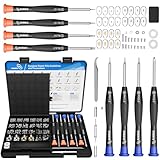
My personal advice, based on years of building and rebuilding, is to always have a small PC screw assortment kit on hand. They’re relatively inexpensive, usually contain a good mix of common screw types (including standoffs, motherboard screws, drive screws, PSU screws, and sometimes even small zip ties), and they’re incredibly useful. A good kit might cost you around $20, and it can easily save you from a build-halting disaster. It’s the PC builder’s equivalent of having a spare fuse or a roll of duct tape – you hope you don’t need it, but you’re damn glad you have it when you do.
Contrarian Corner: Why ‘tool-Less’ Isn’t Always Better
Everyone talks about ‘tool-less’ designs in PC cases like they’re the holy grail of PC building. You know, those cases with thumb screws everywhere, drive bays that clip in, and expansion slots that pop out. The idea is you can build your entire PC without needing a screwdriver. Sounds great, right? Less hassle, faster builds. I used to think so too. But after years of tinkering, I’ve become a bit of a skeptic. In fact, I often find myself preferring cases that require a screwdriver, and here’s why.
First, the security. Thumb screws are great for side panels. I get it. Quick access to swap out a component or dust things off. But when it comes to mounting something as important as a motherboard or a hard drive, a proper screw that you tighten with a screwdriver offers a much more secure connection. Thumb screws can loosen over time due to vibrations, especially in a system with spinning hard drives. I’ve had a graphics card sag slightly because the thumb screw holding it in place wasn’t as tight as a properly screwed-in one. It’s a small difference, but over months or years, it matters for component stability and longevity.
Second, the quality of the tool-less mechanism itself. Manufacturers often cut corners on these. The plastic clips for drive bays can be flimsy and break. The pop-out expansion slot covers can feel cheap and not align perfectly. For motherboards, while some tool-less designs are decent, others rely on plastic clips or levers that just don’t feel as solid as screwing the motherboard down onto well-placed standoffs. The feeling of firmly seating components with metal screws is just more reassuring. It’s a tactile feedback that says, ‘Yep, that’s secure.’
Third, and this is a big one for me, it’s about control. When you’re using a screwdriver, you have a much finer degree of control over how tight something is. You can feel the resistance change. You know when a screw is snug, and you know when you’re starting to overtighten. With tool-less systems, it’s often a case of ‘push until it clicks’ or ‘turn until it stops’. There’s less nuance. This can be especially problematic with delicate components or in situations where precise pressure is needed. I’ve seen people accidentally crack motherboard PCBs because they applied too much force to a tool-less mounting point that wasn’t designed for that level of stress.
Finally, let’s talk about compatibility. Not all motherboards, drives, or expansion cards are perfectly standardized. Sometimes, a slightly thicker PCB or a drive with non-standard mounting holes can cause issues with tool-less mechanisms. With screws, you can often adapt.
You can add a washer, use a slightly different screw, or even gently file a mounting point if absolutely necessary (though I try to avoid that!). Tool-less designs offer far less flexibility when things don’t fit perfectly out of the box. So, while the idea of building a PC without any tools is appealing, I’ve found that having a good set of screwdrivers and screws that fit properly offers a more reliable, secure, and ultimately, satisfying building experience. (See Also: How To Adjust Eyeglass Screw )
The case screws that come with your case are often a good indicator of the overall quality and design philosophy. If they’re cheap, expect the rest of the build experience to be similar.
The Art of the Screw: Practical Tips for Your Build
Alright, let’s get down to brass tacks. You’ve got your case, you’ve probably got some screws, and you’re ready to start putting things together. Here are a few practical tips that have saved my bacon more times than I can count:
- Count and Catalog: As soon as you open that little bag of screws, dump them out (carefully!) and count them. Compare them to the list in your case manual, if it has one. Sort them by type and size. Lay them out so you can see what you have. This prevents that heart-sinking moment halfway through a build when you realize you’re missing a important standoff or a specific drive screw.
- Motherboard Standoffs First: These are a must. Make sure every single standoff that your motherboard requires is in place and screwed in firmly. Some cases come with them pre-installed, which is fantastic. If yours doesn’t, take your time. Make sure they’re the right height and that they don’t wobble. A loose standoff can cause all sorts of electrical gremlins.
- Don’t Overtighten: This is particularly true for motherboard screws. You want them snug, but you don’t need to Hulk-smash them. Overtightening can strip the threads in the motherboard itself or, worse, crack the PCB. Use a Phillips head screwdriver that fits the screw head snugly. Turn until you feel resistance, then give it a final gentle turn. If you’re using a power drill (which I generally advise against for your first few builds), use a very low torque setting.
- SSD vs. HDD Screws: Pay attention to the different thread pitches. SSDs (2.5-inch) usually need smaller, finer threads than 3.5-inch HDDs. Forcing the wrong screw can damage the drive or the case mounting point. Most cases will have labeled trays or mounting holes that correspond to the correct screw type, but it’s always good to double-check.
- Expansion Slot Security: The screws for your graphics card and other expansion cards are important for preventing sag and making sure good connection. While some cases use thumb screws here, if yours uses standard screws, make sure they’re adequately tightened. If you have a heavy GPU, you might even consider an aftermarket GPU support bracket if you’re worried about sag, as that adds weight the case screws might not be designed to handle long-term.
- Radiator and Fan Screws: As mentioned, these are often the missing pieces. If you’re planning on water cooling or adding extra fans, check the required screw lengths and types before you start. Radiator screws are typically longer and have finer threads than standard case screws. Buying a universal fan/radiator screw kit can be a lifesaver here. They usually come with an assortment of lengths and thread types.
- Keep Spares: Don’t throw away any extra screws that came with your case or components. Keep them in a labeled container. You never know when you’ll need a specific screw for a future upgrade or a repair. I have a whole drawer dedicated to PC screws, sorted by type, and it’s saved me countless trips to the store.
Faq: Your Burning Pc Case Screw Questions Answered
Do I Need to Buy Screws for a New Pc Case?
Generally, no, you don’t have to buy extra screws for a new PC case if you’re building a standard configuration. Most cases come with a bag of key mounting hardware for motherboards, drives, and expansion cards. However, if you plan on extensive storage, custom cooling, or are building a high-end system that deviates from a basic setup, it’s wise to check if the included screws will be sufficient. Buying a small, inexpensive PC screw assortment kit is a smart backup plan.
What Screws Come with a Pc Case for Ssds?
PC cases typically include smaller screws with finer threads for 2.5-inch SSDs. These are usually M3 screws and are designed to fit into the specific mounting holes or drive sleds for solid-state drives. Cases often come with enough of these screws to mount at least two or three SSDs, and many modern cases also offer tool-less mounting solutions which might use clips or different hardware.
Are Screws Included for 3.5-Inch Drives in Pc Cases?
Yes, screws for 3.5-inch hard drives are almost always included in PC cases. These are larger, coarser threaded screws, commonly M3.5 or M4, and are designed to secure traditional hard disk drives. Cases usually provide enough of these screws for a few drives, and some higher-end models may include rubber grommets to help with vibration dampening and noise reduction.
How Many Screws Come with a Pc Case?
The number of screws that come with a PC case varies significantly depending on the manufacturer, the case model, and its price point. Budget cases might only include the bare minimum for key components, perhaps 20-30 screws in total. More premium or enthusiast-oriented cases can include anywhere from 50 to over 100 screws, often with a wider variety of types and lengths to accommodate various configurations and custom builds.
Final Thoughts
So, do computer cases come with screws? Yes, almost always. But the real question is: do they come with enough of the right kind of screws for your specific build? My advice is to consider the included hardware a good starting point, but always have a backup plan.
Whether it’s a small, dedicated PC screw kit or just a few extra common types you picked up from the hardware store, being prepared is key. A stripped screw or a missing standoff can turn a fun build day into a frustrating ordeal. It’s a small investment of time and money that pays off big time in saved headaches.
Before you even crack open that new case, take a moment to think about your planned components and any special mounting requirements. A little foresight goes a long way in making your PC build a smooth, successful, and satisfying experience.
![AXTH 25-in-1 Small Precision Screwdriver Set, Professional Magnetic Mini Repair Tool Kit for Phone, Computer, Watch, Laptop, Macbook, Ring Doorbell, Eyeglass, Electronic, [Bearing Steel] Screw Driver](https://m.media-amazon.com/images/I/518YlLmPTcL._SL160_.jpg)
