
My first pair of decent glasses cost me a small fortune. So, naturally, the very first time I dropped them, I nearly had a heart attack. The tiny screw holding one arm on had vanished into the carpet abyss. Panic set in. I scrambled, desperate, and that’s when I first asked myself: do eyeglass repair kits come with screws? It felt like a ridiculous question, but in that moment, I’d have paid double for a kit that guaranteed microscopic hardware.
Look, we’ve all been there. A dropped pair, a tiny hinge loose, and suddenly your vision is a blurry mess. You need a fix, and you need it now. But when you’re staring at a wall of tiny plastic boxes in the store, or scrolling through endless online options, the most basic questions pop into your head.
The Tiny Terror: What’s Actually in Those Kits?
Let’s get straight to the point. When you buy an eyeglass repair kit, do they typically come with screws? The short answer is a resounding YES. Most of them do. It would be a pretty useless kit if it didn’t, right? Imagine buying a screwdriver set without any screwdrivers. Same vibe. These kits are designed to fix those common issues like loose arms or wobbly nose pads, and that almost always involves tiny screws, the kind you’d need a microscope to properly admire.
But here’s the blunt truth: the quality and variety of those screws are where things get… interesting. It’s not like walking into a hardware store and picking out a specific gauge screw. These kits usually come with a smattering of what the manufacturer thinks you’ll need. Often, it’s a handful of the most common sizes. They’ll throw in a few millimeters here, a few millimeters there, and hope for the best. My first kit had about five different screw sizes. Five. For the dozens of screw types that exist on eyeglasses? It felt like bringing a spork to a nine-course meal. The manufacturer’s goal is to cover the 80% of common problems, not the 100%.
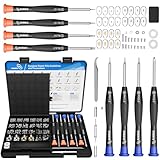
Now, about those other bits. Beyond the screws, you’ll usually find a tiny screwdriver or two. These are often multi-headed, with Phillips and flathead tips. They are incredibly small. I mean, pocket-lint small. They work, but be prepared for a bit of fiddling. If your hands aren’t as steady as they used to be, or if you’re trying to do this in dim light, it can be a real test of patience. Some kits also include little nose pads, replacement pads, and sometimes even tiny tweezers. These extras are good, but they’re secondary to the main event: the screws and the tool to drive them.
My own experience with these little screwdrivers is mixed. One kit came with a surprisingly decent, albeit tiny, multi-tool that actually had some grip. Another had a screwdriver so flimsy I felt like I was going to snap it just by looking at it. It’s a gamble. You’re paying for convenience, not precision engineering when it comes to the included tools. The real value, for me, has always been in the variety of screws and a decent pair of tweezers. The included screwdrivers are often a last resort.
So, yes, they come with screws. But are they the right screws? That’s a whole different ballgame, and we’ll get to that.
When the Kit Screws Aren’t the Right Fit: My Own Dumb Mistake
I learned this lesson the hard way, as I often do. I had a favorite pair of metal-framed glasses that developed a bit of a wobble in the arm. I happily grabbed a generic eyeglass repair kit, confident I was about to save myself a trip to the optometrist and a few bucks. The kit had a bunch of tiny screws, a minuscule screwdriver, and even some replacement nose pads I didn’t need. I found a screw that looked about the right size and started screwing it in.
Here’s where I messed up. I didn’t pay close enough attention to the length and the threading. The screw I picked was almost right.
It went in, and it felt snug enough. I thought I was a genius. I put my glasses on, and the arm felt stable. Victory!
About an hour later, I noticed a tiny, sharp point poking my temple. The screw was too long. It was sticking out the other side of the hinge. (See Also: How To Fix Eyeglasses Arm Without Screw )
Not just a little bit, but enough to be actively annoying. Worse, because it was a slightly different thread, it didn’t grip as well as the original and started to loosen again after only a few hours of wear. It was a complete failure, and frankly, it made the glasses unwearable until I could find the original screw, which, of course, had also disappeared into the ether.
This is a common pitfall. Eyeglass screws aren’t just about diameter; they’re about length and thread pitch. If the screw is too short, it won’t engage enough threads to hold securely. If it’s too long, it’ll poke out and snag on things, or worse, poke you. And if the thread pitch is wrong, it won’t bite properly, leading to a loose fit that will quickly unravel. You might get lucky with a kit screw, but relying on it is a gamble. It’s like trying to fix a leaky faucet with a piece of chewing gum – it might work for a bit, but don’t expect a permanent solution.
The kits provide a selection, but rarely a perfect match for every single screw on every single pair of glasses. Think of it as a starter pack, not a custom tailoring service for your eyewear.
The most common reason people end up frustrated with these kits isn’t that they don’t come with screws, but that the screws provided are either the wrong size, too short, too long, or have the wrong thread. You might need a screw that’s 1.2mm x 3mm, and the kit might only offer a 1.2mm x 3.5mm or a 1.0mm x 3mm. Close, but no cigar. This is why, despite the convenience, I often end up buying a separate, more complete screw assortment.
It’s a few extra bucks, but it saves me the headache and the poking.
What to Look for: Beyond Just ‘eyeglass Repair Kit’
When you’re in the market for a kit, and you’re wondering if do eyeglass repair kits come with screws that are actually useful, here’s what you need to scrutinize. Don’t just grab the first colorful box you see. First off, check the description. Reputable kits will often list the types and sizes of screws included. If it just says ‘assorted screws,’ that’s a red flag. You want to see details like ‘includes 1.0mm, 1.2mm, 1.4mm screws’ and indications of length. Some might even specify ‘for metal frames’ or ‘for plastic frames,’ which can be helpful.
Secondly, look at the quantity and variety. A kit with just ten screws is probably not going to cut it. You want a decent assortment. Ideally, you’re looking for a kit that offers at least a dozen different sizes, covering a range of diameters and lengths. Some higher-end kits will even include a small chart or diagram showing which screw size is typically used for which part of the glasses (e.g., temple hinge, bridge screw). This is gold. It takes some of the guesswork out of the equation.
Third, consider the screwdriver. While I often end up using my own precision screwdriver set, a good multi-tool included in the kit can be a lifesaver in a pinch. Look for one that feels reasonably sturdy, with tips that are well-defined and don’t look like they’ll strip out immediately. Some kits boast magnetic tips, which is a fantastic feature for those minuscule screws. It’s the little things that make the difference when you’re trying to avoid losing a screw into the void for the third time.
Finally, read reviews. This is where the real world comes in. People will complain if the screws are junk, if the tools are useless, or if the assortment is pathetic. Look for comments specifically about the screws themselves – do they fit well? Are they durable? Do they match common eyeglass brands? If multiple people say the screws are too soft and strip easily, steer clear. I once bought a kit based solely on the picture, only to find the ‘screws’ were more like tiny metal pins that barely held anything together. Reviews are your best friend here.
Here’s a quick comparison table I put together based on my own experiences: (See Also: How Measure Metric Computer Screws )
| Kit Feature | What to Look For | My Verdict |
|---|---|---|
| Screw Assortment | Variety of sizes (diameter & length), clearly listed. At least 10-15 different types. | The most important part. If this is weak, the kit is weak. |
| Screwdriver Quality | Sturdy, well-defined tips (Phillips & flathead), magnetic tip a plus. | A good bonus, but I often use my own. Don’t expect miracles. |
| Extra Parts (Nose Pads, etc.) | Relevant to your frame type. | Nice to have, but secondary. The screws are king. |
| Storage Case | Organized compartments, durable material. | Keeps everything together and prevents loss. Key for me. |
Don’t just assume. Dig a little. Your eyeballs will thank you.
The Contrarian View: When to Just Buy the Screws Separately
Everyone says you need a kit. And sure, for a quick fix, a kit can work. But here’s my contrarian take: for anything more than a super rare, emergency fix, you’re often better off just buying a dedicated eyeglass screw assortment. Why? Because the kits are a compromise. They pack in a bit of everything, hoping to hit the most common needs. But what if your glasses use a very specific, slightly unusual screw size? What if you have frames made of titanium, which might need a different thread than standard acetate?
The kits are designed for mass appeal. They’re a one-size-fits-many approach. If you’re like me, and you own multiple pairs of glasses, or you’re particularly clumsy (no judgment, I am too), you’re going to go through these little screws. Constantly buying new kits just for a few screws each time is wasteful and expensive in the long run. I’d rather spend $15-$20 once on a really complete assortment of fifty or a hundred screws in all sorts of sizes, with a decent organizer, than keep buying $5 kits that only have six screws I can use.
Plus, when you buy a dedicated screw assortment, you’re more likely to get better quality screws. They might be made of slightly better-grade stainless steel, less prone to stripping or rusting. The included screwdriver in a good standalone assortment is also usually a step up from the flimsy things you find in basic repair kits. I’ve got a little plastic case from an online retailer that has dozens of tiny screws, all neatly labeled in their own little compartments, and a decent quality mini-screwdriver with interchangeable tips. It cost me a bit more upfront, but I haven’t had to buy another one in years, and I always have the right screw.
So, while the answer to ‘do eyeglass repair kits come with screws’ is yes, my advice is to consider your needs. If you need one screw, right now, and there’s a kit handy, grab it. But if you’re looking for a reliable, long-term solution, or if you have particularly finicky frames, investing in a separate, high-quality screw assortment is probably the smarter, more cost-effective move. It’s about quality over quantity, and precision over a general stab in the dark. I stopped relying on the generic kits for anything other than absolute emergencies about three years ago and haven’t looked back. It saves me time, money, and a whole lot of frustration.
The DIY Eyeglass Repair Process: When Kits Come Into Play
So, you’ve decided to tackle that wobbly arm or loose nose pad yourself. Do eyeglass repair kits come with screws? Yes, and here’s how you might use them. The process, at its core, is simple, but the execution requires a delicate touch.
- Assess the Damage: First, figure out exactly what’s loose. Is it the screw holding the arm to the frame? Is it the screw holding the hinge components together? Or is it a screw that attaches the nose pad arm to the frame? Identifying the problem area is key. Gently wiggle the part to see where the play is.
- Identify the Missing/Damaged Part: If a screw is missing, you’re looking for a replacement. If the screw is stripped or the threads are worn, you might need a new screw or even a new hinge component (though kits rarely cover this). If a nose pad is loose, it might be attached by a tiny screw or a snap-fit.
- Gather Your Tools: This is where the repair kit comes in. You’ll need the screwdriver, and hopefully, the right size screw from the kit. If your kit’s screwdriver is too wimpy, now’s the time to use your own precision screwdriver set. Good lighting is your best friend here. A magnifying glass or a desk lamp with a magnifier can be a big deal.
- Attempt the Repair: For a loose screw, carefully insert the replacement screw (from the kit, or your separate assortment) into the hole. If it’s a hinge, make sure the hinge plates are aligned. Gently turn the screwdriver clockwise. Don’t force it. If it feels like it’s not catching the threads, stop. You might have the wrong size or thread pitch. Try a different screw. If the screw is too long and you can feel it poking out the other side, you need a shorter one.
- Final Tightening and Check: Once the screw is in and feels snug, give it a gentle test. Wiggle the arm. Does it feel secure? Does it open and close smoothly? If it’s still loose, try tightening it a tiny bit more. If it feels too tight and stiff, loosen it slightly. You’re aiming for a balance of secure and functional. For nose pads, make sure they are aligned and comfortable.
- Clean Up: Put away your tools and the repair kit. If you have leftover screws, store them in an organized way for future use.
The biggest mistake people make here is forcing things. Eyeglass screws are tiny and made of relatively soft metal. You can strip the screw head, strip the threads in the frame, or even break off a tiny hinge part if you’re too rough. Patience and the right size screw are your best allies. And if you absolutely cannot find a screw from the kit that fits, or if the screw you have just won’t catch, it’s time to admit defeat and take them to a professional. That’s when you’d be glad you didn’t mangle them trying to force a screw that was definitely not meant for your glasses.
Common Pitfalls and How to Avoid Them
Let’s talk about the screw-ups. You’ve got your kit, you think you’re ready. But there are a few common ways people flub eyeglass repairs, even when the kits do come with screws. One of the biggest is the ‘close enough’ mentality. You find a screw that looks about the right size and you jam it in. As I mentioned before, this can lead to screws that are too long, poking out and snagging everything, or screws that are too short and don’t hold. The result? A repair that fails within hours, or makes your glasses actively uncomfortable.
Another classic mistake is using the wrong tool. Those tiny screwdrivers in the kits are often not great. If the tip isn’t perfectly formed, or if it’s slightly too big or too small for the screw head, you’re going to strip the head. Once a screw head is stripped, it’s a nightmare to remove or tighten. It’s like trying to turn a buttered doorknob. This is where having your own set of precision screwdrivers, with a variety of perfectly sized tips, really shines. They’re not expensive, and they’re worth their weight in gold when you’re dealing with miniature hardware.
Forgetting to secure the other side of the hinge is another common goof. When you’re removing a screw to replace it, make sure the hinge plates stay aligned. If one side slips, the screw might not go back in straight. And if you’re trying to put a screw into a loose hinge where the tiny nut or threaded insert on the other side has fallen out, well, you’re out of luck with just a screw. Kits don’t typically fix missing nuts or threaded inserts, unfortunately. That’s a professional job or requires a specialized glue, which is a whole other can of worms. (See Also: How To Adjust Eyeglass Screw )
Finally, there’s the over-tightening trap. You feel like you need to crank it down to make sure it’s secure. But these screws and the frames they go into are delicate. Over-tightening can strip the threads in the frame itself, making it impossible for any screw to hold. It can also crack plastic frames or bend metal ones. The goal is ‘snug,’ not ‘fusion welded.’ Think of it like screwing in a lightbulb – you stop when it feels firm, not when you’re trying to break a world record for torque.
To avoid these, my advice is simple: slow down. Take your time. Use magnification if you need it. Use the right size tool. And if you’re unsure, it’s always better to take them to an optician. They have the specialized tools and experience to do it right without damaging your glasses. Sometimes, the cost of a professional fix is less than the cost of trying to fix it yourself and messing it up.
Faq: Your Burning Eyeglass Repair Kit Questions
Do Eyeglass Repair Kits Come with Screws?
Yes, almost universally, eyeglass repair kits come with a selection of tiny screws. It would be practically impossible to fix loose hinges or arms without them. The quantity and variety of these screws, however, can vary greatly from kit to kit.
Are the Screws in Eyeglass Repair Kits Universal?
No, the screws are not universal. While kits try to include common sizes, different eyeglass manufacturers use a wide range of screw diameters, lengths, and thread pitches. You might get lucky, but it’s common for the screws in a kit not to be a perfect match for every pair of glasses.
What Kind of Screwdrivers Are in Eyeglass Repair Kits?
Eyeglass repair kits typically include small, multi-headed screwdrivers. These usually have both Phillips (cross-head) and flathead tips. They are very small, designed for precision work on eyewear, but their quality can range from surprisingly functional to quite flimsy.
How Do I Know Which Screw to Use From a Kit?
This can be tricky. Ideally, the kit might provide a size chart. Otherwise, you’ll need to visually compare the old screw (if you have it) or the hole with the screws in the kit. The best approach is to try the smallest screw that seems to fit the thread, then try incrementally larger ones until one feels snug without forcing it. Trying to match the length is also important.
Can I Use Super Glue Instead of a Screw?
For a truly broken hinge or a stripped screw hole where a screw won’t hold, super glue is sometimes used as a temporary fix. However, it’s generally not recommended for permanent repairs on eyeglasses. It can create a mess, make future repairs difficult, and may damage the frame material or lenses. Professional repair is usually the better long-term solution if a screw won’t suffice.
How Long Do Eyeglass Repair Kits Last?
The components within an eyeglass repair kit, particularly the tiny screws, don’t really ‘expire.’ The tools might degrade over time, especially if they are made of lower-quality materials. The main limitation is whether the kit contains the specific screw size you need when you need it. Many people find they use up the most common screw sizes quickly and then the kit becomes less useful.
Conclusion
So, to circle back to the original question: do eyeglass repair kits come with screws? Absolutely. They’re packed with them. But as you’ve seen, simply having screws isn’t always enough. It’s about having the right screws, the right tools, and a bit of patience.
Don’t get me wrong, these kits are handy for a quick, in-a-pinch fix. I’ve definitely used them to get me through the day until I could get to an optician or sort out a more permanent solution. Just go into it with realistic expectations. Understand that the included screws might not be a perfect match for your specific frames, and the tools might be more of a suggestion than a reliable workhorse.
My best advice? Keep a kit handy for emergencies, but if you’re serious about maintaining your eyewear or if you’re prone to breaking them, consider investing in a good standalone assortment of eyeglass screws. It’s a small price to pay for knowing you’ll likely have the exact tiny piece of metal you need, right when you need it, without the guesswork.
![AXTH 25-in-1 Small Precision Screwdriver Set, Professional Magnetic Mini Repair Tool Kit for Phone, Computer, Watch, Laptop, Macbook, Ring Doorbell, Eyeglass, Electronic, [Bearing Steel] Screw Driver](https://m.media-amazon.com/images/I/518YlLmPTcL._SL160_.jpg)
