
I swear, the universe conspires against my eyeglasses. One minute I’m squinting through them, the next I’m fumbling for a tiny screw that’s vanished into the carpet abyss. It’s infuriating. You find yourself asking, ‘do glasses repair kits come with screws?’ because the thought of buying a whole new pair over one lost bit of metal is just… a bridge too far for my wallet.
Look, I’ve been there. Dropped my frames, caught them on a sweater, whatever it is, that little screw holding the arm on can be a real pain. So, what’s the deal with these kits? Do they actually save the day, or are they just another placebo in a world of over-hyped fixes?
The Tiny Metal Menace: What’s Actually in These Kits?
So, you’ve snapped the arm off your favorite shades, or maybe a screw’s gone AWOL from your everyday specs. Panic sets in, followed by the inevitable online search. The question that’s burning a hole in your pocket and your patience is: do glasses repair kits come with screws? The short, sweet, and infuriating answer is: usually, yes, but not always the ones you actually need.
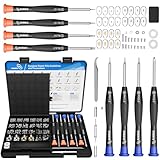
Most of the generic, cheap-and-cheerful glasses repair kits you’ll find on Amazon, at the drugstore, or even in some smaller optician shops are designed to be a one-size-fits-most kind of deal. They’ll typically include a small assortment of the most common screw sizes. Think tiny eyeglass screws, maybe a couple of slightly larger ones for the hinge area, and often a very basic screwdriver with a few interchangeable tips – usually Phillips and flathead, sometimes a tiny Torx if you’re lucky. They might also throw in a pair of nose pads or a little polishing cloth, just to make it feel like you’re getting more bang for your buck.
I remember my first foray into these kits. I’d lost a screw from my prescription glasses, the ones I need to function.
I grabbed the cheapest kit I could find, boasting ‘everything you need!’ Turns out, ‘everything’ meant a bunch of screws that looked roughly the right size, plus a screwdriver that felt like it was made of cheese.
I spent a good twenty minutes trying to force a screw in, thinking I was just being clumsy. Nope. The thread was slightly off, and I ended up cross-threading it, making the problem worse. The ‘kit’ was useless for my specific problem, though I did end up with a handful of tiny screws that are still rattling around in my junk drawer, mocking me.
The problem is, not all eyeglass screws are created equal. While there are common sizes, the exact dimensions – thread pitch, length, head type – can vary wildly between brands, frame materials (plastic vs. metal), and even different parts of the same frame. So, while a kit will likely contain screws, the chance of them being the exact perfect fit for your specific broken glasses can be a bit of a gamble. It’s like buying a ‘universal’ remote; it might control some functions on a few devices, but it’s rarely as good as the original.
Some of the better-quality kits, often from more reputable brands or those specifically designed for eyeglass repair rather than a general ‘bits and bobs’ approach, will come with a wider variety of screw lengths and types. They might even have a little guide or chart to help you identify the right screw. But even then, if your glasses are from a niche brand or are an older model, you might still be out of luck with a standard kit.
When the Kit Fails: Why Generic Screws Aren’t Always the Answer
Here’s the blunt truth: most cheap glasses repair kits are a bit of a lottery. They offer a generic solution to a very specific problem. You’ve probably seen those little plastic cases filled with dozens of teeny-tiny screws. They look impressive, right? But the devil is in the details, and with eyeglass screws, the details are microscopic. If you’re lucky, one of those screws will be the right size and thread. If you’re not, you’re just left with a bunch of tiny bits of metal that don’t do anything except potentially fall down the sink drain. (See Also: How To Fix Eyeglasses Arm Without Screw )
My own disastrous encounter with a ‘complete’ kit is a prime example. I needed a screw for the temple hinge on my metal-framed glasses.
The kit had about twenty different screws, all looking vaguely similar. I picked one that seemed to fit the hole and started screwing.
It went in… too easily. The thread wasn’t biting properly. I kept turning, and it just spun.
Then I tried another. Same issue.
It was like trying to fit a square peg into a round hole, but much, much smaller and with higher stakes (namely, being able to see properly). I ended up stripping the thread in the hinge itself, which was a far more expensive fix than just buying a new screw would have been.
The issue often boils down to thread pitch and diameter. Even a millimeter difference can mean the screw won’t engage, or it will go in too loose, falling out again after a few wears. Then there’s the length. Too short, and it won’t secure the arm properly. Too long, and it can poke into your face or get in the way. And the head size matters too – you want it to sit flush and not snag on anything.
What about those kits that claim to have ‘universal’ screws? I’m skeptical. There’s no such thing as a truly universal screw for glasses. Different manufacturers use different standards, and even within one brand, different models might have slightly different requirements. The common advice is to match the screw size and type as closely as possible, but if you don’t have the original screw to compare, or if you’re buying a generic kit, you’re basically guessing.
I’ve learned the hard way that relying solely on a generic repair kit for anything beyond a very basic, common fix is often a recipe for frustration. It’s like using a butter knife to saw through a piece of lumber – it might make a dent, but it’s not the right tool for the job. For important repairs, especially on more expensive frames, you’re often better off getting the exact replacement part, which usually means going back to the optician or the manufacturer.
What to Look for: Picking a Kit That Actually Works
Alright, so if you’re going to grab a glasses repair kit, how do you avoid ending up with a drawer full of useless tiny metal bits? It’s not impossible to find a decent one, but you’ve got to be a bit discerning. Forget the ones that look like they came from a dollar store’s toy section. You need something a bit more thought-out. (See Also: How Measure Metric Computer Screws )
First off, look for kits that specify the types of screws included. Do they list the sizes? Are there different lengths and head types? A good kit will offer a variety, not just a handful of identical ones. Some kits even come with a small magnifying glass or a chart that helps you measure your existing screw or the hole where it belongs. That’s a sign they’re actually thinking about the user’s problem.
Another thing to consider is the quality of the screwdriver. Those tiny, flimsy ones that come with most kits are often the first thing to break or strip. Look for a kit that includes a decent-quality screwdriver with a comfortable grip and, ideally, replaceable bits. Some higher-end kits might even include a specialized eyeglass screwdriver that’s designed for the job, with a swiveling head and a good balance.
Material matters too. Are the screws made of stainless steel? Cheaper kits might use alloys that can rust or corrode, which is the last thing you want near your face. Stainless steel is generally the way to go for durability and resistance to skin oils and moisture.
And here’s a contrarian take: sometimes, the best ‘kit’ isn’t a kit at all. It’s buying a small pack of assorted eyeglass screws directly from a reputable optical supply company online. You might pay a bit more upfront for a pack of, say, 50 assorted screws, but you’ll have a much higher chance of finding the exact match. Plus, you’ll have spares. I switched to this approach a couple of years ago after getting fed up with the junk kits. I bought a little plastic organizer box, filled it with a variety of screws, and now I actually have the right size when I need it. It cost me maybe $25 for a huge assortment, and it’s lasted me ages.
| Feature | Generic Kit (Verdict) | Quality Kit (Verdict) | Assorted Screw Pack (Verdict) |
|---|---|---|---|
| Screw Variety | Often limited, hit-or-miss. | Good to excellent, often with size guides. | Excellent, very broad range. |
| Screwdriver Quality | Poor, prone to stripping. | Decent, sometimes with multiple bits. | Not included. |
| Material Quality | Variable, can be cheap alloys. | Usually stainless steel. | Usually stainless steel. |
| Cost-Effectiveness | Low (if it doesn’t work). | Moderate to high (if it works). | High (long term). |
| Best For | Very minor, common repairs on cheap frames. | More reliable fixes, decent frames. | Serious DIYers, frequent repairs, specific needs. |
Real-World Use: When a Kit Is Your Best Friend (and When It’s Not)
Let’s be honest, most of us don’t have a full toolkit for fixing our glasses. We just want to stop the darn arm from flopping around. So, when do glasses repair kits actually come in handy?
Well, they’re best for those quick, temporary fixes or for very common problems. If a screw has just loosened slightly on a pair of simple metal-rimmed glasses and you need to tighten it pronto, a kit with a basic screwdriver and a couple of likely candidates for screws can get you out of a jam. I’ve used one to tighten a screw on my reading glasses at a coffee shop, and it held for a few days until I could get to my optician. That’s where these kits shine – in a pinch.
They’re also more likely to be useful if you have a very common type of frame. Think simple, mass-produced plastic frames or basic metal ones. The screws used in these are often standardized to a greater degree than in more complex or high-end designer frames. If you’ve lost a screw from a pair of basic Wayfarer-style glasses, a generic kit might just have what you need.
However, and this is a big ‘however,’ they are generally not suitable for intricate repairs, specialized frames, or when you need a perfect, long-lasting fix. If your glasses have spring hinges, tiny decorative elements, or are made of exotic materials like titanium or acetate with specific mounting points, a generic screw from a kit is highly unlikely to work. Trying to force it can damage the frame, making the repair more expensive and difficult.
I learned this when a tiny screw fell out of the hinge on a pair of expensive, lightweight titanium glasses. I thought, ‘No problem, I have a kit!’ I tried a few screws, none fit. I tried to force one, and I felt a little snap. The hinge mechanism itself was slightly damaged. My optician had to order a specific part from the manufacturer, and it cost me about $60. The cheap repair kit? It cost me $5, but it cost me about $55 more in the long run. It’s a classic case of ‘you get what you pay for,’ but applied to tiny, fiddly eyeglass parts. (See Also: How To Adjust Eyeglass Screw )
So, if you’re dealing with anything other than a very basic frame and a very obvious screw loss, be prepared for the possibility that the kit might not have the exact screw you need. It’s always a good idea to have the original screw if possible, or at least a very clear photo of the hinge mechanism and the hole, when you’re looking for replacements, whether that’s in a kit or from a specialty supplier.
Practical Tips for Eyeglass Screw Emergencies
Dealing with a lost eyeglass screw feels like a tiny personal emergency, doesn’t it? You need to see, and suddenly your vision is blurry and your glasses are falling apart. Here are a few things I’ve picked up over the years that might save you some grief:
- Keep the Original Screw (If Possible): This is the golden rule. If a screw loosens, don’t just tighten it and forget it. Put a tiny dab of clear nail polish or a specific eyeglass threadlocker on the threads before you tighten it. This helps keep it from vibrating loose again. And if it does fall out, having the original means you can take it to an optician or use it as a reference to buy the exact replacement.
- The ‘Catch Everything’ Method: When you’re working on your glasses, especially if you’re trying to replace a screw, do it over a white towel, a shallow tray, or even a sink with the plug in. Seriously. That tiny screw has a magnetic attraction to the darkest, most inaccessible corners of your home. White surfaces make it easier to spot if it goes rogue.
- Don’t Force It: If a screw isn’t going in smoothly, stop. You’re probably using the wrong size or thread. Forcing it is a surefire way to strip the screw head, damage the threads in the frame, or even crack the frame itself. Better to try another screw or admit defeat and seek professional help.
- The Temporary Fix: In a real bind, and if you can’t find the right screw, sometimes a very tiny piece of tape (like clear medical tape) wrapped around the screw post can act as a temporary shim to keep the arm from falling off. It’s not pretty, but it can buy you time. I’ve done this before to get through a work day.
- Know When to Call the Professionals: For anything more than a simple screw replacement, or if you’re dealing with expensive or delicate frames, your local optician is your best bet. They have specialized tools, a vast array of replacement parts, and the expertise to fix it correctly without causing further damage. Many will do simple screw replacements or tightenings for free or a very small charge.
Faq: Your Eyeglass Screw Questions Answered
Do Common Glasses Repair Kits Include Tiny Screwdrivers?
Yes, virtually all glasses repair kits come with at least one small screwdriver. These are usually very basic, often with interchangeable Phillips and flathead tips. The quality can vary significantly, with cheaper kits providing flimsy tools that are prone to stripping screws or breaking.
Can I Use a Regular Household Screwdriver for My Glasses?
Generally, no. Eyeglass screws are incredibly small and have very fine threads. Regular household screwdrivers are far too large and will not fit the screw head or the screw hole. Attempting to use one will likely damage the screw and the frame, making a proper repair impossible.
What If the Screws in the Kit Are Too Big or Too Small?
If the screws in the kit are not the correct size (either too big or too small), the kit is effectively useless for your specific repair. This is a common issue with generic kits because eyeglass screw sizes are not entirely universal. You’ll need to find a different source for the correct size screw, often by visiting an optician.
Are There Kits Specifically for Plastic Frames vs. Metal Frames?
While some kits might include a slightly wider variety of screws, most generic kits are not specifically designed for plastic or metal frames. The main difference in screws for these frame types is usually the length and the need for a slightly different thread pitch to grip the material effectively. Quality kits or specialized screw assortments are more likely to cater to these differences than basic, all-purpose kits.
How Do I Know Which Screw Size to Get If the Kit Doesn’t Have It?
The best way to know the exact screw size is to remove the original screw (if possible) and measure its length and diameter. You can also take the broken part of the glasses or the original screw to an optician, who can identify the correct size for you. Some online vendors also provide detailed charts or measurement tools to help you choose the right screw.
Final Verdict
So, to circle back to the burning question: do glasses repair kits come with screws? Yes, they almost always do. But, and it’s a big ‘but,’ the quality, variety, and exact fit of those screws can be a real gamble. You might get lucky with a basic fix on a cheap pair of frames, but for anything more involved, you’re often better off buying an assorted pack of eyeglass screws or heading straight to your optician.
Don’t waste your money on the cheapest kit hoping for a miracle. If you’re going to buy one, look for one with a decent selection and a quality screwdriver. Better yet, invest in a small organizer box and a variety pack of screws online. It feels like more effort upfront, but trust me, when that arm starts to droop, having the right tiny screw at your fingertips feels like winning the lottery.
Next time your glasses need attention, you’ll know to temper your expectations with those little kits. Sometimes, the most honest advice is to just get the right part, even if it means a little extra legwork.
![AXTH 25-in-1 Small Precision Screwdriver Set, Professional Magnetic Mini Repair Tool Kit for Phone, Computer, Watch, Laptop, Macbook, Ring Doorbell, Eyeglass, Electronic, [Bearing Steel] Screw Driver](https://m.media-amazon.com/images/I/518YlLmPTcL._SL160_.jpg)
