I’ve been there. Standing in the aisle, staring at rows of tape, trying to figure out if the cheapest option is actually worth the risk. You’re about to start a project, maybe painting a room or tackling some DIY trim work, and you need painter’s tape. But the fancy stuff costs a pretty penny. This leads you to the inevitable question: Does Dollar Tree have painters tape? It’s a fair question, and one I’ve definitely asked myself more times than I care to admit. Let’s cut to the chase.
The Dollar Tree Tape Gamble: Is It Worth It?
Alright, let’s get this out of the way. Does Dollar Tree have painters tape? Yes, they often do.
You’ll usually find it in the craft or home improvement sections, often in packs of two or three rolls. They carry brands you might not recognize, and sometimes their own generic label. Now, the real question isn’t if they have it, but should you buy it? My honest answer? It’s a crapshoot, and I’ve learned this the hard way.
A few years back, I was painting my kitchen cabinets and decided to save a few bucks. I grabbed a few rolls of what I thought was painter’s tape from the Dollar Tree. Big mistake. Not only did it lift the paint I’d spent hours prepping, but it also left this sticky, gunked-up residue that was a nightmare to remove.
I ended up having to go to the hardware store anyway, buy proper tape, and then spend another afternoon cleaning up my mess. So, while the price is tempting – usually around $1.25 a roll – you have to weigh that against the potential for project disaster. It’s like buying a lottery ticket for your paint job. Sometimes you win, sometimes you get peeling paint and a whole lot of regret.
The main issue with bargain-basement tape is its adhesive. Good painter’s tape uses a low-tack adhesive specifically designed to hold firm enough to create a seal against paint bleed but also to peel off cleanly without damaging the surface underneath.
Dollar Tree tape often uses a more aggressive, cheaper adhesive. This means it can stick too well to delicate surfaces like fresh paint, wallpaper, or even certain wood finishes.
When you try to pull it off, you’re basically pulling off whatever it’s stuck to. I’ve seen it happen on walls, trim, and even on crafting projects where I was using it to mask off areas. The frustration is real. You’re not saving money; you’re just creating more work and a higher chance of a botched job.
However, there are times when Dollar Tree tape might be okay. If you’re masking off something that is already well-established, like a sturdy primer coat that’s been cured for weeks, or a piece of cardboard you’re just trying to keep from getting overspray, it might do the job.
The trick is knowing your surface and managing your expectations. I’ve used it for masking off windows when doing exterior spray painting, where the surface is glass and the potential for damage is nil.
In those specific, low-risk scenarios, it can be a cost-effective solution. But for anything where a clean, damage-free removal is important, I’d steer clear.
The cost of fixing a mistake far outweighs the few dollars you save on tape.
What to Look for (even at Dollar Tree)
So, if you find yourself in a pinch or just curious to test the waters, what should you look for when you spot painter’s tape at Dollar Tree? First, check the packaging. Is it labeled specifically as “painter’s tape”? Sometimes they’ll have generic masking tape that looks similar, and that’s almost always a bad idea for painting projects. Painter’s tape is formulated differently. Look for any indications of intended use – some might even say “for delicate surfaces” or “easy clean removal,” though don’t take those claims at face value without reservation.
The brand itself can sometimes be a clue, but honestly, most of the brands at Dollar Tree are budget-oriented or private labels that don’t have much of a reputation to speak of. If you see a brand that you do recognize from a hardware store, it might be a good sign, but it’s rare. The color can also be a hint, though not a definitive one. Traditional blue painter’s tape is generally for multi-surface use, while green tape is often for delicate surfaces, and yellow is usually for general-purpose masking. However, Dollar Tree’s offerings might not adhere to these conventions, so don’t rely on color alone. I’ve seen blue tape from Dollar Tree that behaved like aggressive masking tape.
The width of the tape is also a factor. They often come in standard widths like 1 inch or 1.5 inches.
Thinner tapes can be harder to handle and might offer less coverage. If you’re painting a large wall, you might need several rolls, and the seams could be a weak point for paint bleed. Wider tapes are generally easier to apply in long, continuous lines. (See Also: Does Painters Tape Rip Paint Off Walls )
Pay attention to the thickness of the tape material itself. Thicker tape might offer better protection against bleed-through, but it can also be less flexible around corners. It’s a balancing act. My personal preference is for a medium-thickness tape that’s flexible enough to conform to edges but substantial enough to hold its shape.
Unfortunately, you can’t always tell that from the packaging.
Ultimately, your best bet is to buy just one pack if you’re unsure. Test it on an inconspicuous area first. Apply it, let it sit for a bit (but not too long, as heat can make adhesives transfer), and then try peeling it off. See how it behaves. Does it tear easily? Does it leave residue? Does it lift paint? This small test can save you a lot of grief. If it fails the test, it’s probably best used for non-important masking tasks, like covering up a vent or securing something in a moving box. That’s how I’ve ended up using some of the less-than-stellar rolls I’ve bought over the years.
Common Mistakes When Using Cheaper Tape
One of the biggest blunders people make with any painter’s tape, but especially with cheaper options, is assuming it’s foolproof. You slap it on, paint over it, and expect magic.
Wrong. With budget tape, you have to be far more mindful. A common mistake is leaving the tape on for too long. Many of us think, “I’ll just leave it on until the paint is dry.” Big mistake.
For most painter’s tape, you want to remove it while the paint is still slightly wet or at least not fully cured. The reason is that as paint dries, it hardens.
If the tape adhesive is too strong, or if the paint has bonded to the tape’s edge, pulling off the tape after the paint is rock hard can pull the paint off with it. This is doubly true for Dollar Tree tape. I learned this the hard way painting a dark accent wall; I waited until the next morning, and when I pulled the tape, it took jagged strips of my new paint with it, creating a mess that looked like a topographical map of a mountain range.
It took me hours to carefully score the edge with a razor blade to try and salvage it.
Another frequent error is not pressing the tape down properly. This is important for any painter’s tape, but especially for cheaper versions that might not have a perfectly consistent adhesive layer. You need to create a solid seal along the edge to prevent paint from seeping underneath. Use your fingernail, a putty knife, or a dedicated tape tool to firmly press down the entire length of the tape.
Run your finger along the edge. Think of it as sealing a leak. If there are any gaps or loose spots, paint will find its way in. This leads to fuzzy, uneven lines that make your paint job look amateurish, regardless of how much you paid for the paint itself.
I’ve seen people just lay it down and expect it to stick. That’s not how it works, folks.
Improper surface preparation is also a huge pitfall. Before you even think about applying tape, make sure the surface you’re taping onto is clean and dry.
Dust, grease, or moisture will prevent the tape from adhering properly. And if it doesn’t adhere properly, it will bleed.
This is even more important with Dollar Tree tape because its adhesive might not be as forgiving. If it doesn’t grab onto a clean, dry surface, it’s certainly not going to hold well on a dirty or damp one. Some people also try to tape over textured surfaces or freshly painted walls that haven’t fully cured, which is a recipe for disaster.
Always read the paint can for drying and curing times, and when in doubt, wait an extra day or two. The patience will pay off in cleaner lines and less frustration. (See Also: Does Masking Tape Work The Same As Painters Tape )
Finally, don’t be afraid to use a second layer of tape or a caulk bead for important lines. If you’re aiming for razor-sharp edges on something important, like a ceiling line or a detailed trim piece, relying solely on one strip of tape, especially budget tape, is risky. For really high-stakes areas, I sometimes apply a thin bead of paintable caulk along the edge of the tape after it’s down, let that dry, then paint.
This creates an even more solid barrier. Or, after painting, I’ll apply a very thin bead of the original paint color along the tape edge, let that dry, and then remove the tape.
This seals any tiny gaps with the original color, making the tape removal much cleaner. These are advanced tricks, but they become more necessary when you’re working with less-than-premium materials.
Real-World Use Cases: When Dollar Tree Tape Might Shine
Let’s be honest, not every project requires museum-quality precision. There are times when you just need something to hold things together, mask off an area from overspray, or protect a surface that’s not particularly delicate. This is where the Dollar Tree tape could potentially earn its keep.
Think about crafting. If you’re a scrapbooker or doing some mixed-media art, and you need to mask off a section of paper to create a clean edge for glue or paint, the Dollar Tree tape might be perfectly adequate. The paper itself is more solid than a freshly painted wall, and the stakes are lower.
I’ve used similar generic tapes for masking off areas on cardboard templates for woodworking projects. As long as I’m not worried about damaging the cardboard, it works fine for preventing paint or glue from spreading where I don’t want it.
Another scenario is protecting surfaces that are already meant to be roughed up or are very durable. For example, if you’re spray painting the legs of a metal outdoor chair that’s already chipped and weathered, and you just want to keep paint off the seat, Dollar Tree tape might be an option. The metal surface isn’t going to be damaged by the tape’s adhesive. Or, consider covering up a vent or a light switch on a wall that you are not painting. You’re just trying to prevent dust and debris from falling into them while you’re working. In these cases, the risk of damaging the underlying surface is minimal, making the low cost a more attractive proposition.
I’ve also seen people use this type of tape for temporary fixes around the house. Think securing a loose wire temporarily, holding a small poster up on a non-important surface, or even as a makeshift bandage for a ripped piece of fabric on a backpack.
These aren’t painting applications, but they highlight the versatility of tape when the primary concern isn’t residue-free removal. It’s about function over finesse.
If you’re just trying to keep two things stuck together for a short period, and the surface is forgiving, then the $1.25 rolls might serve their purpose. It’s about using the right tool for the job, and sometimes, the “wrong” tool can still get the job done if your expectations are aligned with its limitations.
One specific instance comes to mind: I was helping a friend move, and we needed to secure some packing paper to a large, oddly shaped piece of furniture to protect it from scuffs. We didn’t have any proper packing tape handy, but we did have a few rolls of generic tape from a dollar store.
We used it to tape the paper down, and it held reasonably well. There was a slight residue on the furniture afterwards, but it wiped off easily with a damp cloth. It wasn’t ideal, but it prevented worse damage during the move. So, while I’d never recommend it for painting walls, there are niche applications where it can be surprisingly useful, provided you understand its limitations.
When to Bite the Bullet and Buy Better Tape
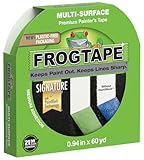
Let’s be blunt. If you’re painting walls, trim, furniture, or anything with a finish you care about, you absolutely need to buy proper painter’s tape from a reputable brand. I’m talking about tape from 3M (like their ScotchBlue line), FrogTape, or even good quality store brands from places like Sherwin-Williams or Benjamin Moore. These tapes are engineered with specific adhesives and backing materials that guarantee clean removal and sharp lines on a variety of surfaces.
The difference is night and day. I once tried to cut corners on painting my bathroom vanity.
I used some cheap tape, and when I pulled it off, it took chunks of the satin finish with it. I was mortified. The cost of fixing that mistake – sanding, priming, repainting – was exponentially higher than if I had just bought a $10 roll of good tape from the start. (See Also: Does Painters Tape Peel Paint )
That’s a lesson I only had to learn once.
The types of surfaces you’re working with are a huge determinant. If you’re painting over freshly painted walls, especially latex or acrylic paints that need time to cure, you need tape designed for delicate surfaces.
These tapes have a much lower tack adhesive. Trying to use Dollar Tree tape here is like playing Russian roulette with your paint job.
Even if the paint is dry to the touch, it might not be fully adhered to the wall. Cheap tape will rip it right off. Similarly, if you’re working with wallpaper, historic plaster, or any kind of veneer or delicate wood finish, you need the best tape you can get.
The adhesive on these special tapes is formulated to be extremely gentle. I’ve invested in green tape specifically for delicate surfaces, and it’s saved me so much heartache on older homes.
Consider the time and effort you’ve already put into your project. If you’ve spent days prepping, sanding, and priming, the last thing you want is to ruin it all with a $1.25 roll of tape. The time you save by using cheap tape will be lost tenfold in fixing mistakes and redoing work. Think about the visual impact.
Do you want crisp, clean lines that make your paint job look professional and polished, or do you want fuzzy, bleeding edges that scream “DIY fail”? For me, the satisfaction of a clean line is worth the investment in good tape. It’s a small price to pay for a professional-looking finish.
I’ve seen projects where the paint color was gorgeous, but the bad taping made the whole thing look sloppy. It’s the details that matter.
There’s also the psychological aspect. When you use good quality materials, you have more confidence. You’re less stressed about the process. You can focus on applying paint evenly, knowing that the tape will do its job. With cheap tape, there’s always that nagging doubt, that anxiety about how it will come off. It adds an unnecessary layer of stress to what should be a rewarding activity. For my own sanity and the quality of my work, I’ve made the switch. I now keep a good supply of reliable painter’s tape on hand, and I only consider the bargain stuff for situations where the risk is virtually zero.
Faq: Your Dollar Tree Tape Questions Answered
Is Dollar Tree Painter’s Tape Good for Walls?
Generally, no. While Dollar Tree often carries painter’s tape, its adhesive is frequently too aggressive for freshly painted or even well-cured walls. It carries a high risk of peeling paint, leaving residue, or damaging the wall surface. For painting walls, it’s always best to invest in reputable brands specifically designed for clean removal.
Can I Use Dollar Tree Tape for Crafts?
Yes, for many crafting projects, Dollar Tree tape can be perfectly adequate. If you’re working with paper, cardboard, or other materials that aren’t easily damaged, and the primary goal is masking or temporary adhesion, it can be a cost-effective option. Just be mindful of its adhesive strength on more delicate craft surfaces.
What’s the Difference Between Masking Tape and Painter’s Tape?
Masking tape is generally more aggressive in its adhesive and is intended for rougher applications where clean removal isn’t a priority. Painter’s tape, on the other hand, is formulated with a low-tack adhesive specifically to adhere firmly enough to prevent paint bleed but also to remove cleanly from most surfaces without damage. Dollar Tree might sell masking tape that looks similar, but it’s not a substitute for true painter’s tape.
How Do I Know If Dollar Tree Tape Will Damage My Surface?
The best way to know is to test it. Apply a small piece of the tape to an inconspicuous area of the surface you plan to tape on. Let it sit for a reasonable amount of time (e.g., a few hours, or as long as you might leave tape on during a real project), then carefully try to peel it off. Observe if it lifts paint, leaves residue, or tears the surface. If it causes any damage in your test, do not use it on your main project.
Verdict
So, the short answer to does Dollar Tree have painters tape is yes. But as we’ve discussed, the longer, more important answer is: proceed with extreme caution. For important painting jobs where clean lines and undamaged surfaces are most important, the few dollars saved at Dollar Tree is rarely worth the potential headache and cost of repairs. I’ve learned that lesson the hard way, and I’m telling you now to save yourself the trouble.
However, if you’re doing a craft project, masking off a non-delicate surface, or need something for a temporary fix where residue isn’t a major concern, then giving their tape a try might be sensible. Just always, always test it first on a hidden area. Your paint job, your walls, and your sanity will thank you for it.
Next time you’re tempted by that bargain roll, ask yourself: what’s this project worth to me? If it’s more than a couple of bucks, it’s probably time to hit up the hardware store.