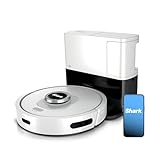
Staring at a blinking red light on a robot vacuum when you’re expecting clean floors is… infuriating. You think you’ve got the thing set up, ready to go, and then it just… stops. It’s like a toddler on a sugar rush, full of energy one minute, then suddenly out of commission.
This question, does the Shark robot vacuum recharge batteries while cvleaning, pops up more than you’d think. It’s a fair question, and frankly, the marketing materials don’t always spell it out in the blunt, no-nonsense way we need.
Honestly, most people assume they just… do it. Like magic. But the reality? It’s a bit more nuanced, and understanding this can save you a whole lot of headache, and a surprising amount of wasted time.
Frankly, I’ve been there. I’ve bought machines that promised the moon and barely delivered a dim flicker, and that’s why I’m here to cut through the noise.
Robot Vacuum Battery Life: The Real Deal
Let’s get this straight, right off the bat: Does the Shark robot vacuum recharge batteries while cvleaning? No. Absolutely not. It’s physically impossible for a device to be both actively expending energy to clean your floors and simultaneously drawing power to replenish its own battery. Think of it like trying to drink water while simultaneously spitting it all out – it just doesn’t work.
When a Shark robot vacuum, or any robot vacuum for that matter, is in cleaning mode, it’s drawing power from its battery to spin brushes, engage suction motors, and propel itself around your home. The charging process requires a stable power source and a calm state, not a frantic dash across the living room rug. It’s a fundamental principle of electrical energy: you can’t be using it and storing it at the exact same moment.
This is where a lot of confusion happens. People see the robot dock itself, and then later it starts cleaning again, and they infer some sort of continuous charging. What’s actually happening is a cycle: clean -> low battery -> return to dock -> recharge -> clean again. That’s the loop, and there’s no overlap.
My Own Expensive Misunderstanding
Years ago, I bought one of the earlier models of robot vacuums – not a Shark, but some other brand that promised the world. I was so excited. I’d run it, it would get about 40 minutes in, and then just stop dead in the middle of the hallway. I’d find it there, a sad little disc of plastic, battery dead, and I’d have to go find the charger and plug it in manually. It was a real pain.
I distinctly remember thinking, ‘Why can’t this thing just go back and charge a bit, then finish the job?’ I must have spent a solid three weeks convinced the battery was faulty, or maybe the charging dock wasn’t working right. I even contacted customer support, convinced there was a defect. Turns out, I just didn’t understand the basic operational cycle of the machine. I wasted probably 10 hours troubleshooting something that was working exactly as designed. It was a humbling, and frankly, embarrassing, realization. (See Also: Should I Turning My Shark Robot Vacuum Off )
The ‘recharge and Resume’ Feature: What It Actually Means
Now, here’s where things get a little more sophisticated, and where some marketing might lead you astray if you’re not careful. Many modern robot vacuums, including most Shark models, have a feature called ‘Recharge and Resume’. This sounds like it might be related to charging while cleaning, but it’s not.
What ‘Recharge and Resume’ actually means is this: the robot vacuum will clean until its battery level drops to a certain point (usually around 15-20%). At that point, it will automatically navigate back to its charging dock, and it *will* recharge its batteries. Once it has reached a sufficient charge level (often around 80% or a full charge, depending on the model and settings), it will then leave the dock and resume cleaning exactly where it left off.
This is brilliant for larger homes. Instead of cleaning for, say, 60 minutes and then dying, it might clean for 40 minutes, charge for 30-60 minutes, and then clean for another 30-40 minutes to finish the job. It effectively extends its cleaning runtime over a longer period, but it’s still a distinct cycle of cleaning, charging, and then cleaning again.
My old vacuum certainly didn’t have this. I had to babysit it. This ‘Recharge and Resume’ is a huge step up, but it doesn’t mean it’s charging *while* it’s sucking up dust bunnies. The battery needs that downtime, that dedicated charging period, just like your phone does.
Understanding Battery Health and Charging Cycles
For those of you who, like me in my early days, are obsessed with getting the most out of your devices, let’s talk battery health for a second. Lithium-ion batteries, which are what most robot vacuums use, have a finite number of charge cycles. Charging it constantly, even for short bursts while cleaning, would actually degrade the battery faster over time. Manufacturers design these charging protocols to maximize the lifespan of the battery.
Think of it like running a marathon. You can’t sprint the entire 26.2 miles, get tired, take a quick sip of water, and expect to instantly have the energy to sprint the next mile. You need to pace yourself, refuel properly, and then continue. The robot vacuum’s cleaning cycle is its marathon, and the dock is its pit stop for proper refueling. Forcing it to charge while running would be like trying to refuel a car while it’s doing 100 mph down the highway – a recipe for disaster and a very expensive repair bill.
Common Robot Vacuum Misconceptions and Realities
There are a lot of things people get wrong about robot vacuums. One common one is that they can clean any mess. Nope. Spilled cereal? Probably fine. A pile of wet dog food? Not so much. Another is that they never get stuck. Ha! I’ve found mine wedged under furniture I didn’t even know existed, looking utterly pathetic.
But the charging while cleaning thing is a biggie. Everyone assumes these things are perpetually powered. They’re not. They have limitations, just like any other electronic device. A report by the Consumer Electronics Association highlighted that the average runtime for a mid-range robot vacuum before needing a recharge is between 60-90 minutes, which aligns with the need for a dedicated charging period. (See Also: Is It Best Robot Vacuum With Self Emptying Bin )
The best approach is to let the robot vacuum do its job, and trust its programming. If it says it needs to charge, it needs to charge. Trying to override that is usually a sign you’re fighting against the design, not working with it.
When Does Your Shark Robot Vacuum Actually Charge?
So, to be crystal clear: your Shark robot vacuum will NOT recharge its batteries while cvleaning. It cleans until it needs to charge. Then it docks and charges. Then it resumes cleaning. This cycle is essential for its operation and for the longevity of its battery.
Some models might have faster charging capabilities, meaning they spend less time at the dock before resuming. Others might have larger batteries that allow for longer cleaning sessions before needing that first charge. But the fundamental principle remains the same. The vacuum must be stationary on its charging base to draw power from the outlet.
If you’re looking at a Shark robot vacuum model and wondering about its battery performance, pay attention to specs like battery capacity (measured in mAh), estimated runtime, and recharge time. These will give you a realistic picture of its capabilities and how often it will need to visit its charging station.
| Feature | Description | My Verdict |
|---|---|---|
| Continuous Cleaning While Charging | Robot vacuums are NOT designed to charge while actively cleaning. | Impossible. Don’t believe any marketing that implies otherwise. |
| Recharge and Resume | Robot docks, recharges to a certain level, and then resumes cleaning. | This is the smart functionality you want. Saves your sanity. |
| Battery Lifespan | Li-ion batteries have limited charge cycles. | Let the robot manage its charging. It knows best for longevity. |
| Standalone Cleaning Time | Most robots clean for 60-90 minutes before needing a charge. | Factor this into your expectations for whole-home cleaning sessions. |
Frequently Asked Questions About Shark Robot Vacuums
Can My Shark Robot Vacuum Clean My Whole House on One Charge?
For most medium-sized homes, yes, many Shark robot vacuums can clean the entire house on a single charge. However, if you have a very large home or multiple levels, you might need the ‘Recharge and Resume’ feature to kick in. Always check the specific model’s specifications for estimated runtime and square footage coverage.
What Happens If My Shark Robot Vacuum Battery Dies Mid-Clean?
If your Shark robot vacuum’s battery dies mid-clean and it does NOT have the ‘Recharge and Resume’ feature, it will likely stop where it is. You’ll then need to manually move it to its charging dock to recharge before you can resume cleaning. This is why models with ‘Recharge and Resume’ are generally worth the investment for larger spaces.
Is It Bad for the Battery to Charge My Shark Robot Vacuum Frequently?
No, it’s generally not bad for modern lithium-ion batteries to charge frequently. In fact, keeping them topped up rather than letting them drain completely can sometimes be beneficial for their long-term health. The ‘Recharge and Resume’ feature ensures it maintains an optimal charge level, not constantly overcharging.
How Long Does a Shark Robot Vacuum Battery Typically Last Before Needing Replacement?
A typical lithium-ion battery in a robot vacuum can last anywhere from 1 to 3 years, depending on usage, charging habits, and the specific battery quality. Shark, like most manufacturers, offers replacement batteries if yours starts to degrade significantly. (See Also: Is It Best Robot Vacuum For Cleaning Large Homes )
The Truth About ‘smart’ Cleaning Cycles
These machines are called ‘robot vacuums’ for a reason. They have a degree of autonomy and intelligence built into them. They know when they’re low on power, they know where their home base is (usually), and they know when they’ve completed a cleaning cycle. Trusting that programming is key.
Trying to force a robot vacuum to do something it wasn’t designed for, like charging while it’s actively cleaning, is like trying to teach a cat to fetch. It’s a fundamentally inefficient use of its capabilities and will likely lead to frustration and disappointment. The technology is smart enough to manage its own power needs; you just need to let it.
So, next time you see your Shark robot vacuum heading back to its dock, don’t think of it as stopping its work. Think of it as powering up for the next phase of its mission. It’s a well-orchestrated dance of cleaning and recharging, designed to give you the best results without you having to micromanage every single step.
Conclusion
So, the short answer to whether does the Shark robot vacuum recharge batteries while cvleaning? is a resounding no. It’s a crucial distinction, and understanding it means you won’t be pulling your hair out wondering why your automated cleaner keeps stopping.
The ‘Recharge and Resume’ functionality is your best friend here. It allows the vacuum to intelligently manage its own power, cleaning for a period, docking to charge, and then continuing its work. This is far more efficient and better for the battery’s lifespan than any hypothetical continuous charging while cleaning would be.
If you’re in the market for a robot vacuum, pay attention to those battery specs and the recharge time. It’s not about a vacuum that can do it all in one go, but one that can intelligently manage its power to cover your entire home effectively over a reasonable timeframe.
Next time you see it docking, just appreciate the smart engineering at play.
Recommended Products