Honestly, I spent way too much money on those early robot vacuums. The ones that just bumped around like drunk toddlers, leaving streaks and missing half the house. I remember one particular model, a shiny black orb that promised ‘intelligent navigation’ but mostly just got stuck under the sofa, emitting a pathetic little beep of distress. It cost me nearly $400, and after three months, I was convinced robot vacuums were just a glorified novelty.
Then came the Shark. The first time I watched it meticulously plan its route, I was skeptical. It didn’t just randomly wander; it seemed to *know* where it was going. This got me thinking, and frankly, a bit annoyed that I’d wasted so much cash on inferior tech. So, how does Shark robot vacuum mapping work? It’s less magic, more clever engineering.
It’s a far cry from the random chaos I’d endured, and understanding the tech behind it made me feel a lot better about eventually ditching those expensive paperweights.
The Laser vs. The Camera: What’s Really Happening?
Forget the marketing fluff about ‘smart’ vacuums. At its core, how does Shark robot vacuum mapping work boils down to two main technologies, sometimes used in combination: LiDAR (Light Detection and Ranging) and vSLAM (Visual Simultaneous Localization and Mapping). Shark primarily leans on LiDAR for its higher-end models. Think of LiDAR like a super-fast, incredibly precise laser tape measure that spins around the top of the robot. It’s constantly firing out tiny laser beams and measuring how long it takes for them to bounce back off walls, furniture, and other obstacles. This creates a real-time 3D point cloud of your room.
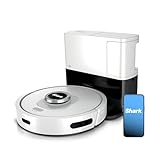
The little spinning turret on top? That’s the heart of it. It whirs almost silently, a faint hum you barely notice over ambient noise. When it spins, it’s not just for show; it’s capturing thousands of data points per second, building a surprisingly detailed picture of your home’s layout.
This data is then processed by the robot’s internal computer. It stitches together these laser measurements into a ‘map’ of your environment. This map isn’t just a flat blueprint; it includes information about room shapes, the placement of furniture legs, and even subtle changes in elevation like thresholds between rooms. The robot uses this map to plot an efficient cleaning path, avoiding obstacles it’s already ‘seen’ and ensuring it covers the entire designated area without aimlessly bouncing around.
Building the Map: It’s Not Just About Seeing
So, it sees the room. Big deal, right? Many older robots did that by bumping into things. The crucial difference with Shark’s mapping is how it remembers and uses that information. This is where SLAM comes in, even if LiDAR is the primary sensor. Even with LiDAR, the robot needs to know where it is *on* that map it’s building. This is the ‘Localization’ part. It constantly compares the new sensor data to its existing map to figure out its exact position and orientation. If it loses track – maybe it gets nudged by a pet or you manually move it – it has to re-localize, which can sometimes lead to a brief period of confusion before it gets its bearings back.
Simultaneous Localization and Mapping means it’s doing both at the same time: building the map *and* figuring out its own place on it. Imagine trying to draw a map of a room while blindfolded, only you can feel the walls and furniture around you. You’re constantly updating your drawing based on what you feel, and at the same time, you’re updating your mental note of where you are standing within that drawing. It’s a complex dance of sensor input and algorithmic processing.
I once left a laundry basket in a slightly different spot than usual, and my Shark, which usually cleans the hallway with military precision, spent a good five minutes circling the basket like a confused guard dog before it finally registered the change and adjusted its path. The little LED lights on its chassis pulsed with what felt like digital frustration. (See Also: Should I Turning My Shark Robot Vacuum Off )
From Map to Action: Why It Matters for Your Floors
Why does all this mapping even matter? Because it’s the difference between a functional cleaning tool and an expensive toy. This detailed mapping allows for several things: efficient cleaning paths that cover your entire floor space without repeating areas unnecessarily, targeted cleaning zones, and the ability to avoid specific no-go areas you set via the app. It means the robot can actually complete a full clean of your main living area in under an hour, whereas those old bump-and-grind models would take twice as long and miss spots.
I stopped using my old Roomba after I realized it was spending more time just bumping around furniture legs than actually cleaning the open floor. The Shark, on the other hand, moves with a purpose. It’ll go down a hallway, turn perfectly at the end, and work its way back. It’s not just about covering square footage; it’s about intelligent coverage.
When you consider how much time you save and the consistency of the clean, the initial investment in a well-mapped robot vacuum feels a lot more justifiable. My floors have been noticeably cleaner since I got a Shark that actually *knows* my house.
Shark’s mapping tech isn’t just for walls and furniture. It’s also pretty good at recognizing different floor types. While not as sophisticated as some of the ultra-high-end models that can literally *tell* you they’re switching from carpet to hardwood by sound, the mapping data helps it adapt its suction power. You can set specific instructions in the app: ‘clean the living room carpet at high power, but don’t go into the nursery.’ This is all thanks to the map it builds.
I’ve experimented by leaving small, low-profile rugs in random spots, and the Shark usually adjusts. It might slow down slightly as it goes up, then continue. However, it’s not perfect. I once had a tangled charging cable on the floor – the kind that’s flat and black – and the robot treated it like a miniature speed bump, getting briefly stuck before backing off. It’s definitely better than what I had before, but you still need to do a quick ‘pre-flight’ check of the floor before it starts its run.
Personal Failure Story: I vividly remember the time I was testing an older, non-mapping Shark model. I’d just spent about $350 on it, convinced it was the next big thing. I set it to clean the main floor while I was out. When I got home, the entire living room was covered in a fine layer of… glitter. Apparently, my daughter had a craft project earlier that day, and the vacuum, in its random wandering, had managed to scatter glitter *everywhere* instead of sucking it up. It was like a unicorn exploded. That was the moment I realized that random bumping wasn’t going to cut it; I needed a vacuum that could plan its attack.
Contrarian Opinion: Is Lidar Always Best?
Everyone talks up LiDAR as the gold standard, and for good reason. But here’s my take: for most average-sized homes, the difference between a good LiDAR system and a really good camera-based vSLAM system might be negligible in day-to-day use. While LiDAR is fantastic for precision and low-light conditions, some vSLAM systems using advanced AI and multiple cameras can potentially identify objects more accurately. They can sometimes distinguish between a shadow and a real obstacle, or recognize a ‘mess’ like a spilled pile of cereal better than a pure LiDAR system might. I’ve seen some camera-based robots get confused by shiny floors or dark carpets, but the latest generation is getting incredibly sophisticated. Shark’s reliance on LiDAR is a solid choice, but don’t dismiss other brands solely because they use cameras if their overall AI and navigation are strong.
The ability to recognize specific objects, like pet waste, is usually a feature of the highest-end, often camera-equipped models. While Shark is improving, pure LiDAR doesn’t inherently ‘see’ a doggie doo; it just sees an irregular shape. The software interprets it. So, while LiDAR gives you the map’s geometry, vision systems can potentially offer more semantic understanding of what’s on the map. (See Also: Is It Best Robot Vacuum For Cleaning Large Homes )
Faq Section
Does Shark Robot Vacuum Mapping Require Good Lighting?
Generally, no. LiDAR-based mapping, which many Shark robots use, works by sending out laser pulses. This means it can map your home effectively even in complete darkness. This is a significant advantage over camera-based systems that rely on visual cues and can struggle in low light conditions or when rooms are very dark.
How Does Shark Robot Vacuum Mapping Handle Multiple Floors?
Most Shark robot vacuums are designed to map and clean one floor at a time. You typically need to move the robot and its charging base to each floor you want cleaned. The robot will create a separate map for each floor it operates on. If you pick it up and place it in a different room on the same floor, it will usually re-orient itself using its existing map, but moving between levels requires a manual transfer.
Can I Edit the Map Created by My Shark Robot Vacuum?
Yes, you absolutely can. Once the Shark robot has completed its initial mapping run, you can typically use the Shark app to edit this map. You can set no-go zones (areas the robot should avoid entirely), create virtual walls, and define specific rooms or zones that you want the robot to clean on demand or on a schedule. This customization is a key benefit of advanced mapping technology.
How Often Does the Shark Robot Vacuum Update Its Map?
The robot’s mapping system is constantly working. It updates its map in real-time as it cleans, noting any changes it encounters. If you significantly rearrange furniture or add new large items, it will usually detect these changes on its next cleaning run and adjust its map accordingly. For minor changes, it typically maintains its existing map and navigates around new obstacles on the fly.
What Happens If the Shark Robot Vacuum Can’t Create a Map?
If your Shark robot vacuum is having trouble creating a map, there could be several reasons. It might be too much clutter on the floor, insufficient lighting (though less of an issue for LiDAR), or the robot might be getting stuck too often, preventing it from completing its initial mapping run. Sometimes, a simple reset of the robot and its app, followed by clearing the floor and trying the mapping run again, can resolve the issue. Ensure the LiDAR sensor is clean and unobstructed.
Shark Robot Vacuum Mapping vs. Other Technologies
Comparing Shark’s approach to how does Shark robot vacuum mapping work with older methods is like comparing a GPS to a paper map and compass. Older vacuums used random bounce navigation or what’s sometimes called ‘bump and go.’ They’d move in a straight line until they hit something, change direction randomly, and repeat. This was inefficient, time-consuming, and often resulted in missed spots. My first robot vacuum, a hulking disc from about seven years ago, was a prime example. It would systematically clean one square foot, then spend ten minutes getting stuck under my IKEA coffee table. I spent about $280 testing three different ‘random’ models before I swore them off entirely.
Then came structured cleaning, where robots would follow a more systematic pattern, like back-and-forth lines. This was an improvement, but still lacked true environmental awareness. Shark’s mapping, primarily LiDAR, takes it a huge step further by creating a persistent, detailed model of your home.
This allows for features like room selection (clean only the kitchen), targeted cleaning of specific spots (right under the dog’s food bowls), and virtual no-go zones. The entire experience shifts from ‘set it and forget it’ to ‘set it, forget it, and trust it to do a consistently good job’ – assuming you’ve given it a clean bill of health on the floor. (See Also: Is The Shark Robot Vacuum Better Than The Irobot Roomba )
Here’s a quick rundown:
| Technology | How it Works | Pros | Cons | My Verdict |
|---|---|---|---|---|
| Random Bounce | Bumps into things, changes direction randomly. | Cheap. Simple. | Inefficient, misses spots, time-consuming, gets stuck easily. | Avoid. Honestly, a broom is better. |
| Systematic Pattern | Cleans in straight lines, often back and forth. | More coverage than random. | Still lacks true environmental awareness, can still miss edges or corners. | Better, but still not what I’d call smart. |
| LiDAR Mapping (Shark’s focus) | Uses lasers to create a detailed 3D map of the home. | Precise navigation, efficient paths, room selection, no-go zones, works in dark. | Can be confused by very dark or reflective surfaces, object recognition isn’t perfect without AI. | Excellent for most homes. Reliable and smart. |
| Camera/vSLAM | Uses cameras and AI to visually map and identify objects. | Can potentially identify objects better, good for advanced AI features. | Requires good lighting, can be fooled by visual anomalies. | Very promising, especially with AI improvements, but ensure good lighting. |
Keeping Your Shark’s Brain Sharp
Just like any smart device, your Shark robot vacuum needs a little maintenance to keep its mapping brain running smoothly. The LiDAR sensor needs to be kept clean. Dust and debris can obstruct the laser, leading to inaccurate mapping or navigation errors. A quick wipe with a dry microfiber cloth usually does the trick. Check the wheels too; hair and debris can get tangled and affect its movement, which indirectly impacts its ability to accurately follow its planned path.
Software updates are also important. Shark, like most manufacturers, pushes out firmware updates that can improve their navigation algorithms, enhance object recognition, or fix bugs. Keeping your robot connected to Wi-Fi and allowing it to update ensures you’re getting the best performance out of the mapping technology.
I learned this the hard way when my Shark started acting… weird. It would clean half a room and then stop, claiming it was done. Turned out the LiDAR sensor had a smudge of something sticky on it – probably from a spilled juice box that I hadn’t noticed. A quick clean, and it was back to its old, efficient self. It reminded me that even the smartest tech needs a little TLC.
Final Thoughts
So, how does Shark robot vacuum mapping work? It’s a combination of laser precision and smart software that builds a detailed blueprint of your home. This allows for efficient, targeted cleaning that you just don’t get with older, ‘random’ navigation robots. It’s the technology that makes them genuinely useful, not just a curiosity.
Don’t expect it to be perfect; you’ll still need to do a quick floor check before runs, and occasionally it might get confused by a novel obstacle. But compared to the expensive, frustrating ‘smart’ vacuums I used to own, the mapping tech in Shark robots is a revelation.
If you’re still on the fence, think about it like this: investing in a robot vacuum with good mapping is investing in your time and a cleaner home. It’s a pretty solid trade-off, in my book.
Recommended Products