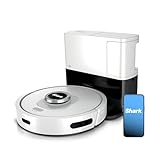
Honestly, the first time I plugged in my Shark robot vacuum, I stared at it like it was a pet rock. How long does this thing actually take to get juiced up? It wasn’t exactly intuitive.
You see these things advertised, all sleek and autonomous, cleaning your floors while you sip coffee. But the reality of getting that initial charge can feel like waiting for dial-up internet in the age of fiber optics.
My initial assumption was ‘a couple of hours, tops.’ Boy, was I wrong. Figuring out precisely how long for Shark robot vacuum to charge became an obsession for a while.
Some days it felt like an eternity, and other days, it was surprisingly quick. It’s not a one-size-fits-all answer, and that’s what I’m going to lay out for you, straight up.
The Big Question: How Long Does This Thing Actually Take?
So, you’ve unboxed your shiny new Shark robot vacuum, maybe even assembled it with that satisfying click of plastic parts. The manual says ‘fully charge before first use.’ Great. But ‘fully charge’ can mean anything from 90 minutes to a marathon session depending on the model and its current battery state. For most of the Shark models I’ve wrestled with, expect a minimum of 4 hours. Some of the older ones, or if the battery’s seen better days, can creep closer to 6 hours. It’s a bit like asking ‘how long does a phone take to charge?’ – depends on the phone, right?
This waiting game can be frustrating, especially when you’re eager to see it zipping around, collecting dust bunnies. I remember one Saturday morning, I’d cleaned the house top to bottom, ready for the robot to maintain. I plugged it in, went to the grocery store, did a load of laundry, and made lunch. It was still blinking stubbornly on the charging dock. I swear it took nearly 7 hours that day. Seven! My expectations were not met, to say the least.
What Influences Charging Speed?
It’s not just the model, either. A few factors can play a role in how long for Shark robot vacuum to charge. The most obvious one is the battery’s health. If you’ve had your robot for a few years, its lithium-ion battery simply won’t hold as much charge as it did when it was new. It’s like an old car – it might still run, but it’s not going to hit top speed anymore. I noticed this with my IONFlex stick vacuum; the battery life noticeably dropped after about three years of heavy use. (See Also: Should I Turning My Shark Robot Vacuum Off )
Then there’s the ambient temperature. While your robot vacuum isn’t going to be operating in the Arctic, extreme heat or cold can affect battery performance. If your charging dock is in a hot garage or a drafty sunroom, it might take a little longer for the battery to reach its full capacity. It’s a minor point, but worth considering if you’re in a climate with wild temperature swings.
And, of course, the charging dock itself. Is it clean? Are the contacts free of dust and debris? Sometimes, a simple wipe-down of the charging contacts on both the robot and the dock can make a surprising difference in how efficiently it charges. Think of it like cleaning the contacts on an old game cartridge – a bit of grime can interrupt the signal.
My First Robot Vacuum Debacle
I’ll never forget buying my very first robot vacuum – not a Shark, a different brand that promised the moon. The manual said ‘charge overnight.’ Overnight! I was so excited to use it the next morning. I woke up, eager to see it in action. It had charged, yes, but it only lasted about 20 minutes before it conked out, beeping sadly. Turns out, I’d accidentally put the charging base near a window where it got direct sunlight, and apparently, that messed with its charging sensor. I wasted a good $300 on that thing and ended up returning it, feeling utterly defeated and a little bit foolish. That experience taught me to read *all* the fine print and to stop assuming things just ‘work’ without a little bit of understanding.
Contrarian View: Is ‘full Charge’ Always Necessary?
Everyone will tell you to fully charge your robot vacuum before its first run, and usually, for subsequent runs. And yes, for the initial ‘getting to know you’ phase, that’s probably a good idea. But I’ve found that for everyday cleaning cycles, a ‘partial charge’ is often perfectly adequate. My Shark, for instance, can typically clean my main living area and kitchen on about 60-70% charge. If I only need it to do a quick sweep of the hallway after the dog tracks in some dirt, I don’t wait for it to hit 100%. It’s like not topping off your phone battery every single time you unplug it; you use what you need. This has definitely saved me some waiting time over the past couple of years. Of course, for a full house clean, you’ll want that 100%, but don’t stress if you only have an hour or two for a partial top-up between cleanings.
Understanding Charging Indicators
This is where things get… ambiguous. Most Shark robot vacuums have some kind of light or indicator to show you its charging status. You’ll see blinking lights, solid lights, different colored lights. The manual *should* tell you what they mean, but sometimes it feels like interpreting ancient hieroglyphs. Generally, a solid, fully illuminated light means it’s charged. A blinking light usually means it’s charging. A red light? Well, that often means trouble – maybe it’s not docked correctly, or there’s a battery issue. It’s not uncommon for owners to spend considerable time just trying to decipher these blinking patterns. I’ve lost count of the times I’ve Googled ‘Shark robot vacuum blinking blue light meaning’ at 10 PM.
| Shark Model (Example) | Stated Charge Time | My Real-World Charge Time (Approx.) | Verdict |
|---|---|---|---|
| Shark IQ Robot Self-Empty (AV1010AE) | 4-5 hours | 4.5 – 6 hours | Generally accurate, but battery age can push it longer. |
| Shark ION Robot 750 | 3-4 hours | 3.5 – 5 hours | Quicker than some, but battery health is key here. |
| Shark AI Ultra Robot (AV2501AE) | 4-6 hours | 5 – 7 hours | Can be on the longer end, especially for initial charges. |
What If It’s Taking Too Long?
If your robot vacuum seems to be taking significantly longer than the manual states, or longer than it used to, there are a few things to check. First, clean the charging contacts. Seriously, I’ve seen this fix more charging issues than anything else. Second, ensure the charging dock is on a hard, level surface with plenty of clearance around it. The robot needs to be able to dock cleanly every time. If it’s constantly struggling to connect, it might not be getting a consistent charge. Third, and this is a big one, consider the battery itself. Like all rechargeable batteries, the one in your robot vacuum has a finite lifespan. After about 2-3 years of regular use, you might start noticing shorter run times and longer charge times. At that point, you might need to look into replacing the battery. According to battery manufacturers like Panasonic, lithium-ion battery capacity degrades over time, typically losing about 20% of its original capacity after around 500 charge cycles. For a robot vacuum used daily, that can happen sooner than you think. (See Also: Is It Best Robot Vacuum With Self Emptying Bin )
Sometimes, a simple reset can do wonders. Unplug the charging base for a minute, then plug it back in. You can also try powering the robot off completely for a few minutes. It’s like rebooting your computer when it’s acting sluggish.
How Long for Shark Robot Vacuum to Charge: The Faq
How Long Does a Shark Robot Vacuum Take to Charge the First Time?
For the very first charge, it’s best to assume it will take the maximum time indicated in your manual, often between 4 to 6 hours, and sometimes even longer for older or larger battery models. This initial charge is important for conditioning the battery. It’s like waking up a sleeping giant; it needs a good, long stretch.
Can I Leave My Shark Robot Vacuum Plugged in All the Time?
Yes, generally you can leave your Shark robot vacuum plugged into its charging dock when it’s not in use. Most modern robot vacuums have smart charging systems that prevent overcharging. Keeping it docked means it’s always ready for its next cleaning cycle.
Why Is My Shark Robot Vacuum Charging Slowly?
Several factors can cause slow charging: dirty charging contacts on the robot or dock, an aging battery, extreme ambient temperatures, or a faulty charging dock. Always start by cleaning the contacts and ensuring a clean docking environment. If the problem persists, the battery might be nearing the end of its life.
Does the Wi-Fi Connection Affect Charging Time?
No, the Wi-Fi connection itself does not directly affect the time it takes for your Shark robot vacuum to charge. The Wi-Fi is for communication and scheduling, not for the power delivery to the battery. Charging speed is determined by the battery chemistry, the charging circuit, and the power supplied by the dock.
What Happens If I Interrupt the Charging Cycle?
Interrupting a charging cycle, especially a full one, before it’s complete might mean your robot doesn’t have enough battery power for its next scheduled clean. While modern batteries are resilient and occasional interruptions won’t permanently damage them, it’s always best to allow a full charge for optimal performance, especially before a long cleaning session. (See Also: Is It Best Robot Vacuum For Cleaning Large Homes )
Verdict
So, how long for Shark robot vacuum to charge? It’s not a simple stopwatch answer. Expect anywhere from 4 to 6 hours for a full charge on most models, but be prepared for it to nudge higher with age or specific conditions. Don’t be like me, the first time, just staring blankly, wishing for a magic button.
The key takeaway is understanding that it’s a battery-powered device, and batteries take time to fill up. It’s like waiting for a kettle to boil, or for bread to rise – there are natural processes at play. If it’s consistently taking way longer than it should, or the run time is drastically shorter, it’s probably time to look at that battery.
Next time you plug it in, maybe set a timer for about 5 hours and then check it. You’ll get a feel for your specific unit’s rhythm. It’s just part of the robot vacuum ownership dance.
Recommended Products