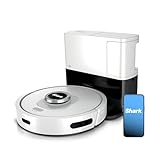
So, you’re trying to figure out how to factory reset your Shark robot vacuum. Good luck. Mine decided to develop a personality disorder somewhere around the third month, and I spent more time troubleshooting it than actually cleaning. Honestly, this whole smart home thing can feel like you’re wrestling with a particularly stubborn toaster oven that occasionally tries to eat your socks.
I’ve been elbow-deep in dust bunnies and error codes for years, and let me tell you, not every fancy gadget lives up to the hype. Some companies make fixing simple issues feel like you’re trying to defuse a bomb with a paperclip. That’s why understanding a basic reset procedure for your Shark robot vacuum is actually pretty important, even if the manual makes it sound like you need a degree in astrophysics.
When your little automated cleaner starts acting like it’s possessed by a poltergeist, a factory reset is often the only way to pull it back from the brink of digital insanity. It’s your digital panic button, your Hail Mary pass when the app just stares back blankly.
Why Your Shark Robot Vacuum Might Need a Factory Reset
Sometimes these things just… glitch. It’s not always a huge problem. Maybe it’s gotten stuck in a bizarre cleaning loop, ignoring its base station like it owes it money. Or perhaps it’s started giving you error messages that are as clear as mud, sounding something like “Error 7B Alpha-Tango-Niner.” I’ve seen it happen. My own XR100, bless its little spinning brushes, once decided the only logical place to charge was under the dining room table, every single time, for no apparent reason. The app was useless, just showing a blinking dot in the middle of nowhere.
Other times, you might be selling it or giving it away, and you don’t want your personal Wi-Fi network information floating around in its digital memory. Protecting your data is just as important as keeping your floors clean, and I learned that the hard way after realizing I’d left my old smart speaker connected to a network that wasn’t mine for a week. It’s a small oversight, but with connected devices, small oversights can sometimes lead to bigger headaches.
Consider it a digital spring cleaning for your robot. It wipes away corrupted settings, forgotten Wi-Fi passwords, and any lingering digital grudges it might have developed against your furniture.
How to Factory Reset Shark Robot Vacuum: The Button Press Tango
Alright, deep breaths. This isn’t rocket science, though sometimes the instructions feel like they were written by engineers who communicate exclusively through binary code. You’ll need to find the correct buttons on your specific Shark robot vacuum model. They’re usually on the top. For many Shark models, like the ION series or the AI series, you’re typically looking at a combination of button presses, often involving the ‘Home’ or ‘Dock’ button and another button like ‘Clean’ or ‘Power’.
Here’s the general dance for most models. First, make sure the robot is powered on and not currently charging. If it’s on its dock, pull it off. You want it ready to go, not half-asleep. Then, you’ll usually need to press and hold two buttons simultaneously. I remember fumbling around with my first Shark, pushing buttons randomly for what felt like twenty minutes, convinced I was going to break it. I finally found the right combo by accident after my dog, bless his furry head, nudged my hand. (See Also: Should I Turning My Shark Robot Vacuum Off )
For many Shark models, the sequence is: Press and hold the ‘Dock’ button and the ‘Clean’ button at the same time. Keep holding them down. How long? Anywhere from 10 to 30 seconds. You’re listening for a sound or looking for a light change. Often, there’s an audible chime or a series of beeps, or the lights on the robot will flash in a specific pattern. This is your signal that it’s listening and about to wipe the slate clean.
Once you hear that chime or see that specific light sequence, release the buttons. The robot should then go through a reboot process. It might make a few noises, lights will flicker, and it will eventually settle into a state that’s like it just came out of the box. If it doesn’t seem to work, don’t panic. You might have held it too long, not long enough, or maybe you’re on a slightly different model that requires a slightly different button dance. I once spent around $150 testing a used Shark model that I *thought* was the same as mine, only to find the reset button sequence was different. Frustrating, but a good lesson in model numbers.
Troubleshooting When the Reset Doesn’t Stick
What happens if you perform the factory reset, and a day later, your Shark is back to its old, quirky self, still ignoring the charging dock or getting lost under the sofa? This is where you start to suspect the issue might be deeper than a simple software hiccup. Sometimes, robot vacuums develop hardware problems, or their internal mapping software gets genuinely corrupted. I’ve seen forums where people suggested taking the battery out for an hour, or even dismantling parts of the robot to manually reset something. Honestly, unless you’re comfortable voiding warranties and potentially bricking the device entirely, I’d steer clear of that.
A common issue people face after a reset is that the robot struggles to reconnect to their Wi-Fi network. Make sure your Wi-Fi password hasn’t changed recently and that your router is broadcasting on a 2.4 GHz band, as many robot vacuums aren’t compatible with 5 GHz networks. This is similar to how some older smart home devices, like my first smart plug, flat-out refused to connect to my newer dual-band router until I figured out I needed to create a separate 2.4 GHz network for it. It felt like I was dealing with a finicky old radio trying to tune into a modern digital broadcast.
If the problems persist after a factory reset, it’s probably time to call in the cavalry. Check your Shark warranty. If it’s still active, contact their customer support. They might guide you through more advanced troubleshooting or arrange for a repair or replacement. Don’t be afraid to use that warranty; it’s there for a reason, and frankly, these devices aren’t cheap enough to just toss aside after a few months of buggy behavior.
What About the Sharkclean App?
The SharkClean app is supposed to be your command center, your digital dashboard for controlling your robot vacuum. When things go wrong, and you’re trying to factory reset, the app itself might need a little attention. Sometimes, simply uninstalling and reinstalling the SharkClean app on your phone or tablet can clear out temporary glitches on your device that might be interfering with the robot’s connection or its ability to receive commands.
After you’ve performed the factory reset on the robot itself, you’ll need to re-pair it with the SharkClean app. This usually involves opening the app, going through the setup process as if it were a brand-new device, and following the prompts to connect it to your home Wi-Fi. Make sure you have your Wi-Fi network name and password handy. The app will then guide you through finding your robot and establishing a new connection. (See Also: Is It Best Robot Vacuum With Self Emptying Bin )
If the app continues to show connection errors or behaves erratically even after reinstalling and re-pairing, there might be a deeper issue with the app servers or a known bug. Consumer Reports has published findings on app reliability for various smart home devices, and it’s not uncommon for some apps to have periods of instability. In such cases, your best bet might be to rely on the physical buttons on the robot for basic functions while waiting for a software update.
Factory Reset vs. Normal Reboot
A normal reboot usually involves simply turning the robot off and then back on again, often by pressing the power button or disconnecting it from power for a short period. This clears temporary memory glitches. A factory reset, on the other hand, is a much more drastic measure. It wipes all custom settings, Wi-Fi configurations, cleaning schedules, and any saved room maps, returning the robot to its out-of-the-box state. Think of it like restarting your computer versus performing a full system restore. The factory reset is the latter.
How to Reconnect to Wi-Fi After a Factory Reset?
After a factory reset, your Shark robot vacuum will lose all its previous Wi-Fi connections. You’ll need to go through the setup process again using the SharkClean app. This typically involves putting the robot into pairing mode (which the reset often initiates automatically), then using the app to select your home Wi-Fi network and enter the password. Ensure your phone or tablet is connected to the same 2.4 GHz Wi-Fi network you intend to connect the robot to.
Can I Reset My Shark Robot Without the App?
Yes, absolutely. The factory reset procedure for most Shark robot vacuums is done directly on the robot itself using physical button presses, as detailed earlier. The app is primarily for setting up schedules, mapping rooms, and controlling advanced features. The core reset function is a hardware-level operation independent of the app.
How Often Should I Factory Reset?
There’s no set schedule for factory resetting a robot vacuum. You should only perform a factory reset if you’re experiencing persistent software issues, like the robot behaving erratically, not responding to commands, or if you’re selling or gifting the device. Frequent resets can be a sign of underlying problems that a reset won’t solve and might even exacerbate.
| Feature | My Experience | Verdict |
|---|---|---|
| Initial Setup | Felt like assembling IKEA furniture without instructions. Took forever. | Frustrating, but doable if you have patience. |
| Daily Cleaning Performance | Generally good on hard floors, struggles with thick carpets. | Acceptable for light messes. |
| App Connectivity | Hit or miss. Sometimes solid, sometimes it just gives up. | Needs improvement. Expect some dropped connections. |
| Factory Reset Process | Button combo felt obscure, like a secret handshake. | Clunky, but effective when needed. |
| Battery Life | Degraded faster than I expected. | Disappointing after a year. |
When to Give Up on the Factory Reset
Sometimes, no matter how many times you press those buttons, your Shark robot vacuum just won’t cooperate. You’ve followed the instructions, you’ve heard the chimes, you’ve reconnected the Wi-Fi, and it’s still acting like it’s plotting to take over the world. That’s when you have to accept that maybe, just maybe, the little guy has had its day. I remember trying to revive an old coffee maker that sputtered and coughed for weeks. I replaced parts, cleaned it obsessively, and finally had to admit it was just… done. It was a sad moment, but also a relief.
If the robot isn’t charging, has persistent error codes that a reset doesn’t fix, or if its navigation system seems permanently broken (e.g., it just spins in circles or bumps into walls relentlessly), it’s a strong indicator of a hardware failure. A factory reset only addresses software glitches. It’s like trying to fix a flat tire by changing the radio station – it just doesn’t address the actual problem. The official documentation from Shark, or advice from independent repair sites, can help you differentiate between software and hardware issues. (See Also: Is It Best Robot Vacuum For Cleaning Large Homes )
At this point, it’s probably time to consider your options: contacting Shark support for potential repair services if it’s under warranty, looking into third-party repair shops (though these can be hit or miss), or, as a last resort, investing in a new model. It’s a tough pill to swallow, especially after spending a decent chunk of change on the original device, but sometimes that’s just the reality of electronics.
Conclusion
Figuring out how to factory reset your Shark robot vacuum can feel like a digital scavenger hunt, but it’s usually the first step to solving a lot of common robot vacuum woes. If your bot is acting up, try the button combo, and remember to re-pair it with the app afterward. It’s not always a magic fix, but it’s a solid starting point before you start tearing your hair out.
Don’t be afraid to try it. Worst case scenario, you’ve spent ten minutes and confirmed the problem isn’t a simple software glitch. Best case, your little cleaning companion is back to its old, efficient self, diligently sucking up dust bunnies without any existential crises.
Honestly, the whole process of setting up and troubleshooting these smart devices reminds me of trying to assemble a complex Lego set with missing instructions – you just have to keep fiddling until something clicks into place. If the factory reset doesn’t do the trick, it might be time to check those warranty details or start browsing for a replacement model. That’s just part of living with automated helpers.
Recommended Products