
You’re fumbling for your phone, or maybe just trying to read a menu, and BAM. Your glasses feel suddenly heavier, or worse, completely loose. That tiny screw has vanished into the ether, leaving you with a wobbly frame and a blurry world. I’ve been there. Staring at my hand, realizing my entire vision depended on a microscopic piece of metal that decided to take a solo trip. It’s infuriating, right? Especially when you’re nowhere near an optician. This isn’t a complex engineering problem; it’s an annoyance that needs a swift, practical solution. Fortunately, knowing how to fix eye glasses that screw fell out is a skill you can actually learn without a degree in micro-mechanics.
The sheer panic when you realize your glasses are falling apart mid-day is something else. It’s not like a loose button you can ignore; your vision is literally compromised. I remember one time, right before a big presentation, one of the arms on my favorite frames just sagged. The audience kept getting blurrier, and I could feel the sympathy stares. It’s a moment that screams for immediate action, not a trip to the store.
The Tiny Terror: Why That Screw Keeps Escaping
Look, these screws are minuscule. They’re designed to be small to keep the hinge mechanism unobtrusive, but that’s also their Achilles’ heel. The constant motion of your head, the temperature changes, even just fiddling with your glasses – it all adds up. Over time, vibrations can work these little guys loose. It’s like trying to keep a tiny nut on a bolt that’s constantly being shaken. Eventually, it’s going to find a way out. Think about it: your glasses go through a lot. You put them on, take them off, shove them in pockets or bags, maybe even sleep in them sometimes (don’t lie). Each action is a potential nudge for that screw.
I learned this the hard way with a pair of Ray-Bans that cost more than my first car’s down payment. I was on vacation, enjoying the view, and suddenly – snap. One arm dangled precariously. I spent a good twenty minutes on my hands and knees on a sandy beach, squinting, trying to find the screw.
The sun was beating down, my eyes were watering, and all I could think was, ‘This is ridiculous.’ I ended up having to buy a cheap, temporary pair that looked like they belonged on a clown. The common advice often glosses over how often this happens, especially with cheaper frames or if you’re not gentle. It’s not a rare defect; it’s a common consequence of how we use and abuse our eyewear.
The materials also play a part. Cheaper frames might use softer metals for the screws, which can strip more easily or just be less resistant to loosening. Even high-end frames aren’t immune, though.
It’s a fundamental design challenge. The hinge needs to be tight enough to hold the arm securely, but flexible enough to allow you to open and close it. That’s a tightrope walk for tiny screws.
Sometimes, it’s the frame itself where the screw threads into that gets slightly worn or widened, making the screw less likely to stay put. This is especially true if you’ve had the glasses for a while and they’ve seen heavy use. You’ll notice the screw doesn’t feel as snug even when it’s in, and it’ll fall out again more readily.
I’ve seen people try to jam bits of plastic or tape into the hinge to keep it together. It’s a desperate move, and frankly, it looks terrible and usually doesn’t work for long. The real solution involves getting a replacement screw or finding a way to secure the existing one. The good news is, it’s usually not a permanent problem if you have the right tools. The key is understanding that it’s not necessarily a sign of a poorly made pair of glasses, but more often a testament to the daily grind they endure. The real question becomes, how do you put them back together reliably?
The Gear You Actually Need (and What to Skip)
Forget about trying to MacGyver this with a paperclip and some chewing gum. It’s a recipe for disaster. When you’re looking at how to fix eye glasses that screw fell out, the first thing you need is a proper eyeglass repair kit. Now, not all of these kits are created equal.
I’ve bought a few over the years, and some are just glorified little plastic boxes filled with junk. What you actually need are a few key items. First and foremost: a variety of tiny screws.
Seriously, get a kit that has an assortment. You’ll likely find the original screw is a specific size, and trying to force a wrong one in is a bad idea. Look for kits that include different lengths and thread types, even though you’ll probably only need one specific size for your glasses.
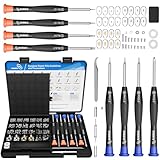
The other absolute must-have is a set of precision screwdrivers. These aren’t your dad’s hefty toolbox screwdrivers.
We’re talking about jeweler’s screwdrivers, the tiny ones with swiveling caps. You need one that’s just the right size to fit the head of the screw without stripping it. If the screwdriver is too big, you’ll just mangle the screw.
If it’s too small, it won’t catch and you’ll spin endlessly. I once bought a cheap kit where the ‘precision’ screwdrivers were barely smaller than a regular one. It was utterly useless and I ended up damaging a screw head trying to make it work. So, invest a few extra bucks here.
It’s worth it. My current go-to kit cost me about $15 online and it’s been invaluable.
Beyond screws and screwdrivers, some kits include tiny pliers. These can be surprisingly useful, especially for holding the screw steady while you work, or for gently manipulating the hinge if it’s a bit bent. A small pair of needle-nose pliers is a lifesaver. Some kits also come with nose pads, which is handy if yours are worn out, and little rubber stoppers that can sometimes help prevent screws from backing out in the future. (See Also: How To Fix Eyeglasses Arm Without Screw )
These are nice additions, but not strictly necessary for the core task of replacing a lost screw. What you can definitely skip are the generic ‘tools’ that look like they might be for something else entirely. If it’s not clearly a miniature screwdriver or a specialized plier for eyeglass hinges, it’s probably just filler.
Here’s a quick breakdown of what to prioritize:
| Item | Why It’s Key | Verdict |
|---|---|---|
| Assorted Tiny Screws | You need the right size replacement. | Must-have |
| Precision Screwdrivers | To avoid stripping the screw head. | Absolutely key |
| Small Needle-Nose Pliers | For holding, manipulating, and aligning. | Highly recommended |
| Magnifying Glass | Helps you see what you’re doing! | Very useful |
| Storage Case | Keeps everything together. | Nice to have |
The biggest mistake people make is buying the cheapest kit they can find. You might save a dollar or two upfront, but you’ll end up frustrated and possibly damaging your glasses further. Think of it like buying a cheap tool for a important job – it’s almost guaranteed to fail when you need it most. I once saw a guy try to fix his glasses with a tiny flathead screwdriver from a keychain multi-tool. The screw head looked like it had been attacked by a badger by the time he was done.
The Actual Process: Step-by-Step for the Dazed and Confused
Alright, so you’ve got your trusty repair kit. First things first: find a well-lit area. Seriously. Trying to do this in dim light is like trying to thread a needle in a blackout. I usually spread a white cloth or paper towel on my desk. This not only gives you a clean surface but also makes it a lot easier to spot if you drop a screw. Trust me, tiny screws have a knack for vanishing into carpet or dark surfaces. I learned that lesson trying to fix my kid’s glasses when they dropped one at a restaurant. We spent half an hour looking under the table, much to the embarrassment of everyone around us.
Next, identify the hinge where the screw is missing. If the arm is just hanging there, it’s pretty obvious. You might need to gently pull the arm away from the frame slightly to expose the hole where the screw goes. Don’t force it too hard, you don’t want to bend or break anything. Some hinges are more complex than others, but the principle is the same: you need to get that screw back into its designated spot.
Now, pick out the correct screw from your kit. It should look like a good match for the other screws on your glasses. If you can still see one screw in the hinge on the other side, compare them. You want one that’s the same length and has a similar thread pattern. If you’re unsure, start with a slightly shorter one, as a screw that’s too long can poke through the other side and be uncomfortable or even damage the frame. Once you’ve got your candidate screw, use your precision screwdriver to pick it up or, if you have pliers, gently grip it by the head.
Here’s the tricky part: lining up the screw with the hole. You might need to hold the arm of your glasses in the correct position with one hand while you carefully guide the screw with the other. If the hinge is a bit loose or bent, you might need to use the pliers to gently coax it back into alignment before you try to insert the screw. Take your time here.
Breathe. It doesn’t need to be a race. Once the screw starts to engage with the threads, you can start turning the screwdriver. Turn it gently, feeling for resistance.
You don’t want to overtighten it, as this can strip the threads in the frame or the screw itself. Just tighten it until the arm feels secure and doesn’t wiggle excessively.
If the screw is particularly stubborn, or if the threads in the frame seem a bit stripped, you can try a tiny dab of clear nail polish or a special thread-locking compound (like Loctite blue, but use it very sparingly and avoid the red kind, which is permanent). Apply it to the threads of the screw before you insert it. Let it dry for a few minutes before you start screwing it in.
This can help to keep it from backing out again. However, use this as a last resort, as it can make future repairs more difficult if you ever need to replace the screw again. My father, a retired watchmaker, always said, ‘The right tool, used properly, is better than brute force and a prayer.’
What If the Screw Hole Is Stripped?
If the threads in the frame are damaged (stripped), it’s a bit more challenging but not impossible. Sometimes, a slightly larger screw can catch enough of the remaining threads. If that doesn’t work, you might be able to use a tiny amount of a strong adhesive, like a cyanoacrylate (super glue), on the screw threads, then carefully insert it.
Be incredibly sparing with the glue – you don’t want it to ooze out and permanently bond the hinge shut. Let it cure completely before testing. If it’s a really bad strip, you might be looking at needing an optician to potentially re-tap the hole or replace the hinge entirely, which can be expensive.
This is where knowing how to fix eye glasses that screw fell out before it gets this bad is key.
Common Pitfalls and How to Avoid Them
The most common mistake I see people make when they’re trying to fix their glasses is rushing. Seriously, it’s like trying to assemble IKEA furniture after a triple espresso. You end up forcing things, stripping screws, or even breaking the frame. Take a deep breath, put on some calm music, and go slow. I once tried to fix a screw while I was half-asleep and ended up snapping the tiny screw head off. Then I had an even bigger problem. My glasses were unusable, and I had to wait until morning to buy a proper kit.
Another big pitfall is using the wrong size screwdriver. This is why that precision set is so important. If the screwdriver tip is too big, it won’t fit into the screw head properly. If it’s too small, it’ll just spin around, making a mess of the screw and not actually tightening anything. You’ll end up with a rounded-out screw head that’s a nightmare to remove or tighten later. I’ve spent more time than I care to admit trying to remove a stripped screw with pliers, only to make the problem worse. It’s a lesson learned the hard way, and it usually involves a lot of cursing. (See Also: How Measure Metric Computer Screws )
Over-tightening is another classic error. People think that if they crank down on the screw, it’ll be more secure. Wrong. You can strip the threads in the frame, crack the plastic or metal around the hinge, or even break the screw itself. The goal is to get the arm to feel snug and stable, not to weld it in place. Just a gentle tightening until there’s no wobble is usually sufficient. If the arm still feels loose, try a slightly longer screw or consider the thread-locking compound mentioned earlier, but don’t just keep cranking. I’ve seen friends’ glasses literally fall apart at the hinge because they overtightened a screw, and it split the frame material.
People also forget about the other side. If your screw fell out of the left temple, the screw on the right temple might be loose too. Always check both sides after you’ve done a repair. Give both arms a gentle wiggle. If one feels loose, give that screw a gentle tighten as well. It’s much easier to do a quick tighten than to face another dropped arm later. I make it a habit now to check my screws every few months, just a quick visual inspection and a tiny turn of the screwdriver. It takes about thirty seconds and has saved me a lot of headaches.
Finally, don’t be afraid to seek professional help if you’re really struggling. Most opticians will do a quick screw replacement for free or a very small fee. If you’ve tried everything and the screw won’t go in, or if the frame is damaged, it’s better to take it to them than to risk making it worse. They have specialized tools and experience that can save your favorite pair of glasses. I once tried to fix a hinge that was completely warped, and after about an hour of frustration, I took it to my local optometrist. They had it fixed in five minutes with some special pliers I’d never seen before.
When Is It Time to Call a Professional?
If you’ve lost the original screw and can’t find a suitable replacement in your kit, or if the screw hole in the frame is clearly stripped and a new screw won’t hold, it’s time to see an optician. Also, if the hinge itself is bent or damaged, you’ll likely need professional help. Trying to force a bent hinge back into shape can easily break it. Don’t attempt to solder or use super-strong industrial adhesives on your glasses unless you’re absolutely certain you know what you’re doing; the risk of permanent damage is very high. For most situations, a simple screw replacement is DIY-friendly, but know your limits.
Real-World Scenarios and Hacks
I’ve had screws fall out in the most inconvenient places. Once, it was during a hike. My glasses were key for navigating the trail, and suddenly, one arm was flopping around. Luckily, I had a tiny repair kit in my backpack (learned that lesson after the beach incident!). It took me about five minutes kneeling on a pine needle-covered path, but I got it fixed. The relief was immense. It’s those moments that make you appreciate having the right tools handy. A small, well-stocked eyeglass repair kit is a must-have for anyone who wears glasses. It’s like a miniature first-aid kit for your face.
Another time, the screw came out while I was cooking. You know, bending over the stove, steam everywhere, and then plink. My glasses slid down my nose. I remember thinking, ‘Great, now I’m going to get splattered with hot oil because my glasses are in pieces.’ I had to finish cooking with them balanced precariously on one arm, constantly pushing them up. That day, I swore I’d never be caught unprepared again. I bought a second, smaller kit and keep it in my kitchen drawer. It’s saved me a couple of times since then.
What about temporary fixes if you absolutely can’t find your kit? This is where you’re really improvising. Some people have had luck using a tiny piece of plastic from a bread bag tie or even a very small piece of stiff tape to wedge into the hinge, just enough to keep the arm from falling off.
This is highly unreliable and looks awful, but in an emergency, it might get you home. I’ve seen people try to use a bit of wire, but that’s often too thick and can scratch the frame.
The best temporary hack I’ve heard of, though, is finding a tiny piece of stiff plastic from something disposable, like a credit card corner that you carefully trim down, and using that to wedge the hinge. It’s still jury-rigged, but potentially less damaging than wire.
However, I strongly advise against relying on these. They are bandaids, not cures, and you’ll want to get a proper fix ASAP.
One particularly clever trick I heard about involved using a small piece of metal from a twist-tie, carefully straightened and then cut to size to act as a makeshift pin. This requires a lot of dexterity and the right kind of twist-tie (some are too flimsy). It’s a very niche hack, but the person who shared it swore it worked for months. The key is always to find something that fits the hole snugly without being so large it damages the surrounding material. Remember, the goal is to replace the screw’s function: to hold the hinge together.
DIY vs. Professional Repair Costs
Doing it yourself is almost always the cheapest option. A good eyeglass repair kit costs between $10 and $20, and a single kit can last for years if you don’t lose it. The only ongoing cost might be replacing the kit if you misplace it or run out of screws.
Taking your glasses to an optician for a screw replacement is typically free or costs a nominal fee, often around $5-$10, if they even charge at all. They might charge more if they have to replace a hinge or do more extensive work, perhaps $30-$50 or more, depending on the complexity and the type of frame. For simple screw replacements, DIY is the way to go for savings, but don’t underestimate the value of a quick, professional fix if you’re in a bind or worried about damaging your expensive frames.
The main reason to go professional is if you are unsure, or if the frame is valuable and you don’t want to risk it.
When the Common Advice Is Just Plain Wrong
Here’s where I get a little riled up. You’ll see a lot of advice online telling you to just use super glue. Now, I’m not saying super glue never works. It can temporarily hold a screw in place if you’re incredibly careful. But here’s the problem: super glue is permanent, brittle, and messy. If you use too much, you can glue your hinge shut permanently, or you can end up with a cloudy, unsightly residue on your frame that you can never get rid of. I’ve seen people do this, and their glasses look terrible afterward. The tiny amount of flexibility you need in the hinge is lost.
The common advice often fails to mention that most eyeglass hinges need a tiny bit of give. Super glue, or using the wrong kind of permanent adhesive, removes that important flexibility. (See Also: How To Adjust Eyeglass Screw )
It makes the hinge stiff and prone to breaking the next time you put pressure on it. It’s a short-term fix that often creates a long-term problem.
My contrarian take? Avoid super glue like the plague when it comes to repairing your eyeglass screws unless you are an absolute surgeon with a microscopic application and have accepted the risk of permanent damage. It’s far better to use a proper screw or a specialized thread locker designed for this purpose, or even a dab of clear nail polish which is less permanent and more forgiving.
Another piece of advice I often see is to just use any old tiny screw you can find. That sounds logical, right? But the threads on eyeglass screws are very specific.
They’re designed to mate with the threads in the frame material. Using a random screw from a piece of electronics or a craft project might seem like it fits, but it could be too coarse, too fine, or the wrong material. This can strip the threads in your frame, making it impossible to get a secure fit, or it can damage the screw head itself.
It’s like trying to fit a square peg in a round hole, and it rarely ends well. The precision required for eyeglasses is higher than most people realize. Always try to get the correct replacement screw.
And then there’s the advice to just bend the arm back into place if it’s loose. While a slight adjustment might be necessary to align the hinge before inserting a screw, trying to “fix” looseness by bending is a bad idea. The hinge mechanism is delicate. Bending it out of shape will likely weaken it and could lead to it breaking entirely. The looseness is almost always caused by a missing or loose screw, not a deformed hinge. Address the screw first. If the hinge itself is bent, that’s a different problem, usually requiring professional attention, not brute force. It’s a common misconception that frames are more solid than they are.
The internet is full of quick fixes that sound good but just aren’t practical for the long haul. When it comes to how to fix eye glasses that screw fell out, patience and the right tiny tools are your best friends, not random household glues or random bits of metal. Trust me, I’ve seen too many glasses ruined by these ‘easy’ solutions.
What’s the Fastest Way to Fix a Lost Eyeglass Screw?
The fastest way is to have a pre-assembled eyeglass repair kit ready. Locate the missing screw hole, select the correct replacement screw from your kit, and carefully insert it using a precision screwdriver. If you have pliers, use them to hold the screw steady. Tighten until the arm feels secure but not overly forced.
Can I Use Super Glue to Fix My Glasses If a Screw Falls Out?
While super glue can be a desperate, temporary measure, it’s generally not recommended. It’s permanent, brittle, and can easily result in a messy, unsightly residue or permanently bond your hinge shut. This removes necessary flexibility and can lead to further damage. It’s far better to use a proper replacement screw or a specialized thread locker if absolutely necessary.
How Do I Know If I Need to Go to an Optician Instead of Fixing It Myself?
You should go to an optician if you’ve lost the original screw and cannot find a suitable replacement, if the screw hole in the frame is significantly stripped and a new screw won’t hold, or if the hinge itself appears bent or damaged. If you’re unsure or worried about damaging expensive frames, a professional fix is the safest bet.
What Are the Key Tools for Fixing Eyeglass Screws?
The key tools are an assortment of tiny replacement screws and a set of precision screwdrivers. Small needle-nose pliers are highly useful for manipulating small parts. A magnifying glass can also be very helpful to see the tiny components clearly.
How Often Should I Check the Screws on My Glasses?
It’s a good idea to do a quick visual check and a gentle tightening of the screws on your glasses every few months. This proactive maintenance can prevent screws from loosening and falling out unexpectedly, saving you hassle and potential repair costs.
Verdict
Losing a tiny screw from your glasses is a real bummer, but it doesn’t have to be a crisis. Knowing how to fix eye glasses that screw fell out with a basic repair kit can save you time, money, and a whole lot of frustration. The key is to have the right tools – those tiny precision screwdrivers and a good assortment of screws are your best friends here.
Avoid the temptation to just slap some super glue on it or shove random bits of metal in there. Those quick fixes often create bigger problems down the line. Be patient, work in good light, and take your time. If the screw hole is stripped or the hinge is genuinely damaged, don’t hesitate to visit your local optician. They’ve seen it all and can usually sort it out quickly.
Next time you feel that tell-tale wobble, don’t panic. Grab your kit, take a breath, and get those glasses back in working order. It’s a small skill, but one that pays off big time for anyone who relies on eyewear.
![AXTH 25-in-1 Small Precision Screwdriver Set, Professional Magnetic Mini Repair Tool Kit for Phone, Computer, Watch, Laptop, Macbook, Ring Doorbell, Eyeglass, Electronic, [Bearing Steel] Screw Driver](https://m.media-amazon.com/images/I/518YlLmPTcL._SL160_.jpg)
