
I’ve seen too many fancy watches, especially those with brand names like Armani, end up looking sad and neglected because a tiny screw went missing. It’s infuriating, right? You pay good money for something that’s supposed to be built to last, only for a minuscule piece of metal to cause its downfall. I remember holding my friend’s supposedly high-end watch, a gift he’d cherished, and noticing a gap where a screw should be. It looked cheap, almost broken, and his frustration was palpable.
This isn’t some obscure problem; it happens more than you’d think. Trying to figure out how to fix an Armani watch that is missing screws can feel like a personal quest through a labyrinth of minuscule parts and specialized tools. But don’t toss that timepiece just yet. There are practical ways to get it back in working order, and it doesn’t always involve a king’s ransom at a jeweler.
The Tiny Terrors: Why Watches Lose Screws
Look, watches are complex little machines. Even the slickest Armani isn’t immune to the laws of physics and wear and tear. Those tiny screws holding everything together, from the case back to the bracelet links, are under constant stress.
Think about it: your wrist is always moving, bumping into things, subjected to temperature changes. It’s no wonder they can loosen up over time.
I’ve had screws vanish from cheap digital sports watches and from more expensive pieces alike. It’s not a reflection of quality as much as it is a testament to the forces at play.
Some watches are assembled with very fine threads, and if the initial build wasn’t perfectly torqued, or if they’ve been opened for battery changes or repairs without proper care, those little guys can decide to make a break for it.
One time, I was fiddling with a dive watch that had seen better days. The bezel was a bit loose, and I figured a quick tighten would do the trick. Turns out, one of the tiny screws holding the bezel assembly down had already vanished. I didn’t even notice until I was trying to put it back together. It was a stark reminder that even when you think you’re being careful, tiny components can surprise you by being absent. The frustration is real, especially when you’re not dealing with a basic Timex. You expect a certain level of resilience from a brand like Armani, and losing a screw feels like a betrayal of that expectation.
The problem is often compounded by the fact that watch screws aren’t like the screws you’d find in your toolbox. They’re incredibly small, often made of specific alloys to resist corrosion and magnetic interference, and they have very precise thread pitches. Trying to force the wrong size or type of screw can do more damage than good, stripping the threads in the watch case or movement itself. And let’s be honest, sourcing genuine replacement parts for specific high-end watches can be a headache in itself. The watch industry, for all its beautiful craftsmanship, can be notoriously closed-off when it comes to individual parts.
What to Look for (before You Panic)
Before you even think about how to fix an Armani watch that is missing screws, the first step is a thorough inspection. You need to know exactly what you’re dealing with. Grab a magnifying glass – a jeweler’s loupe is ideal, but even a good quality magnifying glass will do. Carefully examine the area where the screw is missing. Look at the hole: are the threads still intact? Sometimes, the screw hasn’t just fallen out; it might have stripped the threads on its way out, or the hole itself could be damaged. This will dictate your next steps considerably.
Next, try to determine the type of screw. Is it a standard-looking screw that holds the case back on, or is it a minuscule, specialized screw that might be part of the movement or a decorative element on the bezel? Look at the other screws of its kind on the watch. If you can find an identical one, measure it carefully or, better yet, take clear, close-up photos with a ruler in the frame. Note the head type (flathead, Phillips, or even a more specialized slot like a Torx or Pentalobe, though these are less common on traditional Armani watches) and the length. This information is gold when you start looking for replacements. (See Also: Can T Get Screw Back In Glasses )
Also, consider the material. Most high-quality watch screws are made from stainless steel, titanium, or sometimes even precious metals. If your watch is gold, the screws might be as well, or at least plated.
Trying to use a cheap steel screw on a gold watch could lead to galvanic corrosion over time, which is a whole other mess. This is where generic advice can go wrong. People often say, ‘just grab a screw that fits!’ But for a watch, especially a branded one, ‘fitting’ is only half the battle.
The material and thread integrity are just as important, if not more so. My own experience with a vintage Omega taught me this lesson the hard way; I used a generic screw, and within months, a faint discoloration appeared around the hole.
Lesson learned.
What Is the Most Common Watch Screw Size?
There isn’t one single ‘most common’ size because watches vary so widely. However, for case back screws or bracelet links on many standard watches, you’ll often find sizes ranging from 0.5mm to 2mm in diameter, and lengths from 1mm to 6mm. Specialized screws within the movement or for decorative elements can be even smaller and use proprietary thread pitches. Always measure or consult the watch’s specifications if possible.
The DIY Approach: When You Can Fix It Yourself
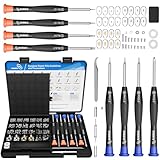
So, you’ve assessed the damage, and the threads look okay. Maybe a screw for the case back or a bracelet link has gone missing. This is where you might be able to save some money and do it yourself. The first thing you’ll need is a good set of watchmaker’s screwdrivers. Forget those cheap, multi-bit sets from the hardware store; they’re too coarse and will likely damage the tiny screw heads. You need a dedicated set with micro-screwdrivers, usually ranging from 0.6mm up to 2mm, with hardened steel tips.
You can find these online from reputable watch parts suppliers or even on Amazon, though exercise caution with the cheapest options. I snagged a set for about $30 a few years back, and it’s been indispensable for everything from changing watch batteries to tackling minor repairs. The key is a good grip and a tip that perfectly matches the screw head. A wobbly screwdriver is a recipe for disaster, turning a simple fix into a costly repair.
When you’re ready to insert the new screw, do it gently. Don’t force it. You should feel the threads catch easily. If you feel resistance, stop. Back it out and try again. Sometimes, a tiny bit of non-permanent Loctite (the blue kind, specifically for electronics or watches) can help prevent future loosening, but use this sparingly and only if you’re confident the threads are good. A single drop is all you need, applied to the screw tip before insertion. This is how I reattached a clasp screw that kept backing out on a leather-strap watch, and it held perfectly for over two years.
For bracelet links, some watches use screws that go all the way through, while others have a screw on one end and a threaded tube on the other. If a screw from a link is missing, you’ll need to find a replacement screw that matches the length and thread pitch of the original. You can often buy assortment kits of watch bracelet screws, which can be a lifesaver. I bought a mixed bag for about $15 and found a perfect match for a missing screw on a Luminox bracelet. It’s these little wins that make the DIY approach so satisfying. (See Also: Does Bestbuy Sell Laptop Screws )
When to Hand It Over to the Pros
If the missing screw is part of the watch’s actual movement – the internal mechanism – or if the threads in the watch case are stripped, it’s time to call a professional. Trying to fix internal movement parts yourself is a very advanced skill. You risk damaging the delicate gears, springs, and jewels. For stripped threads, a watchmaker has specialized tools and techniques, like re-threading or using tiny helicoils, that are beyond the scope of most DIYers. Also, if the watch is particularly valuable, sentimental, or a complex chronograph, the risk of making it worse is too high to attempt a home repair.
Sourcing Replacement Screws: The Hunt Begins
Finding the right screw is the biggest hurdle in figuring out how to fix an Armani watch that is missing screws. If you’re lucky, the missing screw is a common type used in many watches. Websites like Esslinger, Cousins UK, or WatchGnome specialize in watch parts and often sell individual screws or small assortment kits. You’ll need to know the diameter, length, and thread pitch. Measuring the hole where the screw goes with a caliper is the most accurate way, if possible.
When ordering online, always buy a few extra if they’re cheap. Trust me, you’ll lose at least one more before you’re done. It’s a universal law of tiny screws. If you can’t measure, you might have to resort to buying a generic assortment kit that covers a range of sizes. These kits are often sold by screw head type (e.g., flat head, Phillips) and length. You can then try each screw until you find one that fits snugly without being too tight.
A lot of people ask if they can just take a screw from another, less important watch. My advice? Generally, no. Unless you’re absolutely sure the screw is identical in size, material, and thread pitch, it’s a gamble. The wrong screw can damage the threads of the watch you’re trying to fix. It’s better to spend a few extra bucks on a proper replacement part. I once tried to cannibalize a screw from an old Fossil watch to fix a Seiko, and while it looked like it fit, it was slightly too soft and got mangled when I tried to tighten it. Stick to reputable sources or well-hand-picked kits designed for watch repair.
Comparison of Common Screw Replacement Methods
| Method | Pros | Cons | Verdict |
|---|---|---|---|
| DIY with Micro-Screwdrivers & New Screws | Cost-effective, satisfying, good for common parts (case backs, bracelets). | Requires specific tools, can be time-consuming, risk of error for beginners. | Recommended for simpler fixes. |
| Watchmaking Professional | Expertise, specialized tools, guarantees work, handles complex issues. | Most expensive option, can take time. | Best for internal issues or valuable pieces. |
| Generic Screw Assortment Kits | Wide variety of sizes, affordable. | Finding the exact match can be hit-or-miss, quality varies. | Good backup if primary methods fail. |
| Salvaging from Other Watches | Free (if you have donor watches). | High risk of incompatible size, material, or thread pitch; potential for damage. | Generally not advised. |
Common Mistakes and How to Avoid Them
The biggest mistake I see people make when trying to fix an Armani watch that is missing screws is using the wrong tools. I’ve seen people try to pry open case backs with butter knives or use pliers to turn tiny screws. This is a guaranteed way to scratch your watch case, damage the crystal, or strip the screw head beyond recognition. Invest in proper watchmaking tools. A good set of micro-screwdrivers and a case back opener are not expensive in the grand scheme of things, especially compared to the cost of repairing accidental damage. I picked up a basic watch repair kit for around $40, and it’s paid for itself many times over.
Another common pitfall is forcing things. If a screw isn’t going in smoothly, don’t jam it. This is a sign that the threads are not aligned, the screw is the wrong size, or the threads in the watch itself are damaged. Back it out, re-examine, and try again. Patience is key. Rushing the process is how you turn a minor inconvenience into a major problem. I once tried to rush changing a watch battery and ended up cross-threading the case back screw, which then refused to come out and wouldn’t screw in properly. It took me an hour of careful work with a needle file to gently correct the threads.
Over-tightening is another classic error. You don’t need to wrench down on watch screws. They just need to be snug enough to hold, but over-tightening can strip the threads in the metal of the watch case or the screw itself. For most small watch screws, a gentle turn until you feel resistance, and then just a quarter-turn more, is usually sufficient. Remember, these are not structural bolts holding together a bridge; they’re holding together delicate watch components.
Finally, a word on magnetism. While most modern watches are reasonably resistant, strong magnetic fields can affect the accuracy of mechanical movements. If you’re working with screws near the movement, try to keep magnets away. While most watch screws themselves aren’t magnetic, the screwdrivers can be, and you don’t want to inadvertently magnetize a sensitive part of the watch. Use non-magnetic screwdrivers if you’re working very close to the movement.
When to Call in the Cavalry: Professional Repair
Let’s be blunt: some jobs are just not worth the risk of DIY. If your Armani watch is a high-value model, perhaps a mechanical chronograph or a limited edition, the cost of a mistake far outweighs the savings of doing it yourself. For these watches, a reputable watchmaker is your best bet. They have access to genuine parts, specialized tools, and the experience to handle delicate mechanisms without causing damage. A good watchmaker can often source specific screws, even for older or less common models, through their network of suppliers. (See Also: Do Laptop Screws )
What constitutes a ‘professional’ job? If the missing screw is internal to the watch movement, it needs a professional. The movement is the heart of the watch, a complex interplay of gears, springs, and levers. Tampering with it without proper training and tools is like trying to perform surgery with a kitchen knife. Even if the screw is on the exterior, but the threads are stripped, you’ll likely need a professional. They can often repair stripped threads using techniques like re-tapping with a slightly larger thread size (if appropriate) or using a thread insert, which requires precision and specialized equipment.
Another reason to seek professional help is if the watch has special water-resistance ratings. If your Armani is a dive watch or has a significant water-resistance rating (say, 100 meters or more), attempting a repair yourself, especially if it involves opening the case back, can compromise that seal. A professional watchmaker will have the proper tools to reseal the case, test the water resistance, and make sure it meets its original specifications. Trying to DIY this can lead to water damage, which is far more expensive to fix than a few missing screws.
Frequently Asked Questions About Watch Screws
Can I Use Super Glue to Fix a Loose Watch Screw?
Absolutely not. Super glue is a permanent adhesive that will seize up the screw and surrounding mechanism. It’s incredibly difficult to remove and will likely cause significant damage to the watch, making future repairs much harder and more expensive. Stick to mechanical solutions.
Where Can I Find Specific Armani Watch Replacement Screws?
For specific Armani screws, your best bet is to contact an authorized Armani service center or a reputable independent watch repair shop that specializes in luxury brands. They may be able to order genuine parts directly from the manufacturer or have access to compatible aftermarket screws.
What If the Watch Screw Hole Is Stripped?
If the threads in the watch case are stripped, it’s a more complex repair. A professional watchmaker can often repair stripped threads using methods like re-tapping with a slightly larger screw size (if the design allows) or by using a specialized thread insert. DIY repair of stripped watch threads is generally not recommended due to the precision required.
How Important Is the Material of Watch Screws?
The material is quite important. High-quality watches use screws made from corrosion-resistant materials like stainless steel, titanium, or even precious metals. Using the wrong material, especially a cheaper metal, can lead to corrosion, discoloration, or even galvanic reactions if it’s in contact with dissimilar metals, potentially damaging the watch over time.
Verdict
So, you’ve got a missing screw situation on your Armani, and the panic has subsided. The good news is that this isn’t usually a death sentence for your timepiece. For simple cases, like a loose bracelet link or a case back screw that’s decided to go AWOL, a bit of research, the right micro-screwdrivers, and a carefully sourced replacement screw can get you back in business. It’s a small victory, but it feels pretty good when you fix something yourself.
However, don’t be a hero if the problem is internal, involves stripped threads, or if the watch is a particularly valuable or complex piece. That’s when it’s time to swallow your pride and hand it over to someone who knows their way around a watch movement. Trying to fix an Armani watch that is missing screws when you’re out of your depth can turn a minor annoyance into a costly repair bill. Know your limits, buy the right tools if you’re going DIY, and remember that sometimes, the best tool is a professional’s expertise.
![AXTH 25-in-1 Small Precision Screwdriver Set, Professional Magnetic Mini Repair Tool Kit for Phone, Computer, Watch, Laptop, Macbook, Ring Doorbell, Eyeglass, Electronic, [Bearing Steel] Screw Driver](https://m.media-amazon.com/images/I/518YlLmPTcL._SL160_.jpg)
