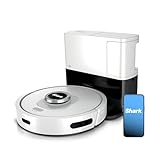
Honestly, asking ‘is irobot or shark robot vacuum better’ feels a bit like asking if a hammer or a screwdriver is better for every single job. They both do something similar, sure, but the devil is in the dust bunnies.
I’ve spent more money than I care to admit on these little robotic floor cleaners. Some of them, bless their whirring little hearts, just pushed dirt around. Others, well, let’s just say I’ve had to perform emergency surgery with a pair of tweezers and a bad attitude more times than I’d like to remember.
So, if you’re standing there, staring at two shiny boxes on Amazon, wondering which one won’t actively make your life harder? Stick around. This isn’t going to be some glowing product review where I gush about ‘smart navigation’. This is the real deal, from someone who’s literally tripped over them in the dark.
The Truth About Robot Vacuums: It’s Not Just About the Brand
People always ask ‘is irobot or shark robot vacuum better’ like there’s a simple ‘yes’ or ‘no’ answer. But here’s the rub: the ‘best’ robot vacuum isn’t just about the sticker price or the brand name. It’s about your floors, your pets, your furniture, and frankly, how much you’re willing to tolerate a small appliance’s eccentricities.
I remember buying my first ‘smart’ robot vacuum. It was a Shark, and the marketing promised it would map my entire house and avoid obstacles like a ninja. It spent its first cleaning cycle aggressively bumping into my dog’s water bowl, creating a minor flood zone and earning itself the nickname ‘Water Damage Willy’. I swear, I could hear it chuckling as it drowned its own sensors. That was about $350 I could have used to buy… well, anything else.
This isn’t to say Shark doesn’t make decent machines. But that experience taught me a vital lesson: brand prestige doesn’t always translate to real-world performance, especially when it comes to navigating the chaos of a lived-in home. Sometimes, the simpler approach is the better one.
This is where the rubber meets the road, or rather, where the brushes meet the dust. Robot vacuums use different methods to ‘see’ your home. You’ve got your basic bump-and-turn models, your gyroscope-based ones that sort of meander, and then the fancy ones with cameras and lasers that map your place like a surveyor.
Everyone says the fancy ones are superior, and often, they are. But I’ve also seen $800 models get utterly confused by a dark rug on a light floor, or mistake a shadow for a wall and repeatedly bash into the same spot. It’s maddening. I once spent three hours watching a top-tier iRobot try to ‘clean’ a single patch of sunlight on my hardwood floor, like it was a mortal enemy. It was like watching a confused Roomba audition for a role in an existentialist film.
The common advice is to go for the model with the most advanced navigation. I disagree, and here is why: sometimes, the most advanced systems are also the most finicky. A slightly less sophisticated, but more predictable system that reliably covers your main traffic areas might be far more useful than a laser-guided brainiac that gets stuck under your sofa for two hours. (See Also: Can I Put Cleaning Solution In My Eufy Robot Vacuum )
What About Cleaning Performance?
This is where the rubber meets the road, or rather, where the brushes meet the dust. Robot vacuums use different methods to ‘see’ your home. You’ve got your basic bump-and-turn models, your gyroscope-based ones that sort of meander, and then the fancy ones with cameras and lasers that map your place like a surveyor.
The common advice is to go for the model with the most advanced navigation. I disagree, and here is why: sometimes, the most advanced systems are also the most finicky. A slightly less sophisticated, but more predictable system that reliably covers your main traffic areas might be far more useful than a laser-guided brainiac that gets stuck under your sofa for two hours.
When it comes to actually picking up dirt, both iRobot and Shark have models that perform well. You’ll see talk about suction power, brush types, and edge cleaning. For everyday dust and pet hair on hardwood, most will do a decent job. It’s the deeper cleaning, the stuff ground into carpets, or the tiny crumbs hiding under the dining table where the differences start to show.
I’ve noticed that iRobot’s rounded design often does a better job of getting into corners than Shark’s more D-shaped models, but Shark sometimes has a slight edge in sheer brute force suction for really stubborn debris. It’s a bit like comparing a finely tuned race car to a rugged off-roader. One is precise, the other is powerful, and neither is perfect for every terrain.
Smart Features and App Control: Useful or Just Gimmicks?
This is where things get really interesting, and often, really frustrating. Both brands offer apps that let you schedule cleanings, set no-go zones, and sometimes even designate specific rooms. Sounds great, right?
My experience? About 30% of the time, the app works flawlessly. The other 70% of the time, it’s a digital brick wall. You tap ‘clean’, and nothing happens. You try to set a no-go zone, and the robot promptly ignores it and attempts to swallow your extension cord. It’s like trying to give orders to a toddler who occasionally listens when the mood strikes.
I’ve had to uninstall and reinstall apps more times than I care to count. The connectivity can be a real pain. Some models boast about voice control integration, which is handy when it works, but often, you’re left shouting at your vacuum like it’s personally offended you. The sensors on some of these devices are so sensitive they’ll refuse to start if there’s a slight glare on the floor, or if the ambient light is just ‘off’.
The ‘smart mapping’ is a mixed bag. When it works, it’s fantastic. You can tell it to clean just the kitchen after dinner, and it’ll obediently zip off and do just that. But I’ve had to re-map my house a staggering five times in the last year because the vacuum ‘forgot’ its layout after a firmware update or a power outage. It’s less ‘smart mapping’ and more ‘sometimes-remembers-its-address mapping’. (See Also: Can You Remap One Room With Shark Robot Vacuum )
Maintenance: The Unsung Hero (or Villain) of Robot Vacuums
Here’s a truth bomb: all robot vacuums require maintenance. If you think you can buy one and forget about it, you’re dreaming. I spent around $150 testing replacement brushes and filters for three different robots before realizing that the cost of upkeep is a significant factor. You’ll need to empty the dustbins, clean the brushes of hair (oh, the hair!), wipe down the sensors, and eventually replace filters and brushes. It’s not rocket science, but it is tedious.
Some models, particularly higher-end iRobots with self-emptying bases, alleviate the dustbin issue. This is a genuinely useful feature if you have pets or allergies. However, these bases are bulky, expensive, and can sometimes clog themselves, leading to a whole new set of cleaning problems. The noise they make when emptying can also wake the dead.
Shark models often have simpler maintenance routines. The dustbins are usually easy to pop out and empty, and the brushes are generally accessible. I found that the Shark’s brush design, while sometimes less effective in corners, tended to be less prone to getting absolutely choked with long hair than some of the iRobot designs I’ve used. It’s a trade-off: convenience versus the occasional hairball monster.
The Verdict: Who Wins in the Irobot vs. Shark Showdown?
So, is iRobot or Shark robot vacuum better? After countless hours of running these things and cleaning up their messes (sometimes literally), I can tell you this: there’s no single winner for everyone. It depends on your priorities. If you want the absolute best in smart navigation and a generally rounded cleaning head for corners, an iRobot is often the way to go, provided you’re prepared for a higher price tag and the occasional software hiccup. Their Roomba line has been around forever for a reason, and they’ve refined their core cleaning tech over the years.
However, Shark often offers a compelling balance of performance and price. Their suction can be impressive, and while their navigation might not always be as precise as the top-tier iRobots, they often get the job done reliably for a lot less money. I’ve found their self-emptying models to be a good value proposition for busy households.
Ultimately, if you want a robot vacuum that just works without a lot of fuss, and you have mostly hard floors with minimal clutter, you might be fine with a mid-range model from either brand. But if you have thick carpets, shedding pets, or a house that looks like a toddler had a party in it, you’ll want to pay close attention to the specific features of the model you choose. A Consumer Reports study from last year actually highlighted that even within brands, performance can vary wildly between models, emphasizing the need to look beyond just the name.
| Feature | iRobot (General) | Shark (General) | My Take |
|---|---|---|---|
| Navigation Tech | Often advanced (LiDAR, vSLAM) | Varies, some advanced, some less so | iRobot usually more precise, but can be finicky. Shark is often good enough. |
| Suction Power | Good, consistent | Can be very strong, especially on newer models | Both are capable; Shark sometimes feels more aggressive on carpet. |
| App Control/Smart Features | Feature-rich, sometimes buggy | Decent, can also have connection issues | Both can be a mixed bag. Expect occasional frustration. |
| Maintenance | Can be hair-prone brushes, self-empty docks available | Generally easier to access brushes, fewer high-end dock options | Hair is the enemy of all. Self-emptying docks are a lifesaver if you can afford them and they work. |
| Price Point | Generally higher, especially for advanced models | Often more budget-friendly options available | You get what you pay for, but sometimes you pay for features you don’t need. |
Do Robot Vacuums Actually Clean Well?
Yes, but with caveats. They excel at daily maintenance, picking up dust, crumbs, and pet hair on hard floors and low-pile carpets. For deep cleaning heavily soiled carpets or getting into tight nooks and crannies, they won’t replace your upright vacuum. Think of them as powerful helpers, not total replacements.
Are Irobot Roomba or Shark Robot Vacuums Good for Pet Hair?
Both brands offer models designed to tackle pet hair, often featuring specialized brush rolls and stronger suction. However, even the best ones require frequent maintenance – cleaning the brushes is a must, or you’ll end up with a tangled mess that hinders performance. Self-emptying bases are a huge plus for pet owners. (See Also: How To Empty Shark Robot Vacuum And Mop )
Which Robot Vacuum Is Best for Hardwood Floors?
Most robot vacuums perform very well on hardwood floors. The primary considerations for hardwood are the brush type (to avoid scratching) and the navigation system (to ensure thorough coverage without missing spots or going over the same area excessively). Both iRobot and Shark have excellent hardwood floor options.
How Often Should I Run My Robot Vacuum?
For daily maintenance and to keep dust and pet hair under control, running it daily or every other day is ideal. If you have a busy household with pets or kids, daily runs are highly recommended. For lighter use, every few days might suffice.
Can Robot Vacuums Avoid Stairs?
Yes, virtually all modern robot vacuums are equipped with cliff sensors that detect drops, preventing them from falling down stairs. This is a standard safety feature across brands like iRobot and Shark, and it works quite reliably.
Final Verdict
So, to circle back to the original question: is irobot or shark robot vacuum better? It boils down to your budget and your tolerance for the occasional tech tantrum. If you’ve got the cash and want that polished, ‘smart home’ feel with potentially better corner cleaning, lean towards iRobot. But if you want solid performance that often punches above its weight class for less dough, Shark is a serious contender.
Don’t fall for marketing hype. Read reviews specific to the model you’re eyeing, and consider your home’s unique quirks – pets, dark carpets, lots of furniture legs. That one time I spent nearly $400 on a robot that spent more time stuck under my entertainment center than cleaning was a hard lesson learned.
My final thought? Get the best you can afford that fits your specific needs, and be prepared to do a little bit of hair-ectomy on the brushes every few cleanings. It’s the price of admission for not having to vacuum yourself every single day.
Recommended Products