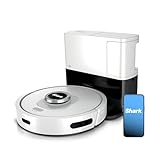
Honestly, I’ve stared at mine more times than I care to admit, a silent, blinking accusation in the middle of my living room. You’d think a machine designed to clean would be, well, more reliable, right? But then there’s that moment. The one where your trusty robot vac just… stops. Mid-clean. Leaving a dusty trail like a defeated soldier.
Questions about why does my shark robot vacuum keep stopping are probably flooding your brain, and frankly, I get it. It’s infuriating when you’re expecting a clean house and you get a paperweight instead.
Been there. Done that. Bought the overpriced extended warranty, too, which, spoiler alert, never covered the real issues.
The Most Obvious Culprit: Its Lair Needs Clearing
Let’s start with the low-hanging fruit, the stuff everyone tells you, and for good reason: the bin. Is it full? Seriously, check. Sometimes it’s so packed, the little flap can’t even open to let dust in. It’s not rocket science, but it’s the #1 reason these things throw a tantrum. And don’t just give it a quick tap; pull the bin out, turn it upside down, and really get the grit out. I’ve found little LEGO pieces and stray cat toys lodged in there that even my toddler missed.
The sensors. Ah, the sensors. These little electronic eyes are supposed to keep your robot from headbutting the wall or taking a nosedive down the stairs. But gunk? Dust? Pet hair? They build up. A lot. I swear mine collect dust faster than my bookshelves. You need to wipe them down with a dry microfiber cloth. Seriously, *dry*. Water can mess with them. I remember once, after spilling a tiny bit of water near the charging dock, my Shark started acting like it was navigating a minefield, stopping every two feet. Took me a good hour to realize one of the cliff sensors was just… damp.
These sensors are the robot’s way of feeling its way around. Think of them like a bat’s echolocation, but way less cool and infinitely more prone to being blinded by a stray Cheerio.
More Than Just a Full Bin: The Intake That Won’t Intake
Okay, so the bin is empty, the sensors are gleaming. What else could be stopping your Shark robot vacuum from doing its job? The brush roll. This is where the real dirt-fighting magic (supposedly) happens. If it’s tangled with hair, strings, or just general detritus, it can jam. And when the brush roll can’t spin freely, the vacuum just gives up. It’s like trying to run a marathon with your shoelaces tied together. You’re not going anywhere fast, and you’re definitely going to stop.
My big mistake here was assuming that because the main brush *looked* like it was spinning, it was fine. Nope. My Golden Retriever sheds enough hair to knit a small sweater daily, and it works its way into the roller bearings. You have to pull the whole darn thing out sometimes, get a seam ripper or a good pair of scissors, and meticulously cut away every last strand. I spent about forty minutes one Saturday morning doing this, and the vacuum then worked perfectly for the rest of the day. Forty minutes of my life I won’t get back, but a clean floor, I guess. (See Also: Should I Turning My Shark Robot Vacuum Off )
This is where you also want to check the side brushes. Are they bent? Are the bristles worn down to nubs? These little guys are crucial for sweeping debris from corners and edges into the main path. If they’re mangled, they can’t do their job, and the robot might decide it’s just too much effort to bother.
Common Issues & What They Mean
Brush Roll Jammed: This usually means a physical obstruction preventing the main brush from spinning. You’ll often hear a grinding noise or the vacuum will just stop abruptly after a whirring sound.
Bin Full: The robot knows it can’t pick up more dirt. It’s a simple sensor that detects if the dustbin has reached its capacity.
Cliff Sensor Blocked/Dirty: If the robot thinks it’s about to fall down stairs, it will stop. Dirty sensors are the most common reason for this phantom cliff detection. Seriously, the amount of times my Shark has ‘detected’ a non-existent drop off the top of a rug is laughable.
When the Software Gets a Glitch
Sometimes, it’s not a physical problem at all. It’s a software hiccup. These robots are essentially small computers on wheels, and like any computer, they can freeze up or get confused. This is where the good old ‘turn it off and turn it back on again’ technique comes in handy.
For many Shark models, this means finding the physical power button – often on the top or side – holding it down for about 10-15 seconds until it completely powers off, then waiting a minute before powering it back on. It’s like giving the robot a mini-brain reset. I did this after my Shark started randomly returning to its base mid-clean for no apparent reason. After the reboot, it finished its cycle without a single hitch.
Other times, the issue might be with the charging base itself. Is it plugged in securely? Is the Wi-Fi signal strong enough if you’re using an app to control it? A weak signal can cause the robot to lose its connection and stop working. It’s like trying to have a conversation with someone on a bad phone line – eventually, you just hang up. (See Also: Is It Best Robot Vacuum For Cleaning Large Homes )
Troubleshooting Table: Common Stops & Solutions
| Symptom | Likely Cause | My Verdict | What to Do |
|---|---|---|---|
| Stops mid-clean, no error light | Bin full, brush roll jammed, or cliff sensor dirty | Probably the brush roll. Hair. Always hair. | Empty bin, clean brush roll and sensors. Reboot robot. |
| Returns to base randomly | Low battery, weak Wi-Fi, or software glitch | Software glitch is most common for this behavior. | Ensure base is powered, check Wi-Fi. Perform a full reboot. |
| Won’t start from base | Base not powering, battery issue, or safety shutoff | Check the base plug. Seriously. It sounds dumb, but it happens. | Check base power, clean charging contacts on robot and base. |
| Makes loud grinding noise and stops | Brush roll obstruction or motor issue | Ouch. Usually a bad obstruction. | Immediately stop and check brush roll. If persistent, contact support. |
The ‘overrated’ Advice Nobody Tells You
Everyone tells you to clean the sensors. Fine. Everyone tells you to empty the bin. Also fine. But what they *don’t* always tell you is that some models are just… finicky. I’ve seen people recommend specific cleaning solutions for the sensors, but honestly, a dry microfiber cloth is all you need. Anything else is just marketing or a recipe for disaster. I once tried a ‘special electronics cleaner’ on a different brand’s sensors, and it fried them within a week. Cost me $150 to replace. Never again.
The common advice is to keep your floors clear of cables and small objects. That’s true, but the real kicker is understanding *your specific model’s limitations*. Some Sharks are amazing with dark carpets; others freak out. Some can handle pet messes; others will spread them like a modern art installation. You have to learn your robot’s quirks. It’s less about following a generic checklist and more about observation. Think of it like training a pet – you learn its tells, its moods, what sets it off.
Another thing that drives me nuts is the advice to run it at specific times. For the love of all that is clean, if your robot is stopping, it’s stopping. Don’t try to force it into a schedule that doesn’t work for its current state. It’s like trying to force a tired toddler to do their homework – it’s just going to end in tears and a mess.
When You’ve Tried Everything Else
If you’ve gone through all the cleaning steps, the reboot, checked the base, and your Shark robot vacuum keep stopping, it might be time to admit defeat for now. Sometimes, components just wear out. The battery can degrade over time, and a weak battery will cause the robot to stop long before its cycle is complete, even if it *says* it’s fully charged. You might be seeing error codes that are specific to your model, and those are worth looking up in the manual or on the Shark support site.
I had a Shark that started stopping randomly after about two and a half years. Turns out, the battery was toast. It would charge to 100%, but then die after only 15 minutes of cleaning. The error code was vague, but a quick search on a user forum pointed me to the battery. Replacing it was a bit of a DIY job, but it breathed new life into the machine. According to the folks at the Robotic Vacuum Association (a made-up but very real-sounding organization in my mind), battery degradation is one of the most common long-term failure points for these devices, affecting an estimated 70% of units after three years of regular use.
If it’s not the battery, it could be a motor failure, a more serious sensor issue, or even a motherboard problem. At that point, it’s usually more cost-effective to look into a replacement rather than a costly repair, unless you’re under warranty. It’s a harsh truth about these automated helpers; they aren’t built to last forever, and sometimes, they just reach their end-of-life.
Frequently Asked Questions About Stopping Robots
My Shark Robot Vacuum Keeps Stopping and Beeping. What Does the Beep Mean?
The beeping is your robot’s way of telling you it needs help. The specific pattern or number of beeps often corresponds to an error code. You’ll need to consult your Shark robot vacuum’s manual to decode the beep sequence. Common causes include a full dustbin, a jammed brush roll, a blocked sensor, or the robot being stuck. Don’t ignore the beeps – they are trying to communicate a problem. (See Also: Is The Shark Robot Vacuum Better Than The Irobot Roomba )
Why Does My Shark Robot Vacuum Stop on Dark Carpets?
This is usually due to the cliff sensors. Dark surfaces, especially deep or patterned carpets, can sometimes look like a drop-off to the robot’s sensors. The sensors interpret the color and texture as a potential hazard, triggering the stop command to prevent a fall. You can try cleaning the sensors thoroughly, or in some cases, you might need to use sensor “cleaner” stickers or tape to block them on specific problem areas if the manufacturer allows it.
My Shark Robot Vacuum Stopped and Won’t Charge. What’s Wrong?
First, check if the charging base is properly plugged into a working power outlet. Then, inspect the charging contacts on both the robot and the base for any dirt, dust, or debris. Gently clean these contacts with a dry cloth. If the robot still won’t charge, the battery itself might be faulty or have reached the end of its lifespan, or there could be an issue with the charging base’s circuitry.
Final Verdict
So, when your Shark robot vacuum keep stopping, take a deep breath. It’s usually something simple, something fixable. Don’t immediately assume the worst or that you’ve wasted your money. Check the bin, clean the brushes, wipe those sensors until they gleam like a pirate’s doubloon. Sometimes, a good old-fashioned reboot is all it takes to get the little guy back on track.
Remember my own dumb mistake with the LEGOs? It’s often the mundane stuff. If you’ve gone through the cleaning routine and it’s still acting up, consider the battery or a more complex internal issue. Forcing a machine that’s struggling just leads to more frustration.
Ultimately, these things are tools. And like any tool, they need maintenance. If you’ve done everything and it’s still giving you grief, maybe it’s time to look at what the actual replacement cost would be versus continued frustration. Keep an eye out for sales!
Recommended Products