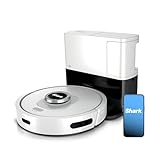
Seriously, that blinking red light of doom. You’re trying to relax, maybe catch up on that show everyone’s talking about, and suddenly your Shark robot vacuum is chirping a mournful ‘disconnected’ tune. It’s enough to make you want to just… sweep. I’ve been there. That whirring silence where there should be purposeful cleaning is infuriating.
My first Shark robot, bless its little digital heart, seemed to have a personality disorder. One minute it was a diligent cleaner, the next it was sitting in its dock, flashing that ‘disconnected’ error like it was staging a tiny, robotic protest. I wasted a good solid afternoon staring at the manual, then at the app, then back at the manual, convinced I was missing some grand, hidden setting.
For anyone asking ‘why is my Shark robot vacuum saying disconnected,’ the answer is usually far less dramatic than you think, and definitely not a sign the thing is plotting against your sanity. Often, it’s something ridiculously simple, like a rogue Wi-Fi signal or a dusty charging port.
That ‘disconnected’ Error: What It Actually Means
When your Shark robot vacuum says it’s disconnected, it’s essentially telling you it’s lost its internet connection. Think of it like your smart TV suddenly forgetting your Wi-Fi password. It can’t communicate with the app on your phone, meaning no remote control, no scheduling, and no software updates. This usually isn’t a hardware failure on the robot itself, but rather a communication breakdown. The charging dock is just a charging dock at that point; it’s not an active beacon for your network.
Honestly, I used to panic, thinking some vital component had fried. My second robot, a different brand entirely, did the same thing after about three months. I’d spent nearly $300 on that one, and the thought of it becoming a glorified dust collector made me fume. Turns out, it was just the router needing a reboot. A humbling, but ultimately useful, lesson.
The Usual Suspects: Easy Fixes First
Before you start contemplating a return or calling tech support in a huff, let’s go through the basics. These are the things that solve the problem for about seven out of ten people I’ve talked to who have this exact issue.
- Check your Wi-Fi: Is your home Wi-Fi working for your phone, laptop, or other smart devices? If your internet is down, the robot will be too. Simple, but often overlooked.
- Router Reboot: Unplug your router and modem for about 60 seconds, then plug them back in. Let everything reconnect. This clears out temporary glitches that can cause devices to drop off.
- Robot Reboot: Many Shark robots have a power button you can hold down to force a restart. Consult your specific model’s manual, but usually, it’s a 10-15 second hold.
- Dock Placement: Ensure the charging dock is in an open area, away from large metal objects or other electronics that could interfere with the signal. It needs a clear path back to its home base and a stable connection to your Wi-Fi.
The little LEDs on the dock itself can sometimes give you a clue. A solid green light usually means it’s happy and connected; a blinking or red light means it’s having a communication party, and you’re not invited. (See Also: Should I Turning My Shark Robot Vacuum Off )
When the Easy Stuff Fails: Deeper Dives
Okay, so the simple fixes didn’t work. Don’t despair yet. We’re going to get a bit more technical, but it’s still within the realm of ‘things you can do without a degree in computer science.’
Wi-Fi Signal Strength and Interference
Your Shark robot vacuum needs a decent Wi-Fi signal to stay connected. If your router is in the basement and the robot docks upstairs, you’re asking for trouble. I’ve seen people try to run these things in houses that are basically Wi-Fi dead zones. It’s like trying to have a conversation in a hurricane; the signal just can’t hold up.
Consider the frequency. Most smart home devices, including robot vacuums, operate on the 2.4 GHz Wi-Fi band. If your router is dual-band and you’re trying to connect to the 5 GHz band, it might not work. Some routers can get confused, or your robot might simply not support the faster, shorter-range 5 GHz band. I remember spending an entire Saturday trying to connect a smart thermostat, only to realize it was stubbornly trying to use the 5 GHz network while I was trying to force it onto 2.4. The sheer frustration of realizing I’d wasted hours on a simple band selection was… character-building.
Authority Check: According to the Wi-Fi Alliance, a common industry body, optimal Wi-Fi performance relies on sufficient signal strength and minimal interference. Devices like robot vacuums often have less powerful antennas than your phone or laptop, making them more susceptible to these issues.
The App and Software Glitches
Sometimes, the problem isn’t the Wi-Fi or the robot; it’s the app you’re using to control it. Make sure you have the latest version of the SharkClean app installed on your phone or tablet. Outdated app versions can cause communication errors. Try clearing the app’s cache or even uninstalling and reinstalling it. This can fix corrupted data files that might be preventing a stable connection.
Software updates for the robot itself are also important. If the robot is disconnected, it can’t receive these updates. This is a bit of a catch-22, but if you can get it reconnected even temporarily, check for firmware updates within the app. These updates often fix bugs that could lead to disconnection issues. (See Also: Is It Best Robot Vacuum With Self Emptying Bin )
Network Security Settings and Router Configuration
This is where things can get a bit hairy. Your router’s security settings can sometimes block devices. Ensure your router isn’t using MAC address filtering that only allows specific devices to connect. If it is, you’ll need to add your Shark robot’s MAC address to the allowed list. You can usually find the robot’s MAC address in the app or on a sticker on the robot itself.
Another common culprit is VPNs or complex firewall settings on your router. For basic home use, these are often overkill and can inadvertently block communication for smart home devices. If you’ve recently made changes to your router’s settings, especially around security, that’s a prime suspect. I once had a router update that turned on some aggressive firewall setting, and suddenly all my smart plugs were offline. It took me hours to figure out it was a new default setting I hadn’t even noticed.
Robot vs. Router: A Comparison
Think of it like this: Your robot vacuum is a tiny, specialized drone that needs a constant radio signal to get its orders. Your router is the air traffic control tower. If the tower is busy with other planes (your phone, laptop, smart TV), or if the radio signal is weak due to weather (Wi-Fi interference) or faulty equipment (a glitchy router), the drone can’t land or take off properly. It’s not the drone’s fault it’s lost; it’s the communication channel that’s the problem.
| Issue | Likely Cause | My Verdict |
|---|---|---|
| Robot says ‘Disconnected’ | Wi-Fi signal loss, router issue, app glitch | Start with router reboot; most common fix. |
| Constant disconnects | Poor Wi-Fi coverage, router overload, interference | Consider a Wi-Fi extender or mesh system if coverage is poor. |
| Never connects initially | Incorrect Wi-Fi password, wrong network band (2.4GHz vs 5GHz), router security settings | Double-check password and ensure you’re on 2.4GHz. |
When It’s Time to Call for Backup
If you’ve tried all of the above – rebooted everything, checked your Wi-Fi, reinstalled the app, verified network settings, and it’s still saying ‘disconnected’ – it might be time to contact Shark customer support. There’s a small chance there’s a hardware issue with the robot’s Wi-Fi module, or even with the charging dock’s connectivity. When I finally called support for my second robot (after doing everything else), they walked me through a factory reset that actually did the trick. It felt like admitting defeat, but at least the cleaning resumed.
Faq: Your Shark Robot Connection Questions Answered
Why Does My Shark Robot Vacuum Keep Disconnecting From Wi-Fi?
This usually happens due to a weak or unstable Wi-Fi signal reaching the robot or its dock. Other common causes include your home internet connection being down, router issues, or interference from other electronic devices. Sometimes, the SharkClean app itself or the robot’s firmware might have a temporary glitch.
How Can I Improve My Shark Robot Vacuum’s Wi-Fi Connection?
Ensure the charging dock is placed in an area with a strong Wi-Fi signal, ideally within 30-50 feet of your router. Rebooting your router and modem regularly can help. If your Wi-Fi is weak, consider a Wi-Fi extender or a mesh network system to boost coverage. Make sure your robot is connecting to the 2.4GHz band, as many models don’t support 5GHz. (See Also: Is It Best Robot Vacuum For Cleaning Large Homes )
What Should I Do If My Shark Robot Vacuum Won’t Connect to the App?
First, verify your phone or tablet is connected to the same Wi-Fi network you’re trying to connect the robot to. Try restarting both your phone and the robot. Ensure you have the latest version of the SharkClean app installed and consider uninstalling and reinstalling it. Check your router settings to make sure it’s not blocking new devices.
Is It Normal for Robot Vacuums to Disconnect Frequently?
No, it’s not normal for a robot vacuum to disconnect frequently. While occasional hiccups can happen with any smart device, persistent disconnection suggests an underlying issue with your Wi-Fi network, router configuration, or the robot itself. It’s worth troubleshooting thoroughly to ensure reliable operation.
Do I Need a 2.4ghz Wi-Fi Network for My Shark Robot Vacuum?
Yes, most Shark robot vacuums require a 2.4GHz Wi-Fi network for initial setup and ongoing operation. While many modern routers offer both 2.4GHz and 5GHz bands, robot vacuums typically only support the 2.4GHz band due to its longer range and better penetration through walls. Connecting to the 5GHz band will likely result in a failed connection.
Final Thoughts
So, why is my Shark robot vacuum saying disconnected? More often than not, it’s a communication hiccup, not a catastrophic failure. You’ve probably already figured out it’s your Wi-Fi acting up, or maybe your router just needed a good old-fashioned slap on the back (aka a reboot).
Don’t let that blinking red light win. Usually, it’s just a signal that the little guy can’t find its way back to the digital highway. Give your network a quick once-over, try the simple fixes, and remember that even the smartest tech can get confused sometimes.
If all else fails, a quick call to Shark support is probably your next best bet. They’ve seen this ‘disconnected’ drama countless times and might have a specific trick for your model. Just breathe; it’s usually fixable.
Recommended Products