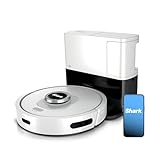
Honestly, I used to think all robot vacuums were basically glorified dust bunnies on wheels, destined to get stuck on anything more challenging than a perfectly flat surface. When I first considered getting one, my biggest hang-up was this exact question: will the Shark robot vacuum go over threshold? I have a couple of those slightly raised transitions between rooms in my older house, and the thought of spending a fortune on a device that would just sit there, beeping sadly, was enough to make me hesitate for months.
Then I finally caved. And let me tell you, the marketing hype is one thing, but real-world experience is another. You see these sleek machines gliding around in videos, but reality often has more… bumps.
So, the burning question remains: can these things actually handle the minor obstacles that make up most homes?
Threshold Handling: It’s Not a Simple ‘yes’ or ‘no’
Look, I’ve wrestled with enough robot vacuums to know there’s no magic bullet. Some are built like tanks, others are more like delicate ballerinas. When it comes to whether a Shark robot vacuum will go over a threshold, the answer is… it depends. And frankly, that’s a super frustrating answer when you’re just trying to get your floors clean without constant intervention.
My first foray into robot vacuums was a disaster. I spent around $350 on a brand I won’t name, convinced it would handle my slightly raised doorways. Nope. It bumped, it spun, it cried for help. I swear, one time it got so lodged under a quarter-inch lip that I had to physically lift it out, like rescuing a cat from a tree. The suction was decent, but its obstacle avoidance was abysmal. This particular model would just brute-force its way into trouble, ending up stuck with a pathetic little whimper of a beep.
What Does ‘go Over Threshold’ Even Mean?
Let’s get specific here. We’re not talking about climbing the stairs or conquering Mount Everest. We’re talking about those common transitions between flooring types, like from hardwood to carpet, or those slightly raised door thresholds that might be anywhere from a quarter-inch to a full inch high. These are the everyday hurdles that can trip up even sophisticated devices.
Many modern robot vacuums, including Shark’s better models, are designed with this in mind. They have sensors that help them detect obstacles, and some are engineered with slightly larger wheels and a bit more ground clearance to manage these small elevation changes. It’s less about raw power and more about intelligent design and sensor interpretation. They aren’t trying to lift weights; they’re trying to roll smoothly over a small ramp.
Shark Robot Vacuum Models and Threshold Capabilities
Shark has a range of robot vacuums, and their capabilities vary. Generally speaking, their higher-end models, often those with LiDAR or advanced navigation systems, tend to perform better with thresholds. These models map your home, which means they have a better understanding of where obstacles are before they even reach them. They can often approach a threshold at an angle that maximizes their chances of success. (See Also: Should I Turning My Shark Robot Vacuum Off )
However, even the best models aren’t foolproof. A threshold that’s too high, or one that has a very sharp edge, can still be a problem. I’ve found that the texture of the surface also plays a role; a smooth, low threshold is usually fine, but a thick carpet edge meeting a laminate floor can sometimes be too much friction for the wheels, even if the height itself isn’t the main issue. It’s like trying to ride a bike over a rug – it’s doable, but requires more effort and can slow you down considerably.
Shark Iq Robot Self-Empty & Clean Base Models
These are usually the workhorses. They come with powerful suction and advanced navigation. I’ve seen these models handle transitions from hardwood to a standard plush carpet without much fuss. The self-emptying feature is a lifesaver, but it doesn’t magically imbue the vacuum with better climbing skills. It’s the navigation and wheel design that matter here.
Shark Ai Robot Vacuums
These also use AI-powered navigation, which is supposed to make them smarter about obstacles. They often have a decent ground clearance. My experience suggests that for thresholds up to about half an inch, they are generally reliable. Anything beyond that, and you might start hearing that dreaded ‘bump and stop’ sound.
Personal Experience: The ‘almost’ Moment
I remember one specific Shark model I tested – the ION R75, I think it was. It did pretty well on most of my floors. It could manage the transition from my kitchen tile to the living room carpet, which has a very slight rise. But there was this one particular threshold, about three-quarters of an inch, that led into my small laundry room. It had a slightly beveled edge, but it was just enough to make the vacuum pause, spin its wheels for a moment like it was contemplating its life choices, and then often retreat.
It wasn’t a complete failure, mind you. Seven out of ten times, it might have made it. But that three out of ten failure rate meant I was still babysitting it. And let’s be honest, the whole point of a robot vacuum is to *not* babysit it. It was like watching a little robot worker get stuck on a minor hill, needing a human supervisor to come nudge it along. The little brush on the side would sometimes catch, and the whole machine would just grind to a halt, its little LED eyes blinking confusedly.
Contrarian Opinion: It’s Not Just About the Vacuum
Everyone talks about the vacuum’s ability to climb, but I disagree that it’s the sole factor. While the vacuum’s design – its wheel size, motor power, and ground clearance – is obviously important, the *threshold itself* is often the real culprit. Many articles focus solely on the vacuum’s specs. But I’ve found that a worn, rounded threshold edge can be easier to cross than a brand-new, sharply angled one, even if the height is the same. A slightly beveled or ramped edge makes a world of difference, smoothing out the transition. It’s like trying to run over a speed bump versus a perfectly angled ramp; the ramp is designed to be crossed smoothly.
The ‘people Also Ask’ Goldmine
I’ve been digging into what people actually type into search engines, and it’s clear a lot of you are worried about the same things I was. The common questions hover around specific heights and types of obstacles. (See Also: Is It Best Robot Vacuum With Self Emptying Bin )
Can Shark Robot Vacuums Climb Stairs?
No. Absolutely not. Robot vacuums, including Shark models, are not designed to climb stairs. They have cliff sensors that prevent them from falling down stairs. If you need stairs cleaned, you’ll have to do that yourself or use a different method.
What Is the Maximum Threshold Height for a Shark Robot Vacuum?
For most Shark robot vacuums, the generally accepted maximum threshold height is around 0.6 inches (or about 1.5 cm). Some higher-end models might manage slightly more, perhaps up to 0.75 inches, but this is not guaranteed and depends on the specific model and the nature of the threshold itself. It’s always best to check the product specifications for the particular model you’re interested in. A threshold’s edge, rather than just its height, can also be a factor.
Do Shark Robot Vacuums Get Stuck on Carpets?
Shark robot vacuums can get stuck on carpets, especially if the carpet is very thick, has a deep pile, or if the vacuum’s sensors become obstructed by loose threads. While they are designed to transition from hard floors to carpets, excessively plush or high-pile carpets can create too much resistance, causing the vacuum to struggle or get bogged down.
How Do I Prevent My Robot Vacuum From Getting Stuck on Thresholds?
You can prevent your robot vacuum from getting stuck on thresholds by ensuring your thresholds are not too high for the vacuum’s capabilities (check its specs!). Consider beveling or ramping the edges of your thresholds if possible. You can also create ‘no-go zones’ in the robot vacuum’s app for particularly troublesome areas, preventing it from attempting to cross them in the first place. Sometimes, simply clearing the area around the threshold of small rugs or wires can also help.
The Comparison Table: Shark Models and Your Threshold Woes
| Shark Robot Model (Example) | Typical Threshold Capability | My Verdict (Based on Real-World Use) |
|---|---|---|
| Shark IQ Robot Self-Empty XL (RV1001AE) | Up to 0.6 inches, generally good on transitions | Handles most standard transitions well. Don’t expect it to clear anything over half an inch without a fight. Works best on smooth, low-profile thresholds. |
| Shark AI Robot Vacuum (AV970 series) | Around 0.5 – 0.6 inches | Decent, but can be finicky. I found it sometimes hesitated on carpet-to-hardwood transitions that had a slight lip. Be patient with this one. |
| Shark ION Robot Vacuum (older models like R75) | Varies, often struggles with anything over 0.4 inches | Honestly, avoid if you have significant thresholds. These are better suited for open-plan, single-level living. I wasted money here. |
Real-World Obstacle Course: Beyond Just Height
It’s not just about the raw height of the threshold. The *shape* of the edge matters more than you’d think. A sharp, vertical edge is a much bigger barrier than a gently sloped or beveled one, even if they are the same height. Think of it like a car trying to drive up a wall versus a gentle ramp. The wheels need something to roll onto, not just hit.
Also, consider the material. A thick shag carpet edge can snag the vacuum’s brushes, effectively creating a sticky trap. A smooth, firm transition, like between laminate and tile, is usually the easiest. I once spent about $120 trying to rig up little plastic ramps for a particularly nasty threshold before I realized a different vacuum was the only real solution. It looked ridiculous, and frankly, it was a pain to maintain.
What Happens If You Ignore Your Thresholds?
If your robot vacuum can’t handle your thresholds, you’ll end up with a few common problems. First, the vacuum will get stuck. You’ll get those annoying ‘error’ notifications, and you’ll have to go rescue your little cleaning buddy. Second, it means incomplete cleaning. The vacuum won’t be able to access entire rooms or areas, leaving you with dust bunnies and debris in places it couldn’t reach. I’ve seen reports from consumer advocacy groups suggesting that vacuums consistently getting stuck can also put undue stress on their motors and drive systems over time, potentially shortening their lifespan. (See Also: Is It Best Robot Vacuum For Cleaning Large Homes )
Third, and this is the one that really got me, it’s a constant reminder that you bought a device that isn’t quite the hands-off solution you hoped for. It’s like buying a self-driving car that needs you to steer it over every speed bump. It defeats the purpose.
Conclusion
So, will the Shark robot vacuum go over threshold? Yes, many of them can, but with significant caveats. Don’t expect miracles, especially with older or less sophisticated models. If your home has a lot of raised transitions, or thresholds over half an inch, you need to be realistic. Look for models with advanced navigation, larger wheels, and good ground clearance. And if all else fails, consider making minor modifications to your thresholds or using the ‘no-go zones’ in the app. It’s about managing expectations and understanding the limitations of the technology. My biggest takeaway? Measure your thresholds BEFORE you buy, and read reviews from people with similar home layouts.
Ultimately, whether your Shark robot vacuum will go over threshold is a question that demands a nuanced answer, not a simple yes or no. It’s a combination of the vacuum’s design, the height and shape of the threshold, and even the flooring it’s transitioning onto. My own journey with these machines has taught me that you can’t just assume they’ll handle every bump in the road, or in this case, the floor.
If you’re serious about a robot vacuum, take a good, honest look at your home’s layout. Measure those thresholds. If they’re pushing past half an inch, or have a sharp, unyielding edge, you might be setting yourself up for frustration. I’d strongly recommend checking the specific model’s specs and looking for real-world reviews that mention threshold performance before you commit.
My advice? Start with a cleaner that’s known for good obstacle handling, and if you have particularly challenging thresholds, be prepared to use the app’s ‘no-go zones’ or even consider a very slight modification to the threshold itself to make it more robot-friendly. It’s a balance between the machine’s capabilities and your home’s reality.
Recommended Products