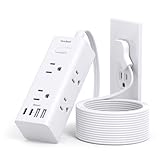
I remember the sheer panic when I realized my trusty laptop charger’s cord wouldn’t reach the bedside outlet in that tiny hotel room. Forcing it behind the nightstand, I ended up with a frayed mess and a dead battery. It made me wonder, what about bringing a proper extension cord? Are extension cords allowed in carry on luggage? It’s a question that pops up for anyone who travels with a lot of tech, or even just needs a little extra reach.
Most of us just shove whatever we need into our bags and hope for the best. But when it comes to electrical items, especially anything with a plug that looks like it could double as a weapon, you start to second-guess.
This isn’t about the giant, heavy-duty cords you use for power tools. We’re talking about the slender, travel-friendly ones. So, let’s cut through the airline jargon and get straight to what you need to know.
The Tsa’s Stance: What They Actually Care About
Look, the TSA (Transportation Security Administration) has a whole list of things you can’t pack, and it’s mostly about things that could be used as weapons or are hazardous materials. Think knives, explosives, flammable liquids. An extension cord, by its very nature, isn’t inherently dangerous in the way a can of hairspray or a multi-tool is. It’s just a piece of wire with plugs.
Here’s the reality: I’ve flown with these things countless times. I’ve had my carry-on bag rummaged through, and never once has an TSA agent batted an eye at a standard travel extension cord. They’re more concerned about liquids over 3.4 ounces, sharp objects, and anything that looks remotely like a bomb component. A coiled-up cord, even with a few outlets, just doesn’t fit that profile. The key is that it needs to be a standard extension cord, not some jury-rigged monstrosity.
You won’t find “extension cord” explicitly listed as a prohibited item on the TSA’s website. What they do list are things like “electric stun guns” and “weapons.” A power cord doesn’t fall into those categories. The closest they get is mentioning lithium batteries, which are a whole different ballgame. So, as long as your extension cord isn’t some bizarre, custom-built device designed for nefarious purposes, you’re generally in the clear. They’re checking for threats, not for your convenience.
I once had a guy in front of me at security get his bag flagged because he had a ridiculously oversized, industrial-looking extension cord that looked like it was meant for powering a small city. That’s the kind of thing that raises eyebrows. But a compact, 3-foot cord designed for travel? They’ll wave it through without a second thought. It’s about practicality and common sense, and most airport security personnel have plenty of that when it comes to everyday items. The rules are designed to catch troublemakers, not travelers who want to charge their phone and laptop simultaneously.
Why You Actually Need One (and When You Don’t)
Let’s be honest, the primary reason you’re even asking if extension cords are allowed in carry on luggage is because you’ve been there. That hotel room with the outlets strategically placed behind the bed, or the airport lounge with only one or two precious charging ports. It’s a universal traveler’s frustration. I’ve stayed in places where the only outlet was inside a dusty cabinet, forcing me to contort myself like a circus performer just to charge my phone. That’s where a small extension cord becomes a sanity saver.
I’ve found them to be invaluable for longer trips, especially when I’m working remotely. Having a dedicated spot for my laptop, phone, and maybe even my e-reader, all within reach, is a big deal. Instead of playing musical chairs with charging ports, I can set up a little tech hub. This is especially true in hostels or older accommodations where outlets can be few and far between, or inconveniently located. (See Also: Can Extension Cords Short Out )
However, don’t go overboard. You don’t need a 25-foot behemoth. For most travel scenarios, a 3-foot to 6-foot cord is more than enough. Anything longer just adds bulk to your carry-on without much added benefit. If you’re staying in a modern hotel, you’ll probably find plenty of outlets. The real need arises in older buildings, airports, train stations, or during long layovers where power is a luxury. I once forgot mine on a trip and had to buy a ridiculously overpriced one at the airport – a lesson learned the hard way.
Here’s a contrarian take: many people overpack these. They bring cords that are too long, or they bring multiple. I used to be one of them. But after years of travel, I’ve learned that a single, compact cord with maybe two or three outlets is all you really need. Trying to charge five devices simultaneously is a recipe for a tangled mess and likely exceeds the power capacity of most travel cords anyway. Think smart, not just more.
Choosing the Right Travel Extension Cord: Specs That Matter
Not all extension cords are created equal, especially when you’re talking about travel. You want something compact, lightweight, and safe. The first thing to look for is the cord length. As I said, 3-6 feet is usually the sweet spot. Anything longer becomes unwieldy in a carry-on bag.
Next, check the number of outlets. Most travel cords come with 2 or 3. Three is generally ideal, allowing you to charge your phone, tablet, and maybe a camera or power bank simultaneously. Make sure they are spaced adequately so bulky chargers don’t block adjacent outlets. Some even have USB ports built-in, which is a nice bonus, though I tend to prefer dedicated USB wall adapters as they often charge faster.
The plug type is also important. Most travel cords come with a standard Type B plug (the one used in North America). If you’re traveling internationally, you’ll need to consider a travel adapter for the wall outlet in addition to your extension cord. Don’t confuse the two. The extension cord is for extending reach within a room; the adapter is for matching your plug to the country’s socket.
Safety certifications are a big deal. Look for cords that are UL-listed or ETL-certified. This means they’ve met certain safety standards. It’s a small detail that can prevent a lot of potential headaches, or worse. I once bought a cheap, uncertified cord that got alarmingly warm after only an hour of use. Never again. It’s worth spending a few extra bucks for peace of mind. The build quality should feel solid, not flimsy. The insulation on the wire should be solid, and the outlets should feel like they’ll grip your plugs securely.
Here’s a quick breakdown of what I look for:
| Feature | My Verdict | Why |
|---|---|---|
| Length | 3-6 feet | Balances reach with portability. Too long is a pain. |
| Outlets | 2-3 standard + optional USB | Enough for essentials without bulk. USB is a bonus. |
| Plug Type | Type B (for North America) | Requires separate adapter for international travel. |
| Safety Certifications (UL/ETL) | Must Have | A must for preventing fire hazards. |
| Cord Thickness/Flexibility | Medium, Flexible | Durable but easy to coil and pack. Avoid super thin cords. |
| Surge Protection | Optional, but nice | Adds a layer of protection for sensitive electronics. |
This table summarizes my priorities. You might have slightly different needs, but these are the core things I consider every time I buy a new travel extension cord. (See Also: Can Extension Cords Be Use With Electric Heaters )
Common Mistakes and How to Avoid Them
The biggest mistake people make is not considering the type of extension cord. They grab whatever is lying around the house – a heavy-duty, 15-foot cord meant for power tools or outdoor equipment. These are bulky, heavy, and frankly, overkill for travel. They take up way too much space in your carry-on and might even draw unnecessary attention if security is having a particularly strict day. Remember, we’re talking about travel-friendly, compact cords here.
Another common pitfall is confusing extension cords with power strips that have surge protectors and then wondering why they’re being questioned. While many travel extension cords do have surge protection, the primary function is extending reach. If it’s a massive power strip with more than 3-4 outlets and a huge surge protection brick, it might raise flags. Keep it simple and simplified.
Then there’s the issue of electrical compatibility. If you’re traveling internationally, assuming your North American extension cord will work in Europe without an adapter is a rookie mistake. You’ll need a plug adapter for the country you’re visiting, and then you plug your extension cord into that adapter. The extension cord itself doesn’t change the voltage or plug shape; it just gives you more outlets. I learned this the hard way in Italy when I plugged my entire setup into a European outlet, only to realize my extension cord wouldn’t fit the socket adapter I’d bought. It was a frustrating hour of trying to find a local store that sold the right combination.
Finally, people often forget to check the power rating. While most travel extension cords are designed for low-power devices like laptops and phones, overloading them can be a problem. Don’t try to plug in a hair dryer or a portable heater into a small travel extension cord. They aren’t designed for that kind of load and could overheat or trip a breaker. Stick to charging your electronics.
The key takeaway is to choose a cord specifically designed for travel. They are smaller, lighter, and generally meet the expectations of airline security. Don’t try to repurpose something from your garage.
Real-World Use Cases and Practical Tips
Beyond the hotel room, where else do these little lifesavers come in handy? Airports are a big one. Gate areas, especially during peak travel times, can feel like a competition for the few available outlets. Having your own extension cord means you can position yourself a bit further away from the charging station and still keep your devices topped up. I’ve sat on the floor a little way off from a crowded wall, plugged in, and watched people eye my setup with envy. It’s a small win, but it’s a win.
Long train journeys or bus rides can also be surprisingly lacking in power. Some newer trains have them, but older ones often don’t. If you have a long haul, being able to charge your devices makes sure you don’t run out of juice mid-journey, which can be a real drag. I’ve used mine on overnight trains where the only outlet was inconveniently located near the bathroom. It’s not glamorous, but it works.
For digital nomads or anyone working remotely, these are practically key. Conferences, co-working spaces, even cafes can have limited power access. Having your own extension cord gives you flexibility. You can set up your workspace without being tethered to the nearest wall socket. It allows for a more comfortable and productive setup. (See Also: Are Outdoor Extension Cords 10 Or 12 Gauge )
Here are a few practical tips:
- Coil it up neatly: Use a velcro strap or a small zip tie to keep your extension cord tidy. This prevents it from tangling with everything else in your bag and makes it easy to deploy when needed.
- Test it before you go: Plug in a few devices into your extension cord at home before your trip. Make sure everything charges correctly and that the cord doesn’t get excessively warm.
- Keep it accessible: Pack your extension cord in an outer pocket of your carry-on bag or in a compartment you can easily reach. You don’t want to be digging through your entire suitcase at the airport.
- Consider a power bank too: While an extension cord is great, a high-capacity power bank is your ultimate backup. It’s a good idea to have both for maximum charging flexibility.
- Check the local voltage: For international travel, remember that your extension cord is just an extension. You’ll still need a voltage converter or adapter if the local voltage differs significantly from your devices’ capabilities.
These simple steps can make a big difference in how smoothly your travel charging setup functions.
Frequently Asked Questions About Extension Cords in Carry-On
Are Extension Cords Considered Electronics?
Yes, extension cords are considered electronics or electrical accessories. While they are not typically restricted like batteries or certain other electronic devices, they fall under the general category of items that security personnel might examine. However, standard travel extension cords are usually not a problem for carry-on luggage.
Can I Pack a Power Strip in My Carry-on?
Generally, yes, you can pack a power strip in your carry-on luggage. The TSA’s main concern is with items that could be used as weapons or pose a safety hazard. A standard power strip, especially a compact travel version, is unlikely to cause issues. Make sure it’s not excessively large or industrial-looking, and it doesn’t contain prohibited battery types.
What Electrical Items Are Not Allowed in Carry-on Luggage?
The TSA prohibits items that can be used as weapons or pose a safety risk. This includes items like knives, firearms, explosives, flammable liquids, and certain aerosols. For electronics, the primary restrictions are on lithium batteries, especially loose ones or those in devices exceeding certain watt-hour limits. Most standard electronic devices and their necessary accessories, like extension cords, are permitted.
Can I Bring a Surge Protector Extension Cord on a Plane?
Yes, you can generally bring a surge protector extension cord in your carry-on luggage. Similar to regular extension cords and power strips, surge protectors are not typically prohibited by the TSA. The key is that it should be a standard travel-sized unit, not an oversized or industrial model. Security personnel are looking for safety hazards, and a typical surge protector extension cord is not considered one.
Final Verdict
So, to finally put it to rest: are extension cords allowed in carry on luggage? For the most part, yes. The TSA isn’t out to get your charging convenience. They’re focused on safety and security, and a standard travel extension cord just doesn’t fit the bill for anything dangerous.
My advice? Invest in a small, lightweight, travel-specific cord. It’s saved me countless headaches in hotel rooms, airports, and on the go. Don’t be the person fumbling behind a dresser trying to plug in your phone; be the person who’s prepared.
Just remember to check for safety certifications and avoid anything that looks overly bulky or industrial. A little foresight goes a long way in making your travel charging setup smooth and stress-free.