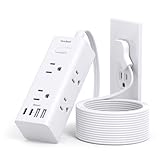
I remember the days of frantically searching for an outlet, only to find it blocked by a desk, a bed, or worse, a ridiculously short cord on the charger itself. It felt like a personal affront from the tech gods. So, the question of whether extension cords are bad for phone chargers isn’t just theoretical; it’s born from pure, unadulterated necessity and a healthy dose of suspicion.
We’ve all seen those cheap, flimsy extension cords that look like they might melt if you plug in anything more demanding than a night light. That’s where the worry starts. Does using one of those doofers actually fry your phone’s insides or just slow down the charging? Let’s cut through the BS and get to what actually matters.
This isn’t about marketing fluff; it’s about real-world use. I’ve bought more junk tech than I care to admit, and I’m here to tell you what’s worth your time and what’s just going to make you pull your hair out.
Why People Even Ask: Are Extension Cords Bad for Phone Charger?
Look, nobody wants to use an extension cord for their phone charger. It feels… wrong. Like putting training wheels on a sports car. But sometimes, there’s just no other way. The wall socket is miles away, or it’s inconveniently located behind a mountain of furniture. So, you grab that spare extension cord you’ve had lying around – maybe it’s one from an old lamp, or a generic power strip you bought ages ago. That’s when the little voice in your head pipes up: ‘Is this going to mess up my expensive phone?’
The core of the concern isn’t really about the phone charger itself, but about the power delivery. Your phone charger, or the ‘power brick’ as some call it, is designed to take the standard household voltage (say, 120V in the US) and convert it down to the much lower voltage and specific amperage your phone needs to charge safely. This conversion process generates a tiny bit of heat and requires a stable power source. The worry is that an extension cord, especially a cheap or damaged one, might introduce instability or resistance into that power flow.
Think of electricity like water flowing through pipes. A standard wall outlet is like a wide, smooth pipe directly from the source. An extension cord is like adding a narrower, possibly kinked, or longer pipe to that system. If the pipe is too narrow (under-spec’d gauge for the load) or has obstructions (damage, poor connections), the flow can be restricted. For a high-draw appliance like a space heater, this could be a fire hazard. For a phone charger, which pulls relatively little power, it’s less about a fire risk and more about efficiency and potentially, longevity of the charger or even the phone’s battery if the charging profile gets weirdly inconsistent.
I once plugged my brand-new, flagship phone charger into an old, dusty extension cord I found in the garage. It was one of those thin, beige ones that came with a bedside lamp in the late 90s. I noticed my phone was taking ages to charge, and the charger brick felt unusually warm – not hot, but warmer than usual. I unplugged it almost immediately, feeling a mix of paranoia and annoyance. Was it just my imagination, or was that cord actually degrading the charging process? It’s a valid question for anyone trying to keep their tech running smoothly.
The simple answer most people give is ‘no, as long as it’s a good quality cord.’ But that’s like saying ‘you won’t get sick as long as you eat healthy food.’ It’s true, but it doesn’t tell you which healthy food or what ‘healthy’ even means in that context. For extension cords, ‘good quality’ means specific things. It’s about the wire gauge, the insulation, the connectors, and the overall power rating. Using a cord that’s undersized for even a low-power device like a phone charger can, in theory, lead to voltage drop, which means the charger might not be receiving the optimal voltage to operate efficiently, or the charger itself might work harder than it needs to.
What Your Phone Charger Actually Needs (and Why Extension Cords Can Mess It Up)
Your phone charger is a bit of a magician. It takes the raw power from your wall socket, which is AC (alternating current) at a relatively high voltage, and transforms it into DC (direct current) at a low, stable voltage and specific amperage that your phone’s battery can absorb without going kaboom. This process is handled by the circuitry inside that little plastic brick. For modern fast chargers, this is a sophisticated process involving switching power supplies that are very efficient, but they still have limits and preferences for clean, stable power.
The key specifications you’ll see are voltage (V) and amperage (A). Your charger will output a specific voltage (like 5V, 9V, 12V, or even higher for some fast-charging standards) and a maximum amperage. The ‘wattage’ (W) is just V x A, and it’s the total power the charger can deliver. A typical phone charger might be 5V at 2A (10W), but fast chargers can push 25W, 45W, or even 100W for some laptops, though phones usually top out around 65W for fast charging.
Here’s where the extension cord can become a problem. If an extension cord is too thin for the amount of current (amperage) being drawn, it offers resistance. This resistance causes a phenomenon called ‘voltage drop’. Imagine trying to push a lot of water through a very narrow straw. The pressure at the end of the straw will be significantly lower than at the beginning. The same happens with electricity. If the voltage drops too much between the wall socket and the charger brick, the charger might not receive the voltage it was designed to operate with.
This can lead to a few outcomes: (See Also: Can Extension Cords Short Out )
- Slower Charging: The charger might simply not be able to deliver its maximum wattage, resulting in much slower charging speeds. This is probably the most common, and least harmful, consequence. Your phone might even display a message indicating slow charging.
- Charger Overheating: If the charger has to work harder or is operating outside its designed parameters due to unstable voltage, it might generate more heat. While most chargers have thermal protection, excessive heat can shorten their lifespan or, in extreme and rare cases, pose a safety risk.
- Inconsistent Charging: The voltage might fluctuate, causing the charger to constantly try and adjust. This can be bad for the charger’s internal components and potentially for the phone’s battery management system over the long haul.
- Charger Malfunction: In worst-case scenarios, a charger might not work at all, or it could be damaged by prolonged exposure to incorrect voltage or unstable power.
I’ve personally experienced the ‘slower charging’ phenomenon with a cheap extension cord. I was charging my tablet, which has a reasonably powerful charger, through a long, thin cord I found in a bargain bin. It took about twice as long as usual. I initially blamed the tablet, then the charger, before finally trying a different outlet directly. The difference was night and day. It hammered home that the ‘path’ the power takes matters.
My contrarian take? While most modern phone chargers are pretty solid and will likely just charge slower if the extension cord is bad, I absolutely avoid using them for anything that relies on precise power delivery or has expensive components. If I have to use an extension cord, it’s going to be a heavy-duty one, even for a phone charger. It’s like wearing a seatbelt: you hope you never need it, but when you do, you’re damn glad you have a good one.
The Gauge of Truth: What to Look for in an Extension Cord
This is where most people get it wrong. They see ‘extension cord’ and think they’re all pretty much the same. Big mistake. The most important spec for an extension cord, especially when you’re worried about voltage drop and power delivery, is the wire gauge. This refers to the thickness of the wire inside the cord. A lower gauge number means a thicker wire, which means less resistance and less voltage drop. This is absolutely important for carrying electricity safely and efficiently.
For typical household use, you’ll see gauges like 18 AWG (American Wire Gauge), 16 AWG, 14 AWG, and 12 AWG. Sometimes you’ll see even heavier duty cords with lower numbers, but those are for industrial applications.
Here’s a general breakdown:
- 18 AWG: This is your lightweight cord. Think of Christmas lights, very small electronics, or short extension cords for lamps. It’s generally not recommended for anything that draws significant power or needs to be run over long distances. For a phone charger, it’s pushing it, especially if the cord is long.
- 16 AWG: This is a good middle-ground for moderate loads. It’s suitable for most small to medium appliances, power tools, and longer extension cord runs where voltage drop might become a factor with thinner wires. This is often a safe bet for phone chargers, especially if the cord is 10-25 feet long.
- 14 AWG: This is a heavier-duty cord, suitable for appliances that draw more power, like microwaves, space heaters (though those often need 12 AWG), and multiple devices plugged into a power strip. If you’re going to use an extension cord for your phone charger and want zero worries, a 14 AWG is overkill but perfectly safe.
- 12 AWG: This is serious business. Used for heavy-duty equipment, large generators, or anything that needs to draw a lot of power over a considerable distance without any voltage sag. You don’t need this for a phone charger, but it highlights the range of what’s available.
Another factor is the cord length. The longer the cord, the more resistance it inherently has, even with thicker wires. So, a 50-foot 18 AWG cord is going to be a voltage-dropping nightmare, while a 10-foot 14 AWG cord will perform excellently. When choosing an extension cord for your phone charger, if you absolutely must use one, I’d lean towards a 16 AWG cord that’s no longer than 15-20 feet. If you need to go longer, definitely consider 14 AWG.
I made the mistake years ago of buying a super long, cheap extension cord to reach my desk from across the room. It was probably 18 AWG and at least 30 feet. It worked for my laptop charger initially, but I noticed my phone, plugged into the same strip at the end of the cord, charged noticeably slower. It wasn’t until I upgraded to a proper 14 AWG cord of the same length that I saw a significant improvement. That’s when I truly understood the importance of wire gauge and length. It’s not just about avoiding fire hazards; it’s about getting the power your devices actually need.
Beyond gauge and length, look at the connectors. Are they solid? Do they grip the plug tightly? Is the insulation intact, with no nicks or cracks? A damaged cord is a hazard, regardless of its gauge. Also, check the cord’s power rating (usually in amps or watts). While your phone charger won’t pull much, it’s good practice to make sure the cord is rated for at least 10 amps (which is 1200 watts at 120V) or more. Most decent cords will be rated for 13 amps or 15 amps.
| Cord Type/Gauge | Typical Use Case | Opinion/Verdict for Phone Charger |
|---|---|---|
| 18 AWG (Lightweight) | Indoor decorative lighting, very short runs | Avoid if possible. Might work for very short distances and low-power chargers, but prone to voltage drop and slower charging. Not ideal. |
| 16 AWG (Medium Duty) | Small appliances, power tools, moderate length runs | Good choice. A safe bet for most phone chargers, especially if the cord is 10-25 feet. Balances price and performance well. |
| 14 AWG (Heavy Duty) | Larger appliances, workshops, long runs | Overkill but excellent. Guarantees minimal voltage drop and optimal performance for your phone charger, even on longer runs. Peace of mind guaranteed. |
| 12 AWG (Extra Heavy Duty) | Industrial equipment, generators | Completely unnecessary for a phone charger. Expensive and bulky. |
Common Mistakes That Make Extension Cords Bad for Phone Chargers
It’s not just the cord itself that can cause issues; user error is a massive factor. People treat extension cords like indestructible spaghetti, but they have their limits. And when you push those limits, that’s when you start flirting with problems for your phone charger, or worse, your home’s electrical system.
One of the biggest mistakes is using an old, frayed, or damaged extension cord. I’ve seen cords that are literally falling apart, with exposed wires or cracked insulation. Plugging anything into that is just asking for trouble. It’s a fire risk, a shock hazard, and it’s definitely not going to provide clean power for your sensitive electronics. If you wouldn’t touch the wires with your bare hands, don’t plug your expensive charger into it.
Another common blunder is overloading the extension cord. While a phone charger is relatively low-power, people often plug multiple devices into the end of a single extension cord. You might have your phone charger, a laptop charger, a tablet charger, and maybe a desk lamp all daisy-chained together. Most standard extension cords are designed for a specific amperage or wattage. Piling too many devices on one cord can exceed its capacity, leading to overheating and potential damage. Even if the cord doesn’t melt, the combined resistance and potential voltage fluctuations can mess with your phone charger’s performance. (See Also: Can Extension Cords Be Use With Electric Heaters )
Then there’s the ‘long cord syndrome’. As we discussed, longer cords mean more resistance. People often buy the longest extension cord they can find, thinking ‘more is better’ or simply because they need to reach a distant outlet. If that long cord is also a thin gauge (like 18 AWG), you’re creating a significant voltage drop. Your charger might struggle to deliver power efficiently, leading to slow charging or even the charger not working at all. I learned this the hard way with a 30-foot cheap cord that made my fast charger feel like it was from the stone age.
Failing to coil or store cords properly is another sneaky issue. Coiling cords too tightly, especially while they’re still plugged in or under tension, can damage the internal wires over time. Think of it like repeatedly bending a paperclip until it breaks. This internal damage isn’t always visible but can create resistance points and affect power flow. Plus, a tightly coiled cord can sometimes trap heat, which is never good for electronics.
I’ve also seen people use indoor-rated extension cords outdoors, or vice-versa. While not directly impacting the phone charger’s power quality in terms of voltage drop, using the wrong type of cord for the environment is a safety hazard. Outdoor cords have specific weatherproofing and insulation requirements that indoor cords lack. Exposing an indoor cord to moisture or extreme temperatures can degrade it rapidly, leading to damage and poor performance, even if it’s a thick gauge.
Finally, there’s the “out of sight, out of mind” mentality. People plug in an extension cord and then forget about it, often routing it under rugs or behind furniture where it can be pinched, stepped on, or abraded without anyone noticing. This physical damage to the cord is a major culprit in causing erratic power delivery and potential hazards. Regularly inspecting your extension cords for any signs of wear and tear is a simple step that can prevent a lot of potential problems.
When Extension Cords Make Sense (and When They Don’t)
Okay, let’s be honest. While we’ve talked a lot about the potential downsides, there are absolutely times when using an extension cord for your phone charger is not only understandable but practically necessary. The key is to use the right extension cord for the job and understand the limitations.
The most obvious scenario is when the wall outlet is simply too far away. Maybe you have a minimalist bedroom with no outlets near the nightstand, or your desk is set up in a corner far from any power sources. In these cases, an extension cord is your lifeline. The trick is to choose wisely. As I’ve hammered home, a good quality, thicker gauge cord (16 AWG or preferably 14 AWG) that’s not excessively long is your best bet. Aim for the shortest cord that will comfortably reach without being stretched tight.
Another situation is when you have a lot of devices charging in one area. If your bedside table is a hub for your phone, smartwatch, earbuds, and maybe a Kindle, and the single outlet can’t handle it all, a power strip that plugs into an extension cord can be a savior. Again, the quality of that extension cord is most important. You don’t want to be drawing power for multiple devices through a flimsy, undersized cord.
Sometimes, the built-in charger cord is just too short. Manufacturers sometimes seem to have a vendetta against people who don’t live in tiny studio apartments. A short charger cord can force you to put your phone in an awkward spot while charging, or even unplug other key devices to make space for your charger. In this case, a quality extension cord provides much-needed flexibility.
However, there are times when you should absolutely avoid using an extension cord for your phone charger. If you have a perfectly good outlet within reach, use it. Don’t create an unnecessary point of failure. If your charger is a super-fast charger (like 65W or 100W) that’s designed for maximum speed and efficiency, I’d be extra cautious. While these chargers are smart and will adapt, they are designed to operate within specific power parameters. Introducing a potentially unstable or resistive element like a bad extension cord feels like a gamble I’m not willing to take with expensive tech.
I also advise against using extension cords with any kind of ‘smart’ or highly sensitive charging equipment unless you’ve thoroughly vetted the cord. While phone chargers are generally forgiving, other devices might not be. If you’re unsure, it’s always better to err on the side of caution and plug directly into the wall. My personal rule of thumb is: if the device cost more than $100, it gets a direct wall connection whenever possible, or a very high-quality surge-protected power strip, which itself is plugged into a solid wall outlet.
One final consideration is the type of charger. Some older chargers, or very basic ones, might be more susceptible to power fluctuations than modern, sophisticated fast chargers. Newer chargers often have better internal circuitry to handle minor variations in voltage. So, while a cheap extension cord might not kill your brand-new fast charger, it might significantly degrade the performance or lifespan of an older, simpler charger. Ultimately, the goal is to provide a stable, consistent power source. If an extension cord is going to compromise that, it’s best to avoid it. (See Also: Are Outdoor Extension Cords 10 Or 12 Gauge )
Practical Tips for Using Extension Cords with Phone Chargers
So, you’ve assessed your situation, and you’ve decided you do need an extension cord for your phone charger. Don’t just grab the first one you find. Here are some practical tips to make sure you’re doing it right and not setting yourself up for disappointment or, worse, damage.
- Prioritize Wire Gauge: This is the golden rule. Always opt for a 16 AWG cord at a minimum. If the cord is going to be longer than 15-20 feet, strongly consider a 14 AWG cord. Check the cord’s packaging or markings for the AWG rating. Don’t buy a cord that doesn’t clearly state its gauge.
- Keep it Short and Sweet: Only use the length of cord you actually need. Longer cords inherently have more resistance. If you only need to extend the reach by 5 feet, don’t buy a 25-foot cord. Shorter, thicker cords are always better for power delivery.
- Inspect Before Plugging In: Before you plug anything into an extension cord, give it a thorough visual inspection. Look for any cuts, nicks, fraying, or cracks in the insulation. Check the prongs on the plug and the socket on the other end to make sure they are clean and not damaged or bent. If it looks suspect, toss it.
- Avoid Daisy-Chaining: Do not plug one extension cord into another, and avoid plugging multiple power-hungry devices into the same extension cord if you can help it. While a phone charger is low-draw, combining it with other devices on a questionable cord can compound problems. If you need multiple outlets, use a good quality power strip that is plugged directly into a wall outlet or a single, heavy-duty extension cord.
- Ventilation is Key: Extension cords, especially when carrying a load, can generate a small amount of heat. Make sure the cord is not covered by rugs, blankets, or stored in tight, enclosed spaces where heat can build up. Good airflow helps prevent overheating.
- Route Safely: Avoid running extension cords under carpets, through doorways where they can be pinched, or in high-traffic areas where they are likely to be stepped on or tripped over. Proper cord management can prevent physical damage that compromises the cord’s integrity. Use cord clips or protectors if necessary.
- Consider Surge Protection: While not directly related to voltage drop from the extension cord itself, if you’re using the cord to reach a location with potentially unstable power or to power multiple devices, a surge-protected power strip at the end of the extension cord (or plugged directly into the wall if the extension cord is just for reach) can offer an extra layer of protection for your phone charger and phone.
- Buy Reputable Brands: Stick to well-known brands for extension cords. While price can be a factor, investing in a quality cord from a reputable manufacturer generally means better materials, stricter quality control, and adherence to safety standards. A few extra bucks for peace of mind is usually worth it.
When I bought my first proper gaming PC, I was amazed at how much power it drew. My old setup barely registered on the electricity meter. I learned very quickly that all power strips and extension cords are NOT created equal. I ended up buying a heavy-duty 12-gauge extension cord just for my PC setup, and then a good quality surge protector power strip. For my phone, which I charge overnight, I still use a direct wall outlet, but if I ever needed an extension, I’d apply the same principles: thick gauge, short length, and good condition.
Remember, the goal is to provide your phone charger with the cleanest, most stable power possible to make sure efficient charging and the longevity of your devices. If an extension cord is necessary, make it a tool that helps, not a hindrance.
Frequently Asked Questions About Phone Chargers and Extension Cords
Can I Use a Cheap Extension Cord for My Phone Charger?
Generally, it’s not recommended. Cheap extension cords often use thin wire gauges (like 18 AWG) that can lead to voltage drop, slower charging, and potentially overheating or premature wear of your charger. While your phone might still charge, it’s not ideal for performance or the lifespan of your equipment. It’s better to invest a few extra dollars in a quality, thicker gauge cord.
Will an Extension Cord Damage My Phone’s Battery?
Directly damaging your phone’s battery is unlikely from a standard extension cord, assuming it’s not severely damaged or faulty. The primary issues with using a bad extension cord are slower charging speeds due to voltage drop or potential strain on the charger itself. Modern phones have sophisticated battery management systems that are designed to handle minor fluctuations, but consistent poor power quality can theoretically impact long-term battery health, though this is hard to definitively prove.
How Long Can an Extension Cord Be Before It Affects Phone Charging?
The length at which an extension cord significantly affects phone charging depends heavily on the wire gauge. For a thin 18 AWG cord, noticeable effects can start occurring after just 10-15 feet. For a thicker 16 AWG cord, you might be able to go 25-30 feet before seeing a significant drop. A heavy-duty 14 AWG cord can handle much longer runs, often 50 feet or more, with minimal impact. For phone chargers, it’s best to keep the cord as short as practically possible, ideally under 20 feet, and always use at least 16 AWG.
Is It Safe to Use a Phone Charger Plugged Into a Power Strip That Is Plugged Into an Extension Cord?
It’s generally safe if all components are high-quality and within their rated capacities, but it adds more potential points of failure and resistance. If you need the reach, it’s better to use a single, heavy-duty extension cord directly from the wall to your power strip, rather than chaining multiple extension cords or using a very long, thin cord. Always make sure the extension cord and the power strip are rated for the combined load of all devices plugged into them.
Should I Use a Surge Protector Extension Cord for My Phone Charger?
A surge protector extension cord offers the benefit of both extension and surge protection. While a phone charger doesn’t typically need surge protection as much as a delicate computer or TV, it doesn’t hurt. The main advantage is that reputable surge protector cords are usually built with decent wire gauges and solid construction, so they often perform better than generic, cheap extension cords. If you need the reach and protection, it’s a good option, provided it’s a quality unit.
Conclusion
So, are extension cords bad for phone chargers? The short, blunt answer is: they can be, but they don’t have to be. It all boils down to the quality and specifications of the extension cord you choose. A flimsy, cheap, old cord is a gamble you probably shouldn’t take with your expensive gadgets. You risk slower charging, a shorter lifespan for your charger, and in rare, extreme cases, potential issues.
If you absolutely need to use an extension cord, do yourself a favor and invest in a decent one. Look for at least 16 AWG wire gauge, keep the length as short as possible, and inspect it for damage regularly. A good quality extension cord is like a reliable friend – it’ll do its job without causing drama. Anything less is just asking for trouble, and frankly, I’ve wasted enough money on junk tech to know the difference.
Next time you’re tempted to grab that dusty old cord from the back of the closet, pause for a second. Think about what you’re plugging into it. Sometimes, the simplest choice is the right one: plug directly into the wall if you can. But if you can’t, make sure your extension cord isn’t the weak link in your charging chain.