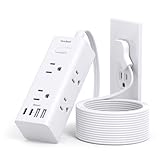
I remember the first time I plugged my brand new, ridiculously expensive gaming PC into a cheap power strip I’d grabbed from the discount aisle. Zap. A tiny puff of smoke, a smell I can still conjure up, and a dead computer. That’s when I started looking really closely at what exactly was inside those plastic boxes we call extension cords and power strips. It makes you wonder, doesn’t it? Specifically, when you’re eyeing up some of IKEA’s budget-friendly home solutions, you have to ask yourself: are IKEA extension cords surge protected?
Ikea’s stuff is usually well-designed and affordable, but when it comes to protecting your electronics from the unpredictable whims of the electrical grid, you can’t just assume.
Surge Protection: It’s Not Magic, It’s a Component
Look, the short answer to ‘are IKEA extension cords surge protected?’ is usually no, not in the way you’re probably thinking. Most basic extension cords, regardless of where you buy them – IKEA, Walmart, or that little hardware store down the street – are just wires in a sheath. They’re designed to extend the reach of your outlet, plain and simple. They don’t have any fancy circuitry to stop a sudden jolt of electricity from frying your sensitive electronics. Think of it like this: a basic extension cord is just a really long plug.
Surge protection, on the other hand, involves specific components designed to absorb or divert excess voltage. The most common component is a Metal Oxide Varistor (MOV).
When the voltage spikes above a certain level, the MOV’s resistance drops dramatically, and it shunts the excess electricity away from your devices, usually to the ground wire. If you’ve ever taken apart an old surge protector, you’ve likely seen those little disc-shaped MOVs inside.
Without these, a lightning strike miles away or a squirrel chewing through a power line down the street can send a surge that’s more than enough to kill your TV, your computer, or even your fancy coffee maker. This is why understanding what you’re buying is so important. It’s not just about length and outlets; it’s about what’s inside.
I learned this the hard way after a particularly nasty thunderstorm. I had a decent surge protector, or so I thought. Turns out, the MOVs inside had degraded over time – a common issue with older units – and they were no longer offering any real protection. My beloved Blu-ray player became a very expensive paperweight. It wasn’t the storm itself that got me; it was the lack of actual protection when I needed it most. So, while IKEA offers extension cords, you’ll generally need to look for their specific power strips or surge protectors if you want that added layer of defense. Don’t just grab the cheapest cord and assume it’s got your back.
Deconstructing Ikea’s Power Solutions: What’s Really on Offer?
IKEA does offer a range of power solutions, and it’s important to differentiate between a simple extension cord and a surge-protected power strip. Their basic extension cords, often found under names like ‘RÄKNA’ or ‘KOPPLA,’ are precisely that: cords. They’re functional for plugging in lamps, maybe a vacuum cleaner, or anything that isn’t particularly sensitive to power fluctuations. They are designed for convenience and extending reach, not for safeguarding electronics. I’ve used these extensively for things like Christmas lights and simple task lighting where a fried bulb isn’t a financial disaster.
Where IKEA does step into surge protection territory is with their power strips. Products like the ‘ÅSKMULLER’ or some variants of the ‘KOPPLA’ series often include surge protection. However, even then, you need to read the fine print. Not all of their power strips are created equal.
Some might offer basic surge protection with a lower joule rating, while others might have more solid protection. The joule rating is a key indicator of how much energy a surge protector can absorb before it fails. (See Also: Can Extension Cords Short Out )
A higher joule rating generally means better protection and a longer lifespan for the protector itself. I always aim for a rating of at least 1000 joules for anything I consider valuable, and ideally, much higher for sensitive equipment like computers and entertainment systems.
It’s also worth noting that IKEA, like many retailers, often has different product lines or regional variations. What’s available in one country might have slightly different features or specifications in another. So, when you’re in the store or browsing online, always look for clear labeling indicating ‘surge protection’ or ‘surge suppressor’ and, if possible, the joule rating. If it just says ‘extension cord’ or ‘power strip’ without mentioning surge protection, it’s safe to assume it doesn’t have it. This distinction is vital for making informed decisions about protecting your gear.
What to Look for: Beyond Just the Number of Outlets
When you’re on the hunt for anything that’s going to plug into your wall and feed power to your electronics, you need to be a bit of a detective. The number of outlets on a power strip is often the first thing people notice, but it’s probably one of the least important features when we’re talking about protecting your stuff. You need to be looking for a few key things, and they’re not always slapped on the front of the packaging in giant letters.
First up, joule rating. This is the big one. It tells you how much energy the surge protector can absorb before it’s no longer effective. Think of it like a sponge for electrical spikes. A higher joule rating means it can handle more or larger surges. For a basic lamp or a phone charger, maybe 500-700 joules is okay, but for anything with a microchip – computers, TVs, gaming consoles, sound systems – you want to be looking at a minimum of 1000 joules, and ideally 2000+ joules. Manufacturers will often list this somewhere on the packaging or the unit itself. If you can’t find it, that’s usually a red flag.
Next, clamping voltage. This is the voltage level at which the surge protector starts doing its job. Lower is better. A common standard is 400 volts. This means that once the incoming voltage exceeds 400 volts, the protector kicks in. Anything much higher than that means your devices might still experience a damaging surge before protection is activated. Again, look for this spec. It’s another indicator of quality.
Finally, indicator lights. Most decent surge protectors will have lights that tell you two things: (1) that the unit is plugged in and receiving power, and (2) that the surge protection circuitry is active. These lights are your lifeline. If the surge protection light goes out, it means the MOVs have done their job protecting your equipment, but they’ve sacrificed themselves in the process. The unit might still provide power, but it’s no longer surge protected. This is a common mistake people make – the light is off, but they think it’s still protecting them. I’ve seen it happen. You’ve got to be vigilant about checking those lights. Here’s a quick rundown of what to prioritize:
| Feature | What to Look For (Opinion/Verdict) |
|---|---|
| Joule Rating | At least 1000J for sensitive electronics, 2000J+ is better. Don’t settle for less if your gear is pricey. |
| Clamping Voltage | Lower is better. Aim for 400V or below. Higher means more risk. |
| Indicator Lights | Key. Must show power is on AND surge protection is active. Important for knowing when to replace. |
| Number of Outlets | Convenience, but secondary to protection specs. Make sure you have enough, but don’t let it be the deciding factor. |
| Brand Reputation / Warranty | Established brands often have better quality control and warranties. A good warranty can be a lifesaver. |
The Common Pitfalls: Mistakes People Make
It’s easy to fall into traps when buying power accessories. One of the biggest mistakes I see people make, and honestly, I’ve been guilty of it myself, is assuming that more expensive means better. That’s not always true, but in the case of surge protectors, it often correlates with better components and higher specifications. However, the most common pitfall related to IKEA’s offerings is simply not understanding the difference between a basic extension cord and a surge-protected power strip. You might buy an IKEA extension cord thinking it will save your TV during a thunderstorm, and that’s a costly assumption.
Another huge mistake is not replacing surge protectors when they’ve done their job. Those indicator lights I mentioned earlier? They are your best friend. If the ‘surge protection’ light is off, the unit is still providing power, but it’s no longer protecting your devices from surges.
It’s basically just a fancy power strip at that point. Many people leave these in place for years, thinking they’re still safe, only to find out when disaster strikes that their protector had already given its life. Manufacturers often recommend replacing surge protectors every 3-5 years, even if the light is still on, because the MOVs can degrade over time with regular use and smaller, unnoticed surges. (See Also: Can Extension Cords Be Use With Electric Heaters )
Think of it like tires on a car – they wear out.
People also tend to overload their power strips. While IKEA’s power strips might look sturdy, they have limits. Plugging too many high-draw devices into a single strip, even a surge-protected one, can lead to overheating and potential fire hazards. Always check the wattage or amperage rating of the power strip and compare it to the total draw of the devices you’re plugging in. It’s better to use multiple power strips or have dedicated circuits installed for heavy-duty equipment than to risk overloading one. My rule of thumb: if you have to cram plugs in, you’re probably overloading it.
Finally, and this is a bit of a contrarian take, some people over-invest in surge protection. You don’t need a top-of-the-line, $200 surge protector for your bedside lamp. For things that are inexpensive to replace, like a basic clock radio or a simple reading lamp, a standard extension cord or a very basic power strip will suffice. The money saved can be better allocated to high-quality surge protectors for your most valuable electronics like your computer, home theater system, or specialized equipment. It’s about matching the protection level to the value and sensitivity of the device.
Real-World Use: My Experience and Practical Tips
I’ve been a loyal IKEA shopper for years. Their furniture is great for starting out, and their kitchenware is solid.
But when it comes to electronics protection, I’ve learned to be a bit more discerning. For my home office, which houses my main computer, a couple of monitors, and various peripherals, I wouldn’t dream of using a basic IKEA extension cord.
I’ve invested in a high-end surge protector with a very high joule rating – north of 3000 joules – and a low clamping voltage. It cost me around $80 a few years back, and honestly, it’s one of the best investments I’ve made for my setup.
It’s got plenty of outlets, USB ports, and importantly, those indicator lights that give me peace of mind.
My living room entertainment center is another area where I’m meticulous. My TV, soundbar, game consoles, and streaming devices are all plugged into a separate, equally solid surge protector. I’ve had a couple of close calls with power surges that caused flickering lights and minor disruptions, and in both instances, the surge protector did its job, the indicator light remained on, and my expensive electronics were unharmed. It’s a small price to pay for avoiding thousands of dollars in damage.
However, for less important items – like my IKEA floor lamp in the corner, or the charging station for my electric toothbrush, or even the small fan I use in the summer – I’ve happily used IKEA’s basic KOPPLA extension cords. These items are either inexpensive to replace or not sensitive to minor fluctuations. So, the key takeaway from my experience is to categorize your devices. What’s irreplaceable or very expensive? That needs quality surge protection. What’s cheap and cheerful? A simple cord will do. (See Also: Are Outdoor Extension Cords 10 Or 12 Gauge )
Here are a few practical tips:
- Categorize Your Gear: Make a list of your electronics and rank them by value and sensitivity. High-value/high-sensitivity items (computers, TVs, gaming consoles, home theater equipment) need top-tier surge protectors. Low-value/low-sensitivity items (lamps, fans, phone chargers) can get by with basic extension cords or less-rated power strips.
- Check Indicator Lights Religiously: Make it a habit to glance at your surge protectors regularly. If the ‘surge protection active’ light is off, replace the unit immediately. Don’t wait for a surge to happen.
- Don’t Skimp on Joules: For anything connected to your home network or entertainment system, aim for a joule rating of at least 1000, and preferably 2000 or more. This is the primary defense against voltage spikes.
- Consider Dedicated Circuits: For very high-power equipment like large appliances, home theater amplifiers, or dedicated workstations, consult an electrician about dedicated circuits. This offers the best possible protection and prevents overloading shared circuits.
- Buy from Reputable Brands: While IKEA is great for furniture, for surge protection, consider brands known specifically for electrical safety and power management. Look for UL (Underwriters Laboratories) certification, which indicates the product has been tested for safety.
Ikea and Surge Protection: The Official Word
When trying to get a definitive answer on whether IKEA extension cords are surge protected, it’s important to consult their official documentation or product descriptions. According to IKEA’s own product information for their power strips and extension cords, the distinction is clear. Basic extension cords, like many in their KOPPLA series, are designed solely to extend the reach of an electrical outlet and do not offer surge protection. They are built for simple power delivery.
However, IKEA does offer power strips that are designed with surge protection. For example, some SKRUVSTA or ÅSKMULLER series products are explicitly marketed as surge-protected power strips. These typically include features such as MOVs (Metal Oxide Varistors) to absorb voltage spikes and indicator lights to show that the surge protection is active. The joule rating, a key metric for surge protection, will usually be specified in the product details for these models. If a product is not specifically labeled as a surge protector and does not list a joule rating or mention surge protection capabilities, it is safe to assume it is a standard extension cord or power strip.
It’s always best practice to read the product packaging and description carefully. IKEA, being a global retailer, often provides detailed specifications to help consumers make informed choices. If you’re in doubt, it’s better to err on the side of caution and assume a basic cord or strip does not offer protection unless explicitly stated. For valuable electronics, it’s often recommended to invest in a surge protector from a brand that specializes in power protection, even if IKEA offers a surge-protected option. This is not to disparage IKEA’s products, but rather to emphasize that specialized devices often provide a higher level of protection and feature sets custom for sensitive electronics.
People Also Ask: Answering Your Burning Questions
Are Ikea Power Strips Surge Protected?
Some IKEA power strips are surge protected, but not all. You need to check the product description and packaging carefully. Look for explicit mentions of ‘surge protection’ or ‘surge suppressor’ and a joule rating. Basic extension cords from IKEA, like many others, are generally not surge protected.
What Is the Joule Rating on Ikea Surge Protectors?
The joule rating varies depending on the specific IKEA surge protector model. Some models may have lower joule ratings suitable for less sensitive devices, while others are designed for more valuable electronics and will have higher ratings, often exceeding 1000 joules. Always check the product’s specifications for the exact joule rating.
Do I Need a Surge Protector for My Computer?
Yes, it is highly recommended to use a surge protector for your computer. Computers contain sensitive electronic components that can be easily damaged by voltage spikes from lightning strikes or power grid fluctuations. A good surge protector with a high joule rating and low clamping voltage will help safeguard your investment.
How Often Should I Replace a Surge Protector?
Surge protectors degrade over time, especially after absorbing surges. Most manufacturers recommend replacing them every 3-5 years, or immediately if the ‘surge protection active’ indicator light goes out. Even without visible damage, the protective components wear out.
Verdict
So, to circle back to the main question: are IKEA extension cords surge protected? The vast majority are not. They’re simple cords for extending reach. If you need protection for your electronics, you need to look for IKEA’s specific surge-protected power strips, and even then, scrutinize the specs. Don’t get caught out assuming a basic cord will save your expensive gear.
My advice? For anything you can’t afford to lose – your computer, your gaming console, your big-screen TV – invest in a dedicated, high-quality surge protector from a reputable brand that specializes in power protection. For lamps, fans, or other less important items, an IKEA extension cord might be perfectly fine. It’s all about matching the right product to the right device.
Ultimately, protecting your electronics is about being informed. Don’t just plug and play; understand what you’re plugging into. It could save you a lot of headaches and money down the line.