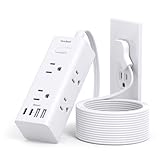
I remember staring at a tangle of bright orange cords in my garage, trying to figure out which one would actually reach the damn Christmas lights on the garage door. It was a mess, and I was sweating, not just from the effort, but from the sheer confusion. This whole question of ‘are extension cords measured end to end or cord length’ isn’t just some pedantic technicality; it’s the difference between powering your project and watching it fizzle out halfway across the yard.
Seriously, you’d think it’d be simple, right? But the way these things are sold and advertised can make your head spin faster than a cheap rotary tool. I’ve bought cords that looked long enough, only to find out they were measured like a politician’s promise – full of hot air and barely delivering on the actual usable length.
This isn’t about marketing fluff; it’s about practical reality. So, let’s cut through the BS.
The Real Deal: What ‘length’ Actually Means
Let’s get this straight from the jump: when you buy an extension cord, the advertised length is almost universally the total length from the tip of one plug to the tip of the other. This includes the plugs themselves. It’s a bit like buying a chain – they measure the whole dang thing, end to end. So, if you see a 25-foot cord, you’re not getting 25 feet of usable wire to stretch between outlets or devices. You’re getting about 24 feet, maybe a little less, of actual cord before you factor in the space those plastic housings take up.
This is where a lot of people get tripped up. They see ’50 feet’ and mentally picture it stretching across their entire patio, only to discover it falls a good few feet short. It’s a common frustration. I once bought a 100-foot cord for a remote landscaping project, thinking I’d have plenty of slack.
Turns out, when I plugged in my hedge trimmer, the plug just barely reached the outdoor outlet, and the trimmer’s cord barely reached the edge of the flowerbed I wanted to tackle. That 100 feet felt more like 95, and it made all the difference. It’s a simple measurement, but it’s often overlooked, and the consequences can be annoying, forcing you to buy a second, shorter cord just to bridge the gap, or worse, to run multiple cords in series, which brings its own set of problems.
The reasoning behind measuring end to end, from what I gather and have experienced, is consistency and ease of manufacturing. It’s a standardized way to label the product. However, it lacks a certain user-friendliness. A more practical measurement for the consumer would be the usable cord length, excluding the plugs. But then again, who’s going to measure and verify that on every single cord? The manufacturers have settled on the end-to-end method because it’s straightforward for them to implement and communicate, even if it leads to consumer confusion. We’re stuck with it, so understanding it is key.
The gauge of the wire (its thickness, often denoted by AWG – American Wire Gauge) is equally, if not more, important than the length for power delivery, especially with longer cords. A thinner wire (higher AWG number) will have more resistance, leading to voltage drop over distance. This means your power tool might not get the juice it needs, potentially running slower, overheating, or even failing to start. So, while you’re thinking about the 100 feet, you also need to be thinking about whether it’s a 12-gauge or a 16-gauge cord.
The Gauge Game: Why Thickness Matters More Than You Think
This is where a lot of folks, myself included early on, get it wrong. They focus solely on length, thinking ‘longer is better,’ and then wonder why their heavy-duty equipment sputters like a tired old lawnmower. The thickness of the copper wire inside the cord, measured by AWG, is a big deal, especially for extension cords. A lower AWG number means a thicker wire, which can handle more amperage and carry power with less resistance over distance.
So, if you’re running a circular saw, a leaf blower, or any tool that draws a significant amount of power, you absolutely need a heavy-gauge cord, meaning a low AWG number like 10 or 12. Trying to power a high-demand tool with a thin, long cord (like a 16-gauge, 100-footer) is a recipe for disappointment and potential fire hazard. The voltage drop is significant. I’ve seen it happen: a perfectly good saw that sounds like it’s struggling through molasses because it’s connected to an undersized cord. It’s not the saw’s fault; it’s the cord’s. (See Also: Can Extension Cords Short Out )
Here’s a little table I put together to help sort this out. It’s not exhaustive, but it covers the common scenarios and my own experiences:
| Use Case | Recommended Gauge (AWG) | Max Recommended Length (Feet) | My Verdict |
|---|---|---|---|
| Light Duty (e.g., string lights, fans, small electronics) | 16 | 25-50 | Okay for occasional, low-draw items, but I usually step up if I can. |
| Medium Duty (e.g., power tools, lawnmowers, heaters) | 14 | 50-100 | My go-to for most DIY projects. Reliable for the average job. |
| Heavy Duty (e.g., large compressors, welders, high-draw machinery) | 12 | 50-100 | Absolutely necessary. Don’t skimp here, or you’ll regret it. |
| Extreme Duty (e.g., generators, industrial equipment) | 10 | Up to 100+ (check rating) | For serious work. Not for your average homeowner, but important when needed. |
The maximum recommended length is also important. Even with a thick gauge, pushing an extension cord beyond its rated length will result in voltage drop. For longer runs, you need a thicker gauge. This is why a 100-foot 16-gauge cord is a bad idea for anything that pulls significant power. The wire is simply too thin to handle the load over that distance without losing too much juice. Think of it like trying to push a lot of water through a tiny straw – it’s going to be slow and inefficient.
My personal rule of thumb: if I’m unsure, I always go with a thicker gauge than I think I need. It’s better to have a cord that’s a bit overkill than one that’s inadequate. The cost difference is usually not that dramatic for the peace of mind and performance you gain. I learned this the hard way after buying a cheap, thin cord for my electric mower, only to have it barely cut grass. Upgrading to a proper 14-gauge, 50-foot cord made it a whole new machine.
Common Mistakes That Will Cost You (and Your Tools)
Alright, let’s talk about the screw-ups I’ve seen and made myself. The biggest blunder, as we’ve touched on, is buying based on length alone without considering the gauge. People see a 100-foot cord for a decent price and grab it, only to realize their power tool is wheezing like an asthmatic chain smoker. It’s a classic case of ‘you get what you pay for,’ but also ‘you get what you need to pay for.’
Another mistake is using indoor-rated cords outdoors. These cords are not built to withstand moisture, temperature fluctuations, or physical damage from the elements. They can crack, become brittle, and pose a serious electrocution risk. Always, always, always check the rating. Look for cords labeled for outdoor use, usually indicated by a thicker, more durable outer jacket and proper sealing on the connectors. I once saw a neighbor’s setup where they were using a standard indoor cord for their patio lights, and after a few rainstorms, the plug was corroded and sparking. Terrifying and completely avoidable.
Then there’s the issue of using extension cords for permanent wiring. Extension cords are not designed to be plugged in and left that way for months or years. They are temporary solutions.
Running them under rugs, through doorways where they can be pinched, or stapling them to walls is a big no-no. This creates wear and tear, potential short circuits, and fire hazards. My buddy tried to use a long extension cord to power a detached garage for a whole winter. The cord got brittle, the snow piled on it, and eventually, it frayed.
Luckily, nothing caught fire, but it was a disaster waiting to happen. For permanent power needs, you need to consult an electrician and get proper wiring installed.
People also tend to overload cords. Just because a cord can be plugged into a higher amperage outlet doesn’t mean it should be with every device you own. Each cord has a maximum amperage rating. Exceeding this can cause the cord to overheat, melt, and potentially ignite. Always check the amperage rating of your tools and compare it to the cord’s rating. It’s a simple calculation: Amps x Volts = Watts. If your tool’s wattage is higher than the cord’s capacity (adjusted for length and gauge), you’re asking for trouble. For example, if a tool pulls 10 amps on a 120-volt circuit, it’s 1200 watts. Make sure your cord can handle at least that, preferably with a buffer. (See Also: Can Extension Cords Be Use With Electric Heaters )
Finally, daisy-chaining extension cords. While it’s sometimes unavoidable in a pinch, running multiple cords together (especially if they’re of different gauges or ages) increases resistance and the risk of failure. Each connection point is a potential weak link and a place for resistance to build up, generating heat. If you absolutely have to, use the shortest, heaviest-gauge cords possible to bridge the gap, and make sure all connections are secure and dry. It’s a last resort, not a standard practice.
Extension Cord Types: Beyond the Basic Orange
When most people picture an extension cord, they imagine the bright orange, heavy-duty cords you see at hardware stores. And sure, those are common, but the world of extension cords is a bit more diverse than that. Understanding the different types can save you from buying the wrong one for the job.
First, there are the basic indoor cords. These are usually lighter duty, flexible, and come in neutral colors like white or gray to blend in with home decor. They’re fine for plugging in lamps, chargers, or a laptop. But again, keep them indoors and away from tripping hazards or excessive wear. They’re not tough enough for much else.
Then you have the outdoor-rated cords. These are built tougher. They have a more solid outer jacket, often made of PVC or rubber, that can handle UV exposure, moisture, and temperature changes. They’re also usually a brighter color, like orange or yellow, for visibility. You’ll find these in various gauges, from lighter 16-gauge options for string lights to heavy-duty 12-gauge ones for power tools used outside. These are the workhorses for most DIYers tackling garden projects or outdoor power needs.
For really demanding jobs, there are heavy-duty cords, often referred to as ‘contractor grade.’ These are typically 10 or 12-gauge, meaning they’re thick and built to deliver maximum power with minimal voltage drop. They’re also incredibly durable, designed to withstand being dragged over rough surfaces, stepped on, and generally abused. These are the ones you want for serious power tools, generators, or any application where consistent, high power delivery is a must.
Another type you might encounter is the retractable extension cord reel. These are great for organization and keeping cords tidy. You pull out the length you need, and then with a tug, it retracts back into a housing. They come in various lengths and gauges, but quality can vary wildly. Some of the cheaper ones can have issues with the retraction mechanism or the cord itself getting kinked inside. I’ve had mixed experiences; a good quality one is a lifesaver for keeping the garage floor clear, but a bad one is just an expensive tangled mess.
Finally, there are specialty cords. These might include cords with multiple outlets (power strips integrated into the cord), cords with built-in circuit breakers for added safety, or cords designed for specific environments like welding or RV hookups. For example, RV cords are designed to handle specific voltage and amperage requirements for powering a recreational vehicle. Always check the specifications for these specialized cords to make sure they match your needs precisely. The key takeaway here is that the ‘extension cord’ isn’t a monolithic product; it’s a category with options designed for different purposes and environments.
How to Choose the Right Cord: A Practical Checklist
Picking the right extension cord doesn’t have to be a shot in the dark. It’s about matching the cord to the job. Here’s a simple checklist I run through every time I need a new one:
- Identify Your Power Needs: What are you plugging in? Is it a low-draw device like a lamp, or a high-draw tool like a power saw? Check the wattage or amperage on the device’s label. This is your starting point.
- Determine the Required Length: Measure the distance from the power source to where you need power. Remember to add a little extra for slack, but don’t go crazy. Longer cords mean more potential for voltage drop, especially with thinner gauges. If you need more than 100 feet, seriously consider if a generator or a more permanent solution is better.
- Select the Correct Gauge (AWG): Based on your power needs and the required length, choose the appropriate gauge. Use the table I provided earlier as a guide. For high-draw tools over medium distances (50-100 feet), a 14-gauge is often the minimum. For longer distances or very high-draw tools, you’ll need a 12-gauge or even 10-gauge. If you’re only powering a fan for a short distance, a 16-gauge might suffice.
- Check the Cord Rating: Is it for indoor or outdoor use? If it’s going outside, make sure it’s rated for outdoor use with a durable, weather-resistant jacket.
- Consider Extra Features: Do you need multiple outlets? A built-in circuit breaker? A lighted end to show it’s powered? These can add convenience and safety.
- Inspect for Damage: Before you buy and especially before you use, give the cord a good once-over. Look for nicks, cuts, fraying, or damaged prongs on both the cord and the plugs. A damaged cord is a hazard.
My own experience has taught me that investing in a good quality, appropriately sized extension cord is always worth it. I once tried to save a few bucks on a cheap, thin 100-foot cord for my electric snowblower. It was a disaster. The motor struggled, it barely cleared the driveway, and the cord got so hot I worried it would melt. I ended up having to go out and buy a heavy-duty 12-gauge, 50-foot cord, which worked perfectly. That initial ‘saving’ cost me double and a lot of frustration. So, don’t be that person. (See Also: Are Outdoor Extension Cords 10 Or 12 Gauge )
A Contrarian Take: When Shorter Is Actually Better
Everyone talks about needing longer extension cords, and sure, there are times you absolutely do. But I’ve also found that often, people buy cords that are way longer than they actually need. This is a mistake. Why? Because every foot of extension cord adds resistance. Even with a good gauge, a 100-foot cord will always have more voltage drop than a 25-foot cord of the same gauge. So, if your project is only 30 feet from the outlet, using a 100-foot cord is unnecessarily compromising your power delivery.
My contrarian advice? Buy the shortest, thickest-gauge cord that will comfortably reach your target. If you need 30 feet, buy a 50-foot cord. If you need 75 feet, buy a 100-foot cord. But don’t buy a 100-foot cord if you only need 30 feet, just because it’s the most common length or seems like a good deal. You’re not getting more effective power; you’re just adding more electrical resistance to the equation. It’s like putting a kink in a garden hose – you restrict the flow. So, while everyone is chasing length, I’m often looking at the shortest length that gets the job done reliably, paired with the heaviest gauge I can justify for that specific use.
Faq: Extension Cord Measurements and Usage
Are Extension Cords Measured From Plug to Plug?
Yes, generally extension cords are measured from the tip of one plug to the tip of the other. This total length includes the plastic housings of the plugs themselves, meaning the actual usable cord length is slightly less than the advertised measurement.
Does the Length of an Extension Cord Affect Its Power Output?
Yes, the length of an extension cord significantly affects its power output due to voltage drop. Longer cords, especially those with thinner wires (higher AWG numbers), have more electrical resistance, which causes a reduction in the voltage delivered to the connected device. This can lead to reduced performance, overheating, and potential damage to the device.
Can I Connect Multiple Extension Cords Together?
While it’s possible to connect multiple extension cords, it’s generally not recommended for anything other than very short-term, low-power applications. Each connection point adds resistance and potential for failure, increasing the risk of overheating and fire. If you must connect cords, use the shortest, heaviest-gauge cords possible and make sure all connections are secure and protected from the elements.
What Is the Difference Between 14 Gauge and 16 Gauge Extension Cords?
The primary difference lies in their thickness and power-carrying capacity. A 14-gauge cord has a thicker wire than a 16-gauge cord. Thicker wires (lower gauge numbers) have less resistance, allowing them to safely carry more amperage and deliver power more efficiently over longer distances without significant voltage drop. 16-gauge cords are suitable for light-duty tasks, while 14-gauge cords are better for medium-duty applications.
Final Verdict
So, to finally put this to rest: are extension cords measured end to end or cord length? It’s end to end, including the plugs. That’s the number you’ll see on the packaging, and it’s important to remember that the usable length is a bit less. But as we’ve seen, length is only half the story.
Don’t get caught out by a cord that’s technically ‘long enough’ but too thin to do the job. Always consider the gauge, the intended use (indoor vs. outdoor), and buy the shortest, thickest cord that meets your needs. It’s the best way to avoid frustration, protect your tools, and keep yourself safe.
Next time you’re staring down a power need, you’ll know exactly what to look for. Now go forth and power up, intelligently.