I’ve seen some truly questionable ‘fixes’ over the years, and one that always makes me twitch is seeing someone reach for electrical tape when the stakes are high. Specifically, I’m talking about the age-old question: can electrical tape catch handle 120v? My gut reaction is a hard ‘no,’ but let’s be real, sometimes you’re in a jam and you wonder if that roll in your toolbox might just do the trick in a pinch. I’ve wasted enough money on cheap, useless tools and materials to know that ‘good enough’ often turns into ‘oh crap, I gotta fix this again, and it’s worse now.’
So, is it really the quick and dirty solution some folks make it out to be, or is it a recipe for disaster? Let’s break down what electrical tape actually is, what it’s designed for, and where it falls flat when you’re dealing with real household voltage.
What ‘electrical Tape’ Actually Means (and Why It Matters)
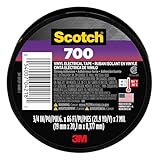
Look, the name itself is a bit of a misnomer, isn’t it? ‘Electrical tape.’ You’d think it’s specifically engineered to be the superhero of all things electric. But here’s the blunt truth: most of what you buy off the shelf labeled ‘electrical tape’ is really just vinyl tape with a decent adhesive and some basic insulating properties.
It’s designed for low-voltage applications, like wrapping wire nuts on a lamp or tidying up some speaker wires. Think of it as the duct tape of the low-volt world. It’s flexible, it sticks okay, and it offers a little bit of protection against minor abrasion or dust. It’s great for those little jobs where you need to keep a connection neat or prevent two bare wires from accidentally touching in a junction box that’s not going to be subjected to any real stress.
I remember a time I was wiring up some accent lights in my garden shed. Nothing high-voltage, just low-current LEDs. I used some generic electrical tape to secure the connections and cover the wire nuts.
It worked fine, looked neat, and stayed put through a couple of mild rain showers. It did exactly what I expected it to do.
But that was a far cry from what we’re talking about when the question comes up: can electrical tape catch handle 120v reliably and safely? For that kind of power, you need something with far more solid insulation and heat resistance.
This is where the common stuff just… stops working. It can melt, it can crack, and more importantly, it can fail catastrophically, leading to shorts, fires, or electric shock. It’s not built for the sustained heat and potential for arcing that 120-volt circuits can produce.
The problem is that people see it, they see ‘electrical’ in the name, and they assume it’s a one-size-fits-all solution for anything involving wires. It’s the ‘quick fix’ mentality that gets people into trouble.
You see it online, in DIY forums, people saying ‘yeah, just wrap it up good with electrical tape.’ And for a low-power, low-stress situation, it might hold for a while.
But when you’re dealing with the kind of power that can light up your house, that thin vinyl layer isn’t going to cut it. It’s like using a band-aid to patch a gaping wound. It might cover it, but it’s not going to stop the bleeding or heal the underlying issue. And the potential consequences of that failure are astronomically higher.
The Real Deal: What Actually Handles 120v
So, if your everyday roll of electrical tape isn’t the hero we might hope for when dealing with 120v, what is? The answer is specialized tapes designed for high-voltage applications, or more commonly, proper insulation methods. When I’m doing any work that involves actual household voltage – like installing a new outlet, replacing a switch, or even just working inside an appliance that’s plugged into the wall – I reach for specific materials. The gold standard for high-voltage tape is often something like vulcanizing tape, also known as self-fusing silicone tape.
This stuff is a big deal. When you stretch it and wrap it tightly, it actually fuses with itself to create a solid, smooth rubber-like insulation layer. It’s incredibly durable, heat-resistant, and provides excellent electrical insulation properties. It’s what professionals use for splicing high-voltage cables and creating waterproof seals.
It’s not cheap, and it takes a bit of practice to apply correctly, but it’s the real deal.
Beyond specialized tapes, the most common and reliable way to handle 120v connections is through mechanical insulation and protective casings. Think about the plastic housing on your outlets and switches, or the rubberized insulation on appliance cords. (See Also: Can I Use Electrical Tape To Connect Wires )
These are engineered materials designed to withstand the voltage and the environment they’re in. Wire nuts, when used correctly and sized for the gauge of the wire, are another prime example.
They mechanically secure the wires and provide an insulated cap. The key is using the right product for the job.
If you’re in doubt, and you’re dealing with anything more than a battery-powered toy, you should be looking at materials specifically rated for the voltage and current you’re working with. I learned this the hard way, trying to ‘save a buck’ by using a common electrical tape on a garden faucet timer’s power cord that was exposed to the elements.
It worked for about six months before it started to degrade, and a nice little short circuit took out the timer and tripped my breaker. That $10 timer cost me $30 for a replacement and a few hours of aggravation.
The question of ‘can electrical tape catch handle 120v’ really hinges on defining ‘catch handle.’ If you mean ‘temporarily prevent a catastrophic failure in a very specific, controlled, low-stress situation where it’s not the primary insulation,’ then maybe, maybe, under very specific and unlikely circumstances, it might not immediately burst into flames. But if you mean ‘provide reliable, safe, long-term insulation for 120-volt circuits,’ then the answer is a resounding and unequivocal no. It’s not designed for it, it won’t withstand it, and relying on it is just asking for trouble. The risk versus reward is completely skewed. You’re risking fire, electrical shock, and expensive damage for the sake of using a material that’s five bucks a roll.
Common Mistakes and Misconceptions
One of the biggest blunders I see people make is confusing ‘insulating’ with ‘isolating.’ Standard electrical tape offers a thin layer of insulation, yes, but it’s not designed to isolate high voltage from its surroundings, especially under stress. People assume that if they just wrap enough layers of regular electrical tape around a frayed wire carrying 120v, they’ve solved the problem.
This is dangerously wrong. The vinyl material degrades over time, especially with heat generated by the current or ambient temperature changes.
It can become brittle, crack, or even melt. When that happens, you’ve gone from a small problem to a potentially massive one. The electrical current can find a path through the degraded tape, arc, and potentially ignite surrounding materials.
Another common mistake is assuming all ‘electrical tapes’ are created equal. There are different grades and types. The cheap, off-brand stuff you grab at the dollar store is almost certainly the least capable.
Even higher-quality vinyl electrical tapes are generally rated for much lower voltages, typically around 600 volts, but this rating often assumes ideal conditions and specific thicknesses. For continuous, reliable use at 120v, especially in applications where there might be vibration, moisture, or temperature fluctuations, you need more.
I’ve seen people try to use electrical tape to repair the insulation on a power cord that’s constantly being bent and flexed. It might look okay for a week, but the constant movement will cause the tape to stretch, tear, and eventually fail. It’s like trying to patch a leaky tire with a sticker – it’s not going to hold under pressure.
The misconception often stems from seeing electrical tape used in temporary fixes or in areas of a circuit that are already well-protected. For instance, covering a wire nut that’s already inside a junction box. In that scenario, the tape isn’t the primary insulator; it’s just an extra layer of protection.
But when people see that, they extrapolate and think it’s a standalone solution for any electrical issue. This is a prime example of why understanding the context and the intended use of a material is so important. It’s not just about the ‘electrical’ in the name; it’s about the specifications and the engineering behind it. You wouldn’t use a kitchen knife to chop down a tree, would you?
Same principle applies here. Using the wrong tool, or in this case, the wrong material, for the job can have severe consequences. It’s about respecting the power you’re working with. (See Also: Can Electrica Tape Catch On Fire )
Real-World Applications (and Where Not to Use It)
Let’s talk specifics. Where can you actually use that roll of electrical tape with confidence? Think low-voltage DC circuits – your car’s wiring harness (for non-important connections), hobby electronics, speaker wire, or even temporary fixes on an antenna lead. If you’re dealing with something that’s running on a few AA batteries or a small AC adapter, the risks are significantly lower.
Wrapping a loose connection on a low-amperage doorbell wire? Probably fine. Securing a cable tie on a bundle of network cables? No problem.
It’s for neatening up, preventing minor abrasion, or providing a bit of extra layer in environments where it won’t be stressed. I’ve used it myself to wrap the handles of tools that were getting a bit sticky, or to add a bit of grip to a game controller. These are all low-stakes, low-voltage scenarios.
Now, where should you absolutely, positively, never use it for insulation on 120v? Any exposed wires in a household circuit. This includes: appliance power cords that are frayed or damaged, wiring inside junction boxes that isn’t properly terminated with a connector, outlets or switches with exposed terminals, and any outdoor electrical connections.
If a wire has lost its original insulation and you’re tempted to reach for electrical tape, stop. Seriously. Just stop. This is where things get dangerous.
Household voltage has enough power to cause severe burns, start fires, and is, of course, potentially lethal. The heat generated by current flowing through a compromised connection can melt even good-quality electrical tape, creating a fire hazard.
Furthermore, the adhesive can break down, causing the tape to unwrap, exposing the live wire. It’s a ticking time bomb.
I once had a neighbor, bless his heart, who tried to ‘fix’ a frayed cord on his hedge trimmer with electrical tape. He swore it was working fine. About a week later, during a damp morning, he got a nasty shock that sent him flying backward. Luckily, he was okay, just shaken up and a bit sore.
The hedge trimmer, however, was fried. That little incident reinforced for me that when it comes to 120v and above, you need to use materials specifically designed for the job, not just what’s readily available and vaguely related to ‘electrical.’ You need to respect the power. The cost of proper repair materials, or even calling an electrician, is infinitesimally small compared to the potential cost of an accident.
Don’t gamble with your safety or your home.
Understanding Electrical Tape Ratings
This is where things get a little more technical, but it’s important. Not all electrical tapes are created equal, and they have ratings that tell you what they can handle. The most common type, the vinyl electrical tape you see everywhere, typically has a voltage rating of around 600 volts. Sounds impressive, right? But here’s the catch: that rating is usually for a specific thickness, and it’s often a dielectric strength rating, meaning the voltage it can withstand before it breaks down under ideal laboratory conditions. It doesn’t account for the real world – temperature fluctuations, UV exposure, stretching, or repeated flexing. For a 120v circuit, this might seem like plenty of buffer, but it’s misleading.
The real issue isn’t just the breakdown voltage; it’s also the temperature rating and the adhesion properties. When 120v circuits draw significant current, especially under load, the wires and connections can get warm. Standard vinyl electrical tape isn’t designed for sustained heat. It can soften, lose its adhesive quality, and become brittle. This is why you see specialized tapes like high-temperature vinyl tapes or even rubber mastic tapes for more demanding applications. These are designed to handle higher temperatures, provide better adhesion, and offer more solid insulation. For true high-voltage work, like splicing power cables, professionals often use self-fusing silicone tapes or specialized splicing kits that provide multiple layers of insulation and environmental protection.
Here’s a quick rundown of what you might see and what it means:
| Type of Tape | Typical Voltage Rating (AC) | Primary Use Cases | Opinion/Verdict for 120v |
|---|---|---|---|
| Standard Vinyl Electrical Tape (e.g., Scotch 33+) | 600V | Low-voltage wiring, wire nut insulation (secondary), cable bundling, general insulation. | Avoid for primary 120v insulation. Okay for tidying up already insulated connections in junction boxes, but not for exposed wires or damaged cords. |
| High-Temperature Vinyl Tape | 600V | Applications where moderate heat is present, automotive wiring. | Slightly better than standard, but still not ideal for direct, exposed 120v connections. Risk of degradation remains. |
| Rubber Insulating Tape (Uncured/Self-Fusing) | ~1000V (can vary) | Splicing low and medium voltage cables, sealing connections against moisture. | Good option for 120v if applied correctly. Forms a solid, fused layer. Better than vinyl for environmental sealing. |
| Silicone Rubber Tape (Vulcanizing) | Up to 40kV (40,000V) | High-voltage splicing and insulation, heavy-duty sealing, extreme environments. | Excellent for 120v and much higher. Overkill for simple household wiring, but offers superior performance and durability. Expensive. |
The key takeaway here is that while standard electrical tape might have a voltage rating that seems sufficient on paper, it’s rarely the right choice for direct, exposed 120v applications. You need materials that are designed for heat, flexibility, and long-term insulation under real-world conditions. When in doubt, always opt for a higher-rated, specialized tape or a mechanical connector/insulator. (See Also: Can I Substitute Duct Tape For Electrical Tape )
Safety First: When to Call a Professional
Let’s be brutally honest here. If you’re asking the question ‘can electrical tape catch handle 120v,’ it’s a pretty strong indicator that you might be venturing into territory where professional help is a much safer bet. Electrical work, especially with household voltages like 120v, carries inherent risks. Fires, electrocution, and damage to your home’s electrical system are all very real possibilities if things go wrong. My own experiences have taught me that while DIY can be rewarding, there’s a line, and sometimes it’s smarter to let someone with the right knowledge, tools, and insurance handle it.
When should you absolutely call a professional electrician? First, if you’re not comfortable with the task. Seriously, if the thought of dealing with live wires makes your palms sweat, that’s your cue. Second, if the problem involves your main electrical panel, your service entrance, or anything that looks complex and unfamiliar. Trying to ‘fix’ a breaker that keeps tripping without understanding why is a bad idea. Third, if the repair involves any doubt about the integrity of existing wiring or components. Frayed cords, damaged outlets, or signs of overheating (like discolored outlets or a burning smell) are red flags that need expert attention.
I remember a situation where a friend’s kitchen outlet started sparking. He, like many, thought, ‘I’ll just tape it up.’ Thankfully, his wife intervened and insisted they call an electrician. Turns out, there was a loose connection deep inside the wall box, a slow-burning fire hazard.
The electrician fixed it properly, and they avoided a major disaster. That $150 service call saved their house.
It’s not about being lazy or cheap; it’s about acknowledging the danger and respecting the complexity of electrical systems. My contrarian take?
Sometimes, the most ‘DIY’ thing you can do is recognize when you’re out of your depth and make the call to a qualified professional. It’s an investment in safety and peace of mind that’s worth every penny.
The temptation to use a quick fix like electrical tape on a 120v issue is strong, especially when you see it in online videos or hear anecdotal advice. But the reality is that these quick fixes are rarely long-term solutions and often create bigger, more dangerous problems down the line. Understanding the limitations of materials like standard electrical tape and knowing when to step back and seek expert help are important skills for any homeowner. Safety should always be the top priority when dealing with electricity.
Faq: Can Electrical Tape Catch Handle 120v Safely?
Can standard electrical tape insulate 120v?
Standard vinyl electrical tape is generally rated for up to 600 volts, but this is under ideal conditions and doesn’t account for real-world factors like heat, stretching, or age. It’s not considered safe or reliable for primary insulation of exposed 120v wires. It’s best suited for low-voltage applications or as a secondary protective layer on already insulated connections.
What kind of tape is safe for 120v?
For higher voltage applications like 120v, you should use specialized tapes such as rubber insulating tape (self-fusing) or silicone rubber tape (vulcanizing). These materials are designed to handle higher voltages, temperatures, and environmental stresses, providing a much more solid and safer insulation. Mechanical connectors and housings are also standard safety measures.
Why is regular electrical tape not good for 120v?
Regular electrical tape is typically made of vinyl, which can degrade, become brittle, melt under heat generated by current, and lose its adhesive properties over time. This makes it unreliable for long-term insulation of 120v circuits, increasing the risk of short circuits, arcing, and fire hazards.
When can I use regular electrical tape on wires?
You can safely use standard electrical tape for low-voltage DC applications (like hobby electronics or car wiring), for bundling cables, tidying up wire nuts inside junction boxes as an extra layer of protection, or for cosmetic purposes on non-important wiring. Always make sure the wire is already properly insulated or terminated with an appropriate connector.
Verdict
So, to circle back to the main question: can electrical tape catch handle 120v? The short, blunt answer is no, not safely or reliably. That roll of vinyl tape in your drawer is for low-voltage jobs, tidying up, or offering a little extra protection in already secure situations. It’s not a substitute for proper insulation on household circuits.
I’ve learned that when it comes to electricity, cutting corners with the wrong materials, like using standard electrical tape on 120v, is a gamble you don’t want to take. The potential consequences – fire, shock, or damage – far outweigh any perceived convenience or cost savings. Always opt for materials specifically rated for the voltage and environment you’re working in, or better yet, call a qualified electrician if you have any doubts.
My advice? Keep that electrical tape for its intended purpose, and invest in proper insulation and connectors for anything involving 120v. It’s the only way to be sure you’re not setting yourself up for a costly and dangerous mistake. Always prioritize safety; it’s not worth the risk.