I remember the first time I tried to hang a heavy mirror in my apartment. The instructions said to use the little plastic anchors that came with it. I scoffed. ‘What a waste of time,’ I thought, hammering the screws directly into what I assumed was solid wall. Five minutes later, the mirror was on the floor, a gaping hole in the drywall, and my pride was thoroughly bruised. So, let’s cut to the chase: are anchors needed for drywall? The short, blunt answer is: usually, yes.
Drywall itself is basically paper-faced gypsum. It’s not exactly engineered to hold much more than a picture frame without some help. Trying to skip anchors when hanging anything with a bit of heft is like trying to build a house on sand – it’s a recipe for disaster. I’ve learned this lesson the hard way, and I’m here to tell you what actually works and what’s just marketing fluff.
When You Can Probably Skip the Anchors (and When You Really Can’t)
Look, I’m all for efficiency. If I can avoid an extra step, I usually will. And for those feather-light things? You’re probably fine.
A small, unframed print, a lightweight calendar, even some hooks for keys – these can often go straight into the studs. But here’s the deal: finding studs isn’t always easy, and even when you do, you need to know what you’re doing. My go-to method for a long time was a cheap stud finder, the kind that beeps.
It was about as reliable as a chocolate teapot. I’d mark spots, drill, and sometimes hit a stud, other times just a hollow void that mocked my efforts.
Eventually, I invested in a decent electronic stud finder, the kind that uses different sensors. It’s not perfect, but it’s a massive improvement, reducing the guesswork by about 70%.
Still, even with a good stud finder, you’re relying on hitting a stud dead center. If your screw is a quarter-inch off, you might miss it entirely.
For anything substantial, like shelves, heavy mirrors, TVs, or cabinets, you’re absolutely playing with fire if you don’t use proper anchoring.
I once decided to hang a substantial, antique medicine cabinet in my bathroom. It wasn’t ridiculously heavy, but it was bulky and filled with glass bottles.
I found what I thought was a stud, put in a couple of beefy screws, and felt pretty smug. A week later, I opened the cabinet, and it sagged alarmingly. A quick inspection revealed the screw had ripped through the side of the stud. My ‘stud’ was probably just a piece of wood that was already a bit compromised, or maybe my screw was just slightly off-angle.
The point is, drywall is not designed for load-bearing. It’s a covering. Imagine trying to hang a 50-pound bag of potatoes from a piece of cardboard.
That’s basically what you’re doing if you don’t use anchors or hit a stud properly.
The Different Types of Drywall Anchors: What Actually Holds
This is where things get confusing, and where companies make a killing selling tiny pieces of plastic and metal. Not all drywall anchors are created equal.
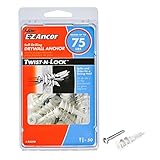
You’ve got your basic plastic expansion anchors – those ribbed little guys you pound or screw in. They’re okay for very light stuff, maybe a pound or two, max. Think a small framed photo or a very light coat hook. Then you have your self-drilling drywall anchors.
These are usually plastic and have a sharp point that screws directly into the drywall, creating their own threads. They’re better than the basic expansion ones, handling maybe 10-20 pounds depending on the size and quality. (See Also: Can Concrete Anchors Be Used In Brick )
I used these a lot when I was first starting out because they were so easy to install – just a screwdriver and you’re done.
The real workhorses, though, are the toggle bolts and the molly bolts. Toggle bolts have these wings that fold up when you insert them through a hole, then spring open on the other side of the drywall, distributing the weight across a larger area. They’re fantastic for heavier items, easily handling 30-50 pounds or more, depending on the size. The only downside is you need to drill a larger hole for them.
Molly bolts are similar in concept but have a metal sleeve that expands behind the drywall as you tighten the screw. They’re strong, often rated for similar or even higher weights than toggle bolts, and some come with a built-in screw, which is convenient. The key with these is to make sure the metal sleeve is properly engaged behind the drywall.
I’ve had a few instances where the sleeve didn’t expand quite right, and the anchor spun uselessly. That’s a real pain to fix.
My Opinionated Anchor Verdict Table
| Anchor Type | Max Weight (Approximate) | Ease of Installation | Best For | Verdict |
|---|---|---|---|---|
| Plastic Expansion | 2-5 lbs | Very Easy | Small pictures, light decor | Barely worth it for anything but the lightest items. |
| Self-Drilling | 10-25 lbs | Easy | Medium-weight shelves, mirrors | Good for lighter-medium duty, easy to use. |
| Toggle Bolts | 30-75 lbs+ | Moderate (needs larger hole) | Heavy mirrors, shelves, TV mounts (small ones) | Solid choice for serious weight. |
| Molly Bolts | 40-100 lbs+ | Moderate | Cabinets, heavy shelving, TV mounts | Very strong, but make sure proper engagement. |
| Strap Toggles / Toggle Straps | 50-150 lbs+ | Moderate (easy for tight spaces) | Heavy TVs, large cabinets, wall-mounted furniture | Excellent for very heavy loads where access is limited. |
I’ve personally found that for anything I’m remotely worried about, I reach for either a good toggle bolt or a molly bolt. The cheap plastic ones just don’t give me the confidence I need. I once hung a towel rack using those basic plastic anchors, and within a month, it was hanging by one screw, the other having pulled out entirely. That was a lesson learned in paying a few extra dollars for peace of mind. When it comes to are anchors needed for drywall for any significant weight, the answer is a resounding yes.
The Truth About ‘stud Finders’ and Finding Wall Studs
Ah, the stud finder. The magic box that promises to reveal the hidden wooden skeleton of your walls. I’ve owned a few. The cheap magnetic ones that find nails?
Mostly useless unless you’re lucky. The electronic ones that beep? Better, but still prone to false positives or missing studs entirely.
The first time I used one, I was trying to mount a fairly heavy soundbar. It beeped enthusiastically in about five different spots for a single stud. I picked the one that seemed strongest, drilled, and hit absolutely nothing but air.
The soundbar now sits precariously on a shelf, a constant reminder of my folly. It turns out, drywall thickness varies, and so does the lumber used for studs. Sometimes the sensor just isn’t sensitive enough, or it’s picking up a pipe or electrical wire.
My advice? Get a decent electronic stud finder that offers multiple detection modes.
The best ones can detect the edges of the stud, giving you a more precise location. Even then, I have a trick: after I think I’ve found a stud, I’ll drill a very small pilot hole (like 1/16th inch) first. If I hit solid wood, great. If I hit nothing, I know I missed, and I can try again nearby without making a huge mess.
Another technique, if you’re brave or desperate, is to tap the wall. A hollow sound means there’s space behind it; a dull thud usually indicates a stud.
It takes practice, and frankly, I’m still not great at it, but it can help confirm what the electronic finder is telling you. For important installations, like a TV mount that could seriously injure someone if it falls, I’ll often drill multiple small pilot holes in a line to confirm I’ve found the center of the stud. It’s overkill for hanging a picture, but for something that could cause real damage, it’s worth the extra effort.
Don’t rely solely on one method; use a combination of tools and your ears. (See Also: Can Cords Be Used To Make Anchors Climbing )
Common Mistakes People Make with Drywall Anchors
One of the most common blunders is using the wrong type of anchor for the job. People see those little plastic ones and think they’re a one-size-fits-all solution.
I’ve seen folks try to hang substantial floating shelves with nothing but those flimsy plastic expansion anchors. It’s a disaster waiting to happen. The weight distribution is all wrong, and they’re just not designed for shear strength – the sideways force that pulls them out of the wall. Another mistake is not drilling the correct size hole.
If the hole is too small, you can damage the anchor or the drywall trying to force it in. If it’s too big, the anchor won’t have anything to grip onto, and it’ll just spin. Always read the package instructions; they usually specify the drill bit size you need.
Over-tightening is another culprit. With self-drilling or molly bolts, cranking down too hard can strip the threads in the drywall or the anchor itself, rendering it useless. You want it snug, not Herculean.
I’ve definitely been guilty of that, trying to make sure it’s ‘extra secure’ and ending up with a stripped screw head or a wobbly anchor. And let’s not forget the classic mistake: not checking if you’ve hit a stud before you commit to an anchor. Even the strongest anchor is less effective if it’s placed next to a stud where it doesn’t need to be. You’re making the hole bigger than necessary.
For TV mounts, people often make the mistake of thinking one anchor is enough. Most TV mounts require at least two mounting points, and you need to make sure those are strategically placed, ideally into studs or using heavy-duty anchors rated for the weight of the TV plus the mount. I recall a friend who installed a small TV with just two molly bolts, and the picture frame wobble was evident.
He ended up reinforcing it, but it was a stressful process.
When to Call in the Pros (or Just Use a Stud)
There comes a point where you have to ask yourself: is this worth the risk? If you’re trying to hang a massive piece of art, a heavy mirror, or a TV that costs more than your car, and you’re not 100% confident in your abilities, it’s probably time to call a handyman. They have the experience and the right tools to do it safely and securely. I learned this lesson when I tried to install a significantly oversized mirror in a hallway.
It was a beautiful antique, and the thought of it crashing down was unthinkable. I’d used anchors before, but this felt different. The handyman I hired took about 15 minutes, used toggle bolts that looked like they could hold a small car, and charged me a reasonable fee.
It was money well spent for the peace of mind. It’s not a sign of weakness; it’s a sign of intelligence to know when to outsource.
However, if you do have access to studs and you’re confident you can hit them accurately, that’s almost always the best solution. Driving a screw directly into a solid wood stud is far more secure than any drywall anchor. Think of it as the primary structural support.
Anchors are the secondary, backup support when the primary isn’t available or sufficient. When I’m building shelves, for instance, I always try to secure the brackets to studs.
If I can’t get a bracket perfectly aligned with studs, I’ll then use heavy-duty anchors in the remaining holes. It’s a hybrid approach that gives maximum security. The wall itself, specifically the framing behind the drywall, is what provides the actual support. Drywall is just the cosmetic face layer.
So, when in doubt, find a stud. If you can’t find enough studs, or the item needs to be positioned away from them, then a quality anchor becomes your best friend. (See Also: Can Anchors In Your Shoulder Break )
A Few Practical Tips for Hanging Heavy Items
Here are a few things I’ve picked up that have saved me time and frustration. First, always, always, always check the weight rating on your anchors and compare it to the weight of the item you’re hanging. Don’t guess. If the item weighs 30 pounds and the anchor is rated for 20, that’s a bad situation.
Add a little buffer – don’t buy anchors rated for exactly the weight; go for ones rated higher. Second, if you’re hanging multiple items in a line, like a series of shelves or hooks, try to hit studs for at least one or two of the mounting points. This provides a solid base, and the anchors can then support the remainder. For example, if you have a shelf that needs four screws, and you can get two into studs, you might only need anchors for the other two.
This significantly increases the overall strength.
Third, when using toggle bolts, remember that the wings need clearance to swing open. Make sure you’re not drilling into a void that’s too shallow.
Some toggles have a specific depth requirement. For molly bolts, make sure the sleeve is fully expanded behind the drywall. You can sometimes feel this as you tighten the screw – it should feel like it’s gripping something solid.
If it just keeps spinning, the sleeve isn’t engaging properly. Finally, if you’re hanging something like a heavy mirror that has D-rings or wire on the back, measure the distance between those points accurately. Mark them on the wall precisely.
A slight misalignment can put uneven stress on your anchors or screws, even if they’re rated for the weight. Use a level! I can’t tell you how many crooked shelves I’ve hung because I skipped the level.
It looks amateurish and can actually make the item feel less secure.
Frequently Asked Questions About Drywall Anchors
Are Anchors Needed for Drywall When Hanging a Picture?
For very small, lightweight pictures (like an 8×10 unframed print), you might get away with a small nail or screw directly into the drywall, especially if it’s a fresh, solid wall. However, for anything heavier, framed, or larger, using a small self-drilling anchor or a plastic expansion anchor is highly recommended. It prevents damage and makes sure the picture stays put.
Can I Hang a TV Without Hitting Studs?
Technically, you can use very heavy-duty toggle or strap toggles designed for extreme weight. However, it is strongly advised against for safety reasons. TVs are heavy and expensive, and a falling TV can cause serious injury or damage. Always prioritize mounting TV brackets into wall studs whenever possible. If studs aren’t perfectly aligned, use a combination of stud mounting and heavy-duty anchors.
How Much Weight Can a Drywall Anchor Hold?
This varies drastically by type and size. Basic plastic anchors might hold only 5-10 pounds, while heavy-duty toggle or strap anchors can hold 75-150 pounds or more. Always check the manufacturer’s weight rating on the packaging and err on the side of caution. Never exceed the stated capacity.
What’s the Difference Between a Toggle Bolt and a Molly Bolt?
Both are strong drywall anchors. A toggle bolt uses spring-loaded wings that spread out behind the drywall to distribute weight. A molly bolt uses a metal sleeve that expands as you tighten the screw. Toggle bolts generally require a larger hole but can be very secure. Molly bolts are often easier to install in tighter spaces and some come with a pre-attached screw.
Do I Need Anchors If I Find a Stud?
If you find a stud and can drive your screw directly into the center of that solid wood framing, you generally do not need an anchor. Driving a screw into a stud is the most secure method. Anchors are primarily used when you cannot locate or use studs for your mounting needs.
Conclusion
So, to circle back to the big question: are anchors needed for drywall? For anything more than a feather-light decoration, the answer is a pretty firm yes. Drywall is not structural; it’s a covering. Trying to hang heavy items directly into it is like expecting a piece of cardboard to hold up a bookshelf. You’ll end up with holes, damaged walls, and potentially broken items. Invest a few bucks in decent anchors, learn which type is best for the job, and take the extra five minutes to install them correctly.
Don’t be like my past self, who thought a little plastic anchor was beneath him. I’ve paid the price in broken items and frustrating repairs. The best-case scenario for hanging anything substantial is always hitting a stud. But when that’s not possible, a good quality toggle bolt or molly bolt is your best friend. They’re designed for this exact purpose and will save you a lot of headaches.
Before you drill that next hole for a heavy shelf or mirror, take a deep breath, assess the weight, and choose your fastening method wisely. Your walls (and your possessions) will thank you. If you’re still unsure about the weight of your item or the best anchor to use, do a quick search for your specific item and ‘drywall anchor recommendation’ – there’s a ton of good advice out there from people who’ve been there.