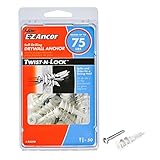
I remember the sheer panic. I’d just hung a beautiful, heavy mirror on my living room plaster wall, feeling pretty smug about my DIY skills. Then, a few days later, I heard this sickening crunch followed by a thud. The mirror, and a good chunk of my plaster, lay in a heap on the floor. That’s when I learned the hard way that plaster walls are a different beast entirely. So, let’s talk straight: are anchors needed for plaster walls? It’s not a simple yes or no, but understanding why is key.
For years, I’d skimmed over advice about plaster, thinking my trusty old screw-and-wall-plug combo would be fine. Turns out, plaster isn’t drywall. It’s crumbly, brittle, and doesn’t have that forgiving gypsum core. My DIY disaster taught me that cutting corners here leads to more work (and more money) down the line.
This isn’t about making you an expert plasterer, but about saving you from my mistakes. We’ll cut through the noise and figure out what really holds up on these old walls.
Plaster vs. Drywall: Why It Matters for Hanging Stuff
Okay, first things first. If you’re used to drywall, you’re in for a bit of a shock when you tackle plaster. Drywall, that white paper-covered gypsum board, is pretty forgiving. You punch a hole, and it’s usually a clean job to patch. The gypsum itself offers some grip, and when you use a decent anchor, it bites into that material. It’s like a sandwich: paper on the outside, soft gypsum in the middle, paper on the other side. Pretty stable for most things you want to hang.
Plaster, though? It’s a whole different animal, and this is why the question ‘are anchors needed for plaster walls’ comes up so often. Traditional plaster walls are usually made of several layers. The base layer, often called ‘lath,’ can be wooden strips or metal mesh, creating a sort of skeleton.
Over this, you have a few coats of plaster, which is typically a mix of lime, sand, and water, or gypsum plaster. The result is a hard, often uneven surface that, when it’s good, feels incredibly solid.
But here’s the catch: it’s also brittle. It doesn’t flex like drywall; it cracks. And when it cracks, it doesn’t just form a small hole. It can crumble outwards, taking a good chunk of the wall with it, like my poor mirror discovered.
The real issue for hanging anything is that plaster itself doesn’t offer much purchase for screws or standard plastic anchors. A standard plastic anchor, the kind you screw into a pre-drilled hole in drywall, relies on that material to expand and grip. In plaster, that same anchor can just spin, or worse, the plaster can break apart around it.
The lath behind the plaster is what’s doing the heavy lifting, but you’re not always drilling into the lath. You might be drilling into just the plaster. This is why a screw driven directly into plaster, even with a plastic anchor, has a high chance of pulling out, taking a piece of the wall with it. Think of it like trying to screw something into a dry cracker versus a piece of wood.
One crumbles, the other holds firm.
I once tried to hang a bookshelf on a plaster wall using what I thought were heavy-duty toggle bolts. I drilled the hole, pushed the bolt through, and when I tightened it, I heard a sound that made my stomach drop. The plaster around the hole just started to spiderweb and fall away. The toggle, meant to expand behind the wall, had basically pulverized the plaster it was trying to grip. It was a messy, expensive lesson in understanding the material you’re working with. Drywall might let you get away with less finesse, but plaster demands respect for its limitations.
When Do You Actually Need Anchors in Plaster?
So, are anchors needed for plaster walls? My gut reaction, after my mirror incident, was a resounding YES. But it’s more nuanced than that. You need anchors when you’re not hitting solid wood or metal framing. Plaster walls do have a structure behind them – the lath. If you can locate a stud or a piece of lath directly behind the plaster, you might get away with just a good, long screw that bites into that structural element. This is the ideal scenario, obviously. Think of it like finding the joist in your ceiling to hang a heavy light fixture. It’s the most secure way to go.
However, finding studs in plaster walls isn’t always straightforward. They’re often deeper than in drywall, and the plaster can throw off stud finders. The lath itself, especially if it’s plaster and wire mesh, also provides some support, but it’s not as solid as hitting a solid wooden stud. If your screw or anchor is only going into the plaster layer, even if it’s a thick one, you’re asking for trouble with anything more than a feather-light picture frame. The plaster can crack and crumble around the anchor, leading to failure. This is where the type of anchor becomes critically important. (See Also: Can Concrete Anchors Be Used In Brick )
Let’s be clear: for anything that has even a moderate amount of weight – a TV, a heavy mirror, shelves, cabinets, even a large piece of art – relying solely on plaster is a gamble. The forces are unpredictable.
Temperature fluctuations, vibrations from footsteps overhead, or just the natural settling of an old house can all put stress on your hanging points. What felt secure yesterday might not be secure today. I’ve seen advice online suggesting that a long screw directly into plaster is fine for lighter items.
I disagree. Why risk it?
My personal rule of thumb is this: if the item weighs more than a couple of pounds, or if it’s something valuable or potentially dangerous if it falls (like a TV), you’re playing with fire without proper support.
The common advice to just screw directly into plaster for ‘light’ items is, in my opinion, a recipe for disaster waiting to happen. I’ve had friends who followed that advice, only to have small decorative shelves or even picture frames come crashing down. It’s not worth the potential damage to the wall or the item you’re trying to hang. So, for the vast majority of hanging tasks beyond a single sheet of paper, you’re going to need some form of anchor or support that goes beyond just the plaster layer itself. The question then becomes, what kind of anchor?
My Honest Verdict on Anchor Needs
For anything heavier than a very small, lightweight picture, yes, you absolutely need an anchor designed to work with brittle plaster or to bypass it and grip the lath or studs. Relying on plaster alone is a fool’s errand.
The Best Anchors for Plaster Walls: What Actually Works
Alright, so we’ve established that for most things, you’re going to need an anchor. But not just any anchor. Those flimsy plastic ones you buy in a pack of 100 for a couple of bucks? Toss ’em. They’re fine for drywall, maybe, but for plaster, they’re practically useless. I’ve wasted money on those cheap anchors, only to have them fail spectacularly. It’s like trying to hold up a bridge with a toothpick.
What you really need are anchors that are designed to spread their load or grip something more substantial behind the plaster. My go-to for years, and something I’ve found consistently reliable, are various types of toggle bolts. The classic toggle bolt has a spring-loaded wing that folds up to go through a drilled hole, and then springs open behind the wall, providing a wide surface area to grip. You drill a hole large enough for the folded toggle, insert it, and then tighten the screw. The wider the wingspan, the more surface area it has to distribute the weight, meaning it’s less likely to pull through the plaster. Some are designed for hollow walls, and they work wonders in plaster.
Another excellent option is a molly bolt. These are metal anchors that you insert into a pre-drilled hole. As you tighten the screw, the sleeve of the molly bolt expands and grips the back of the plaster or lath. They feel incredibly solid once installed and can hold a good amount of weight. They require a slightly larger hole than a standard plastic anchor, but the security they offer is worth it. I’ve hung heavy bathroom cabinets using molly bolts, and they’ve held up for years without an issue.
There are also specialized plaster anchors. Some brands make anchors with wider flanges or designs that specifically grip the lath. These can be great, but sometimes they’re harder to find or more expensive. For general DIY use, I stick to the tried-and-true toggle bolts and molly bolts. They’re readily available at any hardware store and provide a level of security that standard plastic anchors simply can’t match.
When I’m deciding, I usually consider the weight of the item. For something moderately heavy, like a wall-mounted TV bracket (before the TV goes on), a heavy-duty toggle or a molly bolt is my first choice. For very heavy items, like an antique sideboard that needs to be secured to the wall to prevent tipping, I’d be looking at finding studs and using lag screws, or using multiple heavy-duty anchors spaced out. The key is to match the anchor’s holding power to the weight and nature of the item you’re hanging. Don’t guess; check the weight rating on the anchor packaging, but always add a buffer, especially with plaster.
A common mistake I see people make is trying to use the wrong size drill bit. If the hole is too small, you won’t get the anchor in. If it’s too big, the anchor won’t have anything to grip. Always measure your anchor and use the drill bit size recommended on the packaging. It seems obvious, but in the heat of the moment, it’s easy to just grab a bit that looks about right. (See Also: Can Cords Be Used To Make Anchors Climbing )
| Anchor Type | Pros | Cons | My Verdict |
|---|---|---|---|
| Standard Plastic Anchor | Cheap, easy to find | Poor holding power in plaster, prone to crumbling | Avoid for plaster |
| Toggle Bolt (Spring Loaded) | Excellent holding power, spreads load wide | Requires larger hole, can be tricky to insert | Great for plaster, especially for medium to heavy items |
| Molly Bolt | Very secure, good weight capacity, feels solid | Requires larger hole, more expensive than plastic | Excellent for plaster, especially for heavier items |
| Screw Directly into Lath/Stud | Most secure if possible | Requires finding structural element, can be difficult | Ideal, but not always feasible |
The ‘people Also Ask’ Stuff: Answering Your Real Questions
I’ve seen people asking a lot of the same things over and over about hanging things on plaster, and honestly, a lot of the advice out there is either too vague or just plain wrong. Let’s clear some of this up.
### Can you hang heavy items on plaster walls?
Yes, but not by just screwing into the plaster itself. You need specialized anchors like toggle bolts or molly bolts that grip the structure behind the plaster or spread the load over a large area. For extremely heavy items, like large cabinets or TVs, finding wall studs or lath and using solid screws is the most secure method. Always check the weight rating of your chosen anchors and use them appropriately for the item’s weight.
### How do you hang a TV on a plaster wall?
Hanging a TV on a plaster wall requires extra caution. The safest method is to locate the wall studs (the vertical wooden supports behind the plaster) using a stud finder, and then attach the TV mount directly to those studs with heavy-duty lag screws. If studs aren’t accessible in the desired location, you’ll need to use heavy-duty toggle bolts or molly bolts specifically rated for the weight of your TV and mount. Do not rely on plaster alone.
### What is the best anchor for a hollow wall?
For hollow walls, including plaster walls which have hollow spaces behind the plaster and lath, toggle bolts are generally considered the best. Their wings expand behind the wall, creating a large surface area that distributes weight effectively. Molly bolts are also excellent choices. The key is an anchor that doesn’t rely solely on the plaster for grip, but rather uses the void behind it for support.
### How much weight can a plaster wall hold?
This is incredibly variable. A plaster wall’s weight-bearing capacity depends heavily on the condition of the plaster, the type of lath behind it (wood vs. metal), and whether you are hitting studs or just the plaster. A direct screw into a solid stud could hold hundreds of pounds. A standard plastic anchor in plaster might hold just a few pounds before failing. For any significant weight, assume the plaster itself offers minimal support and rely on anchors designed for hollow or brittle walls, or structural elements.
### Can you use drywall anchors in plaster?
Technically, you can try, but it’s a terrible idea and I wouldn’t recommend it. Drywall anchors rely on the gypsum core of drywall for their grip. Plaster is brittle and crumbly. A standard plastic drywall anchor will likely just spin in the hole, or the plaster will break around it, leading to failure. You need anchors specifically designed for plaster or hollow walls that can grip the lath or studs behind the plaster.
Common Mistakes and How to Avoid Them
I’ve made enough mistakes hanging things on plaster walls to write a book, but here are the ones that really stand out and cost me time, money, and a lot of frustration. Avoiding these will save you a headache. (See Also: Can Anchors In Your Shoulder Break )
First off, the classic mistake: using the wrong anchor. This is what I did with my mirror. I grabbed what looked like a substantial anchor, but it was really designed for drywall. It looked okay going in, but it couldn’t handle the slight vibrations or the uneven plaster. When it failed, it took a chunk of the wall with it. It was a mess. The lesson? Always, always use anchors designed for plaster or hollow walls. Toggle bolts, molly bolts – these are your friends. Don’t be tempted by those cheap, generic plastic anchors.
Another big one is not checking the weight rating, or worse, ignoring it. Every anchor has a limit. Plaster is inherently less predictable than drywall. The lath might be old and weak, or the plaster might have hidden cracks. If an anchor says it holds 20 pounds, and you’re hanging something that’s 18 pounds, you’re still cutting it close. I always add at least a 50% buffer. If I’m hanging something that weighs 10 pounds, I want an anchor rated for at least 15-20 pounds, preferably more. This buffer accounts for the unpredictability of older walls and the dynamic forces (like someone bumping into it) that can be applied.
Third, and this is important for plaster: not drilling the correct size hole. If the hole is too small, you’ll struggle to get the anchor in, and you might damage the anchor or the plaster trying to force it. If the hole is too big, the anchor won’t have enough material to grip, and it will just spin freely. Always follow the manufacturer’s instructions for drill bit size. It’s usually printed right on the package. Take the extra minute to measure and get the right bit. It makes all the difference in getting a secure fit.
Finally, rushing the job. Plaster walls require a bit more patience. You need to take your time finding studs (if you’re going that route), drilling holes precisely, and making sure the anchor is seated correctly. I once tried to hang a heavy mirror quickly before guests arrived. I didn’t let the toggle bolt fully set, and the mirror ended up crooked. It’s tempting to speed through, but with plaster, that haste often leads to more work fixing the resulting damage. Slow and steady wins the race, especially when dealing with old, brittle walls.
I learned this the hard way when I was trying to hang a decorative wooden beam on a plaster wall. I was so focused on getting it level and secure, I ended up drilling too many holes because my first few attempts with anchors weren’t holding right. Each failed anchor meant more plaster damage, and I ended up with a Swiss cheese wall that needed significant repair before I could even attempt hanging the beam properly. It cost me a weekend and a good chunk of change for patching compound.
Practical Tips for Hanging on Plaster
So, you’ve decided you need anchors for your plaster wall. Great. Now, how do you make sure you do it right? Here are a few tips that have saved me a lot of grief over the years. First, get a good stud finder. Not all stud finders are created equal, and some are better than others at detecting studs through plaster. Look for one that has different sensitivity settings or can detect metal as well as wood. Sometimes, a combination of a stud finder and a small pilot hole drilled very carefully can help you locate the lath or stud. Just remember to patch any exploratory holes.
Second, invest in a decent drill. A powerful drill makes drilling into plaster much easier. Plaster can be hard, and trying to drill with a weak drill can lead to the bit slipping or overheating. A variable speed drill is also helpful, allowing you to start holes slowly to prevent the plaster from cracking excessively, then ramp up the speed. I’ve found that using a masonry bit, even for plaster, can sometimes provide a cleaner entry and reduce chipping compared to a standard wood bit, especially for larger holes needed for toggle bolts. Just make sure it’s sharp.
Third, always pre-drill your holes to the size recommended by the anchor manufacturer. I’ve already touched on this, but it’s worth repeating because it’s so important. Use a drill bit that matches the anchor’s specifications precisely. For toggle bolts, this means drilling a hole large enough for the collapsed toggle to pass through. For molly bolts, it’s about creating a snug fit for the expanding sleeve. If you’re unsure, it’s better to err on the side of drilling a slightly larger hole than trying to force an anchor that’s too big.
Fourth, when you insert toggle bolts or molly bolts, give them a gentle tug to make sure they’ve set properly and are gripping securely behind the plaster. With toggle bolts, you’ll feel them ‘pop’ open. With molly bolts, you’ll feel resistance as they expand. If an anchor feels loose or wobbly after installation, it’s not secure. Don’t risk it. Remove it, patch the hole, and try a different anchor or a different location. It’s better to have a small, repaired hole than a large, damaged section of wall and a fallen item.
Finally, consider the weight distribution for very heavy items. Instead of relying on one anchor, use multiple anchors spaced appropriately. This distributes the load more evenly across the wall and reduces the stress on any single point. For example, if you’re hanging a long shelf, use at least two anchors, preferably three or four, spaced out along the shelf’s length. This is a fundamental principle of structural integrity, and it applies just as much to hanging things on your wall as it does to building bridges.
I once had to hang a massive antique mirror that weighed easily 50 pounds. My first instinct was to find the studs, but they were just not in the right place for the mirror’s size. I ended up using four heavy-duty toggle bolts, spaced out evenly. It took a bit of measuring and careful drilling, but that mirror hasn’t budged in three years. The key was understanding the weight, the wall type, and using the right kind of multi-point support.
Final Verdict
So, after all this, are anchors needed for plaster walls? My final, no-nonsense answer is yes, for most things you’d actually want to hang. Relying on plaster alone is asking for trouble, and the cheap plastic anchors are just going to disappoint you. Spend a few extra bucks on toggle bolts or molly bolts; your walls (and your belongings) will thank you.
Don’t be like me and learn the hard way with a pile of plaster and a broken mirror. Take the time to understand your wall and choose the right fasteners. It’s not rocket science, but it does require a bit of common sense and the right tools.
Next time you’re staring at a blank plaster wall and wondering what you can hang, remember this advice. Get the right anchors, measure carefully, and you’ll be golden. You might even enjoy the process once you see how solid your work can be.