I remember the first time I hung a heavy mirror in my apartment. Armed with what I thought were the right tools, I screwed in a couple of those cheap plastic anchors and confidently hammered the mirror on. Less than an hour later, a sickening crunch echoed through the room as the whole thing tumbled down, taking a chunk of drywall with it. It was a brutal, immediate lesson: not all drywall anchors are created equal, and the question of whether drywall anchors are strong isn’t a simple yes or no. It depends entirely on what you’re hanging, where you’re hanging it, and importantly, what kind of anchor you’re using. That plaster carnage taught me to look closer.
So, Are Drywall Anchors Strong? The Blunt Truth
Let’s cut to the chase: the strength of a drywall anchor is directly proportional to its design and how it interacts with the drywall itself. Drywall, that papery gypsum sandwiched between thin cardboard, is inherently weak.
It’s basically glorified cardboard with a gypsum filling. It offers minimal structural integrity on its own.
That’s where anchors come in. They’re designed to distribute the weight of whatever you’re hanging over a larger area of that flimsy drywall, or better yet, to grip something more substantial behind it. A cheap, flimsy plastic anchor might hold a few pounds for a short while, but ask it to hold your flat-screen TV, and you’re asking for trouble.
The common advice is often too vague: ‘just use an anchor.’ My experience? You need the right anchor. I once tried to hang a pretty hefty antique shelf – maybe 40 pounds when loaded – using what I thought were decent threaded anchors.
They looked sturdy enough, metal threaded things. Within a week, I noticed a slight sag.
A few more weeks, and a small crack appeared. Turns out, the threaded part was only biting into the outermost layer of drywall, and the constant downward pull was slowly tearing it apart. That shelf is now securely mounted into studs, a lesson learned the hard, drywall-shattering way.
The real strength comes from anchors that expand, toggle, or screw into a larger surface area or a more solid part of the wall structure.
Beyond the Little Plastic Cone: Types That Actually Work
When you walk down the hardware aisle, it’s an avalanche of plastic and metal. You’ve got the classic ribbed plastic ones, the screw-in types that look like tiny metal screws, and then the more serious-looking ones that involve toggles or screw-like mechanisms. The cheap, ribbed plastic anchors? They’re okay for very light things – think small picture frames, maybe a tiny coat hook for a single lightweight jacket.
Anything more, and you’re playing with fire. They work by expanding slightly as you screw them in, creating friction against the drywall.
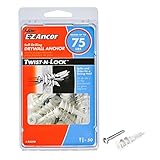
But that friction is minimal and easily overcome by shear weight or vibrations. Then you have the threaded anchors, often called ‘self-drilling’ or ‘цією’ anchors. These look more promising, screwing directly into the drywall.
Some of them are decent for medium-duty loads, like small shelves or curtain rods, provided you get the right size and they bite into a decent amount of drywall. The key is that they spread the load over a larger diameter than a simple screw alone would. But my personal favorites, the ones that have saved me from more drywall disasters, are the toggle bolts and the molly bolts. Toggle bolts are fantastic for heavier items.
They have little wings that spring open behind the drywall, creating a wide surface area to grip. You drill a bigger hole, shove the folded toggle through, and it opens up. Molly bolts are similar; they expand behind the wall as you tighten them.
These are what you want for anything genuinely heavy like significant shelving, large mirrors, or even some wall-mounted TVs (though for TVs, mounting directly into studs is always best practice). I used a set of heavy-duty toggle bolts to hang a surprisingly substantial bookshelf, and it’s been rock solid for years, even after I accidentally bumped it loading it up.
It felt like I was building a foundation, not just hanging something on a wall. The sheer mechanical advantage these anchors offer is the reason they’re so much stronger. (See Also: Can Concrete Anchors Be Used In Brick )
The Stud vs. Anchor Debate: When to Bother with Anchors
Here’s where a lot of DIYers, myself included early on, get it wrong. The golden rule, the mantra whispered by every seasoned contractor, is: ‘If you can hit a stud, hit a stud.’
And they’re absolutely right. A screw driven directly into a wooden stud is the strongest possible way to hang something on a wall. Studs are structural elements; they’re the bones of your wall.
They can handle serious weight. So, why bother with anchors at all? Because studs aren’t always conveniently located where you want to hang something. You want that picture frame right there, but the nearest stud is six inches to the left.
You need a place for a small bathroom shelf, but there are no studs in the perfect spot. This is where anchors earn their keep. They are the solution when studs are inaccessible or impractical. However, it’s a common mistake to think an anchor is a perfect substitute for a stud.
It’s not. Think of it this way: studs are like load-bearing columns, and anchors are like strong, but ultimately temporary, reinforcements for weaker materials. The weight capacity of anchors is always significantly less than screwing into a stud. A heavy-duty toggle bolt might hold 50-100 pounds, whereas a screw into a stud can often hold hundreds of pounds.
You also have to consider the type of drywall. Older homes might have plaster and lath, which is a different beast entirely and often requires specialized anchors or techniques. Newer drywall is typically gypsum board. I learned this the hard way when trying to hang a substantial kitchen pot rack.
I couldn’t find studs in the exact spot I wanted it, so I opted for what I thought were heavy-duty anchors. They held for a while, but the constant vibration of pots and pans being moved eventually wore them out, and the whole rack came crashing down, taking a few pots with it. Now, I always try to locate studs first using a stud finder.
If I absolutely can’t, I’ll use the heaviest-duty toggle or molly bolts I can find, and I’ll always err on the side of caution with weight ratings.
Common Mistakes That Make Anchors Fail
Over the years, I’ve made enough mistakes with drywall anchors to fill a small hardware store. One of the biggest culprits is simply choosing the wrong anchor for the job. People see a plastic anchor, think ‘it’s an anchor,’ and screw it in. But as we’ve established, not all anchors are created equal.
Using a light-duty plastic anchor for something that weighs 20 pounds is a recipe for disaster. Another common blunder is not properly seating the anchor. For threaded anchors, you need to make sure they are screwed in flush with the wall. If they stick out, the item you’re hanging won’t sit flat, and the stress will be concentrated on the anchor’s lip, increasing the chance of it pulling out.
For toggle bolts, making sure the toggle has actually snapped open behind the drywall is most important. If it hasn’t deployed correctly, it’s just sitting loosely, offering minimal support. I once installed a set of anchors for a medicine cabinet, and I was in a rush.
I thought I’d heard the ‘snap’ of the toggle, but I hadn’t really checked. When I went to put the cabinet on, it felt loose. I pulled it off, and sure enough, one of the toggles hadn’t opened properly. It was barely hanging on.
Imagine if I’d loaded that cabinet with toiletries! A third huge mistake is overloading the anchor. Manufacturers provide weight ratings for a reason.
These are usually for static loads (things that just hang there). Dynamic loads (things that get bumped, moved, or vibrated) will reduce that capacity. (See Also: Can Cords Be Used To Make Anchors Climbing )
Always choose an anchor rated significantly higher than the weight of the item you’re hanging. I once tried to hang a heavy antique mirror using anchors that were just barely rated for its weight. It held for a few months, but then, during a minor tremor (we get them sometimes here), the mirror shifted just enough to put extra stress on the anchors, and it fell. Thankfully, it didn’t break, but the anchors were completely mangled.
It taught me the importance of a buffer. And don’t forget about the drywall itself. If your drywall is old, crumbly, or has been repeatedly damaged and repaired, it’s less likely to hold any anchor well, regardless of type.
Always inspect the area where you’re planning to install an anchor.
Real-World Use Cases: Where Anchors Shine (and When They Don’t)
So, when are drywall anchors actually a good idea? Think of them as the workhorses for medium-duty tasks where studs aren’t your friends.
Installing a lightweight bookshelf in a living room that’s filled with decor? Anchors are your go-to.
Hanging a coat rack by your front door for jackets and bags? Good quality anchors will handle it. Mounting a small TV on the wall in a guest bedroom where it won’t be adjusted constantly?
Depending on the TV’s weight and the anchors, it can work. I’ve used heavy-duty toggle bolts successfully to mount a relatively light projector screen in my home office.
The issue was that the ideal placement was right between two studs. The projector screen itself probably weighs around 25 pounds, and with the screen extended, it puts a decent amount of use on the wall.
The toggle bolts, properly installed, have held it perfectly for over a year, with no sag or pull. They distribute the force effectively. However, there are definite no-go zones for anchors. Anything that experiences significant movement or vibration should ideally be attached to studs.
This includes heavy workout equipment, large ceiling-mounted fans, or anything that might be bumped hard regularly. Also, extremely heavy items like large, fully loaded bookshelves or massive wall-mounted TVs should always aim for studs. If studs aren’t an option for these heavy loads, you might need to consider alternative mounting solutions, like French cleats that span multiple studs or even specialized heavier-duty wall anchors designed for commercial applications, but for most of us, it’s studs or good quality toggle/molly bolts. I learned this the hard way when I tried to hang a full-length mirror that probably weighed 70 pounds on what I thought were strong anchors.
It looked fine for about a week, then started to creak ominously. I took it down just in time. It’s now leaning against a wall, safely on the floor, a monument to overestimating anchor strength. The key is understanding the forces at play: shear (downward pull) and tension (pulling away from the wall).
Practical Tips for Maximum Anchor Strength
Getting the most out of your drywall anchors, and avoiding that dreaded drywall crumble, comes down to a few practical steps. First, always, always, always use a stud finder to check for studs. If you can hit one, do it.
If not, then you select your anchor. Second, choose the right anchor for the load. This is a must.
A general rule of thumb: for very light items (under 5 lbs), ribbed plastic anchors might suffice. For medium items (5-20 lbs), threaded anchors or basic molly bolts are usually fine. For heavier items (20-75 lbs), heavy-duty toggle bolts or solid molly bolts are your best bet. (See Also: Can Anchors In Your Shoulder Break )
For anything over 75 lbs, or anything important, find studs. Third, prepare the hole correctly. Most anchors require a specific drill bit size. Too small, and you’ll struggle to insert the anchor, potentially damaging it or the drywall.
Too large, and the anchor won’t have enough material to grip. Follow the manufacturer’s instructions religiously. I once drilled a hole for a toggle bolt that was just a hair too big.
The toggle would deploy, but it felt loose. I ended up using a slightly larger toggle bolt that was rated for a higher load, just to be safe.
Fourth, make sure the anchor is fully engaged. For screw-in anchors, make sure they are flush.
For toggles, give them a gentle tug to confirm they’ve snapped open and are seated firmly against the back of the drywall. Fifth, when in doubt, use more anchors. If you’re hanging a long shelf, use multiple anchors spread out to distribute the weight.
Don’t just put two in the middle. Spread them out towards the ends. Also, consider the type of drywall. Thicker drywall (like 5/8 inch) is generally stronger than thinner (3/8 inch) and can support more weight.
I learned this when mounting some relatively heavy storage units in my garage, which had thicker drywall. The anchors I used felt much more secure than they would have in my apartment’s thinner walls. Finally, read the packaging!
Seriously, the weight ratings and installation instructions are there for a reason. They often come with a diagram showing how the anchor works behind the wall, which is super helpful. Don’t just guess.
People Also Ask:
What Is the Strongest Type of Drywall Anchor?
The strongest types of drywall anchors are generally toggle bolts and heavy-duty molly bolts. Toggle bolts, with their wings that expand behind the drywall, create a large surface area for gripping, making them excellent for heavier loads. Molly bolts also expand behind the wall, offering good strength. For truly heavy items, nothing beats screwing directly into wall studs, but when studs aren’t an option, these types of anchors provide the most reliable support.
Can You Hang a TV on Drywall Anchors?
Hanging a TV on drywall anchors alone is generally not recommended, especially for larger or heavier TVs. While some very small, lightweight TVs might theoretically be supported by heavy-duty toggle bolts, the risk of failure is too high due to vibrations, dynamic loads, and the sheer weight. The safest and most reliable method for hanging any TV is to locate and mount it directly into wall studs using appropriate lag bolts or heavy-duty TV mount hardware.
How Much Weight Can a Drywall Anchor Hold?
The weight capacity of drywall anchors varies drastically by type, size, and quality. Cheap plastic anchors might only hold a few pounds (5-10 lbs), while threaded anchors can hold up to 20-30 lbs. Heavy-duty toggle bolts or molly bolts can often support anywhere from 50 to over 100 lbs in ideal conditions. However, these ratings are for static loads, and dynamic loads or poorly installed anchors will significantly reduce the actual weight they can hold. Always check the manufacturer’s specifications and choose an anchor rated well above the item’s weight.
How Do I Know If My Drywall Anchor Is Strong Enough?
To know if your drywall anchor is strong enough, first identify the weight of the item you intend to hang. Then, check the anchor’s packaging for its maximum weight rating. It’s important to choose an anchor with a rating significantly higher than the item’s weight, especially if the item will experience any movement or vibration. Inspect the anchor after installation to make sure it’s flush with the wall and feels secure. If you’re hanging anything heavy or important, always try to mount into a stud instead of relying solely on anchors.
Final Verdict
So, are drywall anchors strong? Yes, but with a massive asterisk. They are strong enough for many common household tasks, but they are absolutely not a substitute for structural support like wall studs. My journey from ripped drywall to securely hung shelves has taught me patience and the importance of selecting the right tool for the job. Don’t be afraid to spend a few extra bucks on better anchors; it’s cheaper than repairing a hole in your wall.
The key takeaway is to understand the limitations of drywall and to match the anchor’s strength to the load. Think heavy-duty toggles or mollies when studs are absent, and always err on the side of caution. If you’re ever in doubt about whether a specific anchor will hold, it’s probably best to find a stud or reconsider the item’s placement.
Next time you’re hanging something, take a moment. Grab that stud finder. Read the anchor packaging. Your walls will thank you, and you won’t have to explain to your landlord why there’s suddenly a new, unplanned ventilation hole.