I remember the first time I hung a heavy mirror. It was a beast, probably 30 pounds, and I was so proud of myself for getting it straight on the wall. Two days later, I woke up to a crash. The mirror had ripped right out of the drywall, taking a huge chunk with it. That’s when I learned the hard way that sometimes, you really do need those little plastic doodads. So, are drywall anchors necessary? For anything more than a postcard or a feather-light picture frame, the answer is a resounding yes, and here’s why.
Nobody wants to see their favorite shelf or that expensive piece of art end up on the floor. It’s not just about the damage; it’s the frustration, the wasted money, and the feeling of being duped by a wall that looked so solid. This isn’t rocket science, but it’s definitely not as simple as just screwing into drywall and hoping for the best. Let’s cut through the noise and talk about what actually works.
When a Nail Just Won’t Cut It
Look, I get it. You’re trying to hang a picture, maybe a small shelf, and you see that perfect spot. You grab a nail, maybe a screw, and you go for it. For a tiny, lightweight item – like a single sheet of paper or a very thin, small print – that might work. The drywall itself, that paper-covered gypsum core, has a bit of inherent strength. However, that strength is mostly in compression, not tension or shear. Imagine trying to pull a piece of paper upwards by sticking a tiny pin in it; it rips easily. That’s the basic idea here.
When you put a screw directly into drywall without any reinforcement, you’re relying solely on the gypsum core and the thin paper skin to hold the weight. This is fine for things that weigh next to nothing.
But the moment you add a bit of heft – a framed photo, a clock, a small decorative item – you start putting stress on that connection. The weight of the object is pulling downwards, and if it’s slightly offset or if there’s any vibration, it’s also pulling sideways or outwards.
This outward pull is where drywall really struggles. The gypsum crumbles, the paper tears, and boom – disaster strikes. I once tried to hang a medium-sized decorative plate on my bedroom wall with just a screw.
It looked fine for a week. Then, during a particularly loud concert on TV, the bass vibrated enough to loosen it.
The plate ended up on the floor, thankfully not broken, but the wall looked like a small animal had tried to dig its way out.
The real problem isn’t just the static weight. It’s the dynamic forces. If you hang a coat hook on just a screw, even if the hook itself is light, the act of hanging a coat introduces a significant shear force. That screw is being used. The drywall can’t take that kind of sustained, focused pressure. It’s like trying to hold up a heavy box with just your fingertips; it’s not designed for that kind of load. So, if your item has any substance, if it’s anything you’d be upset about dropping, or if it’s something that will experience any sort of movement or repeated use, you’re asking for trouble by skipping anchors.
People often ask if they can just find a stud. And yes, if you can find a stud and screw directly into it, that’s the absolute best-case scenario. A stud is solid wood, usually a 2×4, and it can handle serious weight. But studs aren’t always conveniently located where you want to hang something. You can’t just will a stud to be there. Sometimes the perfect spot for that family photo or that wall-mounted spice rack is smack-dab in the middle of an empty space between studs. That’s precisely where drywall anchors enter the picture. They are the bridge, the reinforcement, the ‘finding a stud when there isn’t one’ solution that makes hanging things infinitely more reliable.
How the Heck Do These Little Things Work?
Alright, let’s get down to the nitty-gritty of how these plastic and metal contraptions actually hold things up. It’s not magic, it’s physics, and understanding it makes you way less likely to screw up (pun intended) your next hanging project. The fundamental principle behind most drywall anchors is expanding the load-bearing surface area. Instead of concentrating all the force on a single small point where a screw penetrates the drywall, anchors distribute that force over a wider area of the wall material. This makes the connection much stronger and more resistant to pull-out.
The most common type you’ll see, and often the first ones people encounter, are the simple plastic expansion anchors. You drill a hole, shove the anchor in, and then drive a screw into it. When the screw goes in, its threads force the plastic anchor to expand outwards, wedging itself tightly against the inside of the drywall hole. It’s like a little wedge that pushes outwards, creating friction and a more secure grip. These are cheap and readily available, and for lighter loads, they do a decent job. I’ve used these for hanging lightweight curtains, small shelves with books that aren’t too heavy, and even a motion-sensor light in a hallway. They’re surprisingly effective for their simplicity.
Then you have the screw-in anchors, often made of metal or a tougher plastic. These are designed to be screwed directly into the drywall before you insert the hanging screw. They have coarse threads that bite into the gypsum and paper.
Once they’re in, you remove them, and then you drive your actual mounting screw into the pre-drilled hole of the anchor. Some of these are like threaded sleeves that create a larger threaded hole in the drywall, increasing the surface area dramatically. Others are more elaborate, like toggle bolts.
Toggle bolts are a bit overkill for most everyday tasks, but they are incredibly strong. They have wings that fold up to go through the hole, and then they spring open inside the wall cavity, creating a strong anchor point against the back of the drywall. These are the heavyweights for when you’re hanging something truly substantial, like a large TV mount or a very heavy mirror.
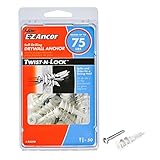
Another popular category is the self-drilling anchor, which often looks like a screw with a wide, fluted head. You simply drive the whole thing into the drywall with a screwdriver or a drill, and it creates its own hole while simultaneously embedding itself. Then you drive your screw into the center of this anchor. These are super convenient for quick jobs and lighter to moderate loads. I used a bunch of these when I was setting up a temporary shelving unit in my garage, and they made the process go much faster than fiddling with separate drill bits and anchors. (See Also: Can Concrete Anchors Be Used In Brick )
The key takeaway is that they all work by increasing the contact area and using the material of the drywall itself, or the space behind it, to create a stronger connection than a simple screw into bare drywall could ever provide. It’s about making that weak gypsum core act like a much stronger material by distributing the load.
| Anchor Type | How it Works | Typical Load Capacity (Estimate) | My Verdict |
|---|---|---|---|
| Plastic Expansion | Expands when screw is inserted | 5-25 lbs | Good for lightweight items, easy to use. |
| Screw-in (Threaded) | Threads into drywall, creates larger hole | 15-50 lbs | Better grip than plastic, decent for medium loads. |
| Self-Drilling | Screws directly into drywall, creates own hole | 20-75 lbs | Fast and easy for moderate weight. |
| Toggle Bolt | Wings open behind drywall for maximum support | 50-100+ lbs | Heavy-duty, for significant weight. Overkill for most things. |
The Common Mistakes That Ruin Your Wall
Even with the right anchor, people still manage to mess things up. And honestly, I’ve been there.
The most frequent error is not matching the anchor to the weight of the object you’re hanging. It’s like bringing a knife to a gunfight. You grab the cheapest, smallest anchor you can find because it’s easy, and then you hang your 40-pound television on it.
That’s just begging for trouble. Always check the weight rating on the anchor packaging. And here’s a important tip: the rating is usually for a single anchor. If you’re hanging something that requires two anchor points, and each anchor is rated for 25 pounds, that doesn’t mean you can hang 50 pounds.
You should be conservative and aim for the total load to be well within the combined rating, maybe even half of it, especially if it’s something that will be bumped or moved.
Another HUGE mistake is using the wrong drill bit size. The packaging for anchors almost always tells you the recommended drill bit size.
If you drill too small a hole, you’ll struggle to get the anchor in, and you might damage the drywall or the anchor itself. If you drill too big a hole, the anchor won’t have enough material to grip onto, and it will just spin loosely in the hole. I made this mistake once with those little orange plastic anchors. I was impatient, didn’t check the size, and drilled a hole that was just a hair too big.
The anchor went in, but it felt loose. When I put the screw in, it just stripped the hole. The whole thing came out with a gentle tug.
Frustrating doesn’t even begin to cover it.
People also tend to over-tighten screws, especially into plastic anchors. When you’re driving the screw into an expansion anchor, you want it snug, but you don’t need to crank on it like you’re sealing a nuclear reactor. Over-tightening can crack the anchor, strip the threads, or even push the anchor deeper into the wall than intended, making it useless. The goal is for the screw to seat firmly against the anchor and the anchor to be secure against the drywall. If it feels like it’s going to keep turning forever, stop. You’ve done enough.
Then there’s the classic case of believing the wall itself is stronger than it is. This ties back to the stud issue.
If you’re hanging something heavy and you miss the stud, but you think you hit it because the screw felt a little resistant initially (drywall can sometimes feel that way), you’re in for a bad surprise. Always use a stud finder or a small nail to probe for a stud before you commit to a hole.
If you don’t find one where you want it, then you use an appropriate anchor. My neighbor once tried to hang a massive, antique bookshelf on a wall where he swore there was a stud.
Turns out, he was just hitting a really thick piece of plaster over the drywall. When he loaded it up, the whole thing ripped off the wall, destroying a significant section of drywall and the plaster.
He learned to trust anchors and stud finders that day. (See Also: Can Cords Be Used To Make Anchors Climbing )
Finally, not reading the instructions is a common pitfall. While many anchors seem intuitive, there are often specific steps or requirements. Some anchors need to be seated to a certain depth, some require specific screw sizes, and some are designed for specific types of drywall or wall materials. Taking five minutes to read the back of the package can save you hours of repair work and disappointment. It’s a small investment of time for a significant return in wall integrity.
Can You Hang a TV Without a Stud?
It depends heavily on the TV mount and the anchors you use. Most TV mounts are designed to be screwed into studs. If you attempt to mount a TV using only drywall anchors, you are taking a massive risk. Even heavy-duty drywall anchors have weight limits, and TVs are heavy and expensive. It’s strongly recommended to locate wall studs and use them for mounting any TV. If you absolutely cannot locate studs in the desired position, consult a professional or use a specialized TV mount that is specifically designed for use with heavy-duty drywall anchors, and make sure the anchors are rated significantly higher than the TV’s weight, and understand the risks involved.
When Are Drywall Anchors Not Necessary?
Okay, so we’ve established that for most things, especially anything with significant weight or that will experience any kind of stress, drywall anchors are your best friend. But is there ever a situation where you can legitimately skip them? Yes, but you have to be brutally honest with yourself about the weight and the purpose of what you’re hanging. The golden rule here is: if it weighs practically nothing, and it won’t be disturbed, you might be able to get away without one.
Think about a single, unframed piece of paper. Or a very lightweight piece of art that’s just tacked to the wall. Or maybe a small, battery-operated motion sensor light that weighs less than an ounce. These are the kinds of things that might be okay with just a nail or a screw directly into the drywall. The key is that the force exerted on the drywall is minimal. There’s no use, no significant pull, and the object itself has negligible weight. I’ve seen people hang string lights directly onto drywall with tiny pushpins. For a short time, with no wind or tugging, that’s usually fine. The pins themselves are so small and light that they don’t create much stress.
Another scenario where you might be okay is if you’re only using it temporarily for something extremely light, and you plan to remove it soon. For instance, if you’re staging a house and need to hang a very light piece of decorative fabric for a few days, a small nail might suffice. But even then, I’d lean towards caution. Why risk damaging the wall or having it fall down when a tiny anchor is so inexpensive?
The real danger zone starts when you move past these absolute featherweights. Anything framed, anything made of glass, anything with moving parts (like a clock), anything that will have things placed on it (like a shelf), or anything that will be handled or bumped (like a coat hook or a towel bar) – these all demand anchors. The moment you introduce any use or significant weight, the drywall’s limited strength is exposed.
My own experience with this is hanging a very light, small corkboard. It was probably only a pound or two. I figured, “Why bother with anchors for this?”
I used a couple of small screws. For a few weeks, it was fine. Then, one day, my cat decided to use it as a springboard to get onto a nearby shelf. The impact, the use from her paws hitting it, was enough to rip the screws out and leave little craters in the wall.
It wasn’t a major disaster, but it was a lesson. The cat was fine, the corkboard was fine, but the wall needed patching. It reinforced for me that even a pound or two, combined with any kind of dynamic force, is enough to warrant an anchor.
The advice you sometimes see about just screwing into the drywall for “light items” needs a lot more context. What’s “light”? A picture frame that’s 8×10 inches and contains a single piece of paper might be light. But an 8×10 frame with thick glass and a heavy matte? That’s a different story. Always err on the side of caution. If you have to ask yourself, “Is this too heavy for just a screw?” the answer is probably yes, and you need an anchor. The cost of a few anchors is negligible compared to the cost and hassle of repairing drywall damage. It’s just not worth the gamble for most things.
Choosing the Right Anchor for the Job
This is where things can get a bit confusing, but it boils down to a few key considerations: the weight of what you’re hanging, the type of wall material (mostly drywall, but sometimes plaster), and how much effort you want to put in. As a general rule, I always over-engineer a bit. If something says it can hold 20 pounds, I’ll aim to use it for something that weighs 10-15 pounds. Better safe than sorry, right?
For very light items, say under 5 pounds – think small, lightweight picture frames, decorative wall hangings with no glass – the simple plastic expansion anchors (the little nylon ones that come in white, red, yellow, or blue) are usually sufficient. They’re cheap, easy to find, and easy to install. Just make sure you use the correct drill bit size recommended on the package. They provide a decent amount of holding power by expanding within the drywall cavity.
When you start getting into the 5-20 pound range – heavier framed pictures, small mirrors, lightweight shelves that won’t hold much – you’ll want to step up your game. The screw-in, self-drilling anchors are excellent here. Brands like Toggler or E-Z Ancor make good versions. These bite directly into the drywall with their threads, offering much more secure holding power than basic plastic anchors. They usually require a pilot hole, but some self-drilling types create their own. They distribute the load over a larger surface area within the drywall and are less prone to pulling out than their simpler counterparts.
For items in the 20-50 pound range, or if you just want extra peace of mind for moderately heavy items, you’re looking at more solid anchors. Metal toggle bolts or molly bolts are the go-to here. Toggle bolts have those distinctive wings that spring open behind the drywall, providing significant holding power. They require a larger hole, and installing them can be a bit more fiddly – you have to hold the wings compressed while inserting the bolt, then tighten.
Molly bolts are similar but often have a metal sleeve that expands. These are what I’d use for a moderately sized TV wall mount (if I wasn’t hitting studs, which I always try to do) or for a shelf that will hold a decent number of books. (See Also: Can Anchors In Your Shoulder Break )
Here’s a quick guide to help you decide:
- Identify the Weight: Be honest about the actual weight of the object. Measure it if you have to.
- Consider the Load Type: Is it a static load (just hanging there) or a dynamic load (will it be bumped, have things added/removed)? Dynamic loads require stronger anchors or more conservative weight ratings.
- Check the Wall Material: Most modern walls are drywall. Older homes might have plaster, which is harder and more brittle. Anchors designed for drywall might not work as well or could crack plaster.
- Match Anchor to Weight: Always choose an anchor with a weight rating significantly higher than the object’s weight. Aim for at least double the object’s weight for static loads, and ideally four times for dynamic loads or if you’re unsure.
- Read the Package: Seriously, do it. It tells you the required drill bit size, the maximum weight it can hold, and installation instructions.
Don’t be afraid to spend a few extra dollars on a better anchor. The few dollars saved on a cheap anchor that fails is nothing compared to the cost of repairing a hole in your wall and replacing a broken item. I once bought a pack of super cheap, no-name anchors online because they were a steal. They looked like expansion anchors but were made of brittle plastic. Half of them snapped when I tried to install them, and the ones that did go in failed within a month. Lesson learned: stick to reputable brands and read reviews if you’re unsure.
Real-World Use Cases: Where Anchors Shine
Let’s talk about actual scenarios where I’ve found drywall anchors to be not just useful, but absolutely indispensable. The most common place I rely on them is in my kitchen. I have a small kitchen with limited cabinet space, so I’ve installed open shelving and wall-mounted racks. My spice rack, for example, is mounted on a fairly long plank of wood. It’s not incredibly heavy when empty, but once it’s filled with jars of spices, it adds up. I used sturdy screw-in anchors for this, spaced evenly along the mounting brackets. This way, the weight is distributed, and I don’t have to worry about it ripping out when I grab a jar of cumin.
Another area where anchors are a lifesaver is in bathrooms. Towel bars, toilet paper holders, even small vanity shelves – these are all prime candidates for anchor failure if not installed properly. A wet towel can be surprisingly heavy. I used molly bolts for my main towel bar, as it’s a substantial piece of metal and gets pulled on daily. For the toilet paper holder, which is lighter but still key and gets frequent use, I used some decent quality self-drilling anchors. They’ve held up perfectly for years.
Consider hanging artwork. While a small, unframed print might be fine with a nail, anything framed, especially with glass, needs more support. I have a large, heavy framed print in my living room. It’s probably 25 pounds. Finding studs perfectly placed for that particular wall space was impossible. So, I used heavy-duty toggle bolts. The installation was a bit more involved, requiring a larger drill bit, but the peace of mind knowing that thing isn’t going anywhere is worth it. The anchor wings sit flush against the back of the drywall, providing a massive surface area for support.
What about mounting electronics? While ideally, you always want to hit studs for things like TV mounts, sometimes you might be mounting a soundbar, a small speaker, or even a security camera. For a soundbar under 10 pounds, I’ve used solid screw-in anchors. For something like a Wi-Fi router or a small surveillance camera, lighter-duty anchors are usually sufficient. The key is understanding the forces involved. A speaker might vibrate, and a camera might need to be adjusted, introducing movement and stress.
I also found anchors incredibly useful when I was setting up a home gym in my basement. I hung resistance bands, pull-up bars (the kind that mount to the wall, not the doorframe ones), and even a small whiteboard for tracking workouts. For the pull-up bar, which puts massive stress on the mounting points, I specifically sought out anchors designed for heavy loads and made sure they were rated for far more than the maximum user weight. These applications are where you really can’t afford to cut corners. The potential for injury or significant damage is too high.
The common thread in all these successful applications is understanding the weight, the forces, and choosing an anchor specifically designed to handle those conditions within drywall. It’s not about just sticking any anchor in the wall; it’s about using the right anchor for the job, installed correctly. That’s the difference between a secure mount and a repair job.
Faq: Are Drywall Anchors Necessary?
Can You Hang Heavy Items Without Finding Studs?
It’s generally not recommended. While heavy-duty drywall anchors exist, they have weight limitations and relying solely on them for very heavy items carries significant risk. Always prioritize finding and using wall studs for heavy objects like TVs, large shelves, or cabinets. If studs are unavailable, consult a professional or use anchors rated far above the item’s weight, understanding that this is a riskier approach.
Do I Need Anchors for Lightweight Picture Frames?
For very small, lightweight picture frames (think a few ounces to maybe a pound or two) that are not made of glass, a small nail or screw directly into the drywall might suffice. However, if the frame has glass, is larger, or will be in an area where it could be bumped, using a small anchor is a safer bet and provides much better security against accidental falls.
What’s the Strongest Type of Drywall Anchor?
Toggle bolts and snap toggles are generally considered among the strongest types of drywall anchors because they expand and distribute weight across a large surface area behind the drywall. They require a larger hole but offer exceptional holding power, making them suitable for heavier items when studs cannot be used.
Can Anchors Damage My Drywall?
Improper installation, using the wrong size drill bit, or removing an anchor incorrectly can cause damage to your drywall, resulting in larger holes or cracks. However, when installed correctly according to the manufacturer’s instructions, anchors create a secure hold and do not typically cause significant damage. Larger holes are required for some types of anchors, which will need to be patched if the anchor is removed.
Final Thoughts
So, to circle back to that initial question: are drywall anchors necessary? For 90% of what people want to hang on their walls, the answer is a resounding, unapologetic yes. Skimping on them is just asking for trouble, and I’ve got the slightly-patched wall to prove it. It’s not about being lazy; it’s about being smart and saving yourself a headache down the line. Even a few bucks for a pack of good anchors is a tiny price to pay for peace of mind and wall integrity.
My advice? Always have a good assortment of anchors on hand. Keep a box of the common plastic ones for lightweight jobs, some of the better screw-in types for medium loads, and maybe a pack of toggle bolts for those ‘just in case’ moments when you’re hanging something truly substantial. Treat them not as optional extras, but as vital components of any hanging job that involves anything more than a feather.
Before you pick up that hammer or drill for your next wall project, take a moment. Weigh the item you want to hang. Think about how it will be used. And then, more often than not, reach for the anchors. Your walls (and your belongings) will thank you for it.