I remember staring at my garage door, frustrated. It was sticking, groaning like a dying whale every time I tried to open it. Took me a solid hour of wrestling with it before I figured out one of the main hinges was practically seized up. It got me thinking, really thinking, about these simple metal things we take for granted. They move, they allow things to swing, and honestly, they’re often the unsung heroes of our daily lives. So, the question that popped into my head, and maybe yours too, is: are hinges a form of wheel? It sounds a bit nuts, right? But stick with me, because the more I looked, the more I saw a connection.
We all know what a wheel is. It’s round, it spins, it makes things roll. Simple. But what if the definition is a bit broader than just a perfect circle? What if the function is more important than the exact shape? That’s the core of this whole debate about whether hinges are a form of wheel.
Look, I’m not here to give you some textbook definition. I’m here to tell you what I’ve learned messing around with cars, bikes, and enough doors to build a small house. And frankly, the common understanding of a wheel might be too narrow.
The Rolling Argument: How Hinges Mimic Wheel Function
Let’s get down to brass tacks. When we talk about wheels, we’re usually thinking about something that rotates around an axle to reduce friction and enable motion, typically linear motion. Think of a car tire – it spins, and the car moves forward. The key here is rotation and reducing resistance. Now, look at a hinge. Most hinges have a pin or a central axis, and two plates that rotate around that axis. They allow for rotational movement, like a door swinging open or a car hood lifting. The primary goal of a hinge is to allow one part to move smoothly relative to another, and it does this through a form of rotation around a fixed point.
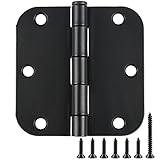
My first real ‘aha!’ moment with this came when I was trying to replace the worn-out hinges on my old pickup truck’s tailgate. They were completely rusted, like trying to bend a rebar. When I finally got them off, I noticed the cylindrical pin that runs through the barrel. It’s basically an axle. The barrel itself, made of two halves of a cylinder joined together, rotates around this pin. It’s not a full circle like a tire, but it’s a component designed for rotational movement. The friction might be higher than a well-lubricated wheel bearing, but the principle is the same: rotation around an axle to help movement.
People often argue that wheels are about reducing friction for linear travel. That’s true for many applications, like vehicles. But a hinge’s primary job is also friction reduction, albeit for rotational travel.
Imagine trying to open a heavy door without hinges. You’d have to slide it, which would create massive friction. Hinges allow it to pivot with significantly less resistance.
This is where the definition gets blurry. Is a lazy Susan’s rotating base a wheel? It spins on a bearing, reducing friction for rotational movement. I’d say yes.
A hinge operates on a similar, albeit simpler, mechanical principle. It’s a rotary bearing system, and in that sense, it’s a primitive, specialized form of wheel. The ‘wheel’ part isn’t the entire component, but the rotating element and the axis it turns on.
My neighbor, a retired engineer, once told me, “Anything that rotates to make something else move with less effort is, in essence, a form of wheel.” He was talking about the gears in a clock, but it applies equally here. The barrel of the hinge is rotating, and the pin is its axle. It’s a very specific type of rotary mechanism, not designed for continuous rolling motion across a surface like a typical wheel, but for controlled, repeated pivoting. It’s a functional analogy, if not a literal one. The difference is scale and purpose, not fundamental mechanical action.
Think about it from a physics perspective. Both rely on reducing the coefficient of friction between two surfaces that are in relative motion. A wheel reduces the friction between a rolling object and a surface. A hinge reduces the friction between two objects that are pivoting relative to each other. The mechanism might be simpler, but the underlying goal is identical: making movement easier by enabling rotation.
When Hinges Go Bad: What to Look for (and Avoid)
Alright, so we’ve established that hinges, in a functional sense, share some DNA with wheels. Now, what happens when they stop working? You get that dreaded squeak, or worse, a jam. I’ve learned the hard way that not all hinges are created equal, and cheap ones can be a total nightmare.
They can seize up, rust out, or just get wobbly, making whatever they’re attached to feel cheap and unreliable. For me, this usually starts with a door that doesn’t close right, or something that feels loose and unsafe. (See Also: A Box Without Hinges Key )
I once bought a set of budget hinges for a heavy garden gate. Within six months, they were visibly sagging, and the gate was dragging on the ground.
Lesson learned: you get what you pay for.
The most common issue is wear and tear, especially on high-traffic items like doors. The constant pivoting action grinds away at the metal, and if it’s not properly lubricated, the friction accelerates this. Rust is another major enemy. If your hinges are exposed to moisture, like on an exterior door or a tool shed, they’ll start to corrode. This corrosion increases friction and can eventually seize the hinge solid. I’ve had to cut rusted hinges off more than once because they just wouldn’t budge. It’s a messy job and usually means you need to replace the entire hinge, and sometimes the mating surface it’s attached to.
Another thing to watch out for is the material. Cheap, thin-gauge steel hinges are notorious for bending under load. This is especially problematic for heavier applications like gates, shed doors, or even car hoods and tailgates. You’ll see the door start to droop, and the gaps around it become uneven.
This is a sign that the hinge is deforming. Look for thicker gauge metal and, if you’re really concerned about durability, stainless steel or brass hinges, though they’ll cost you more.
I’ve found that for general interior doors, a decent quality steel hinge is usually fine, but for anything that takes a beating, you need to step up. I paid about $30 for a set of heavy-duty galvanized steel hinges for my shed, and they’ve held up perfectly for three years, while the cheaper ones I tried initially lasted less than one.
The type of hinge also matters. There are butt hinges, strap hinges, continuous hinges, concealed hinges, and many more. Each is designed for a specific purpose. A strap hinge, for example, with its long ‘straps,’ distributes weight over a larger area and is great for gates.
A butt hinge is for standard doors. Using the wrong type can lead to premature failure.
Don’t just grab the cheapest thing on the shelf; take a moment to consider the weight of the object it needs to support and how frequently it will be used. I once tried to use a standard interior door hinge on a small, but solid, wooden toolbox lid.
It looked fine, but the lid was heavy enough to start bending the hinge pin after only a few weeks. I had to swap it for a small strap hinge.
So, what’s the takeaway? Don’t skimp on hinges, especially for important applications. Inspect them regularly for rust, bending, or looseness. If you hear squeaks, address them with lubrication before they turn into bigger problems. A good quality hinge, properly maintained, will function smoothly for years, just like a well-built wheel.
Common Mistakes People Make with Hinges
This is where I get a bit heated, because I’ve seen (and made) so many of these mistakes. People treat hinges like they’re invincible little metal blocks that will just keep on working forever, no matter what. That’s a recipe for disaster. (See Also: Are Integrated Washing Machine Door Hinges Standard )
One of the biggest blunders is neglecting lubrication. Seriously, it’s not rocket science.
A quick spray of WD-40 or a dab of grease can prevent a squeaky hinge from turning into a seized-up mess. I used to think it was overkill, but after a particularly stubborn door hinge refused to budge and nearly took a chunk out of my hand, I became a convert.
A little maintenance goes a long, long way. Many people never oil them until they squeak, and by then, the damage might already be done.
Another common error is using the wrong type of hinge for the job. I see it all the time: flimsy hinges on heavy doors, or strap hinges where a simple butt hinge would suffice. This leads to sagging, binding, and premature wear. People grab whatever looks like it will fit without considering the weight of the object or the stresses it will endure.
Remember that tailgate I mentioned? Using standard automotive hinges that weren’t rated for the weight and constant vibration would have been a huge mistake. Always match the hinge strength and design to the application. I once saw a guy install a brand-new, solid oak door using the cheapest, thinnest hinges he could find at the hardware store.
It was a disaster waiting to happen, and sure enough, within a year, the door was visibly warped and the hinges were bent.
Over-tightening screws is another subtle but significant mistake. When you’re installing hinges, you want them secure, but cranking down too hard can strip the screw holes in the wood or metal, or even deform the hinge plate itself. This can lead to a wobbly hinge and an improperly hanging door or panel. It’s better to use the right size screw and tighten it until it’s snug, rather than forcing it. I learned this the hard way when I stripped out the mounting holes on a cabinet door, and had to use larger screws and wood filler to get it to hold properly. It’s a small detail, but it makes a big difference in the long run.
People also often forget about the alignment. Hinges need to be installed perfectly parallel and plumb. If they’re even slightly off, it puts uneven stress on the hinge mechanism and can cause binding or misalignment of the door or lid. This is particularly true for more complex hinges like those on car doors, where precise alignment is important for proper function and to prevent wind noise or water leaks. I’ve spent hours just shimming and adjusting hinges on a car door to get it to hang just right. It’s tedious, but key.
Finally, there’s the issue of simply ignoring problems. A squeak, a bit of rust, a slight sag – these are often early warning signs. Most people, myself included at times, will just live with it until it becomes a major issue. This means that a simple fix, like tightening a screw or applying some lubricant, can turn into a much larger repair or replacement job. My advice? Address hinge issues as soon as you notice them. It’s the automotive equivalent of not ignoring that check engine light – it’s always better to fix it early.
People Also Ask:
What Is the Main Function of a Hinge?
The main function of a hinge is to connect two objects while allowing them to pivot or swing relative to each other. It acts as a rotational joint, enabling controlled movement by reducing friction around a central axis. This allows for the opening and closing of doors, lids, and other movable panels, making them accessible and functional.
How Does a Hinge Work Mechanically?
Mechanically, a hinge typically consists of two parts, often called leaves or flaps, joined by a barrel or knuckle that revolves around a pin or axle. One leaf is attached to the stationary object (like a door frame), and the other is attached to the movable object (like a door). When the movable object is pushed, it rotates around the pin, causing the two leaves to pivot relative to each other, helping movement.
Real-World Applications: Where Hinges Shine (and Sometimes Don’t)
Let’s talk about where hinges actually matter in the real world, beyond just the doors in your house. Think about your car. Hinges are everywhere! The doors, the hood, the trunk lid, even the gas cap cover on some older models. (See Also: Are Hinges Wheeels )
These are high-stress environments. Car door hinges need to withstand thousands of open/close cycles, the weight of the door, and the vibrations of the road. They often have complex multi-stage mechanisms to allow for different opening angles and even self-centering. The engineering that goes into a good car door hinge is pretty impressive.
I remember the first time I had to replace a hinge on a vintage Mustang’s door. It was a beast, solid steel, and took a serious amount of torque to get it aligned. The precision required is immense – even a millimeter off can cause the door to bind or not seal properly.
Then you have bicycles. While not as obvious as a car door, many bicycle components rely on hinge-like mechanisms for movement. Think about the brake levers; they pivot. The suspension systems on mountain bikes often use pivots that function very much like complex hinges, allowing parts of the frame to move relative to each other. Even the kickstand pivots on a pin, much like a hinge. I’ve spent countless hours adjusting and cleaning the pivot points on my mountain bike’s suspension. They need to be smooth, tight, and durable, resisting dirt and water ingress, much like a good quality outdoor hinge.
On the flip side, where do hinges often fall short? Budget furniture is a big one. Cheap cabinet doors with flimsy hinges that sag after a year. Or worse, the hinges on those flat-pack wardrobes that feel like they’re made of tin foil. They just don’t hold up. I once bought a cheap TV stand, and the hinges on the cabinet doors were so poorly made that the doors wouldn’t even stay closed properly. I ended up replacing them with some decent brass hinges I found at a flea market, which cost me more than the original stand. That’s the kind of situation where the hinge is a weak link.
Another area where hinges can be a pain is on exterior applications if not chosen carefully. Standard steel hinges on a garden gate or shed door, if not regularly maintained or if made from low-quality steel, will rust and seize up quickly. I’ve seen shed doors that were practically welded shut in the winter due to rust and ice. This is where galvanized, stainless steel, or even specialized marine-grade hinges become necessary. The environment really dictates the type of hinge you should be using. For my workshop door, which is exposed to the elements, I splurged on stainless steel hinges, and it’s been maintenance-free for years, unlike the cheap zinc-plated ones I used before.
It’s about understanding the load, the environment, and the frequency of use. A hinge on a rarely opened closet door has a vastly different requirement than a hinge on a car door or a heavy industrial gate. The common thread is that when a hinge fails, it often makes the entire object it’s attached to feel broken, highlighting just how important these often-overlooked components are. They are, in essence, the unsung mechanical joints that make so much of our physical world function smoothly.
The Hinge vs. Wheel Debate: My Final Verdict
So, are hinges a form of wheel? After all this tinkering, wrestling, and thinking, my honest answer is: yes, in a functional and mechanical sense, they absolutely are. They might not be round, they might not be rolling down the highway, but they embody the core principle of a wheel: enabling rotation around an axle to reduce friction and help movement. The barrel of a hinge is a rotating component, and the pin is its axle. It’s a specialized rotary bearing designed for pivoting, not continuous rolling, but the underlying mechanics are fundamentally similar.
Consider the analogy again: a wheel lets things roll smoothly; a hinge lets things swing smoothly. Both use a central axis and a rotating element to minimize resistance. The difference is the type of movement and the environment they’re designed for. A wheel excels at linear motion over surfaces. A hinge excels at rotational motion between two connected objects. It’s like comparing a bicycle wheel to a lazy Susan bearing. Both are about rotational freedom and friction reduction. One rolls, one spins in place. Are they fundamentally different? I don’t think so.
The common definition of a wheel often focuses too narrowly on the circular, rolling aspect. But if we look at the function – allowing easy movement through rotation – then hinges fit the bill. They are a more constrained, specialized iteration of the wheel principle. Think about the gears in a clock. They rotate around axles. Are they wheels? Most people would say yes. Hinges are similar, just simpler and designed for a specific range of motion. My own experience, working with everything from car parts to DIY projects, has shown me that the mechanical principles often overlap in unexpected ways.
I’ve wasted money on cheap, flimsy hinges that failed miserably, much like I’ve wasted money on tires that wore out too fast. Both are about the quality of the rotational mechanism. A good hinge, like a good wheel, provides reliable, smooth operation for years. A bad one is a constant source of frustration. My opinion is that we should broaden our understanding of what a ‘wheel’ can be, recognizing the functional similarities in components that help movement through rotation. It’s not about the shape; it’s about the job it does. And the job a hinge does is very much in the spirit of a wheel.
Hinge vs. Wheel: A Comparison
| Feature | Wheel | Hinge | Verdict (Are they related?) |
|---|---|---|---|
| Primary Movement | Rolling (Linear or rotational over a surface) | Pivoting/Swinging (Rotational within a constrained arc) | Related: Both involve rotation. |
| Core Mechanism | Rotation around an axle to reduce friction with a surface. | Rotation around a pin/axis to reduce friction between two connected objects. | Related: Both use an axle/pin for rotation and friction reduction. |
| Common Shape | Circular (disc-like). | Two leaves with a barrel/knuckle. | Different: Shape is a key differentiator, but not the sole defining factor of function. |
| Friction Reduction | High, for efficient movement. | Moderate to high, depending on quality and lubrication. | Related: Both aim to make movement easier by reducing resistance. |
| Application Examples | Cars, bikes, carts, rolling luggage. | Doors, gates, lids, car hoods/trunks. | Related: Both are fundamental to moving and accessing objects. |
| Verdict | The classic example of rotational motion for movement. | A specialized rotary joint, functionally analogous to a wheel. | Yes, hinges are a form of wheel in terms of their fundamental mechanical function of helping movement through rotation around an axle. |
Verdict
So, there you have it. While a hinge isn’t going to be winning any races down a track, it performs a similar mechanical feat to a wheel: allowing easy movement through controlled rotation. I’ve seen too many cheap hinges fail to believe they’re just simple, insignificant bits of metal. They’re precision components in their own right, and when they’re good, they work like a charm, just like a set of quality tires.
Whether you call it a primitive wheel, a rotary bearing, or just a plain old hinge, its job is to make things move smoothly. The next time you open a door, take a second to appreciate the engineering. It’s a testament to how fundamental the principle of rotation is in making our world function. The question of whether are hinges a form of wheel is, for me, answered by their shared core purpose: making movement easier.
Next time you’re buying hardware, don’t just grab the cheapest option. Think about the application, the load, and the environment. Invest in good hinges, and you’ll save yourself a lot of headaches down the road. It’s like buying decent tools; they just work better and last longer.