I remember the first time I tried to get a clean edge on an epoxy river table. I spent hours meticulously applying painter’s tape, convinced I was a pro. Then, the epoxy poured. By the time it cured, it looked like a toddler had finger-painted the edges. Little epoxy tendrils had crept under the tape like tiny, destructive invaders. It was a mess, and I was furious. So, can I use painters tape with epoxy? The short answer, which nobody wants to hear, is: it’s complicated, and often, it’s a bad idea.
The common wisdom is that if you do it just right, it’ll work. But ‘just right’ often means a level of precision and patience that most of us don’t have, especially when we’re excited to see that shiny epoxy cure.
Let’s cut through the BS.
Why You’re Probably Screwed Using Standard Painter’s Tape
Look, I get it. You’ve got this beautiful piece of wood, maybe a cool countertop project or a tabletop you’re making. You’ve mixed your epoxy, feeling that buzz of creation.
Now you need a barrier. What’s the first thing most people grab? Painter’s tape. It’s cheap, readily available, and seems like the obvious choice for masking.
But here’s the dirty secret: most standard blue or green painter’s tape is just not built to handle the chemical onslaught of epoxy resin. Epoxy is thin, especially the lower-viscosity stuff you often use for clear pours or river tables. It’s like water finding every single crack and crevice. And painter’s tape, while sticky, has microscopic pores and edges that epoxy just loves to seep through.
I’ve lost count of the times I’ve meticulously taped off a section, only to find tiny, insidious spiderwebs of cured epoxy crawling out from under the tape onto my nice, clean surfaces. It’s infuriating. You end up with a feathered, ugly edge that requires sanding and re-finishing, completely defeating the purpose of the tape in the first place.
The adhesive itself can also be a problem. Some epoxies can react with the adhesive, causing it to break down or become gummy, making removal even harder and messier. It’s a gamble, and frankly, one I stopped taking years ago because the frustration and extra work weren’t worth the few bucks saved.
Then there’s the cure time. Epoxy takes a while to fully harden.
During that time, it can expand slightly and the liquid resin is constantly seeking the path of least resistance. Painter’s tape, especially the cheaper stuff, can lose its adhesion as it gets jostled or slightly saturated. You might think it’s holding firm, but the liquid epoxy is already working its way underneath. It’s like a stealth mission from your resin.
I once tried to save a project by using multiple layers of painter’s tape, really pressing down the edges. I thought I’d created an impenetrable fortress. Wrong. The epoxy found a minuscule gap near a corner and decided to make a daring escape, ruining the entire clean edge.
That project ended up being a complete redo, costing me double in resin and a whole weekend lost. (See Also: Does Painters Tape Pull Off Paint )
The texture of the tape itself can also be an issue. While it looks smooth, up close it has a slight weave. This weave, combined with the adhesive, creates countless tiny channels for the epoxy to travel under. It’s not a solid barrier. It’s porous. Think of it like trying to hold back a flood with a sieve. It might slow it down for a bit, but eventually, the water will find its way through.
What to Look for: The “better” Tapes (and Why They’re Still Not Perfect)
Okay, so if standard blue tape is a gamble, what about the fancy stuff? There are tapes marketed as ‘high-performance’ or ‘epoxy-resistant,’ often in red or purple. These are generally a step up. They typically have a denser backing material that’s less porous, and sometimes, a more solid adhesive that’s formulated to withstand certain chemicals. I’ve had better luck with some of these when I absolutely had to use tape. The key here is ‘better,’ not ‘perfect.’ I’ve still seen epoxy creep, but it’s far less frequent and usually confined to much smaller, more manageable areas. These tapes are often thicker, which helps create a more substantial physical barrier.
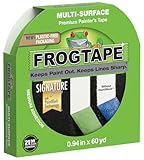
When I’m forced into a corner and must use tape, I’ll usually reach for a higher-quality masking tape, often the kind that painters use for actual painting – the ones that are thicker and have a less porous backing. Brands like 3M or FrogTape often have options that are more resistant to bleed-through.
The trick with these is still meticulous application. You need to press down every single edge firmly, using a credit card or a specialized taping tool to make sure maximum contact. This minimizes any tiny gaps. I once spent nearly two hours just taping off the edges of a large workbench I was refinishing with an epoxy topcoat.
I used a professional-grade masking tape, making sure every millimeter was sealed. It worked reasonably well, but there were still a couple of tiny spots I had to carefully clean up with a razor blade later. It’s a trade-off: more time spent taping, less time spent fixing mistakes.
However, even these ‘better’ tapes have limitations. They aren’t designed to be submerged in liquid resin for extended periods. The adhesive can still degrade, and the backing material, while denser, isn’t entirely impermeable. You’re still relying on the tape’s integrity to hold back a liquid that is determined to spread. It’s a constant battle against physics and chemistry. For truly important, sharp edges where a perfect line is a must, tape often falls short.
The biggest difference I’ve noticed is in the adhesive. Some tapes have adhesives that are more chemically inert. They don’t react with the epoxy and break down. Others might be designed to create a stronger bond but are more susceptible to the epoxy’s solvents. It’s a bit of a guessing game unless you know the specific formulation. I’ve found that the purple tapes tend to be a bit more forgiving than the standard blue ones, but again, it’s not a foolproof solution. They’re better for short-term masking during painting, not for holding back a viscous liquid for 24-72 hours.
Common Mistakes When Using Tape with Epoxy
One of the biggest blunders people make is not preparing the surface properly before applying the tape. You think you’re creating a seal, but if there’s dust, debris, or even a slight sheen of oil on your surface, the tape won’t adhere properly. This creates immediate weak points for epoxy infiltration. Always clean the area thoroughly and make sure it’s dry before you even think about peeling off the tape’s backing.
Another massive mistake is not pressing the edges down firmly enough. I’ve seen people just slap tape on, thinking the stickiness will do all the work. That’s like expecting a leaky faucet to fix itself. You need to use a tool – a credit card, a plastic scraper, even your thumbnail – to really burnish the edge of the tape down onto the surface. You want to eliminate every microscopic air pocket. This is especially important on rough or uneven surfaces, like wood grain. You have to coax the tape into conforming to every contour. Rushing this step is a recipe for disaster.
Overlapping tape strips incorrectly is also a common pitfall. If you just lay one strip over another, you create a ridge. Epoxy can easily seep over that ridge. The best practice, if you must overlap, is to create a ‘shingle’ effect, where the top layer overlaps the bottom layer in a way that directs any potential spill away from the seam, or to use a very fine bead of caulk along the seam of the tape itself if you’re really paranoid. I’ve seen people try to seal the edge of the tape with more tape, creating a thicker, less defined barrier. It’s often a losing battle.
Finally, and this is a big one, people often underestimate how much epoxy can spread. They think a thin line of tape is enough to contain a flood. It’s not. You need to create a dam that is significantly taller than the level of the epoxy you intend to pour, and critically, the tape needs to be applied to a surface that is perfectly level. If there’s even a slight tilt, the epoxy will pool on one side, putting more pressure on the tape barrier and increasing the chances of a breach. (See Also: Does Painters Tape Rip Paint Off Walls )
Real-World Applications: When Tape Might actually Work (sort Of)
So, when can I use painters tape with epoxy and have it not be a complete train wreck? Honestly, it’s for situations where a perfectly sharp, razor-thin edge isn’t the be-all and end-all. Think of projects where you’re creating a contained mold or a dam to hold epoxy within a specific area, and the tape is just a temporary aid to help seal the edges of that mold.
For example, if you’re building a simple box mold for casting small objects, you might use tape to seal the seams of your melamine or plywood mold. In this case, the tape isn’t expected to hold back a massive pour; it’s just sealing tiny gaps in a rigid structure.
Even then, I’d use a good quality tape and liberally apply silicone caulk over the tape on the outside of the mold. This acts as a secondary barrier and is much more reliable.
Another scenario is when you’re using a very thick, high-viscosity epoxy, like a casting resin that’s practically the consistency of honey. These resins move much slower and are less prone to capillary action under tape.
However, even with these, you’re still taking a risk. I’ve had projects where I used thick epoxy, and the tape held up reasonably well, but there were still a few pinholes of bleed-through that needed a quick touch-up with a craft knife. It’s far from the clean, crisp line you’d get with a proper dam system. The ‘real’ solution for creating sharp edges with epoxy involves physical barriers like melamine, silicone caulk, or specialized damming materials.
These are designed to be chemically resistant and create a truly impermeable seal. I learned this the hard way after a particularly disastrous attempt to create a faux-marble effect on a countertop using tape to define the ‘veins.’ The epoxy bled everywhere.
The best advice I can give is to treat tape as a temporary helper, not a primary dam. It can help keep your main mold material clean, or provide a secondary seal after you’ve established a more solid primary barrier. If your project involves a large, exposed surface where you need to define an edge precisely, like the edge of a river table, tape is likely to disappoint.
I remember a friend who was convinced he could tape off the sides of a massive epoxy bar top. He spent days doing it. The first pour, he had breaches everywhere. He reapplied, reinforced, and the second pour had fewer, but still significant, breaches.
He ended up having to live with a slightly ‘organic’ edge, which wasn’t what he planned.
When to Ditch the Tape and Go Pro
Let’s be blunt: if you want a perfect, clean edge with epoxy, the best advice is usually to ditch the painter’s tape altogether. For projects where precision is key – think creating sharp lines, defined borders, or sealing off an entire area where you don’t want any epoxy to escape – tape is a compromise you’ll likely regret.
The real heroes in the epoxy world for creating dams are materials like melamine board, rigid PVC, or even specialized damming tape that’s designed to be chemically resistant and create a truly solid barrier. I’ve found that using a combination of these is often the most reliable approach. For example, I’ll build my mold with melamine, then run a bead of 100% silicone caulk along all the interior seams and the edge where I want the epoxy to stop. (See Also: Does Masking Tape Work The Same As Painters Tape )
The silicone creates a flexible, watertight seal that epoxy just can’t penetrate. It’s a bit more effort upfront, but the results are night and day compared to relying on tape.
Another technique is using metal flashing or aluminum tape, especially if you’re working with higher temperatures. Some people swear by using a thicker, high-quality aluminum foil tape, burnishing the edges down meticulously. I’ve tried it, and it’s better than painter’s tape, but still not as foolproof as a dedicated damming system.
The adhesive can still be a weak point. The most professional results I’ve seen come from building a proper mold with rigid materials and sealing them with silicone. For example, when I made a small epoxy desk organizer, I built the outer form from scrap plywood and then lined the inside with a strip of 3M VHB tape (an industrial-strength double-sided tape that’s pretty solid) and then a bead of silicone. That thing held back the epoxy like a champ, giving me a super sharp edge.
Consider the economics too. While painter’s tape is cheap, the cost of failed epoxy pours – wasted resin, wasted time, and the frustration of fixing mistakes – can quickly outweigh the cost of proper damming materials. I once calculated that a single failed 2-gallon pour cost me nearly $200 in materials alone. After that, I swore I’d never skimp on the damming process again. The right materials might cost a bit more upfront, but they save you so much grief and material down the line. It’s about investing in the success of your project rather than cutting corners.
The key takeaway is that tape is designed for paint, which is water-based and far less invasive than liquid epoxy. Epoxy is a solvent with a tenacious ability to find microscopic imperfections. If you need a clean edge, you need a material designed to withstand that. My experience has shown that relying solely on painter’s tape for important epoxy edges is a gamble most DIYers will lose.
| Method | Pros | Cons | Verdict |
|---|---|---|---|
| Standard Painter’s Tape (Blue/Green) | Cheap, readily available | High risk of bleed-through, adhesive can degrade, porous backing | Avoid for important edges. Only for very minor, non-important sealing or as a secondary aid. |
| High-Performance Masking Tape (Red/Purple) | Denser backing, better adhesive (sometimes) | Still prone to bleed-through, not truly chemically resistant for long pours | Marginal improvement. Better than standard tape but still a gamble for sharp edges. |
| Melamine/Plywood Mold + Silicone Caulk | Excellent damming, repeatable results, strong seal | Requires mold construction, can be time-consuming | Highly Recommended. The reliable way to get clean, sharp edges. |
| Epoxy-Specific Damming Tape | Designed for epoxy, often chemically resistant | Can be expensive, application still requires care | Good Option. A dedicated solution, but price can be a factor. |
Can Painter’s Tape Hold Epoxy?
Generally, standard painter’s tape cannot reliably hold epoxy for extended periods, especially for projects requiring a clean, sharp edge. Epoxy’s low viscosity allows it to seep under the tape’s edges and through its porous material, leading to bleed-through and messy results. While some higher-performance tapes might offer slightly better resistance, they are not a foolproof solution.
What Tape Is Best for Epoxy?
For creating clean, sharp edges with epoxy, dedicated epoxy damming tape or building a mold with materials like melamine and sealing the edges with 100% silicone caulk is best. These methods create a truly impermeable barrier that prevents epoxy from escaping. Standard painter’s tape is not designed to withstand the chemical properties of liquid epoxy.
Why Does Epoxy Seep Under Tape?
Epoxy seeps under tape primarily because of its low viscosity, which allows it to exploit microscopic gaps. Standard painter’s tape has a porous backing and an adhesive that can be compromised by epoxy solvents. Even with meticulous application, tiny imperfections in the tape’s seal or the surface it’s applied to become pathways for the epoxy to penetrate and spread.
Can I Use Tape as a Dam for Epoxy?
While you might get away with using tape as a dam for very small, short pours or in conjunction with other materials as a secondary seal, it’s generally not recommended as a primary damming solution. The risk of epoxy finding a way through is high, especially for larger pours or projects demanding precise edges. Investing in proper damming materials or techniques will yield far better results.
Verdict
So, after all these years and countless ruined edges, my honest verdict on using painter’s tape with epoxy is this: don’t. Not if you can avoid it. The few bucks you save on proper damming materials are almost always a false economy when you consider the wasted resin, time, and sheer frustration. It’s a gamble, and usually, the house wins.
If you’re doing a quick, low-stakes experiment where a slightly fuzzy edge is acceptable, maybe. But for any project where you care about a clean line, invest in silicone, melamine, or even just a good quality aluminum foil tape applied with extreme care. I’ve learned that the hard way, and I don’t want you to go through the same pain. This whole question of ‘can i use painters tape with epoxy’ is really about managing expectations versus results. For most people, the results you’ll get with painter’s tape just aren’t worth the effort.
Next time you’re facing an epoxy pour that needs a clean edge, think about building a proper dam first. Your future self will thank you.