I remember staring at the paint aisle, overwhelmed. So many brushes, so many promises. I’d just bought a cheap pack of synthetic brushes that shed more bristles than a golden retriever in July. Total waste of money. So, I started digging, asking around, and trying different things. That’s how I learned about polyester brushes. Are polyester paint brushes good? Let’s get straight to it: for certain jobs, they’re actually pretty darn great, but the hype sometimes goes overboard.
You’re probably wondering if they’re worth the price tag over those bargain bin options, or if they’ll hold their own against the fancy natural bristle guys. It’s not a simple yes or no. I’ve wrestled with enough sticky latex and stubborn enamels to know that the right tool makes all the difference. And sometimes, that tool is a humble polyester brush.
Polyester Brushes: What’s the Big Deal?
So, what exactly are we talking about when we say ‘polyester’ paint brush? It’s basically a brush made from synthetic fibers, specifically polyester. Unlike natural hog bristle brushes, which come from animals (gross, I know, but effective for some things), these are engineered. The magic, or lack thereof, lies in how these fibers are designed and manufactured. They’re built to be tough, to resist chemicals, and to handle different types of paint. The filaments are often flagged or tipped – that means the ends are split into finer strands, like a tiny flag. This increases the surface area, allowing the brush to hold more paint and lay it down smoother. It’s a pretty clever bit of engineering.
Why does this matter? Well, think about it. Paint, especially water-based latex or acrylics, can be pretty harsh.
Natural bristles can swell up and lose their shape when they get wet, making them useless. Polyester, being a plastic, doesn’t have that problem.
It stays firm, maintains its shape, and doesn’t get waterlogged. This is a huge win for anyone painting with latex or acrylics, which are the most common paints these days for interior walls and trim.
I’ve personally seen cheap natural brushes turn into a soggy mess after just an hour with a gallon of semi-gloss latex. It was infuriating, and I ended up having to clean up a ton of drips because the brush just couldn’t hold its load properly anymore.
Beyond just not swelling, polyester fibers are often designed with a certain stiffness and taper. This gives them a good balance of flexibility and control. You can push them into corners, get crisp lines, and still have enough spring to spread the paint evenly without leaving heavy brush marks. It’s this combination of resilience and performance that makes them a go-to for many DIYers and even some pros. They’re not trying to be something they’re not; they’re designed for modern paints and modern problems, and for the most part, they do a solid job. It’s this practical approach that makes me lean towards them for most of my home projects.
The manufacturing process also allows for a lot of consistency. You can get brushes with very similar performance characteristics batch after batch. This isn’t always true with natural bristles, which can vary quite a bit depending on the animal, its diet, and how the bristles were harvested and processed. So, if you pick up a specific model of polyester brush today, and then buy the same one next year, you’re likely to get a very similar painting experience. That predictability is a big plus when you just want to get a job done without surprises.
When Polyester Brushes Shine (and When They Don’t)
Let’s talk turkey. Polyester brushes are, in my book, fantastic for water-based paints.
We’re talking your standard latex, acrylics, and even some stains designed for wood. For interior walls, ceilings, and trim, they are often the best bet. The fibers don’t break down, they don’t get gummy, and they hold a good amount of paint. You can get those clean lines on a wall-to-trim transition with a decent polyester brush that you’d struggle with using a natural bristle that’s gone soft.
I once tried to paint a whole room with a supposedly ‘premium’ natural bristle brush, and by the time I got to the third coat on the trim, it looked like it had been attacked by a beaver. Swollen, frayed, and leaving trails of paint like a snail. (See Also: Can Acrylic Paint Go In An Air Brush )
The secret is often in the flagging. Those fine tips on the polyester bristles allow for a smoother finish. They really help to lay down the paint evenly, minimizing those dreaded brush strokes. This is particularly important when you’re using paints with a sheen, like satin or semi-gloss, where any imperfection is going to be glaringly obvious. You can get a really professional-looking finish on cabinets, doors, and furniture without spending hours sanding down brush marks. I’ve personally gotten surprisingly good results on kitchen cabinets using a good quality angled polyester brush and a decent semi-gloss latex. It felt like I was cheating compared to the old days of struggling with natural bristles and thinner.
However, and this is where the honesty comes in, they’re not always the champion for oil-based paints or high-gloss enamels. While some polyester brushes can handle them, they might not offer the same ‘bite’ or ‘feathering’ ability as a good quality natural bristle brush. Natural bristles have a unique ability to ‘feather’ the paint, meaning they can spread it out very thinly and blend it smoothly, which is important for those super high-gloss finishes where you want a glass-like surface. Polyester can sometimes feel a bit too ‘slippery’ for these demanding applications, potentially leading to streaks if you’re not careful.
I learned this the hard way trying to paint an old metal radiator with a tough enamel using a generic polyester brush. It just wanted to glide over the surface and didn’t deposit the paint as evenly as I wanted, leaving thin spots that I had to go back over.
It worked, but it wasn’t pretty.
There are also specialized synthetic blends that might outperform plain polyester for certain tasks. For example, some brushes blend polyester with nylon or other synthetics to achieve specific properties. So, when you see ‘synthetic’ on a brush, it might not just be polyester. It’s worth checking the product details, though honestly, most of that info is buried in marketing speak. For most home painters, sticking to good quality polyester for latex/acrylics and a dedicated natural bristle or a high-quality synthetic blend for oils is a safe bet. The key is matching the brush fiber to the paint type.
Choosing the Right Polyester Brush: What to Actually Look For
Okay, so you’re convinced polyester is a good bet for your next latex project. Great. Now, how do you pick a good one? Forget the super cheap multipacks from the dollar store. Those are designed to fail. You want to look for brushes that feel solid in your hand. The ferrule – that’s the metal band holding the bristles to the handle – should be crimped securely. No loose wiggling. The handle itself should feel comfortable. Some prefer fatter handles for better grip, others like the slimmer ones. It’s personal preference, but it matters for long painting sessions.
The bristles are where it gets interesting. As I mentioned, look for flagging. If you can see the very ends of the bristles are split into finer hairs, that’s a good sign. This increases paint-holding capacity and smoothness. The density of the bristles also matters. A fuller brush will hold more paint and lay it down more evenly. You can test this by gently bending the bristles. If they snap back quickly and feel resilient, that’s good. If they feel floppy or sparse, run the other way. I’ve bought brushes that looked okay on the shelf but turned out to be practically hollow in the middle once I started painting.
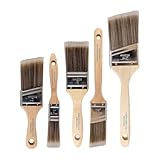
Consider the shape of the brush head. For cutting in edges and corners on walls, an angled sash brush is your best friend. The angle helps you get precise lines. For larger areas like doors, cabinets, or trim, a flat brush of a decent width (say, 2 to 3 inches) works well. The length of the bristles also plays a role; longer bristles generally hold more paint and can provide a smoother finish, while shorter bristles offer more control for detail work. It’s a bit of a balancing act, and often, having a couple of different types on hand is the smartest move.
Here’s a quick comparison of what to expect, and what I’ve personally found:
| Brush Type/Feature | Good Polyester Brush Characteristics | What to Watch Out For | My Verdict |
|---|---|---|---|
| Bristle Material | 100% Polyester or Polyester Blend | Mixed with cheap nylon, overly stiff, or too soft | Polyester is king for latex. Stick with it. |
| Bristle Tipping (Flagging) | Visible fine split ends for better paint hold & smooth laydown | Bristles look blunt and solid at the tips | Important for a good finish. Don’t skip this. |
| Bristle Density | Full, firm bristles that snap back when bent | Sparse, wispy, or overly flexible bristles | A full brush means fewer strokes and better coverage. |
| Ferrule & Handle | Securely crimped metal ferrule, comfortable handle | Loose, wobbly ferrule; uncomfortable or cheap-feeling handle | Seems minor, but a good grip saves your wrist over time. |
| Price Point | $5 – $15 (for decent individual brushes) | Under $2 for a pack, or over $25 for a basic model | Invest a few bucks more. It pays off in less frustration. |
Common Mistakes and How to Avoid Them
The biggest mistake I see people make is treating all brushes the same. They buy the cheapest pack they can find, use it for everything, and then complain about the results. You wouldn’t use a butter knife to saw a plank of wood, right? Same applies here. Buying a $2 multipack of brushes is almost guaranteed to lead to shedding, poor paint application, and a general sense of doom. I learned this early on after a disastrous attempt to paint a fence with some neon green monstrosities that shed like crazy. Every stroke left little green hairs stuck in the wet paint. It looked awful.
Another common error is not cleaning your brushes properly. Seriously, this is a cardinal sin, especially with polyester brushes. (See Also: Can Acrylic Paints Be Used In An Aqua Brush )
They’re designed to last if you take care of them. For latex and acrylics, a good rinse with warm water and soap (dish soap works great) is usually enough.
Work the soap into the bristles, rinse until the water runs clear, reshape them, and let them dry lying flat or hanging bristles-down. If you let paint dry in them, even polyester fibers can become brittle and misshapen. I’ve seen people just dunk them in water and call it a day, and then wonder why the brush is stiff and useless the next time.
It’s like expecting a car to run without oil.
Overloading the brush is also a rookie mistake. Polyester brushes can hold a good amount of paint, but there’s a limit. If you dip the brush too deep into the can, you’ll get paint all over the ferrule, which makes it hard to control and leads to drips running down the handle. You want to load the brush about one-third to halfway up the bristles. Then, tap the excess off gently on the rim of the can or a piece of cardboard. Don’t wipe it aggressively, as that can bend the bristles out of shape. It takes a little practice to get the right amount, but once you do, your painting will be much smoother and less messy.
Finally, and this is a big one, people often don’t use the right brush for the job. They’ll try to cut in the edges of a wall with a wide, flat brush, or try to paint a door with a tiny angled brush.
This is where the specific design of polyester brushes comes into play. Use an angled sash brush for cutting in, a wider flat brush for doors and cabinets, and maybe a smaller detail brush for intricate areas.
The right shape and size of the polyester brush will make the task significantly easier and the results far better. It’s about understanding that different tools are built for different purposes. Using an angled brush for trim, for example, gives you use and precision that a straight brush just can’t match.
It’s not just about the material, but the form.
Real-World Use: My Go-to Polyester Brushes
Over the years, I’ve gravitated towards a few specific types of polyester brushes that have proven themselves. For general wall painting, especially cutting in around ceilings and trim, I almost always reach for a good quality 2-inch or 2.5-inch angled sash brush. Brands like Purdy and Wooster make excellent polyester options that consistently perform well. The bristles are usually well-flagged, dense enough to hold a good amount of latex paint, and stiff enough to maintain a sharp line without splaying out.
I’ve had one of my favorite Purdy angled brushes for nearly five years now, and after proper cleaning, it still performs like a champ. It’s paid for itself a hundred times over in terms of time saved and the quality of the finish.
For doors, cabinets, and furniture, I prefer a 3-inch flat brush. Again, quality polyester is key. These brushes allow for smooth, even coverage across larger flat surfaces. You can achieve a beautiful, even coat of paint without a million brush strokes showing. I’ve found that the slightly longer bristles on these wider brushes help to lay down the paint more smoothly, especially with semi-gloss or satin finishes. It’s a satisfying feeling when a large surface like a cabinet door comes out looking almost spray-finished, just from using a good brush and a bit of care. The key is to use long, confident strokes and avoid overworking the paint. (See Also: A Brushes Digital Painting )
I’ve also experimented with some ‘hybrid’ synthetic brushes that claim to offer the best of both worlds. Some are indeed impressive, blending polyester with other materials to mimic the properties of natural bristles for certain oil-based applications.
However, for the vast majority of my DIY projects – which primarily involve latex paints for walls, trim, and furniture – I find that a dedicated, high-quality polyester brush is simply the most reliable and cost-effective option. It’s not always the sexiest tool in the toolbox, but it gets the job done consistently well. I used to always feel like I should be using natural bristles for everything, but after years of frustration and wasted money, I’ve accepted that for what I do most often, polyester reigns supreme.
It’s a practical choice for a practical person.
One thing that often surprises people is how much difference a slightly higher-quality brush makes. Instead of buying a $4 pack of brushes, spending $8-$12 on a single, good-quality polyester brush for a specific task can save you so much hassle. It’s not about buying the most expensive brush, but about buying a brush that’s well-made for the type of paint you’re using and the job you’re doing. I’ve learned that investing a little more upfront in tools that actually work saves money and sanity in the long run. You’re not just buying a brush; you’re buying a smoother finish and fewer headaches.
The Faq: Answering Your Burning Questions
Are Polyester Paint Brushes Good for Oil-Based Paint?
Generally, polyester brushes are not the first choice for oil-based paints. Natural bristle brushes are usually preferred because they have a certain ‘bite’ and ‘feathering’ ability that helps spread and blend oil-based paints smoothly for a high-gloss finish. While some synthetic blends can handle oil paints, pure polyester might feel too slick, leading to streaks. If you’re working with oil-based paints, it’s often better to invest in a dedicated natural bristle or a specialized synthetic blend brush for optimal results.
Do Polyester Paint Brushes Shed?
Good quality polyester paint brushes should shed very minimally, if at all, especially when new and used for their intended purpose (water-based paints). If a polyester brush is shedding a lot, it’s usually a sign of poor manufacturing quality or that it’s being used with an incompatible paint type, which can damage the bristles. Always look for well-made brushes with securely attached bristles, and clean them properly to maintain their integrity and prevent shedding.
Can You Reuse Polyester Paint Brushes?
Absolutely. This is one of the major advantages of polyester brushes. Unlike cheap natural bristle brushes that can become useless after one or two uses, a well-made polyester brush can be cleaned and reused many times. Proper cleaning is important: rinse thoroughly with water and soap after each use, reshape the bristles, and allow them to dry completely before storing. With good care, your polyester brushes can last for years.
What Is the Difference Between Polyester and Nylon Paint Brushes?
Both polyester and nylon are synthetic fibers used in paint brushes. Nylon brushes are generally more flexible and resilient, making them excellent for latex paints and providing a very smooth finish. They also tend to hold up better in water and are less likely to stiffen. Polyester brushes are typically stiffer and more durable, offering good paint-holding capacity and resilience, making them suitable for both latex and sometimes thicker coatings like enamels. Many premium synthetic brushes are actually blends of nylon and polyester to achieve a balance of flexibility, durability, and paint application.
How Do I Clean a Polyester Paint Brush?
Cleaning a polyester paint brush used with water-based paint (latex, acrylic) is straightforward. First, wipe off as much excess paint as possible on the rim of the can or a clean rag. Then, rinse the brush under warm running water, working the water through the bristles. Apply a small amount of mild soap (dish soap works well) and work it into a lather. Rinse again thoroughly until the water runs clear and no soap residue remains. Finally, reshape the bristles with your fingers and let the brush air dry, ideally lying flat or hanging bristles-down to maintain its shape.
Final Thoughts
So, are polyester paint brushes good? Yes, for the vast majority of homeowners tackling interior painting with latex or acrylics, they are an excellent choice. They offer durability, consistent performance, and a smooth finish that can rival more expensive options if you choose wisely. Don’t fall for the cheapest option; invest in a decent quality brush, and it will serve you well.
The key is to understand their strengths and use them for the right jobs. While they might not be the absolute best for every single painting task out there, especially certain oil-based applications, their versatility and resilience make them a workhorse for most projects. I’ve certainly wasted enough money on sub-par brushes to appreciate a tool that just plain works.
Next time you’re staring down a can of latex paint, don’t shy away from a good polyester brush. Give it a try, clean it properly, and see for yourself if it doesn’t make your next painting job a whole lot easier and the results a whole lot better.