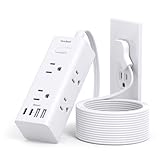
You know that feeling, right? You’re in the middle of a project, maybe setting up outdoor lights for the first time or finally tackling that garden shed, and you realize your trusty old extension cord just isn’t going to cut it. It’s too short. Or maybe it’s just not beefy enough for the tool you’re using. I’ve been there, staring down the barrel of a project with inadequate power. So, the question pops into your head: are there 50 ft white heavy duty extension cords available that can handle the job without melting or sparking? It’s a reasonable question, especially when you’re trying to keep things tidy and blend them into your surroundings.
Forget those flimsy indoor cords that barely manage a lamp. We’re talking about something that can take a beating, survive the elements, and deliver consistent power where you need it most. Finding the right cord can save you a heap of frustration and, frankly, a lot of money on burnt-out equipment.
Why Length and Gauge Are Your Best Friends (and Worst Nightmares)
Look, nobody likes buying extension cords. They’re bulky, they tangle, and they’re usually a god-awful neon orange or sickly yellow. But when you need serious power, and you need it to stretch a good distance, you’re going to have to confront the reality of what makes a cord ‘heavy duty’. For a 50-foot cord, especially if you’re thinking white to keep it less obtrusive, the two biggest factors are length and gauge. Think of gauge like the width of a highway for electricity. A lower gauge number means a thicker wire, which can carry more amperage without overheating. This is absolutely a must for heavy-duty applications.
I remember trying to run a powerful leaf blower from my garage to the far end of my driveway. I grabbed what I thought was a heavy-duty cord, maybe 14-gauge, and it was probably only 25 feet long.
As soon as I fired up the blower, the cord got warm. Not just warm, but uncomfortably hot to the touch. I shut it off immediately, picturing my nice new blower turning into a molten mess.
That’s when I learned the hard way: for anything that draws significant power over distance, you need to go thicker. For 50 feet, you’re likely looking at 12-gauge wire, possibly even 10-gauge if you’re running something truly monstrous like a welder or a large air compressor. Anything higher than 14-gauge for a 50-foot run, especially if it’s for continuous use or high-demand tools, is asking for trouble.
The funny thing is, white cords often get a bad rap for being less durable, or at least that’s the perception. Manufacturers sometimes use white for lighter-duty or indoor cords, which might have led to this. But there are absolutely white, heavy-duty options out there.
You just have to be more diligent in checking the specifications. Don’t let the color fool you into thinking it’s not up to snuff. Always, always, always check the gauge and the power rating (usually listed in amps or watts) before you buy. A 50-foot cord that looks pretty but can’t handle your tools is just a waste of money and a potential fire hazard.
It’s the difference between getting your work done and having a smoke alarm go off.
What to Actually Look for (beyond Just the Color)
When you’re on the hunt for a 50-foot white heavy-duty extension cord, it’s easy to get overwhelmed by jargon and options. So, let’s cut through the noise. First and foremost, you need to understand your power needs. What are you plugging into this thing?
A lawnmower? A shop vac? A series of Christmas lights?
Different tools draw different amounts of power. You’ll see ratings on your tools and on the extension cords themselves.
These are usually in amps (A) or watts (W). The extension cord needs to have a higher rating than the tool you’re powering, especially over that 50-foot distance. As a general rule of thumb, for a 50-foot cord, you should be aiming for a 12-gauge wire if you’re running anything more than a few hundred watts continuously. (See Also: Can Extension Cords Be Thriwn Away )
If you’re using high-draw tools like power saws or heaters, 10-gauge might be your best bet, though 10-gauge 50-footers in white are less common and pricier.
Beyond the wire gauge, look at the construction. Is the outer jacket durable? It should be made of PVC or a similar heavy-duty rubber compound that can withstand being dragged over concrete, exposed to sunlight, and maybe even a little bit of moisture. Check the plug and the receptacle ends.
Are they solid? Do they feel solid, or are they flimsy plastic that feels like it’ll snap off? Molded plugs are generally better than those that look like they were just screwed together.
Also, consider the number of outlets. Do you need a single outlet, or a cord with multiple receptacles so you can power more than one thing at a time?
Some heavy-duty cords come with a lighted end, which is a nice touch for dimly lit areas – you know instantly if the cord is getting power.
I made the mistake once of buying a cord that looked good, felt okay, but I didn’t scrutinize the gauge enough. It was advertised as ‘heavy duty’ but was likely a 14-gauge cord. I was running a small electric tiller in my garden, maybe 7 amps.
After about 15 minutes, the cord was noticeably warm, and the tiller started losing power. I had to stop, let it cool, and then replan my garden layout so I could use a shorter, thicker cord I already owned. It was a real pain. So, my advice?
Don’t trust labels like ‘heavy duty’ at face value. Look for the UL or ETL safety certifications – these mean the product has been tested and meets safety standards.
And always, always, always check the gauge (AWG) and the maximum amperage or wattage rating. It’s the most important spec you’ll find.
People Also Ask: Common Cord Questions
What is considered heavy duty for an extension cord?
A heavy-duty extension cord typically has a lower gauge number (like 12 or 10 AWG) which indicates a thicker wire capable of carrying more amperage and wattage without overheating. It also features a more solid outer jacket (often rubber or heavy-duty PVC) to withstand outdoor conditions and physical wear, along with reinforced connectors.
Can I use a 50 ft extension cord for a power tool? (See Also: Can Extension Cords Short Out )
Yes, but only if the extension cord is rated as heavy-duty (specifically in gauge and amperage/wattage) for the power requirements of your tool and is suitable for outdoor use if that’s where you’re using it. For high-draw tools, a 12-gauge or even 10-gauge cord is recommended for a 50-foot length to prevent voltage drop and overheating.
What gauge extension cord do I need for 50 ft?
For a 50 ft extension cord, a 12-gauge (12 AWG) cord is generally recommended for most medium-duty to heavy-duty applications, like powering appliances or tools that draw up to about 15 amps. For very high-draw tools (over 15 amps), you might need a 10-gauge cord, though these are less common and more expensive in longer lengths.
The Truth About Voltage Drop and Why It Matters
This is where things get a little technical, but it’s super important if you don’t want to damage your tools or have them perform like they’re half-powered. It’s called voltage drop, and it’s a bigger deal with longer cords. Imagine electricity flowing through that wire like water through a pipe. The longer and narrower the pipe, the harder it is for the water to flow, and some of its ‘pressure’ (voltage) gets lost along the way. That’s voltage drop. For a 50-foot cord, especially a thinner gauge one, you can lose a significant amount of voltage by the time it reaches your tool.
Why is this a problem? Well, many power tools are designed to operate within a specific voltage range. If the voltage drops too much, the tool might run slower, overheat, or even suffer damage over time. I saw this happen with a friend who was using a long, thinner extension cord for his angle grinder. The grinder sounded sluggish, and he kept pushing it, thinking it was just the tool. The motor overheated, and he ended up burning it out. Cost him a good chunk of change to replace. Had he used a thicker gauge 50-foot cord, the voltage drop would have been minimal, and the grinder would have run as intended.
So, how do you combat voltage drop? The primary method is to use a thicker gauge wire. A 12-gauge or 10-gauge cord has less resistance, meaning less voltage is lost over the 50-foot distance.
The general rule is that for every 50 feet, you should select a cord gauge that is one size smaller (e.g., go from 14-gauge to 12-gauge) than you would for a shorter run, especially for continuous loads or high-amperage tools. Some sources suggest that for a 50-foot cord powering sensitive electronics or high-demand tools, you might even consider a 10-gauge cord to keep voltage drop within acceptable limits (usually aiming for less than a 3-5% drop). While white cords are available in heavier gauges, they often come at a premium price and might be harder to find in the absolute thickest (10-gauge) options compared to standard orange or yellow cords.
Real-World Scenarios: Where White Cords Shine (and Where They Don’t)
Let’s talk about where a white 50-foot heavy-duty extension cord actually makes sense. The most obvious place is aesthetics. If you’re running power to an outdoor space – a patio, a garden party setup, or for holiday decorations – and you want the cord to blend in with white siding, a white picket fence, or even just be less visually jarring against a light-colored wall, a white cord is a godsend. It’s not just about looking good; it can be about safety too. A white cord might be more visible against dark soil or mulch, reducing the chance of someone tripping over it, especially at night.
I used a 50-foot white heavy-duty cord last Christmas to power some extensive outdoor lights. My house has white trim, and the usual bright orange cords looked like neon scars against it. The white cord, while still visible, blended in far better and made the whole setup look much cleaner. It was 12-gauge, and it handled multiple strings of lights and a few animated figures without any issues. The connectors were well-molded, and the PVC jacket felt tough enough to handle being laid across the lawn, even with occasional foot traffic. It felt like a small victory in the battle against unsightly utility.
However, white cords aren’t always the best choice. If you’re using them in a workshop environment where they’ll be constantly dragged over rough concrete, potentially splashed with oil or grease, or subjected to heavy impacts, a white cord might show dirt and scuff marks more readily than a darker one. While the heavy-duty construction is the same regardless of color, the visual upkeep can be higher. Also, in very muddy or dark environments, a white cord might not offer the same level of visibility as a bright orange one, potentially increasing the trip hazard.
It’s a trade-off between appearance and practicality. For true industrial or rough workshop use, I’d probably lean towards a darker, industrial-grade cord, even if it’s less pretty. But for outdoor entertainment, home decor, or anywhere visibility against lighter backgrounds is key, that 50-foot white heavy-duty extension cord is a winner.
| Cord Type | Gauge (AWG) | Length | Color | Pros | Cons | Verdict |
|---|---|---|---|---|---|---|
| General Purpose | 16-14 | 25-50 ft | Various | Affordable, widely available for light loads. | Prone to overheating with high-draw tools, significant voltage drop over 50 ft. | Okay for small electronics, string lights, maybe a fan. |
| Heavy Duty Outdoor | 12 | 50 ft | White/Orange/Yellow | Handles higher amperage, less voltage drop, durable jacket for outdoor use. | More expensive, can be stiff in cold weather. | Excellent for lawn equipment, power tools, outdoor appliances. |
| Industrial/Extreme Duty | 10 | 50 ft or less | Yellow/Black | Handles highest amperage, minimal voltage drop, extremely solid. | Very expensive, very heavy and stiff, often overkill for home use. | Best for welders, large compressors, high-power machinery. |
Common Mistakes to Sidestep When Buying
Let’s talk about the pitfalls. I’ve seen people buy extension cords like they’re picking out socks – just grab a pair. Big mistake. The most common error, hands down, is buying a cord that’s too thin for the job. People see ‘extension cord’ and assume it’ll work for anything. They grab a 16-gauge or even a 14-gauge cord for a 50-foot run and try to power something that draws more than a few amps. As we’ve discussed, this leads to overheating, poor performance, and potential damage. It’s like trying to drink a milkshake through a coffee stirrer – it just doesn’t work and makes a mess. (See Also: Can Extension Cords Be Use With Electric Heaters )
Another mistake is not considering the outdoor rating. If you plan to use that 50-foot white cord anywhere outside, even if it’s just plugged into an outdoor outlet, it needs to be rated for outdoor use. This means the jacket material is designed to withstand UV rays, moisture, and temperature fluctuations. Using an indoor cord outside is asking for it to degrade quickly, become brittle, and potentially create a fire or shock hazard. I learned this the hard way with some cheap indoor extension cords I tried to use for a temporary patio light setup. Within a single summer, the plastic became brittle and cracked.
Don’t get fooled by marketing fluff either. Terms like ‘power’ or ‘super duty’ don’t mean anything concrete. You need to look for the specifications: the gauge (AWG), the amperage/wattage rating, and the safety certifications (UL, ETL). I’ve seen cords that look impressive but have a pathetic gauge.
The color white itself can sometimes be a trap if you’re not careful. While the available 50 ft white heavy duty extension cords are generally good quality, sometimes the very cheapest white cords are intended for lighter loads. Always double-check the specs against your needs.
Finally, people often forget about the cord’s flexibility, especially in colder weather. Some heavy-duty cords can become quite stiff and difficult to manage when the temperature drops. If you’re in a colder climate and will be using the cord outdoors year-round, look for cords that specifically mention flexibility in cold temperatures.
Where to Find Them and What to Expect Price-Wise
So, you’re convinced. You need a 50-foot white heavy-duty extension cord. Where do you actually buy one? Your best bet, surprisingly, is often online. Big box home improvement stores (like Home Depot, Lowe’s) will carry them, but their selection might be more limited in terms of specific lengths and gauges, especially for white. You’ll find plenty of orange and yellow options, but the white heavy-duty ones can be a bit more niche. Amazon, however, is usually a goldmine for this kind of specific item. You can filter by length, gauge, color, and read reviews from other people who have used them for similar purposes. This is where you’ll find the widest variety.
Specialty electrical supply stores might also have them, but they are often geared towards professional electricians and can be more expensive for individual consumers. For a truly heavy-duty 50-foot white cord, expect to pay a premium. You’re not looking at the $15-$20 range you might find for a basic 25-foot indoor cord.
A good quality 12-gauge, 50-foot white heavy-duty extension cord will likely set you back anywhere from $40 to $70, possibly more if it’s a particularly high-end model or has extra features like GFCI protection built into the outlet. If you see a 50-foot white cord for under $30, I’d be very suspicious of its actual heavy-duty capabilities and would scrutinize the gauge and ratings very carefully. I paid about $55 for a 50-foot, 12-gauge white cord last year, and it felt like a fair price for the peace of mind and the aesthetics it provided for my outdoor lighting project. It’s an investment, sure, but a worthwhile one if it means your tools run properly and your decorations shine bright without a fire hazard.
What Gauge Is Best for a 50 Ft Heavy Duty Extension Cord?
For a 50 ft heavy-duty extension cord, a 12-gauge (12 AWG) is generally the sweet spot for most demanding household applications. It offers a good balance of current-carrying capacity and manageable flexibility. If you are powering very high-amperage tools, consider a 10-gauge cord, though these are less common and more expensive. Always make sure the cord’s amperage rating exceeds your tool’s requirement.
Can I Use a White Extension Cord Outdoors?
Yes, but it must be specifically rated for outdoor use. Outdoor-rated cords have a more durable outer jacket designed to resist UV rays, moisture, and temperature changes, which indoor cords lack. While white cords can be aesthetically pleasing outdoors, always verify the ‘outdoor use’ designation on the packaging or product description.
What Is the Difference Between 12 Gauge and 14 Gauge Extension Cords?
The gauge number (AWG) indicates the diameter of the wire; a lower number means a thicker wire. A 12-gauge cord is thicker than a 14-gauge cord. Thicker wires have less electrical resistance, allowing them to carry more current (amperage) with less voltage drop and less heat buildup over distance. Therefore, 12-gauge is considered more ‘heavy duty’ than 14-gauge, especially for longer cords like 50 ft.
How Much Voltage Drop Is Acceptable on a 50 Ft Extension Cord?
For most applications, an acceptable voltage drop on a 50 ft extension cord is typically no more than 3-5%. This makes sure that your tools and appliances receive sufficient power to operate efficiently and without overheating. Using a thicker gauge cord (like 12 AWG or 10 AWG) is the primary way to minimize voltage drop over longer distances.
Final Thoughts
So, to circle back to the original question: are there 50 ft white heavy duty extension cords? Yes, absolutely. They exist, and they can be a fantastic solution when you need both power and a bit of visual discretion. You just need to be smart about it. Don’t get swayed by the color alone; always check that gauge, the amperage rating, and make sure it’s built for the job, whether that’s powering your summer barbecue or your winter holiday lights.
My biggest takeaway is this: a cheap cord that doesn’t do the job is more expensive in the long run, both in potential tool damage and sheer frustration. Invest in the right gauge, especially for that 50-foot length, and you’ll save yourself a lot of headaches. It’s about finding that sweet spot between functionality, durability, and yes, even a little bit of style.
Next time you’re faced with a power-delivery challenge where length is key, remember to look beyond the obvious. That white cord might just be the unsung hero you need for your next project.